
Master online pricing tactics for smarter shopping
Online prices shift constantly, and understanding why can save you serious money. Amazon alone changes prices 2.5 million times daily, challenging the assumption that listed prices remain stable. This frequent adjustment reflects sophisticated pricing strategies designed to maximize sales and profits. By learning how dynamic pricing, promotional psychology, and timing factors work, you can navigate these tactics confidently. This guide reveals the mechanisms behind price fluctuations on platforms like Amazon and eBay, equipping you with practical insights to identify genuine deals, avoid overpaying, and time your purchases strategically for maximum savings.
Table of Contents
- What Is Dynamic Pricing And How Does It Work?
- The Role Of Promotions And Pricing Psychology In Online Sales
- How Inventory, Supply, And Time Affect Online Price Movements
- Ethical And Consumer Protection Concerns In Algorithmic Pricing
- Discover Tools To Track And Master Online Pricing
Key takeaways
| Point | Details |
|---|---|
| Dynamic pricing drives frequent changes | Algorithms adjust prices based on competition, demand, inventory, and timing factors in real time. |
| Promotions use psychology | Tactics like charm pricing and limited-time offers boost conversions but lose effectiveness when overused. |
| Timing and inventory matter | Prices drop during off-peak hours, month-end quotas, and surplus inventory situations. |
| Ethical concerns exist | Algorithmic pricing raises privacy and fairness issues, prompting regulatory scrutiny. |
| Price tracking tools help | Monitoring historical data and alerts empowers smarter buying decisions and reveals authentic discounts. |
What is dynamic pricing and how does it work?
Dynamic pricing is an algorithm-driven strategy where retailers adjust product prices continuously based on real-time market conditions. Unlike traditional fixed pricing, this approach responds instantly to changes in competitor rates, customer demand, inventory levels, and even time of day. Amazon’s dynamic pricing strategy incorporates factors such as competitor pricing, supply fluctuations, customer behavior patterns, profit margin targets, and seasonal trends to optimize revenue.
Machine learning models power these rapid adjustments. Amazon’s systems can update individual product prices hundreds of times within 24 hours, analyzing vast datasets to predict optimal price points. The scale is staggering. Across millions of products, these algorithms work continuously to balance competitiveness with profitability.
Several key factors influence dynamic pricing decisions:
- Competitor pricing on identical or similar products
- Real-time inventory levels and stock velocity
- Customer browsing and purchase history patterns
- Time-sensitive demand spikes or seasonal trends
- Geographic location and local market conditions
The process follows a systematic approach:
- Algorithms scan competitor prices and market data every few minutes
- Systems calculate optimal price points based on demand elasticity and profit goals
- Prices update automatically across the platform
- Performance metrics feed back into the model to refine future adjustments
Amazon changes prices 2.5 million times per day across its product catalog, demonstrating the massive scale of dynamic pricing operations.
Many shoppers assume dynamic pricing always means higher costs, but this misunderstands the strategy. Retailers frequently lower prices to match or undercut competitors, clear excess inventory, or attract price-sensitive buyers during slow periods. Understanding why prices fluctuate helps you recognize when algorithms work in your favor.
The SEC filing on Amazon’s automatic pricing confirms the company’s commitment to algorithmic price optimization. Research from Harvard Business School also addresses common dynamic pricing misconceptions, clarifying that strategic price reductions occur as often as increases.
Pro Tip: Check product prices at different times throughout the day and week to catch temporary discounts triggered by dynamic pricing algorithms.
Grasping dynamic pricing explained in depth reveals opportunities to time purchases when algorithms favor buyers, turning retailer tactics into consumer advantages.
The role of promotions and pricing psychology in online sales
Beyond algorithmic adjustments, retailers deploy promotional tactics and psychological pricing strategies to influence buying behavior. These methods shape how consumers perceive value and urgency, directly impacting conversion rates and sales volume.
Promotional frequency plays a critical role in effectiveness. Research shows that promotional frequency exhibits diminishing returns beyond three events per quarter. Too many discounts train customers to wait for sales, eroding full-price purchases and profit margins. Strategic timing and moderation preserve promotional impact.

| Promotion Frequency | Sales Impact | Consumer Response |
|---|---|---|
| 1-3 per quarter | Strong lift, maintains urgency | High engagement, perceives value |
| 4+ per quarter | Declining effectiveness | Waits for discounts, skepticism |
Charm pricing, the practice of ending prices in .99 or .95 instead of round numbers, leverages cognitive biases. Consumers perceive $9.99 as significantly cheaper than $10, even though the difference is minimal. Data confirms that charm pricing improves conversion rates by 3.2% compared to round-number pricing, making it a staple across e-commerce platforms.
Common promotional types include:
- Flash sales creating time-limited urgency
- Percentage discounts highlighting savings magnitude
- Buy-one-get-one offers increasing perceived value
- Coupon codes rewarding engaged shoppers
- Free shipping thresholds encouraging larger carts
Each tactic targets specific psychological triggers. Flash sales exploit fear of missing out, while percentage discounts emphasize value. Coupon codes make customers feel rewarded for effort, building loyalty. Understanding these mechanisms helps you evaluate whether promotions represent genuine savings or psychological manipulation.
| Pricing Strategy | Conversion Impact | Consumer Perception |
|---|---|---|
| Charm pricing ($9.99) | +3.2% vs. round | Significantly cheaper |
| Round pricing ($10) | Baseline | Fair, straightforward |
Retailers also use anchoring, displaying original prices alongside discounted rates to exaggerate savings. A product marked down from $100 to $70 appears more valuable than one simply priced at $70, even if the original price was inflated. Savvy shoppers check price drop strategies and historical data to verify claimed discounts.
Pro Tip: Monitor promotion patterns for your favorite products to distinguish genuine deals from routine discount cycles that inflate baseline prices.
Additional insights on charm pricing optimization reveal how retailers fine-tune these strategies across different product categories and customer segments, maximizing psychological impact while maintaining profitability.
How inventory, supply, and time affect online price movements
Inventory levels and supply constraints create immediate pricing pressures that algorithms exploit. When stock runs low, retailers often increase prices to slow demand and maximize revenue from remaining units. Conversely, surplus inventory triggers aggressive discounts to clear warehouse space and recover capital.
Supply chain disruptions amplify these effects. Shortages drive prices upward as competition for limited stock intensifies. Seasonal demand spikes, such as holiday shopping or back-to-school periods, create predictable price patterns that retailers anticipate and leverage.
Timing dramatically influences online prices. Prices vary by 23% on average between peak and off-peak hours, with early mornings and late evenings often offering better deals. Sunday mornings, when traffic is lowest, frequently feature temporary price reductions. Month-end pressure to meet sales quotas also drives discounts, as month-end drives price drops from sales quotas retailers push to hit targets.
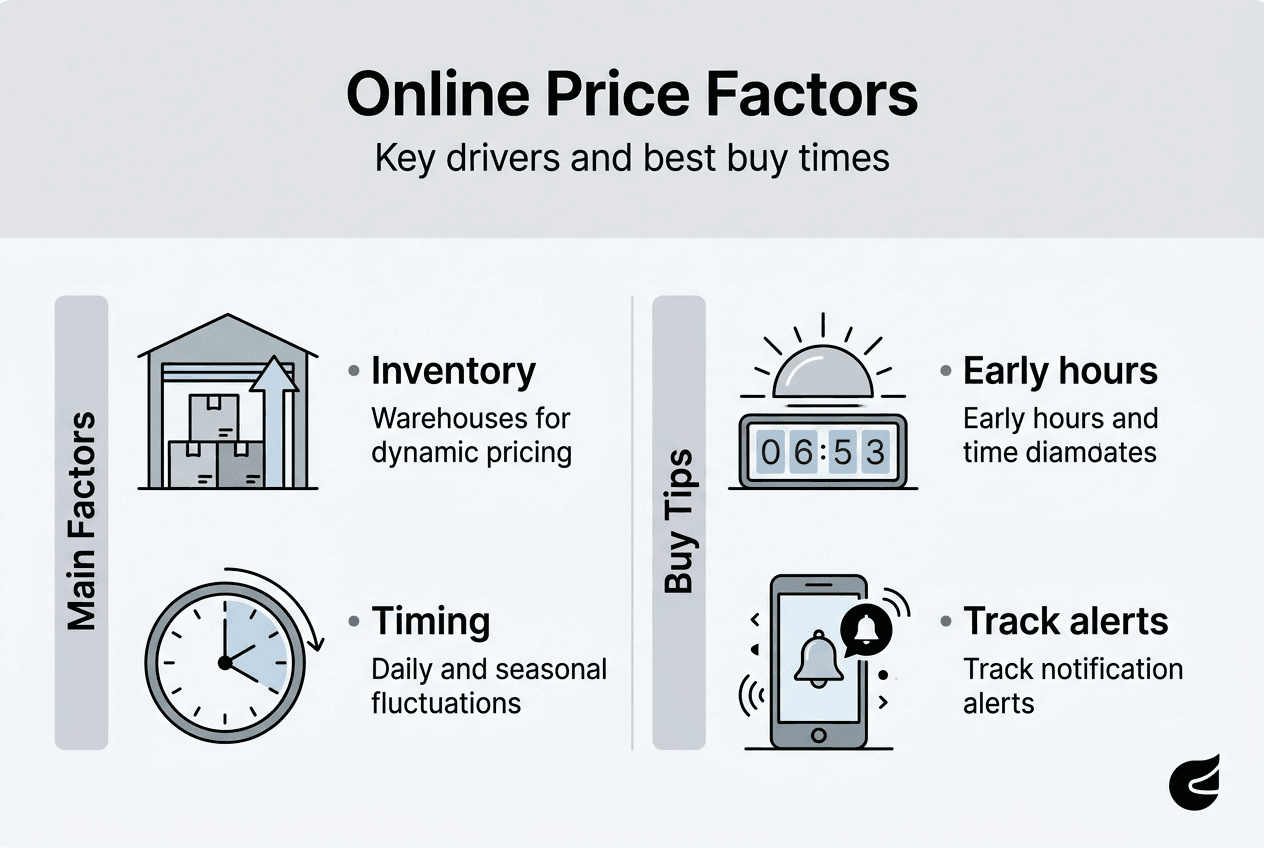
| Time Period | Average Price Change | Best for Buyers |
|---|---|---|
| Early morning (2-6 AM) | -8% vs. peak | Electronics, appliances |
| Weekday afternoons | Baseline | Standard shopping |
| Sunday mornings | -12% vs. peak | Clearance items |
| Month-end (last 3 days) | -15% vs. mid-month | High-ticket purchases |
Inventory-driven pricing creates opportunities for strategic buyers. Products nearing end-of-life or seasonal transitions often see steep markdowns as retailers make room for new stock. Monitoring these patterns through monitoring product prices online reveals optimal purchase windows.
Practical timing tips include:
- Check prices during early morning hours when algorithms adjust for low traffic
- Shop the last few days of each month when sales quota pressure peaks
- Track products approaching seasonal transitions for clearance discounts
- Monitor inventory indicators like “only X left in stock” for urgency signals
- Compare prices across multiple days to identify algorithmic patterns
Supply-side factors also include shipping costs and warehouse location. Products stored closer to major population centers often cost less due to reduced logistics expenses. Regional price variations reflect these supply chain economics, rewarding shoppers who compare prices across different seller locations.
Pro Tip: Use price tracking tools to monitor inventory-driven fluctuations and set alerts for when stock levels trigger automatic discounts.
Understanding how supply, inventory, and timing interact with dynamic pricing algorithms transforms shopping from reactive to strategic, allowing you to anticipate and capitalize on predictable price movements.
Ethical and consumer protection concerns in algorithmic pricing
While dynamic pricing offers efficiency benefits, it raises significant ethical and privacy concerns. Algorithms rely on extensive personal data, including browsing history, location, purchase patterns, and device type. Dynamic pricing raises concerns about collection and use of personal data like location and purchase patterns, creating transparency issues about how retailers use this information.
Key ethical issues include:
- Price discrimination based on personal characteristics or behavior
- Lack of transparency in how algorithms determine prices
- Potential algorithmic bias favoring certain customer segments
- Spike pricing during emergencies or high-demand events
- Race to the bottom dynamics harming small sellers
Regulatory bodies are responding. The FTC issued administrative subpoenas to eight dynamic pricing vendors to investigate whether practices violate consumer protection laws. These investigations focus on transparency, fairness, and whether algorithms engage in deceptive pricing practices.
Consumer frustration intensifies when algorithms create perceived unfairness. Certain AI pricing algorithms cause consumer outrage due to spike pricing, particularly during disasters, holidays, or other high-demand situations where prices surge dramatically. This backlash has prompted calls for stronger regulations and clearer disclosure requirements.
The FTC emphasizes that sellers must clearly disclose total prices upfront, including all mandatory fees, to prevent deceptive pricing practices that harm consumers.
Transparency remains a central concern. Many shoppers never realize they’re seeing personalized prices or that the same product costs different amounts for different buyers. This information asymmetry favors retailers while leaving consumers unable to make fully informed decisions.
Price discrimination, while legal in many contexts, raises fairness questions when based on personal data rather than market conditions. Charging higher prices to customers perceived as less price-sensitive or more affluent creates equity concerns, particularly when algorithms infer these characteristics from protected categories like location or browsing behavior.
Understanding why monitor online prices becomes essential for navigating these ethical complexities. Comparison shopping and price tracking tools help level the playing field, giving consumers visibility into price variations and algorithmic patterns that would otherwise remain hidden.
Advocates argue for mandatory disclosure when algorithms personalize prices, clearer data usage policies, and restrictions on spike pricing during emergencies. As algorithmic pricing grows more sophisticated, the balance between business optimization and consumer protection will likely face increasing scrutiny and regulatory intervention.
Discover tools to track and master online pricing
Now that you understand how retailers manipulate prices through dynamic algorithms, promotions, and timing strategies, you can turn this knowledge into savings. PriceLix price tracking tools provide the visibility and alerts you need to navigate these tactics confidently. By monitoring price history across thousands of retailers, PriceLix reveals authentic discounts and optimal purchase timing.
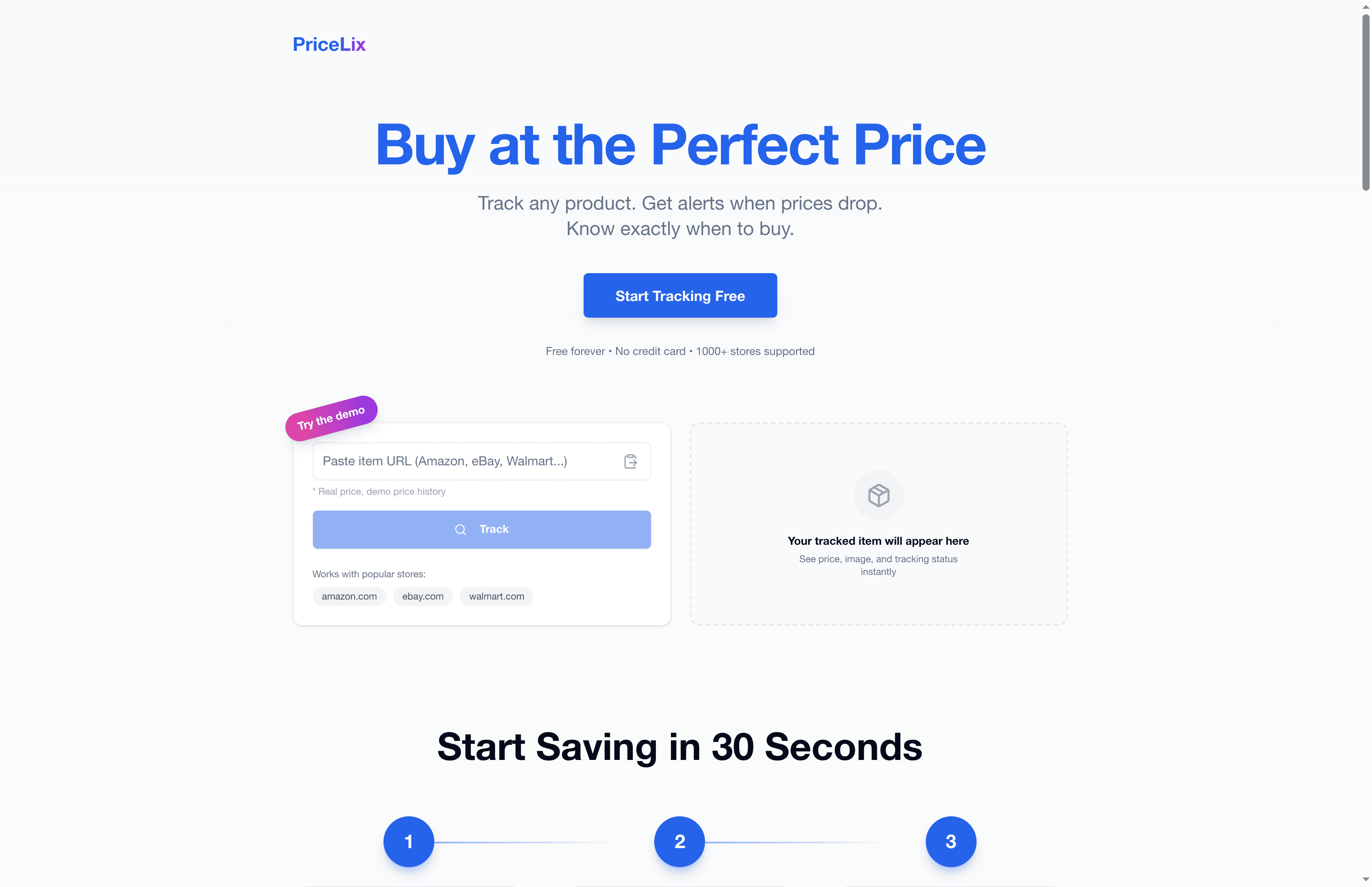
Set up price drop alerts explained to receive notifications when tracked items hit your target price, eliminating the need for manual checking. Historical charts show whether current prices represent genuine deals or routine fluctuations. Understanding the importance of price history transforms guesswork into data-driven decisions, helping you avoid inflated “sale” prices and time purchases during actual low points. Take control of online pricing tactics and shop smarter with automated tracking that works continuously on your behalf.
FAQ
What is dynamic pricing and how frequent are price changes?
Dynamic pricing is when online retailers adjust prices continuously based on real-time factors like competitor rates, demand levels, inventory status, and time of day. Amazon changes prices 2.5 million times daily across its entire product catalog. Individual items can see hundreds of price updates within 24 hours as algorithms respond to market conditions and optimize for profitability.
How can price comparison tools help me find real deals?
Price comparison tools provide historical data showing whether current prices are genuinely low or artificially inflated. They send alerts when tracked items drop to your target price, eliminating constant manual checking. Comparison shopping is effective against price fluctuations, helping you filter out misleading discounts and identify optimal purchase timing. Tools like types of online price tracking reveal patterns that algorithms use, turning retailer tactics into buyer advantages.
Are there ethical concerns with online pricing algorithms?
Yes, significant concerns exist around privacy, transparency, and fairness. Algorithms collect extensive personal data including browsing history, location, and purchase patterns to set individualized prices, raising questions about discriminatory practices. Certain AI pricing algorithms cause consumer outrage due to spike pricing during emergencies or perceived unfairness. Regulators like the FTC are investigating these practices to ensure transparency and protect consumers from deceptive pricing.
When is the best time to buy products online for lower prices?
Prices typically drop during off-peak hours like early mornings (2-6 AM) and Sunday mornings when traffic is lowest. Month-end periods see discounts as retailers push to meet sales quotas. Seasonal transitions and end-of-life product cycles trigger clearance pricing. Monitoring these patterns and checking prices at different times throughout the week helps you catch algorithmic adjustments that favor buyers during low-demand windows.
Recommended
- 6 Must-Know Price Drop Strategies for Smart Online Shoppers | PriceLix
- Price Trends: Making Smarter Online Purchases | PriceLix
- Real-Time Price Changes Explained: Maximizing Savings | PriceLix
- 6 Best Price Tracking Strategies 2026 for Online Shoppers | PriceLix
- Οδηγός Αγορών για Ανδρικά Ρούχα Online: Smart Αποφάσεις
- Définir Prix Marché TCG : Maximiser la Valeur Réelle - JM Cards