
Price Alert Benefits: 78% Retailers Use to Save Big in 2025
In today’s competitive retail landscape, 78% of retailers now deploy price monitoring tools to aggressively adjust prices and stay ahead. Smart shoppers can harness this same technology through price alerts to capture the best deals before prices climb again. This article reveals how choosing the right price alert tool unlocks substantial savings, saves hours weekly, and empowers smarter purchase timing across thousands of online stores.
Table of Contents
- How To Choose The Right Price Alert Tool: Selection Criteria
- Maximize Savings With Instant Price Drop Notifications
- Save Time With Automated Price Tracking
- Make Informed Buying Decisions With Price History Insights
- Stay Competitive With Multi-Store And Multi-Product Monitoring
- Comparing Top Price Alert Tools In 2025: Features & Differentiators
- Considerations And Limitations Of Price Alerts
- Situational Recommendations: Best Price Alert Tools For Different Shopper Types
- Discover The Best Price Alert Tools With PriceLix
- Frequently Asked Questions
Key Takeaways
| Point | Details |
|---|---|
| Price alerts level the playing field | Shoppers gain the same competitive price intelligence that retailers use to maximize profits. |
| Instant notifications prevent missed savings | Real-time alerts capture fleeting discounts before stockouts or price reversals occur. |
| Automation eliminates manual effort | Automated tracking saves hours weekly and consolidates monitored items into one dashboard. |
| Price history drives informed decisions | Historical trend data reveals optimal purchase timing and distinguishes genuine deals from fake markdowns. |
| Multi-store coverage maximizes opportunities | Monitoring 1000+ retailers increases average savings by 17% through comprehensive deal capture. |
How to Choose the Right Price Alert Tool: Selection Criteria
Selecting an effective price alert tool requires evaluating five critical factors that directly impact your savings and shopping experience. The right platform transforms price monitoring from a tedious chore into an effortless advantage.
Alert Speed and Reliability Real-time alert delivery determines whether you catch limited-time deals or arrive after stock depletes. Automated price alerts reduce typical manual price check lag from 48 to 72 hours down to under five minutes. This speed advantage proves essential during flash sales and high-demand product launches.
Multi-Store Product Coverage Comprehensive retailer networks expand your deal discovery potential exponentially. Choosing tools with multi-store coverage and historical price data yields better savings by comparing identical products across competing merchants. Platforms monitoring fewer than 100 stores severely limit your bargain opportunities.
Alert Customization Options Granular control over notification triggers prevents alert fatigue while maintaining coverage. You should adjust price drop thresholds, product categories, and delivery methods to match your shopping priorities. Understanding what a price alert is helps you configure these settings effectively.
Price History and Trend Data Historical pricing charts distinguish authentic discounts from artificial markdowns that deceive shoppers. Trend visualization reveals seasonal patterns and optimal purchase windows for specific product categories. This data layer elevates alerts from simple notifications to strategic buying intelligence.
User Interface and Experience Intuitive dashboards encourage consistent platform usage and efficient alert management. Complex interfaces increase abandonment rates and reduce the tool’s practical value. The top price tracking tools balance powerful features with accessible design that casual shoppers navigate easily.
Pro Tip: Start with conservative alert settings monitoring 10 to 15 high-priority items, then expand coverage as you refine notification preferences. This approach prevents initial overwhelm while building effective tracking habits.
Implementing these best price tracking strategies requires tools that excel across all five criteria rather than specializing in just one or two areas.
Maximize Savings with Instant Price Drop Notifications
Immediate price drop alerts create a competitive advantage that mirrors the monitoring systems retailers themselves employ. Speed matters because many promotions last only hours before stock depletion or automatic price adjustments reverse the savings.
Capturing Fleeting Discount Windows 78% of retailers use price monitoring tools to stay competitive and adjust prices rapidly based on competitor movements and inventory levels. When you receive instant notifications, you match this agility and purchase at the exact moment prices hit their lowest point. Delayed alerts often mean arriving after popular items sell out at discount prices.
Preventing Overspending Through Timing Real-time monitoring prevents the common mistake of purchasing immediately at regular prices when discounts appear within days. Many shoppers lose hundreds annually by buying products just before scheduled promotions activate. Instant alerts eliminate this costly timing error.
Practical Alert Delivery Advantages
- Email notifications reach you within minutes of detected price changes
- Mobile push alerts enable immediate purchasing from any location
- Consolidated dashboards display all active price drops simultaneously
- Customizable thresholds filter noise while capturing significant savings opportunities
Platform Automation Benefits Systems like PriceLix automate continuous price monitoring across thousands of retailers without requiring manual checks. This persistent surveillance captures price drops that occur during off-hours or weekends when you’re not actively shopping. The platform handles the tedious monitoring work while you focus on other priorities.
Key Statistic: Automated price alerts reduce typical manual price check lag from 48 to 72 hours to under five minutes, dramatically increasing deal capture rates.
Understanding price drop alerts explained in detail helps you configure notification triggers that balance comprehensiveness with manageability. The goal is receiving every meaningful discount alert without drowning in trivial price fluctuations.
Save Time with Automated Price Tracking
Manual price monitoring consumes substantial time and mental energy that automation eliminates entirely. Checking prices across multiple retailers for numerous products quickly becomes an exhausting routine that most shoppers eventually abandon.
Consolidation and Efficiency Gains Automated platforms centralize all tracked items into a single dashboard rather than forcing you to bookmark and revisit dozens of product pages. This consolidation transforms scattered monitoring into organized oversight. You review one interface instead of navigating through multiple retailer websites repeatedly.
Eliminating Human Error and Fatigue Manual price checks inevitably miss updates due to forgotten items, incorrect recorded prices, or simply running out of patience. Automated systems never forget, never tire, and check prices with perfect consistency. This reliability ensures you capture every significant price movement.
Quantifiable Time Savings Price alert users save hours weekly compared to manual price monitoring approaches. Consider that checking 20 products across 5 retailers manually requires at least 30 minutes daily. Automation reduces this to a 2-minute dashboard review, reclaiming over 3 hours weekly.
Reduced Decision Fatigue
- Automated alerts notify you only when action makes sense
- No daily decisions about whether to check prices again
- Clear visual indicators show which tracked items merit attention
- Historical data provides confidence rather than second-guessing
Pro Tip: Configure alert frequency to daily checks for most products but enable hourly monitoring for high-priority items during known sale periods. This balanced approach maintains coverage without generating excessive notifications.
Learning how to set up price alerts properly from the start establishes efficient monitoring routines that deliver long-term time savings. Initial configuration investment pays ongoing dividends through reduced shopping friction.
Make Informed Buying Decisions with Price History Insights
Price history transforms alerts from simple notifications into strategic intelligence that reveals optimal purchase timing. Historical context distinguishes genuine bargains from manipulative pricing tactics designed to create false urgency.
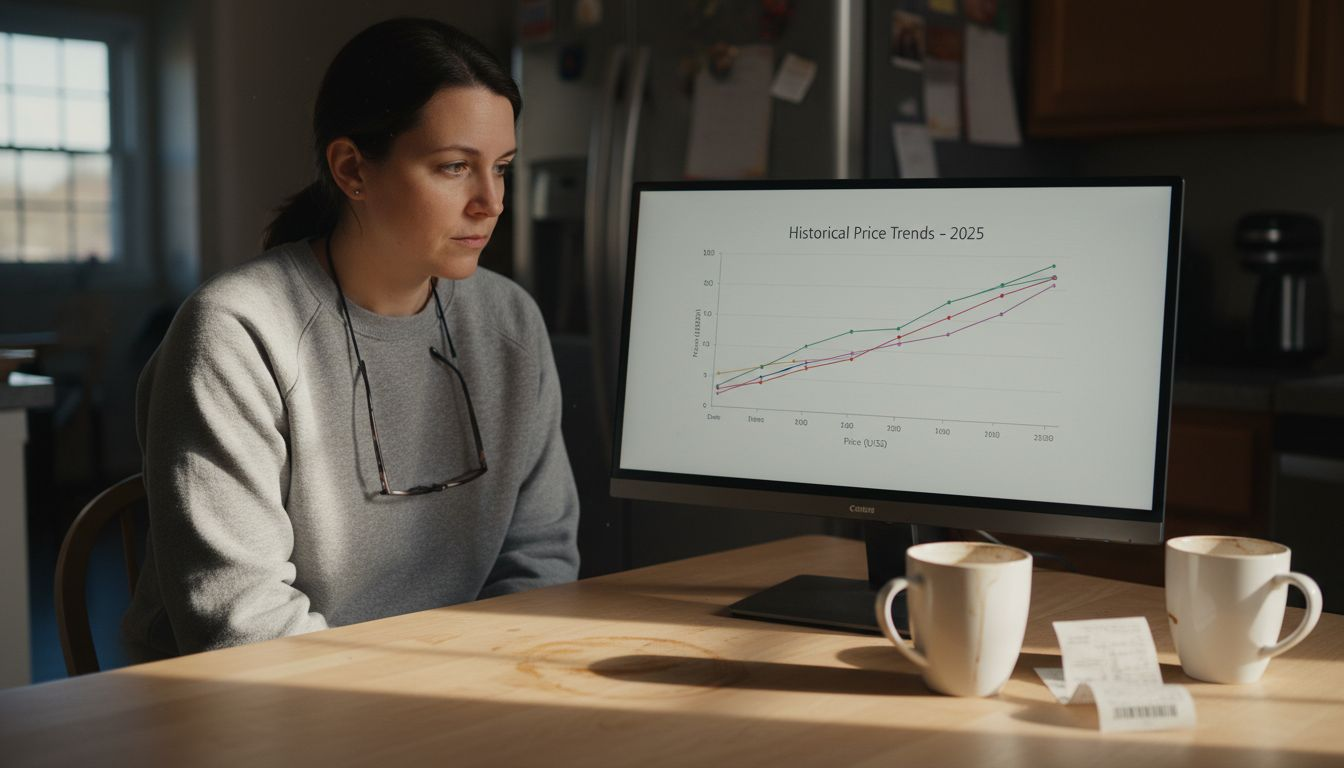
Spotting Authentic Discounts Detailed price history charts enable identifying seasonal and sale pricing patterns that repeat annually. You recognize when current prices represent true lows versus temporary dips that will go lower. Many retailers artificially inflate prices before sales to exaggerate discount percentages.
Seasonal Timing Optimization Historical data reveals consistent patterns like electronics dropping 40% each Black Friday or patio furniture discounting 60% each August. These predictable trends inform whether to buy immediately or wait for scheduled seasonal markdowns. Trend analysis prevents impulsive purchases made without proper timing context.
Visual Confidence Through Charts Graphical price histories communicate trends instantly without requiring numerical analysis. You see at a glance whether current prices sit at historical highs, lows, or average levels. This visual clarity accelerates decision-making and builds purchasing confidence.
Price History Feature Comparison
| Feature | Basic Tools | Advanced Tools | Premium Tools |
|---|---|---|---|
| Historical Data Range | 30 days | 90 days | 12+ months |
| Chart Visualization | Limited | Interactive | Multi-product overlay |
| Trend Analysis | Manual | Automated alerts | AI predictions |
| Export Capability | No | CSV only | Multiple formats |
Strategic Buying Advantages
- Compare current prices against 6-month averages to assess deal quality
- Identify artificial price inflation preceding promotional periods
- Set target prices based on historical lows rather than guessing
- Track competitor pricing patterns to predict upcoming sales
Understanding why tracking price history matters elevates your shopping strategy from reactive to proactive. You stop chasing every advertised sale and start purchasing strategically when data confirms genuine value.
Stay Competitive with Multi-Store and Multi-Product Monitoring
Broad retailer coverage multiplies your savings potential by enabling true price comparison and alternative discovery. Single-store monitoring leaves money on the table by ignoring better deals available elsewhere.
Cross-Retailer Price Intelligence Identical products often vary 20% to 40% in price across different merchants at any given moment. Multi-store monitoring reveals these disparities and directs you to the lowest current price. This comparison advantage compounds over time as you consistently purchase from whichever retailer offers the best deal.
Enhanced Deal Capture Rates Platforms monitoring 1000+ stores report 17% higher user savings on average compared to single-store tools. Comprehensive coverage ensures you capture promotions regardless of which retailer initiates them. Limited monitoring creates blind spots where significant savings opportunities hide.
Multi-Store Feature Comparison
| Platform | Retailer Coverage | Alert Types | Price History |
|---|---|---|---|
| PriceLix | 1000+ stores | Real-time, email, custom thresholds | 12 months |
| Scrapeless | 500+ stores | Email, API | 6 months |
| Rakuten | 2500+ stores | Email only | 3 months |
| CamelCamelCamel | Amazon only | 12+ months |
Product Diversification Benefits Monitoring multiple product categories simultaneously reveals cross-category sales patterns and bundling opportunities. You discover when complementary products discount together, enabling strategic bulk purchases that maximize per-transaction savings.
Pro Tip: Organize tracked items into retailer-specific folders within your dashboard to quickly identify which merchants consistently offer the best prices for specific product categories. This pattern recognition guides future first-look retailers for new purchases.
Implementing proven best price tracking strategies requires tools that scale across thousands of retailers without degrading alert quality or user experience. Comprehensive coverage transforms occasional savings into consistent purchasing advantages.
Comparing Top Price Alert Tools in 2025: Features & Differentiators
Understanding how leading platforms differ helps you select the tool that best matches your shopping priorities and technical comfort level. Feature sets vary significantly despite similar core functionality.
Platform Capability Overview
| Feature | PriceLix | Scrapeless | Rakuten Alerts |
|---|---|---|---|
| Real-Time Alerts | Under 5 minutes | 15 to 30 minutes | 1 to 2 hours |
| Customization | Granular thresholds | Moderate | Basic |
| AI Predictions | Beta | Full integration | Limited |
| Store Coverage | 1000+ | 500+ | 2500+ |
| Interface | Modern dashboard | Technical | Simple |
| Price History | 12 months | 6 months | 3 months |
Alert Customization Depth Top tools vary notably in alert customization, real-time capability, AI integration, and user interface simplicity. PriceLix offers the most granular control with custom percentage thresholds, category-specific rules, and multi-channel delivery options. Rakuten provides simpler email-only notifications suited to casual shoppers who prefer straightforward functionality.
Real-Time Capability Differences Alert latency directly impacts deal capture success during competitive sales periods. PriceLix delivers notifications within 5 minutes of detected changes, while Rakuten’s 1 to 2 hour delay causes missed opportunities on limited inventory items. This speed differential proves critical for popular products that sell out quickly.
Emerging AI Integration AI-powered price alert tools improve prediction accuracy and personalized notifications in 2025 and beyond. Scrapeless leads in AI implementation with predictive pricing models that forecast future discounts based on historical patterns. These predictions help you decide whether to buy now or wait for deeper markdowns.
User Experience Considerations
- PriceLix balances power with accessibility through intuitive visual design
- Scrapeless targets technical users comfortable with advanced analytics
- Rakuten prioritizes simplicity over customization depth
- AI price alert tools require steeper learning curves initially but deliver sophisticated insights
Exploring features of modern price trackers reveals capabilities beyond basic alerts that enhance long-term tracking effectiveness. Advanced features like bulk import, export analytics, and collaborative tracking lists provide additional value for power users.
Considerations and Limitations of Price Alerts
Understanding common pitfalls helps you maintain effective price monitoring over time without abandoning tools due to frustration or diminished returns. Every system has constraints that require user awareness and adjustment.
Alert Fatigue Risks Alert fatigue caused by excessive notifications significantly reduces tool effectiveness as users begin ignoring or disabling alerts entirely. Start conservatively with fewer tracked items and tighter thresholds, then expand gradually. Quality beats quantity when building sustainable monitoring habits.
Data Accuracy Challenges
- Price scraping occasionally misses flash sales lasting under an hour
- Retailer website changes can temporarily break data collection
- Out-of-stock items may display cached prices incorrectly
- Shipping costs often excluded from price comparisons
Coverage Limitations No single platform monitors every online retailer, creating potential blind spots in your price intelligence. Smaller specialty merchants and international stores frequently lack coverage. This gap necessitates occasional manual checks for niche products.
Software Dependency Concerns Relying entirely on automated alerts creates vulnerability if the platform experiences downtime or discontinues service. Maintain basic manual monitoring skills and backup tracking methods for your highest-priority purchases.
Recommendation Balance Pair alerts with regular price history review rather than purchasing immediately upon every notification. This dual approach prevents reactivity while maintaining responsiveness. Context always improves decision quality over pure automation.
Learning the discount alerts meaning includes understanding these limitations to set realistic expectations. Awareness of price alert app limitations prevents disappointment and helps you work within system constraints effectively.
Situational Recommendations: Best Price Alert Tools for Different Shopper Types
Matching platforms to shopping styles maximizes tool effectiveness and user satisfaction. Different priorities demand different feature emphases and complexity levels.
Deal Hunters and Power Users Aggressive bargain seekers benefit most from PriceLix’s rapid alerts, granular customization, and extensive store coverage. The platform’s real-time notifications and detailed price histories support active deal hunting during major sales events. Price alerts best suit budget-conscious shoppers and deal hunters for maximizing sales event savings.
Casual Occasional Shoppers Rakuten Price Alerts provides straightforward email notifications without overwhelming features that casual users never utilize. The simple interface requires minimal learning curve and setup time. Basic functionality suffices when monitoring 5 to 10 items quarterly rather than hundreds continuously.
Multi-Category Bulk Buyers Scrapeless serves professionals and serious shoppers who value AI predictions and advanced analytics over interface simplicity. The platform’s predictive capabilities help optimize large purchase timing across diverse product categories. Export features enable external analysis for business or resale applications.
Emerging AI-Enhanced Options Next-generation tools integrate machine learning to predict optimal purchase timing and personalize alert thresholds automatically. These platforms learn your preferences over time, reducing manual configuration while improving notification relevance. Early adopters gain competitive advantages as AI accuracy improves.
Configuration by Shopper Type
- Deal hunters: Hourly checks, 5% to 10% thresholds, all notification channels
- Casual shoppers: Daily checks, 20% to 30% thresholds, email only
- Professionals: Real-time monitoring, custom category rules, API integration
- Budget shoppers: Focus on frequently purchased categories with aggressive thresholds
Finding best tools for deal hunters requires evaluating which platforms align with your specific shopping frequency, product categories, and desired involvement level. The right match feels effortless rather than burdensome.
Discover the Best Price Alert Tools with PriceLix
Ready to transform how you shop online and capture substantial savings through intelligent price monitoring? PriceLix combines real-time alerts, comprehensive store coverage, and detailed price histories into one intuitive platform designed specifically for smart shoppers.
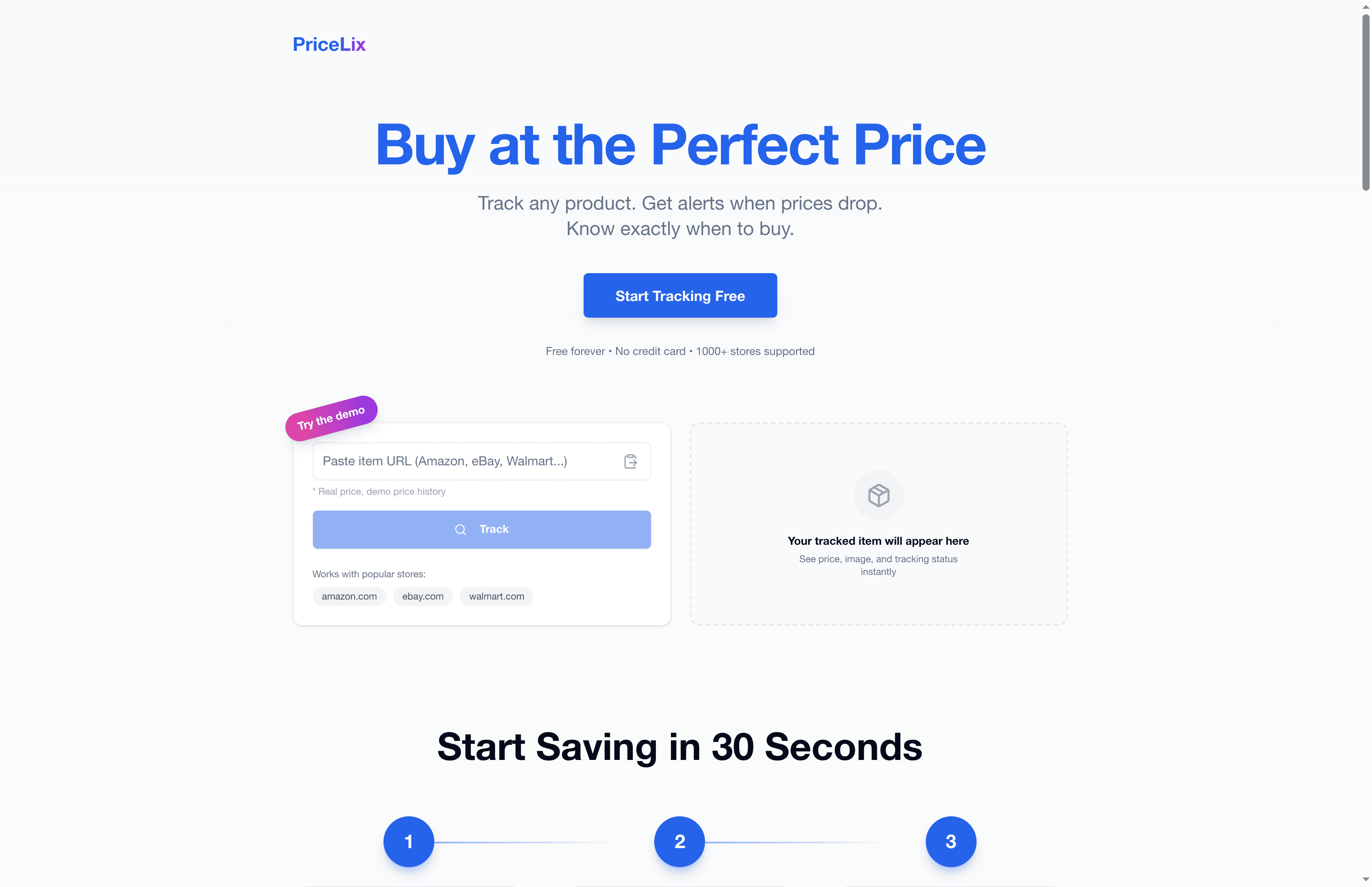
Explore our comprehensive guides on types of online price tracking to understand all available monitoring strategies beyond basic alerts. Implement proven best price tracking strategies that power users employ to maximize their annual savings. Discover essential features of modern price trackers that separate powerful tools from basic notification services. Start saving smarter today.
Frequently Asked Questions
What types of shoppers benefit most from price alerts?
Budget-conscious buyers, deal hunters, and frequent online shoppers gain the most value from price alerts. Parents tracking children’s products, tech enthusiasts monitoring electronics releases, and anyone making regular household purchases see substantial annual savings. Casual shoppers buying infrequently see less dramatic returns but still avoid overpaying when they do purchase.
How do I avoid alert fatigue while maintaining good coverage?
Start by tracking 10 to 15 high-priority items with conservative thresholds of 20% to 30% price drops. Gradually add products as you refine your notification preferences and tolerance. Use category-specific alert rules to manage notifications intelligently, enabling aggressive monitoring for priority categories while relaxing thresholds for less urgent items. Review and prune your tracked list monthly to remove purchased or no-longer-relevant products.
Should I trust price alerts for major purchases?
Price alerts provide valuable timing intelligence but combine them with price history review before major purchases. Verify that current “sale” prices represent genuine discounts by examining 6 to 12 month trends. Cross-reference alerts across multiple platforms when possible to confirm accuracy. Major purchases warrant extra diligence beyond trusting a single notification.
How frequently should price tracking tools check prices?
Daily checks suffice for most products and shopping styles, balancing current information with manageable notification volumes. Enable hourly monitoring only for high-priority items during known sale periods like Black Friday or Prime Day. Real-time tracking makes sense for limited-quantity products or competitive purchases where minutes matter.
Can price alerts help with international shopping?
Yes, though coverage varies significantly by platform and target country. Many tools monitor major international retailers like Amazon’s global storefronts, eBay international, and large European or Asian merchants. Verify your chosen platform explicitly supports your target international stores before committing. Currency conversion features help compare prices across regions accurately.
Do price alert tools work for all product categories?
Most tools excel with consumer electronics, home goods, fashion, and widely distributed products sold across multiple retailers. Specialized categories like fresh groceries, custom products, or small specialty retailer exclusives often lack coverage. Platform documentation usually specifies supported retailers and product types clearly.