
Price Drops Meaning – Why Timing Matters Most
Staring at a product’s price bouncing up and down on your favorite American marketplace can feel confusing when you are hoping to score a real deal. Tech-savvy shoppers know that not every price drop means instant value, especially as dynamic pricing strategies shift costs based on demand and competition. This guide uncovers how understanding price patterns and tracking strategies helps you cut through the noise, making your next big electronics buy genuinely rewarding.
Table of Contents
- What Price Drops Really Mean Online
- Different Types of Price Drops in E-Commerce
- How Automatic Price Alerts Function
- Tracking Price Changes Versus Manual Monitoring
- Common Mistakes When Interpreting Price Drops
Key Takeaways
| Point | Details |
|---|---|
| Understanding Price Drops | Price drops are complex indicators that reflect market dynamics and not just discounts. Consumers should analyze historical pricing to assess true value. |
| Types of Price Drops | Recognize various strategies like seasonal clearance, flash sales, and dynamic pricing to make informed purchasing decisions. |
| Automatic Alerts | Utilize automated price alerts for efficient tracking of price changes, ensuring you don’t miss out on potential savings. |
| Avoid Common Mistakes | Be aware of cognitive biases that may distort your interpretation of price drops and always consider market context before purchasing. |
What Price Drops Really Mean Online
In the digital shopping landscape, price drops represent more than just a temporary discount - they signal strategic opportunities for savvy consumers to save money. Consumer behavior research reveals fascinating insights into how online shoppers interpret and respond to price fluctuations.
Price drops online are complex signals that go beyond simple monetary reductions. They represent intricate market dynamics involving:
- Inventory management strategies
- Seasonal sales cycles
- Competitive pricing pressures
- Merchant liquidation tactics
- Consumer demand fluctuations
Consumers have become increasingly sophisticated in tracking and understanding these price movements. When an item’s price decreases, it doesn’t automatically mean the product is less valuable. Instead, it often indicates sophisticated pricing algorithms working behind the scenes, adjusting costs based on real-time market conditions.
Interestingly, economic research suggests that while individual product prices fluctuate, broader economic trends like inflation play a significant role in determining long-term pricing strategies. Smart online shoppers now use advanced price tracking tools to monitor these changes, transforming price drops from random events into strategic purchasing opportunities.
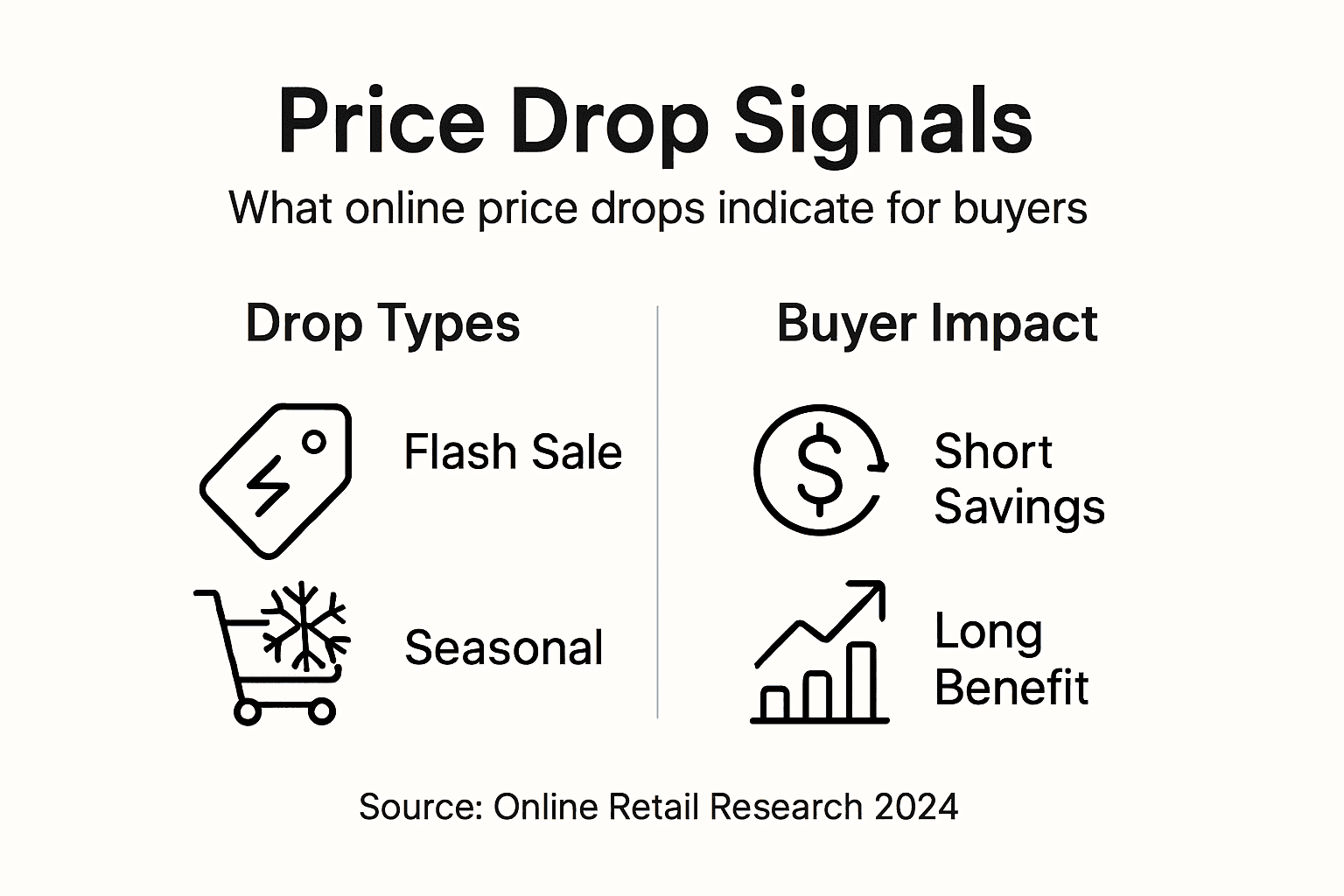
Pro tip: Always compare the current price drop against the product’s historical pricing trend to determine if it represents a genuine value opportunity.
Different Types of Price Drops in E-Commerce
Price drops in online shopping aren’t uniform - they represent complex strategies designed to attract consumers and manage inventory. E-commerce pricing patterns reveal multiple distinct approaches that merchants employ to influence purchasing decisions.
The primary types of price drops in digital marketplaces include:
- Seasonal Clearance Drops: End-of-season sales where retailers liquidate inventory
- Flash Sales: Extremely short-term, deeply discounted price reductions
- Competitive Price Matching: Automatic price adjustments to match competitor rates
- Volume-Based Discounts: Price reductions triggered by bulk purchase potential
- Psychological Pricing Drops: Strategic reductions designed to trigger consumer impulse buying
The Amazon Effect has fundamentally transformed how online retailers approach pricing strategies. Dynamic pricing algorithms now enable near-instantaneous adjustments based on real-time market demand, consumer behavior, and competitive landscapes. These sophisticated systems can trigger price drops within minutes, creating a hyper-responsive digital marketplace where prices fluctuate continuously.

Understanding these nuanced price drop strategies empowers consumers to make more informed purchasing decisions. By recognizing the underlying motivations behind price reductions, shoppers can distinguish between genuine value opportunities and marketing tactics designed to create a false sense of urgency.
Here’s how seasonal, flash, and dynamic price drops compare in online retail:
| Price Drop Type | Typical Duration | Buyer Benefit | Retailer Objective |
|---|---|---|---|
| Seasonal Clearance | Weeks to months | Lower prices on older items | Move unsold inventory |
| Flash Sale | Hours to a day | Deep but short-lived savings | Drive urgent purchases |
| Dynamic Algorithmic Drop | Minutes to days | Responsive to market shifts | Adapt quickly to competition |
Pro tip: Track price histories for at least 30 days before making a purchase to accurately determine whether a current price drop represents a genuine discount.
How Automatic Price Alerts Function
Automatic price alerts represent a sophisticated digital tracking system designed to help consumers monitor product pricing with minimal effort. Alerting system components operate through complex mechanisms that continuously scan pricing data across multiple platforms.
The core functioning of automatic price alerts involves several critical stages:
- Data Collection: Continuous monitoring of product prices across multiple retailers
- Threshold Definition: Setting specific price drop parameters
- Real-Time Tracking: Instantaneous price comparison against predefined benchmarks
- Notification Dispatch: Immediate alerts via email, mobile, or app notifications
- Historical Price Comparison: Analyzing current prices against previous pricing trends
Alert mechanism design reveals three fundamental components that power these intelligent systems. First, a detection mechanism identifies price changes. Second, predefined triggers activate when specific conditions are met. Finally, a notification system delivers timely information directly to the consumer, enabling rapid decision-making.
Modern price alert technologies leverage advanced algorithms that go beyond simple price tracking. They incorporate machine learning techniques to predict potential future price movements, analyze market trends, and provide users with strategic insights about when to make a purchase.
Pro tip: Configure multiple price alert thresholds to capture both minor discounts and significant price drops, maximizing your potential savings strategy.
Tracking Price Changes Versus Manual Monitoring
Navigating the world of online shopping requires strategic price monitoring, and consumers today face a critical choice between time-consuming manual tracking and automated price change detection. Automated price tracking tools have revolutionized how shoppers make purchasing decisions by providing real-time, comprehensive price insights.
The key differences between manual and automated price tracking include:
-
Manual Monitoring:
- Requires constant personal time investment
- Subject to human error and inconsistency
- Limited to sporadic price checks
- Dependent on individual’s availability
-
Automated Tracking:
- Continuous 24/7 price surveillance
- Precise and objective data collection
- Instant notifications of price changes
- Comprehensive historical price analysis
Consumer price research highlights the significant advantages of systematic price tracking. Automated systems eliminate the limitations of manual monitoring by providing comprehensive, unbiased price information that helps consumers make more informed purchasing decisions.
The technological evolution of price tracking has transformed consumer shopping strategies. Advanced algorithms now analyze complex pricing patterns, predict future price movements, and provide strategic insights that were previously impossible through manual methods.
See how automation enhances price tracking for online shoppers:
| Monitoring Method | Time Commitment | Accuracy | Historical Data Access |
|---|---|---|---|
| Manual Checking | High, frequent | Prone to error | Rarely comprehensive |
| Automated Alerts | Minimal, passive | Consistently high | Instant, detailed insights |
Pro tip: Combine automated price tracking with occasional manual checks to create a comprehensive price monitoring strategy that maximizes your potential savings.
Common Mistakes When Interpreting Price Drops
Understanding price drops requires more nuance than simply celebrating a lower number. Consumer price research reveals that shoppers frequently misinterpret price fluctuations, leading to potentially misguided purchasing decisions.
The most common mistakes consumers make when interpreting price drops include:
-
Assuming Continuous Trends:
- Expecting price drops to continue indefinitely
- Believing a single price reduction guarantees future savings
- Overlooking market volatility and dynamic pricing
-
Misunderstanding Contextual Factors:
- Ignoring product quality changes
- Failing to consider seasonal variations
- Neglecting broader economic influences
- Mistaking liquidation sales for genuine value
Behavioral economic research demonstrates that buyers often develop cognitive biases when interpreting price movements. These psychological traps can lead to impulsive or suboptimal purchasing decisions that fail to maximize long-term value.
Sophisticated consumers recognize that price drops are complex signals requiring comprehensive analysis. They look beyond the immediate reduction to understand underlying market dynamics, product lifecycle stages, and potential future price trajectories.
Pro tip: Always cross-reference price drops against historical pricing data and current market conditions before making a purchasing decision.
Master Price Drops with Smart Timing and Automated Alerts
Understanding the true meaning behind price drops is crucial to saving money and avoiding impulse buys. The article highlights the challenges shoppers face navigating confusing price patterns and the importance of tracking historical trends and real-time changes. If you find yourself overwhelmed trying to determine when a price drop is a genuine opportunity or just a marketing tactic, PriceLix provides exactly the solution you need. Our platform automates the tedious work of monitoring prices across Amazon, eBay, Walmart, and thousands of other stores so you never miss a strategic buying moment.
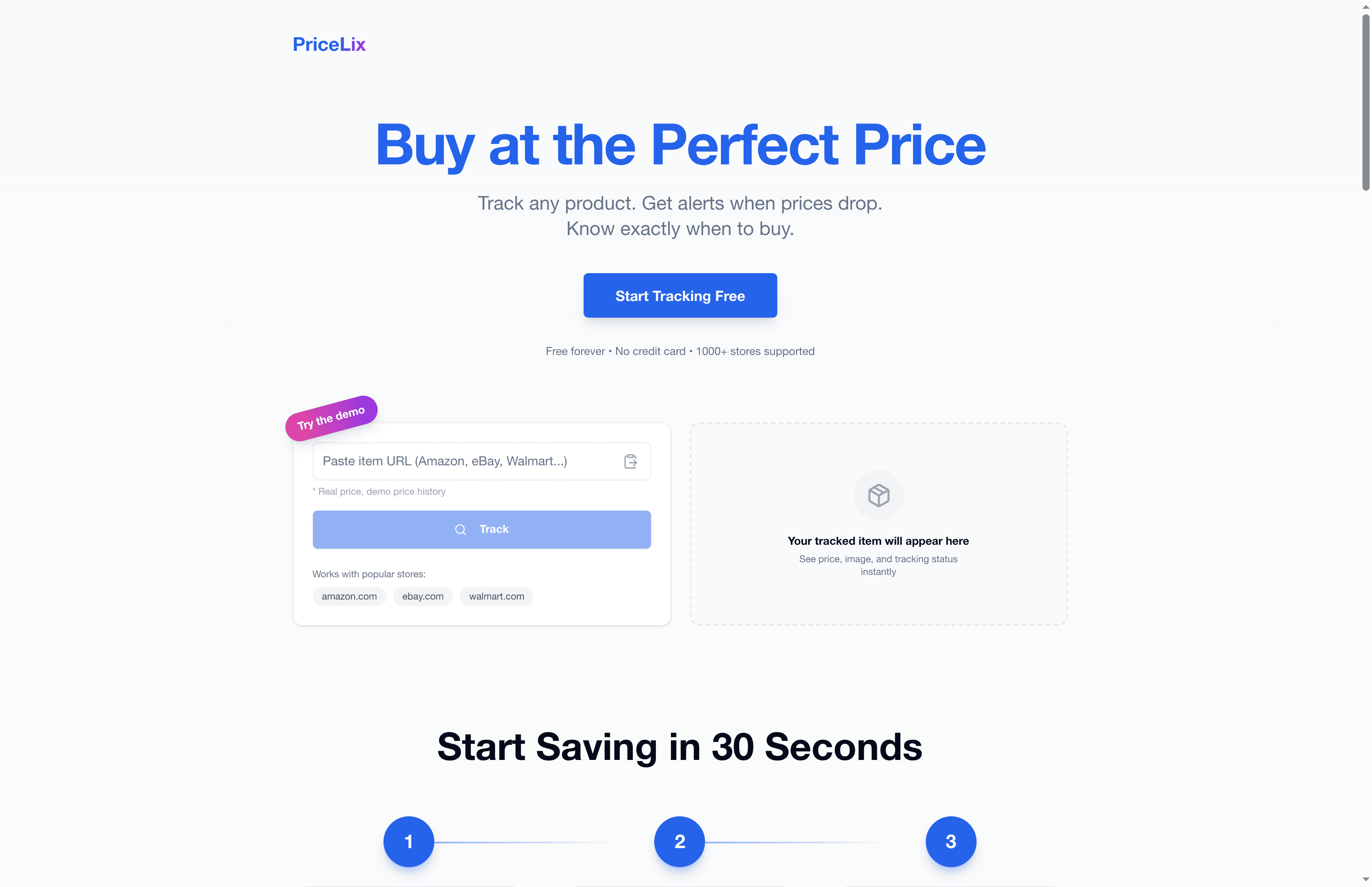
Take control of your online shopping with PriceLix and enjoy features like instant price drop alerts, detailed historical price charts, and a user-friendly dashboard that makes timing your purchases effortless. Don’t let confusing pricing algorithms dictate when you buy. Visit PriceLix today and turn every price drop into a smart saving opportunity. Start tracking now and gain confidence knowing you are always purchasing at the best possible price.
Frequently Asked Questions
What do price drops really mean in online shopping?
Price drops in online shopping signal strategic opportunities for consumers to save money, reflecting inventory management, seasonal sales, competitive pricing pressures, and consumer demand fluctuations.
How can I determine if a price drop is genuine?
To determine if a price drop is genuine, compare the current price against the product’s historical pricing trends and track price history for at least 30 days before making a purchase.
What are the different types of price drops to watch out for?
Different types of price drops include seasonal clearance drops, flash sales, competitive price matches, volume-based discounts, and psychological pricing drops.
How do automatic price alerts work in tracking price changes?
Automatic price alerts continuously monitor product prices across multiple retailers, sending real-time notifications when predefined price drop parameters are met, and analyze historical price trends to assist in making informed purchasing decisions.