
Role of price history in smarter online shopping 2026
Over 60% of online shoppers purchase products without checking price history, often overpaying by 15 to 30% compared to historical lows. This reactive buying habit fueled by flash sales and limited time offers costs consumers billions annually. Understanding price history transforms shopping from guesswork into strategic timing, revealing authentic deals and preventing costly impulse purchases that drain your budget.
Table of Contents
- Understanding Price History: What It Is And Why It Matters
- How Price History Influences Your Buying Timing And Savings
- Common Misconceptions About Price Drops And Sales
- Comparing Price History Tools And Platforms
- How To Read And Use Price History Charts And Data
- Practical Steps To Integrate Price History Into Your Shopping Routine
- Limitations And Challenges Of Relying On Price History
- Make Smarter Purchases With PriceLix
- Frequently Asked Questions
Key takeaways
| Point | Details |
|---|---|
| Price history reveals authentic discounts | Historical data exposes fake sales and inflated original prices that mislead shoppers. |
| Timing purchases strategically maximizes savings | Tracking typical price ranges and lowest points enables optimal buying decisions. |
| Tools differ significantly in coverage and alerts | Multi-retailer platforms with automated alerts outperform single-site trackers. |
| Charts require interpretation skills | Understanding volatility patterns and seasonal cycles prevents impulsive mistakes. |
| Data limitations exist across all platforms | Incomplete records and dynamic pricing create reliability challenges. |
Understanding price history: what it is and why it matters
Price history is the recorded trail of a product’s prices over weeks, months, or years across online retailers. Online prices fluctuate constantly due to demand shifts, seasonal promotions, competitor pricing, and inventory levels. A laptop priced at $899 today might have been $749 last month and $1,099 three months ago.
These fluctuations directly influence how consumers plan purchases. Shoppers who understand price history patterns wait for optimal moments rather than buying at inflated prices. Price history reveals typical ranges and discount cycles that marketing claims often obscure.
Without this context, shoppers react to momentary price changes or persuasive sales messaging. A 20% discount sounds impressive until historical data shows the item regularly sells 35% below its current sale price. Price history cuts through promotional noise to expose genuine value.
Key benefits include:
- Identifying true lowest prices versus temporary marketing discounts
- Recognizing seasonal patterns that predict future price drops
- Avoiding purchases during artificially high pricing periods
- Building confidence in purchase timing through data-backed decisions
This knowledge transforms anxious, reactive shopping into informed, strategic purchasing. You stop second-guessing whether you paid too much because historical data confirms you captured a genuine low price.
How price history influences your buying timing and savings
Historical price data enables precise identification of typical and lowest price points for any product. When you see a smartphone listed at $699, price history shows whether this represents a good deal or if it regularly drops to $599. This comparison prevents premature purchases at mediocre prices.
Impulsive buying triggered by recent temporary drops becomes avoidable. A sudden $50 price reduction creates urgency, but historical data might reveal the item frequently sells $100 lower during predictable seasonal sales. Strategic tracking approaches emphasize patience over reaction.

Predicting future price drops becomes possible through pattern recognition. If a product consistently reaches its annual low in November, waiting until then makes financial sense. Historical cycles repeat across categories, from electronics to home goods.
Setting alerts for historically low prices optimizes purchase timing without constant manual checking. When your tracked item hits a price at or below its historical minimum, you receive immediate notification. Automated monitoring systems eliminate the stress of missing deals while preventing overpayment.
Research confirms these strategies deliver measurable results. Shoppers who receive alerts at historically low prices increase savings by up to 25% compared to impulsive buying. The difference compounds across multiple purchases throughout the year.
Pro Tip: Wait 48 hours after seeing a historical low price to confirm stability before purchasing, avoiding brief dips followed by immediate rebounds that trap hasty buyers.
The timing advantage extends beyond individual savings. Confidence in your purchase decisions reduces buyer’s remorse and returns. You know you bought at the right moment because data supports your choice.
Common misconceptions about price drops and sales
Many shoppers assume all sales represent genuine savings, but this belief costs them substantially. Retailers frequently inflate baseline prices before applying discounts, creating the illusion of value. A 40% off sale means nothing if the original price was artificially raised 50% the week before.
Flash sales and recent drops often sit above average historical prices despite their urgency messaging. That 24-hour lightning deal priced at $79.99 might exceed the item’s typical $69.99 price over the past six months. Time pressure obscures rational comparison.
Price history data exposes these deceptive practices systematically. Comparing current sale prices against months of historical records reveals whether you’re seeing a genuine deal or clever marketing. The contrast between claimed savings and actual historical lows is often shocking.
Key myths to avoid:
- Assuming recent price drops always indicate good timing
- Believing original prices reflect typical market value
- Trusting percentage discounts without historical context
- Accepting limited time pressure as reason to buy immediately
Awareness of these tactics prevents reactive purchases driven by false urgency. When you recognize that today’s sale price matches or exceeds typical pricing, waiting becomes the smarter choice.
“Nearly 40% of online discounts are based on artificially inflated reference prices that mislead consumers into perceiving greater savings than actually exist.”
This manipulation thrives on shopper ignorance of price history. Retailers count on consumers lacking historical context when evaluating deals. Price tracking eliminates this information asymmetry, restoring your advantage as a buyer.
Comparing price history tools and platforms
Selecting effective price tracking tools requires understanding feature differences across platforms. PriceLix offers comprehensive coverage across over 1,000 retailers including Amazon, Walmart, eBay, and Target with automated daily price checks requiring no browser extensions. Honey focuses primarily on coupon codes with limited price history depth. CamelCamelCamel specializes exclusively in Amazon products with detailed historical charts but zero multi-retailer coverage.
| Tool | Retailer Coverage | Alert System | Browser Extension Required | Key Strength |
|---|---|---|---|---|
| PriceLix | 1,000+ stores | Automated daily alerts | No | Multi-platform tracking dashboard |
| Honey | Select partners | Limited price alerts | Yes | Coupon code integration |
| CamelCamelCamel | Amazon only | Email/RSS alerts | No | Deep Amazon history |
| Keepa | Amazon focused | Customizable alerts | Optional | Detailed Amazon analytics |
Multi-platform tracking delivers superior value compared to single-site limitations. Products often appear across multiple retailers at different prices simultaneously. Tracking only Amazon means missing better deals on Walmart or Best Buy.
Alert systems and user-friendly interfaces separate effective tools from frustrating ones. Automated notifications when prices hit your target eliminate constant manual checking. Clear, intuitive dashboards displaying all tracked items at a glance save time and reduce decision fatigue.
Considerations include update frequency, historical data depth, and mobile accessibility. Tools updating prices once daily miss rapid fluctuations, while hourly updates capture short-lived deals. Historical data spanning years provides better pattern recognition than 90-day windows.
Pro Tip: Choose tools offering wide retailer coverage and automated alerts that notify you immediately when tracked items reach historical lows, maximizing your savings potential without constant monitoring effort.
Comprehensive tracking strategies emphasize combining broad coverage with smart alerts. This approach ensures you never miss genuine deals while avoiding false urgency from isolated price movements.
How to read and use price history charts and data
Price history charts display time on the horizontal axis and price on the vertical axis, with data points showing recorded prices at specific dates. Understanding these elements enables confident interpretation. A chart spanning 12 months reveals seasonal patterns invisible in 30-day views.
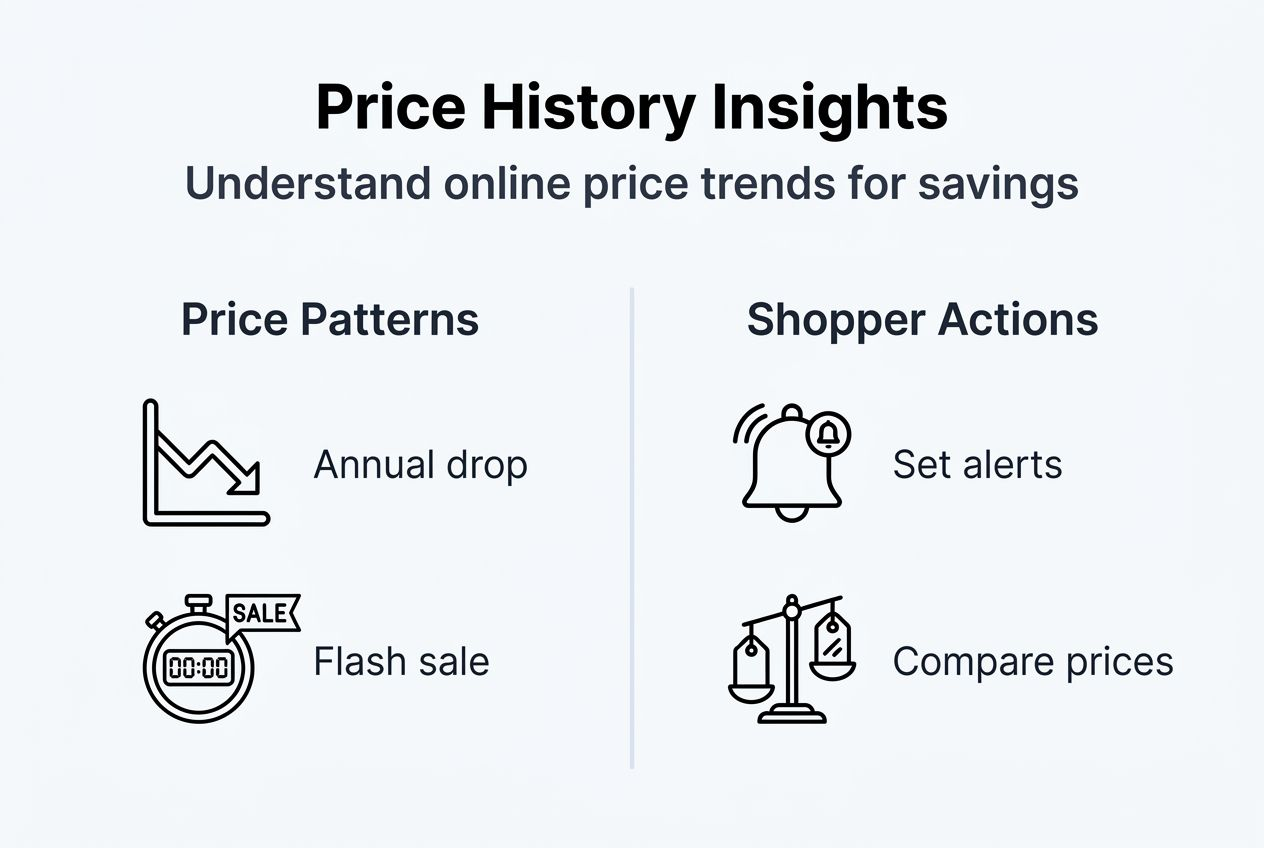
Recognizing price volatility versus steady downward trends prevents misreading temporary fluctuations as lasting changes. High volatility with frequent spikes and drops suggests unpredictable pricing, while gradual downward slopes indicate improving value over time. Sharp recent drops after stable periods may signal either genuine sales or temporary anomalies.
Seasonal and promotional cycles appear as recurring patterns in longer timeframe charts. Electronics typically hit annual lows during Black Friday and back-to-school periods. Home goods drop during spring cleaning seasons. These predictable cycles enable strategic purchase planning.
Using historical lows in charts to set smart purchase alerts maximizes savings efficiency. If a product’s 12-month low was $149.99, setting your alert at $155 ensures notification for near-optimal prices while avoiding missed opportunities from waiting for exact historical minimums.
Key chart reading skills:
- Identifying timeframe scope to understand pattern context
- Distinguishing noise from meaningful price movements
- Spotting recurring seasonal discount windows
- Comparing current prices against historical ranges rather than isolated points
Pro Tip: Cross-reference multiple data points including average price, median price, and historical low before purchasing to avoid impulsive decisions based on single favorable metrics that obscure unfavorable context.
Effective monitoring techniques emphasize holistic chart analysis over reactive responses to recent changes. This disciplined approach builds genuine savings over time.
Practical steps to integrate price history into your shopping routine
Integrating price history tracking into daily shopping starts with selecting key items worth monitoring. Focus on higher-value purchases like electronics, appliances, and furniture where price differences significantly impact your budget. Tools like PriceLix simplify tracking across multiple retailers simultaneously.
- Create a tracking list of desired products across retailers using comprehensive platforms
- Review price history charts weekly to understand typical ranges and volatility patterns
- Set alerts at historically low prices rather than arbitrary discount percentages
- Compare multi-store data before purchasing to confirm best available pricing
- Document your savings to reinforce the habit and justify continued tracking effort
Regularly monitoring price history charts builds intuition about pricing context over time. Weekly five-minute reviews keep you informed without becoming burdensome. You develop a sense for whether current prices represent good, average, or poor value.
Setting alerts for historical lows instead of reacting immediately to any price drop requires discipline but delivers superior results. Alerts trigger only when prices reach genuinely optimal levels, filtering out mediocre discounts that waste your money.
Checking multi-store data confirms best available prices before purchase. The same laptop might cost $799 on Amazon, $749 on Walmart, and $729 on Best Buy simultaneously. Single-retailer tracking misses these cross-platform savings opportunities.
Avoiding common mistakes preserves your savings gains. Incomplete data traps occur when trusting limited historical windows or single-retailer views. Impulsive buying mistakes happen when ignoring your own alerts and purchasing during price spikes due to false urgency.
Pro Tip: Combine automated alerts with planned purchase timing by setting alerts 30 days before you need an item, allowing time to capture optimal pricing without last-minute pressure that forces suboptimal purchases.
Research demonstrates the financial impact of systematic approaches. Shoppers who track prices and wait for alerts save up to 25% compared to impulsive buying. Automation workflows amplify these benefits by eliminating manual monitoring burden while maintaining optimal timing.
Limitations and challenges of relying on price history
Price history datasets face inherent completeness limitations due to restricted platform transparency. Retailers don’t always expose all price changes publicly, creating gaps in tracking data. Private sales, member-only pricing, and regional variations often escape standard monitoring tools.
Dynamic pricing algorithms cause frequent unpredictable price changes that historical patterns can’t forecast. Retailers adjust prices based on your browsing history, location, device type, and real-time demand fluctuations. These personalized prices vary between users viewing identical products simultaneously.
Single-platform histories mislead without cross-retailer comparison context. Amazon’s price history for a product tells you nothing about whether Target consistently offers better value. Narrow data creates false confidence in suboptimal decisions.
Tools vary widely in update frequency and coverage breadth, affecting reliability. Some platforms check prices once daily, missing short-lived deals. Others cover only major retailers, ignoring smaller stores with competitive pricing. This inconsistency makes tool selection critical.
Key limitations to understand:
- Historical data may lack recent price changes due to monitoring delays
- Flash sales and limited-quantity deals often disappear before tracking systems record them
- Retailer pricing errors or glitches create misleading historical anomalies
- Discontinued products lose tracking coverage despite continued third-party availability
Shoppers should use price history as one decision factor among several, not absolute truth. Combine historical data with current market research, competitor pricing, and product review analysis. Understanding algorithmic impacts helps contextualize what price history can and cannot reveal.
These limitations don’t negate price history’s value but frame realistic expectations. Imperfect data still dramatically outperforms no data when making purchase decisions.
Make smarter purchases with PriceLix
You now understand how price history transforms reactive shopping into strategic savings. PriceLix delivers comprehensive multi-retailer price tracking across 1,000+ stores with automated daily checks requiring no browser extensions. Our platform provides clear historical charts and instant alerts when your tracked items hit genuinely low prices.
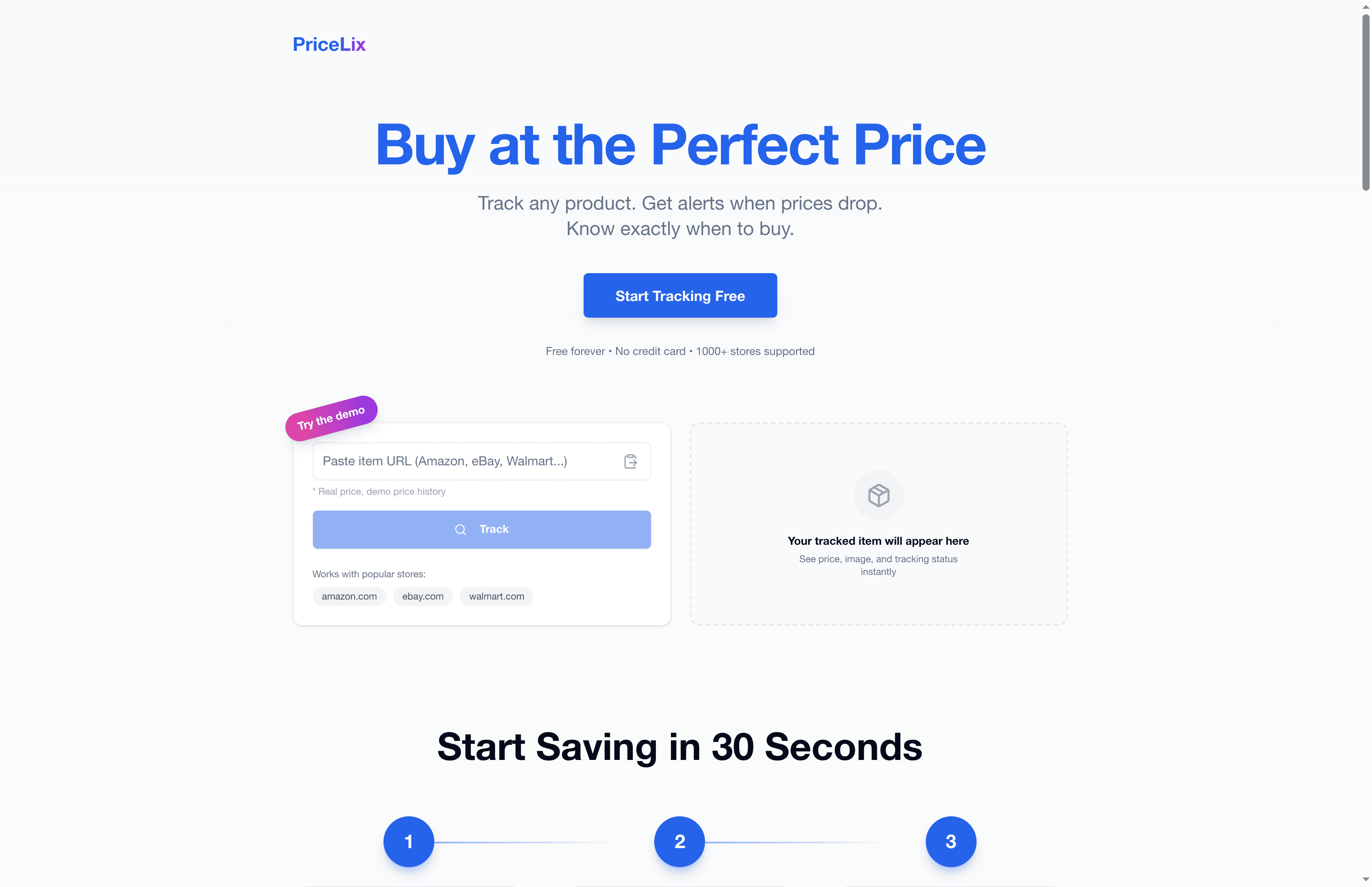
We solve the data gaps and coverage limitations that plague single-retailer tools. Track products simultaneously across Amazon, Walmart, eBay, Target, and hundreds more from one intuitive dashboard. You catch authentic historical lows and avoid fake discounts that cost other shoppers thousands annually. Our alert system notifies you the moment tracked items reach optimal prices, eliminating constant manual checking while ensuring you never miss real deals. Start tracking prices today and see how proven strategies combined with systematic approaches deliver measurable savings on every purchase.
Frequently asked questions
What is price history in online shopping?
Price history records how much a product cost at different times across days, weeks, or months. It shows pricing patterns and trends rather than just today’s price. This historical view reveals whether current prices represent good value or inflated costs.
How can price history help me save money?
Price history identifies typical price ranges and exposes genuinely low prices versus fake discounts. It enables timing purchases for historically optimal moments. You avoid overpaying by recognizing when current prices exceed normal levels.
Are all price drops genuine bargains?
No, many price drops still exceed historical average prices despite appearing discounted. Retailers often inflate baseline prices before applying sales percentages. Price history data exposes these misleading tactics by comparing current sale prices against months of actual pricing.
What should I look for in a price history tracking tool?
Comprehensive multi-retailer coverage ensures you find the best prices across all stores, not just one platform. Automated alerts and clear charts improve timely decision-making without constant manual monitoring. Update frequency and historical data depth also matter for accuracy.
Can price history data be unreliable?
Yes, price history may contain gaps from incomplete tracking or outdated information. Dynamic pricing algorithms create unpredictable changes that historical patterns can’t always forecast. Use price history as one valuable decision factor alongside current market research rather than the sole determinant.