
Why Monitor Price History: Unlocking Savings and Confidence
Scrolling through endless deals only to second-guess every purchase can be frustrating for even the savviest shoppers. For anyone hunting the best value on electronics or home essentials, understanding price history monitoring is more than a money-saving hack, it is a way to shop strategically and with confidence. By tracking historical price trends and using the right tools, you gain a clear edge over fleeting sales and uncertain pricing, helping you spot genuine discounts amid the constant noise.
Table of Contents
- Price History Monitoring Defined and Debunked
- Types of Price Data and Tracking Methods
- How Price History Tools Benefit Shoppers
- Common Pitfalls and Mistakes to Avoid
- Comparing Price Monitoring Alternatives
Key Takeaways
| Point | Details |
|---|---|
| Price History Monitoring Empowers Shoppers | Understanding price dynamics through historical data helps consumers make informed, strategic buying decisions. |
| Utilize Diverse Tracking Methods | Combining multiple price tracking methods enhances insights and maximizes savings potential. |
| Be Aware of Common Pitfalls | Avoid relying solely on automated systems and ensure cross-referencing price data for accuracy. |
| Leverage Technology for Best Results | Use advanced tools and set alerts to stay updated on price changes and seize buying opportunities. |
Price History Monitoring Defined and Debunked
Price history monitoring is a strategic approach to understanding product pricing dynamics, helping consumers make smarter purchasing decisions by analyzing historical cost fluctuations across various marketplaces. Unlike random guesswork, this method transforms shopping from an impulsive activity into a data-driven process.
At its core, price history monitoring involves tracking and analyzing how product prices change over time. By examining detailed price charts and trends, shoppers can identify:
- Seasonal discount patterns
- Regular price fluctuations
- Historical low points for specific products
- Potential future price movements
Economic research suggests that understanding price theory helps consumers recognize market pricing mechanisms. Price monitoring isn’t just about finding immediate discounts - it’s about comprehending broader market dynamics that influence product costs.
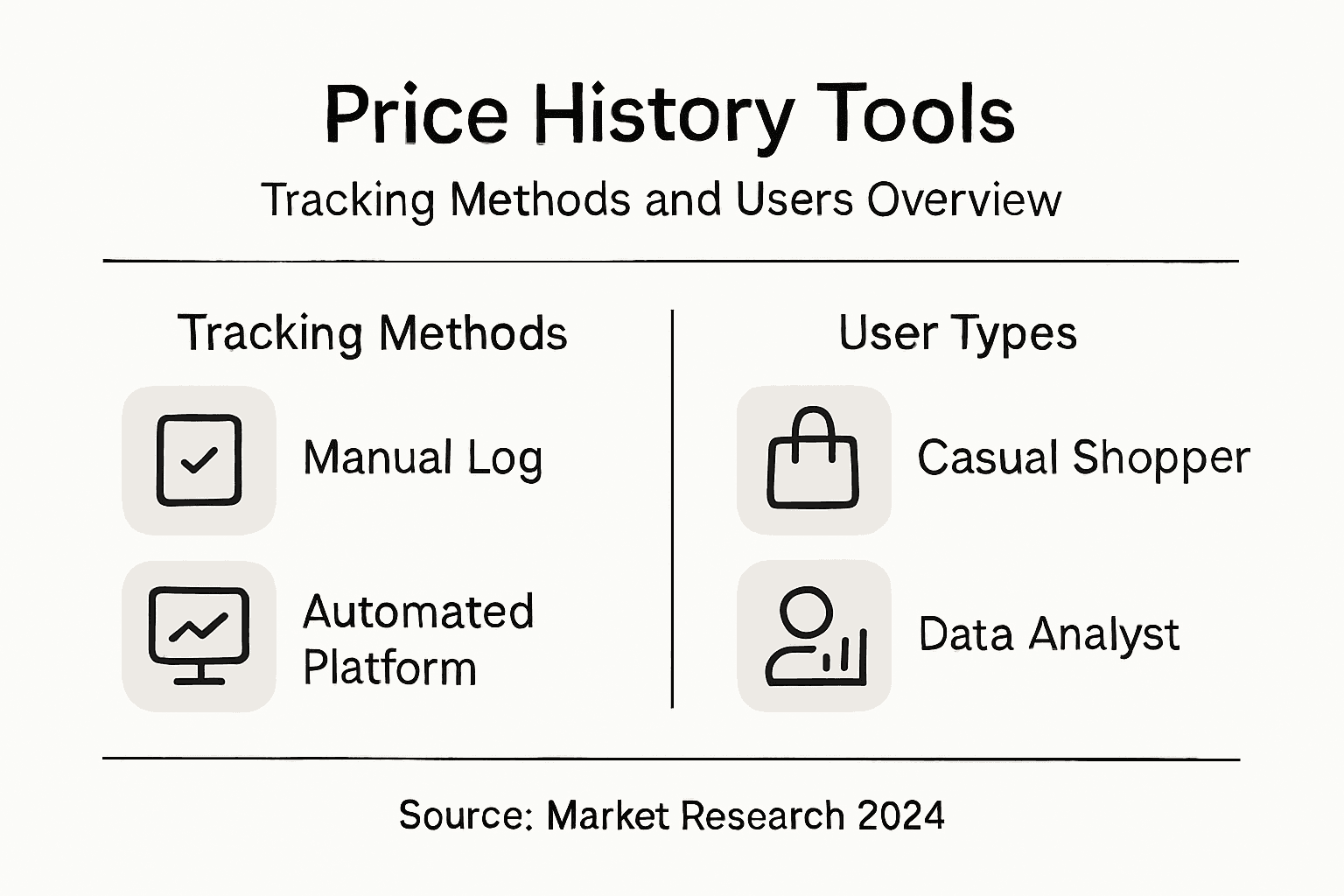
Consumers typically track price histories through specialized platforms or tools that automatically collect and visualize pricing data across multiple retailers. These systems compile comprehensive records showing exactly how prices have shifted, enabling shoppers to predict the best times to purchase.
Pro tip: Develop a systematic approach to price tracking by setting up automated alerts for products you’re interested in purchasing, ensuring you never miss a significant price drop.
Types of Price Data and Tracking Methods
Price tracking involves diverse methodologies and data types that help consumers and economists understand market dynamics. Consumer price indices represent sophisticated tools for analyzing price fluctuations across different economic sectors and product categories.
The primary types of price data collection include:
- Consumer Price Index (CPI): Tracks out-of-pocket expenditures for urban households
- Personal Consumption Expenditures (PCE): Measures broader goods and service consumption
- Scanner Data: Captures real-time retail transaction pricing
- Seasonal Price Tracking: Identifies cyclical pricing patterns
Economic researchers utilize multiple tracking methods and data sources to ensure comprehensive price monitoring. These methods involve systematic data collection techniques like periodic price surveys, scanner data analysis, and quality adjustment protocols.
Modern price tracking technologies leverage advanced algorithms and machine learning to aggregate pricing information from multiple retailers. These systems can analyze historical trends, predict future pricing movements, and provide consumers with actionable insights about potential purchase opportunities.

Pro tip: Combine multiple price tracking methods to develop a more comprehensive understanding of product pricing trends and maximize your potential savings.
Here is a summary contrasting popular price data collection types for quick reference:
| Data Type | Main Focus | Typical User |
|---|---|---|
| Consumer Price Index (CPI) | Urban household purchases | Government, Public |
| Personal Consumption Exp. | Broader goods and services | Economists, Firms |
| Scanner Data | Real-time retail transactions | Retailers, Analysts |
| Seasonal Price Tracking | Cyclical price change patterns | Shoppers, Analysts |
How Price History Tools Benefit Shoppers
Price history tools have transformed the online shopping landscape by providing consumers with unprecedented insights into product pricing strategies. Consumer price research reveals that these tools dramatically improve purchasing confidence and strategic decision-making.
Key benefits of price history tracking include:
- Transparency: Revealing hidden pricing patterns
- Strategic Planning: Identifying optimal purchase times
- Budget Management: Preventing impulsive overspending
- Comparative Analysis: Comparing prices across multiple retailers
The most sophisticated price tracking technologies leverage advanced algorithms to help shoppers make intelligent purchasing decisions. Consumer price knowledge studies demonstrate that when shoppers have access to comprehensive price information, they become more confident and deliberate in their buying behavior.
Modern price history tools go beyond simple price comparisons. They provide predictive analytics that help consumers anticipate future price movements, understand seasonal discount patterns, and make financially savvy purchasing choices. By transforming raw pricing data into actionable insights, these platforms empower shoppers to maximize their purchasing power.
Pro tip: Set up price drop alerts for multiple retailers to ensure you never miss a significant discount on products you’re interested in purchasing.
Common Pitfalls and Mistakes to Avoid
Price history tracking can be incredibly powerful, but shoppers must navigate potential monitoring and evaluation challenges strategically. Understanding common mistakes helps prevent costly errors that could undermine your savings strategy.
Key pitfalls to watch out for include:
- Data Unreliability: Using inconsistent or inaccurate pricing information
- Overreliance: Trusting algorithms without manual verification
- Limited Perspective: Tracking prices from too few retailers
- Emotional Decision-Making: Making purchases based on perceived urgency
- Ignoring Context: Failing to understand broader pricing trends
Pricing algorithm research reveals that automated systems can produce unintended consequences if not carefully managed. Shoppers must maintain a critical perspective, understanding that price tracking tools are guides, not infallible oracles of purchasing decisions.
Successful price monitoring requires a balanced approach that combines technological tools with human judgment. This means cross-referencing multiple sources, understanding seasonal variations, and maintaining flexibility in your purchasing strategy. By staying informed and avoiding these common traps, consumers can transform price history tracking from a potential pitfall into a powerful savings strategy.
Pro tip: Always cross-reference price history data from at least three different sources to ensure accuracy and minimize potential tracking errors.
Comparing Price Monitoring Alternatives
Online shoppers have multiple options for tracking product prices, each with unique strengths and limitations. Price comparison tools offer diverse approaches to help consumers make informed purchasing decisions.
The primary price monitoring alternatives include:
- Manual Tracking: Personally checking prices across multiple websites
- Browser Extensions: Automated price tracking through web browser plugins
- Dedicated Pricing Platforms: Comprehensive tracking services with advanced features
- Mobile Applications: Price monitoring through smartphone apps
- Email Alert Systems: Notifications for price changes on specific products
Each method comes with distinct advantages and potential drawbacks. Manual tracking provides complete control but requires significant time investment, while automated tools offer convenience but might miss nuanced pricing details. Browser extensions provide real-time updates but can sometimes consume excessive system resources.
The most effective price monitoring strategy often involves combining multiple approaches. Sophisticated shoppers might use dedicated platforms for comprehensive tracking, supplement with browser extensions for instant notifications, and occasionally cross-reference prices manually to ensure accuracy. This multi-layered approach maximizes savings potential and reduces the risk of missing significant price drops.
The table below compares the main types of price monitoring methods to help you select the best approach:
| Method | Time Investment | Control Level | Notification Speed |
|---|---|---|---|
| Manual Tracking | High (time-consuming) | Full user control | None (unless repeated visits) |
| Browser Extensions | Low (automated) | Moderate | Instant or near-instant |
| Dedicated Platforms | Low (automated) | Extensive features | Rapid, often customizable |
| Mobile Applications | Low (on-the-go) | Flexible | Fast, push alerts |
| Email Alert Systems | Minimal | Limited | Delayed, depends on service |
Pro tip: Create a spreadsheet to compare different price monitoring methods, tracking their accuracy, ease of use, and total time investment to determine your optimal tracking strategy.
Take Control of Your Savings with Smart Price History Monitoring
Understanding price history is vital for unlocking real savings and making confident purchases. The article highlights how manual tracking or unreliable data can leave you guessing instead of gaining clarity on price trends, seasonal discounts, and strategic buying opportunities. If you want to avoid impulsive spending and missed deals caused by emotional decisions or limited perspectives, then embracing reliable tools is essential.
PriceLix offers a user-friendly platform that automatically tracks prices across top retailers like Amazon, Walmart, and eBay. With detailed price history charts and real-time alerts, you get transparent insights into pricing patterns and can plan your purchases strategically. This eliminates the hassle of manual monitoring or overreliance on inconsistent algorithms and empowers you to act at the perfect moment.
Explore how PriceLix simplifies price tracking and start transforming your shopping experience today.
Discover the convenience of automated price alerts and never miss another price drop again.
See for yourself why savvy shoppers trust PriceLix to maximize savings and boost purchasing confidence.
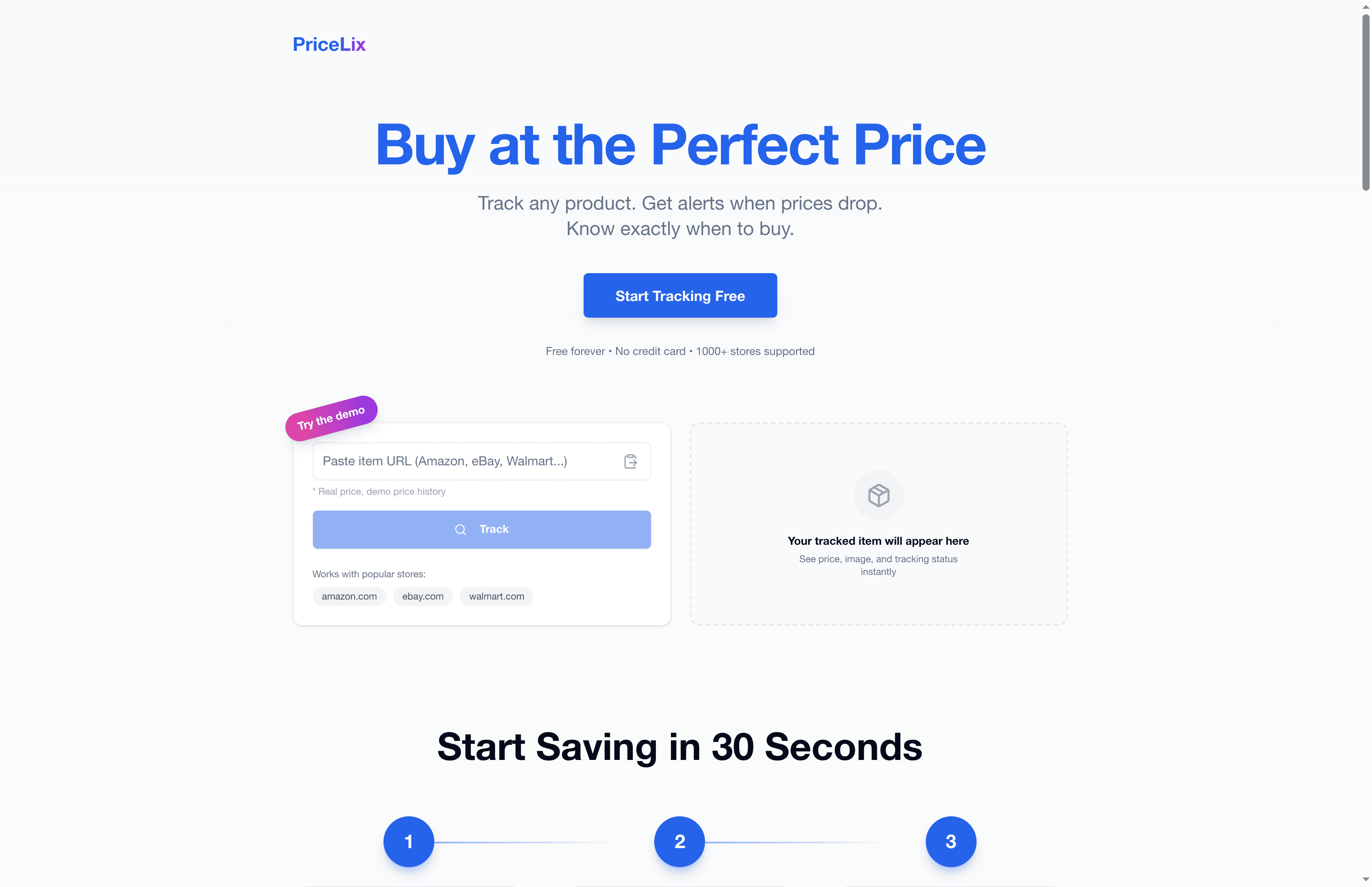
Ready to unlock the power of price history monitoring without the stress of manual tracking Use PriceLix now to gain the edge you deserve and make every purchase count.
Frequently Asked Questions
What is price history monitoring?
Price history monitoring is the practice of tracking and analyzing how product prices change over time, helping consumers understand pricing dynamics and make informed purchasing decisions.
How can price history monitoring save me money?
By analyzing historical price fluctuations, consumers can identify trends such as seasonal discounts and historical lows, allowing them to choose the best times to make purchases and avoid impulsive buying.
What types of data are used in price history tracking?
Key types of data include Consumer Price Index (CPI), Personal Consumption Expenditures (PCE), scanner data, and seasonal price tracking, all of which aid in understanding market trends and pricing behaviors.
What tools are available for tracking price history?
Consumers can use various tools for price history tracking, including dedicated pricing platforms, browser extensions, mobile applications, manual tracking methods, and email alert systems to receive notifications about price changes.