
Maximize holiday savings with price monitoring in 2026
Holiday shopping in 2026 demands smart timing. Prices during holiday sales can fluctuate by as much as 30%, meaning timing impacts your savings significantly. Manual tracking overwhelms shoppers, causing missed deals and overpayment. Automated price monitoring tools solve this problem by tracking thousands of retailers, sending real-time alerts when prices drop, and revealing historical trends that expose false discounts. This guide shows you how to use these tools effectively to capture the best holiday deals without constant price checking or guesswork.
Table of Contents
- Why Holiday Price Monitoring Matters
- How Price Monitoring Tools Work For Holiday Shopping
- Understanding Holiday Price Trends And Common Pitfalls
- Comparing Price Monitoring Tools For Holiday Deals
- How To Set Up And Use Price Alerts To Maximize Holiday Savings
- Common Misconceptions About Holiday Price Monitoring
- Putting It All Together: Smart Holiday Shopping With Price Monitoring
- Discover PriceLix For Smarter Holiday Shopping
- Frequently Asked Questions About Holiday Price Monitoring
Key takeaways
| Point | Details |
|---|---|
| Holiday price drops concentrate in tight windows | Most discounts appear during brief sale events like Black Friday, requiring precise timing. |
| Automated tools track thousands of retailers daily | Real-time alerts notify you instantly when prices meet your thresholds across major platforms. |
| Price history validates discount authenticity | Historical data helps set realistic alerts and exposes misleading ‘lowest price ever’ claims. |
| Web-based platforms offer convenience over extensions | No installation needed, enhancing privacy and usability for multi-device shoppers. |
| Proper alert setup enables quick reaction | Configure thresholds using historical data to catch fleeting deals lasting only hours. |
Why holiday price monitoring matters
Holiday shopping creates unique challenges for bargain hunters. Price fluctuations can reach up to 30% during holiday seasons, significantly affecting savings potential. Without systematic tracking, you risk buying at inflated prices or missing narrow discount windows entirely.
Manual price checking drains time and energy. Visiting multiple retailer websites daily, comparing prices across platforms, and remembering historical costs becomes overwhelming. Most shoppers abandon this effort, defaulting to advertised discounts that may not represent true savings.
Automated price monitoring transforms this process. These tools perform daily scans across thousands of products, capturing rapid price shifts you’d miss manually. You receive instant notifications when prices drop, eliminating guesswork about purchase timing.
Pro Tip: Focus monitoring efforts on peak discount windows rather than year-round tracking. This targeted approach saves time while capturing the deepest holiday discounts, typically occurring within 3 to 5 days of major sale events.
Understanding holiday-specific trends empowers strategic decisions. Retailers manipulate prices before sales, inflating costs to make discounts appear larger. Why monitor price history reveals these patterns, helping you distinguish genuine bargains from marketing tricks.
“The difference between random holiday shopping and strategic price monitoring is the difference between hoping for savings and guaranteeing them.”
Price monitoring delivers measurable advantages:
- Captures time-sensitive discounts appearing for only hours
- Reveals pre-sale price inflation tactics used by retailers
- Enables comparison across dozens of stores simultaneously
- Reduces purchase anxiety by confirming optimal timing
How price monitoring tools work for holiday shopping
Automated price monitoring platforms simplify deal tracking through systematic processes. Automated tools perform daily price checks over 1000+ retailers and send alerts for price drops or threshold hits. This broad coverage ensures you never miss competitive pricing, regardless of which retailer offers the best deal.
The core functions deliver immediate value. Tools continuously scan product listings across major platforms like Amazon, Walmart, eBay, and specialty retailers. When prices change, the system updates your dashboard instantly, eliminating manual checking.
Real-time alerts form the critical advantage. You define your acceptable price threshold, and the tool notifies you immediately when any retailer meets it. This speed matters during flash sales or limited-quantity promotions where delays mean missed opportunities.

Dashboards consolidate tracking efforts. Instead of juggling multiple browser tabs and spreadsheets, you view all monitored items in one interface. This organization prevents overlooked deals and enables quick comparison when multiple products reach target prices simultaneously.
Web-based platforms eliminate installation barriers. Unlike browser extensions requiring downloads and permissions, these tools work through any web browser. You maintain privacy, avoid software conflicts, and access your tracked items from any device.
Pro Tip: Customize alert thresholds using historical price data rather than arbitrary percentages. If a product’s price history shows $50 as the typical low point, set your alert at $48 to capture exceptional deals while filtering routine fluctuations.
The benefits of automated price checks extend beyond convenience:
- Monitors price changes 24/7 without requiring your attention
- Tracks dozens or hundreds of products simultaneously
- Provides historical context unavailable through retailer websites
- Sends customizable notifications matching your shopping preferences
Understanding holiday price trends and common pitfalls
Holiday pricing follows predictable yet counterintuitive patterns. 70% of price drops occur within a brief 3-day window around Black Friday, disproving the belief in steady price decline. Most shoppers assume prices gradually decrease throughout November, but data reveals concentrated discount periods instead.
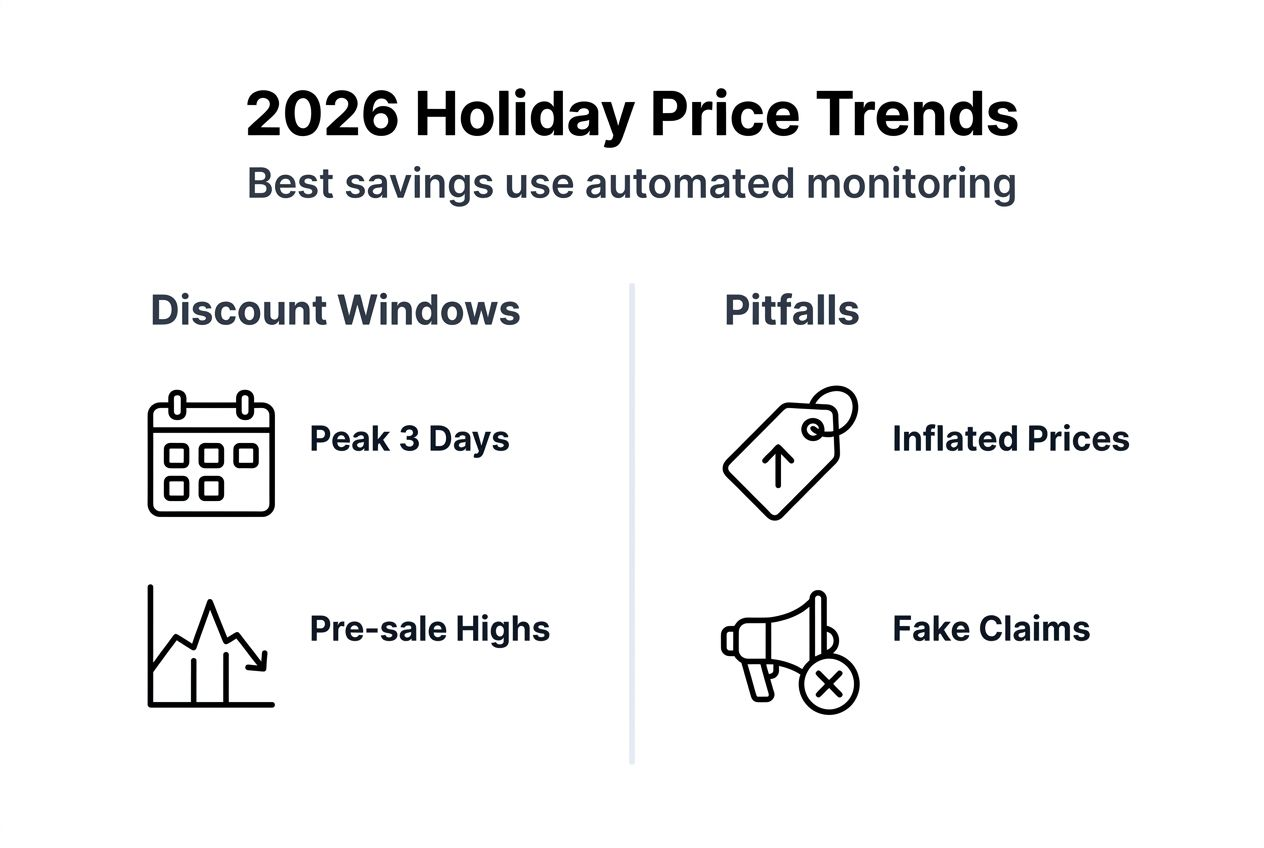
Retailers strategically inflate prices before major sales. A product selling for $80 in October might rise to $100 in early November, then drop to $75 on Black Friday. The advertised “25% off” hides the fact you’re paying less than October’s price by only $5, not the implied $25 savings.
‘Lowest price ever’ claims require verification. Marketing language creates urgency, but historical price charts often reveal identical or better prices from previous months. Without access to this data, shoppers fall for manufactured scarcity.
Timing errors cost money at both extremes. Shopping too early, even weeks before Black Friday, means paying pre-inflation prices that still exceed sale prices. Waiting too long risks stockouts on popular items or missing the concentrated discount window entirely.
Pro Tip: Review price history for at least 90 days before holiday shopping begins. This timeline reveals normal price ranges, pre-sale inflation patterns, and realistic expectations for discount depth, preventing impulsive purchases during artificial urgency.
The best time to book holiday deals demonstrates similar concentrated pricing windows across industries. Understanding these patterns transforms shopping from reactive to strategic.
“Price history is the antidote to marketing hype. When retailers claim unprecedented discounts, historical data reveals the truth.”
Common misconceptions that reduce savings:
- Believing advertised percentages represent true savings without historical context
- Assuming all Black Friday deals offer year-low prices
- Trusting ‘limited time’ claims without verifying actual stock levels
- Shopping based on retailer emails rather than objective price data
Comparing price monitoring tools for holiday deals
Selecting the right monitoring approach impacts your savings efficiency and shopping experience. Web-based platforms are preferred by 60% of users for convenience and privacy over browser extensions. This preference reflects practical advantages in daily use.
| Feature | Browser Extensions | Web-Based Platforms |
|---|---|---|
| Installation required | Yes, per browser | No |
| Privacy concerns | Higher (tracks browsing) | Lower (only tracked items) |
| Multi-device access | Limited to installed browsers | Any device with internet |
| Retailer coverage | Typically 100-500 stores | Often 1000+ stores |
| Alert customization | Basic thresholds | Advanced rules and filters |
Browser extensions offer real-time price comparison while shopping. When viewing a product page, they display historical prices and competitor offerings directly. This convenience comes with tradeoffs: installation requirements, potential security vulnerabilities, and browsing data collection.
Web-based platforms prioritize simplicity and broad coverage. You add products through URLs or searches, configure alerts once, and receive notifications without ongoing software management. The centralized dashboard approach suits shoppers tracking numerous items across multiple categories.
Discount variability across retailers emphasizes multi-platform monitoring. The same product might see a 35% discount at one retailer while another offers only 15%. Tools with comprehensive coverage capture these differences, ensuring you identify the true best price.
Alert effectiveness directly influences purchase confidence. Shoppers using systematic alerts report 40% higher confidence in their purchase timing compared to those relying on manual checks or retailer promotions alone.
Pro Tip: Prioritize tools offering multi-retailer support without requiring installation. This combination delivers maximum flexibility, allowing you to monitor diverse products across platforms while maintaining privacy and device compatibility.
Evaluate tools based on your specific needs:
- High-volume trackers benefit from unlimited item limits
- Privacy-focused shoppers prefer web-based platforms
- Mobile-first users need responsive dashboard designs
- Budget-conscious shoppers seek free tiers with adequate features
The best price tracking strategies 2026 and how price comparison works provide deeper analysis of tool selection criteria.
How to set up and use price alerts to maximize holiday savings
Effective alert configuration transforms passive monitoring into active savings. Follow this systematic approach to capture the best holiday deals in 2026.
- Identify target products early, ideally 4 to 6 weeks before major sales. This timeline provides sufficient price history to set informed thresholds.
- Add products to your monitoring tool using direct URLs or product searches. Verify the tool correctly identifies the specific variant, including size, color, or model number.
- Review historical price data for each item. Note the lowest prices from previous months and typical price ranges during non-sale periods.
- Set alert thresholds 5% to 10% below historical lows to capture exceptional deals while filtering normal fluctuations. For a product with a $60 historical low, configure alerts at $54 to $57.
- Enable multiple alert types: threshold alerts for target prices, percentage drop alerts for unexpected discounts, and back-in-stock alerts for popular items.
Monitor alerts intensively during peak windows. Black Friday through Cyber Monday sees the highest concentration of deals. Check notifications multiple times daily, as many offers last only 2 to 6 hours.
Compare alerts across retailers before purchasing. When one product triggers alerts at multiple stores, verify final prices including shipping, taxes, and return policies. The lowest base price may not represent the best total cost.
Pro Tip: Act within 30 minutes of receiving high-priority alerts during major sale events. Popular items at exceptional prices sell out quickly, and hesitation often means missing the deal entirely despite proper alert setup.
The how to set up price alerts and guide to price alerts setup resources offer detailed walkthroughs. For travel-related deals, free booking alerts demonstrates similar alert strategies.
Optimize ongoing monitoring:
- Adjust thresholds if initial settings generate excessive notifications
- Remove items after purchase to maintain dashboard clarity
- Add newly desired products immediately to build price history
- Review alert performance weekly, refining criteria based on results
Common misconceptions about holiday price monitoring
Several widespread myths undermine effective price monitoring strategies. Correcting these misconceptions improves your savings outcomes and tool usage.
Prices don’t steadily decline before Black Friday. Many shoppers delay purchases expecting continuous drops, but data shows prices often rise in early November before plunging during concentrated sale windows. This pattern means early November purchases frequently cost more than late October or Black Friday prices.
Browser extensions aren’t mandatory for effective monitoring. While extensions offer convenience, web-based platforms provide superior retailer coverage, privacy, and multi-device access. The belief that extensions represent the only viable monitoring method limits options unnecessarily.
Not all holiday discounts are genuine savings. Retailers inflate pre-sale prices, making percentage discounts appear larger than actual savings. A “50% off” claim means nothing without historical price context. Many “lowest price ever” promotions match or exceed prices from previous months.
Advertised discounts alone can’t guide smart purchases. Relying exclusively on retailer marketing without price history verification leads to overpayment. Stores highlight percentage savings while obscuring absolute price comparisons to previous periods.
Tracking too many items creates alert fatigue. Some shoppers add dozens of products without prioritization, generating overwhelming notification volumes. This approach reduces responsiveness to truly exceptional deals buried among routine updates.
Understanding these realities helps you:
- Trust historical data over marketing claims
- Choose monitoring tools based on actual needs rather than assumptions
- Focus tracking efforts on highest-priority items
- Recognize genuine discounts versus artificial promotions
- Time purchases based on data patterns rather than retailer urgency tactics
Putting it all together: smart holiday shopping with price monitoring
Integrating automated monitoring, strategic alerts, and trend knowledge creates a comprehensive approach to 2026 holiday shopping. This system delivers consistent savings while reducing shopping stress and decision anxiety.
Automated tools eliminate the manual effort that causes most shoppers to abandon systematic price tracking. Daily scans across thousands of retailers capture opportunities you’d never find through casual browsing. Real-time alerts ensure immediate awareness of time-sensitive deals.
Combining price history with alert thresholds creates informed purchase timing. Instead of guessing whether current prices represent good value, you compare them against months of data. This context reveals when to buy immediately and when to wait for deeper discounts.
Knowledge of true price trends protects against common pitfalls. Understanding pre-sale inflation, concentrated discount windows, and false “lowest price ever” claims transforms you from a reactive shopper into a strategic buyer. You make decisions based on objective data rather than marketing pressure.
Consolidating tracked items through centralized dashboards streamlines monitoring. You view all target products, current prices, alert status, and historical trends in one interface. This organization enables quick decisions when multiple deals appear simultaneously.
Final reminder: Apply these data-driven strategies consistently throughout your 2026 holiday shopping. The combination of early product identification, historical analysis, strategic alert configuration, and rapid response to notifications maximizes savings while minimizing effort.
The price tracking checklist 2026 provides a structured implementation guide. For broader savings validation, holiday savings real numbers demonstrates financial impact across categories.
Key implementation priorities:
- Start tracking 4 to 6 weeks before major sales to build price history
- Set thresholds based on data, not arbitrary percentages
- Monitor alerts intensively during peak 3 to 5 day sale windows
- Act quickly on high-priority notifications during limited-time offers
- Review and refine your approach after each major shopping event
Discover PriceLix for smarter holiday shopping
Ready to implement everything you’ve learned? PriceLix offers comprehensive web-based price monitoring designed specifically for bargain hunters like you. Track thousands of products across major retailers without installing software or compromising privacy.
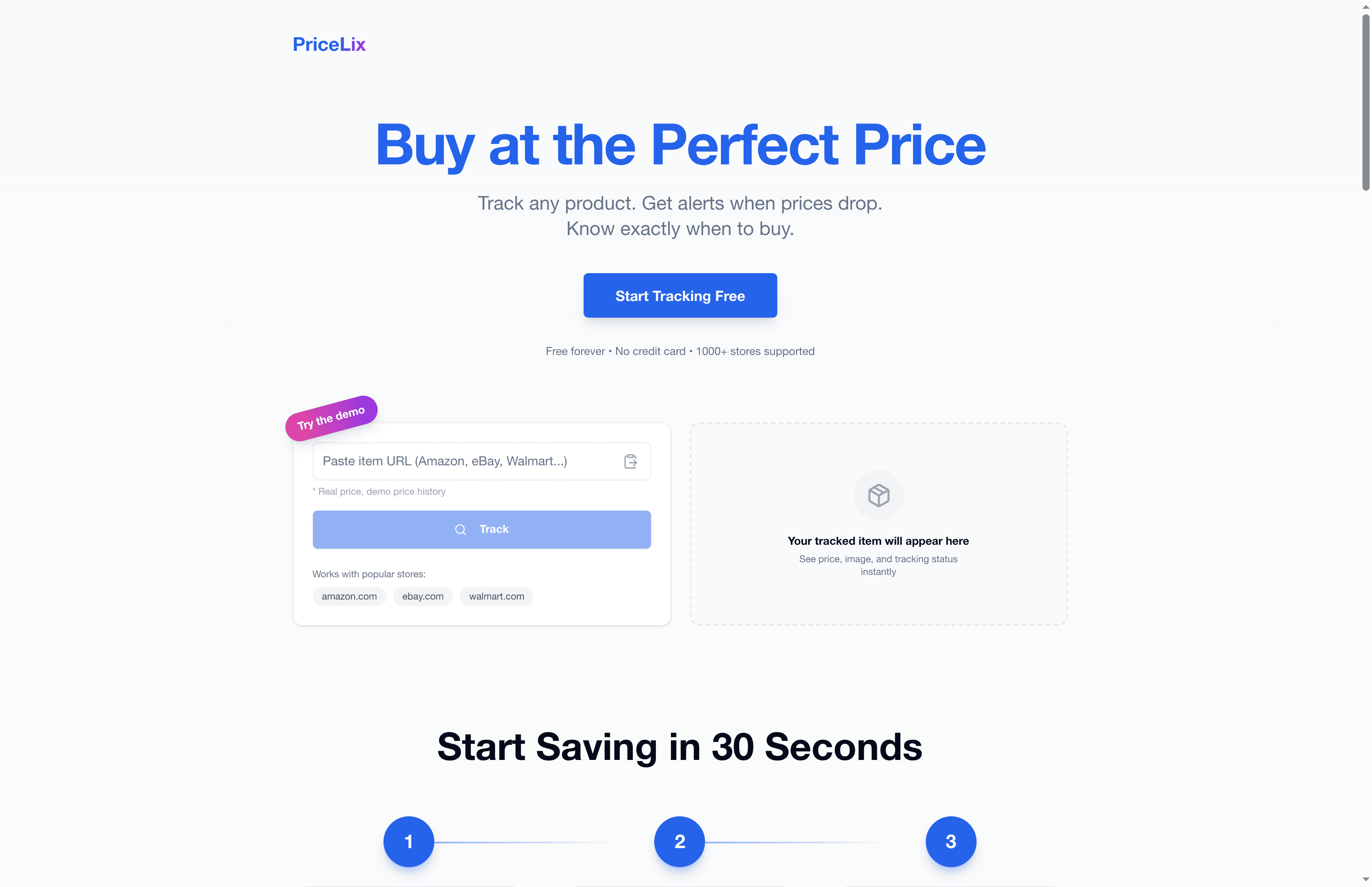
Our platform delivers real-time alerts tailored for holiday shopping intensity. Set custom thresholds, monitor price history, and receive instant notifications when deals meet your criteria. The user-friendly dashboard consolidates all tracked items, enabling quick decisions during fast-moving sales.
PriceLix supports over 1000 retailers, ensuring you capture the best price regardless of which platform offers it. No more juggling multiple websites or missing competitive deals from less-obvious sellers.
Explore our expert resources for deeper insights. Our guide on setting up price alerts walks through optimal configuration, while price tracking strategies 2026 reveals advanced techniques for maximizing holiday savings. Start using PriceLix today and transform your 2026 holiday shopping from stressful guesswork into confident, data-driven bargain hunting.
Frequently asked questions about holiday price monitoring
When should I start tracking prices for holiday shopping?
Begin monitoring 4 to 6 weeks before major sale events like Black Friday. This timeline builds sufficient price history to set informed alert thresholds and identify pre-sale price inflation patterns.
Do I need browser extensions or can I use web-based tools?
Web-based platforms offer superior convenience, privacy, and retailer coverage without requiring installation. Browser extensions provide real-time comparison while browsing but come with privacy tradeoffs and device limitations.
How do I avoid getting too many price alert notifications?
Set thresholds based on historical price data rather than arbitrary percentages. Focus tracking on highest-priority items and configure alerts to trigger only for significant drops, typically 5% to 10% below historical lows.
Are Black Friday discounts really the best prices of the year?
Not always. While 70% of major discounts occur during Black Friday week, some products see better prices during post-holiday clearances or earlier flash sales. Price history reveals these patterns for specific items.
How quickly do I need to act when I receive a price alert?
During major sale events, respond within 30 minutes for high-priority items at exceptional prices. Popular products at deep discounts often sell out within 2 to 6 hours, making quick action essential.
Can price monitoring tools track sales across different retailers?
Yes, comprehensive platforms monitor thousands of retailers simultaneously. This broad coverage ensures you identify the true best price, as the same product often has vastly different discounts across competing stores.
Recommended
- 6 Best Price Tracking Strategies 2026 for Online Shoppers | PriceLix
- Why Monitor Prices Online in 2026: Save Up to 8% Smartly | PriceLix
- Blog - Price Tracking Tips & Savings Guides | PriceLix
- Price Tracking Checklist 2026: Save 18% with Smart Alerts | PriceLix
- Black Friday Perfume Deals: Your 2025 Shopping Strategy
- Get Early Access to Black Friday Deals! – Dracoslides