
Why Monitor Prices Online in 2026: Save Up to 8% Smartly
Did you know 85-90% of online buyers compare prices before buying, yet most still miss the best deals? Online prices shift multiple times daily across major ecommerce sites, making manual checks slow and often ineffective. Systematic price monitoring transforms this chaos into savings, helping budget-conscious shoppers capture optimal deals without constant effort. This guide reveals how automated tracking delivers smarter purchasing decisions and measurable cost reductions.
Table of Contents
- Why Price Monitoring Matters For Budget-Conscious Shoppers
- How Automated Price Monitoring Works
- Common Misconceptions About Price Monitoring
- Benefits Of Using Price Monitoring Tools For Budget-Conscious Shoppers
- Practical Guide: How To Use PriceLix For Effective Price Monitoring
- Turning Price Monitoring Into Smart Shopping
- Maximize Savings With PriceLix’s Advanced Price Monitoring Tools
- Frequently Asked Questions
Key Takeaways
| Point | Details | |-------|---------|| | Effort Reduction | Automated tools save up to 80% of manual tracking time. | | Savings Potential | Price monitoring can increase your savings by 3-8% annually. | | Smart Decisions | Real-time alerts and price history charts enable strategic buying. | | Common Myths | Misconceptions prevent shoppers from benefiting fully from automation. | | Platform Advantage | PriceLix simplifies capturing optimal deals across 1000+ stores. |
Why Price Monitoring Matters for Budget-Conscious Shoppers
Budget shoppers face a relentless challenge: prices change faster than anyone can manually track. Major ecommerce platforms adjust pricing multiple times per day based on demand, inventory, and competitor actions. Without systematic monitoring, even diligent shoppers risk overpaying or missing sudden discounts.
Manual price checks create several problems. First, they demand constant attention across multiple websites. Second, rapid price drops often happen outside your checking schedule. Third, comparing historical trends manually is nearly impossible without detailed records.
Research confirms 85-90% of online buyers compare prices across multiple websites before purchasing. Yet many do this inefficiently, checking sporadically or relying on memory rather than data. This reactive approach leaves money on the table.
Systematic price monitoring solves these issues by:
- Tracking products continuously across dozens of retailers
- Alerting you instantly when prices drop to your target
- Recording historical data to reveal optimal purchase windows
- Eliminating the need to visit multiple sites repeatedly
The stakes are clear. Prices fluctuate daily on essentials like electronics, home goods, and seasonal items. Without automated tracking, you’re gambling on timing. With it, you’re making informed decisions backed by real-time data and trends.
Budget-conscious shoppers need visibility into price comparison patterns that manual methods simply cannot provide at scale.
How Automated Price Monitoring Works
Automated price tracking eliminates guesswork through technology that works 24/7 on your behalf. These platforms continuously scan prices across hundreds or thousands of stores, updating their databases multiple times daily. When a tracked item hits your desired price point, you receive instant notifications via email or app alerts.
The core mechanism is straightforward. You add products from any supported ecommerce site to your monitoring dashboard. The tool then checks those products automatically, recording every price change. This creates a detailed price history chart showing patterns over days, weeks, or months.

Price monitoring tools consolidate data across multiple e-commerce stores, tracking prices from over 1000 stores without requiring you to visit each site individually. This aggregation is impossible to replicate manually at any reasonable time investment.
Key features that deliver value:
- Real-time alerts that notify you within minutes of price drops
- Historical price graphs revealing seasonal patterns and typical discount timing
- Multi-store comparison showing which retailer offers the best current deal
- Threshold settings to alert only when prices meet your budget targets
Automation cuts monitoring effort by up to 80% compared to manual checking. Instead of daily website visits, you simply review alerts when opportunities arise. The system does the repetitive work while you make final purchasing decisions.
Pro Tip: Set price alerts 10-15% below current prices for realistic targets that balance savings with purchase timing.
Here’s how automated price checks compare to manual efforts:
| Feature | Manual Tracking | Automated Monitoring |
|---|---|---|
| Time Required | 15-30 min daily | 2-5 min weekly |
| Store Coverage | 3-5 stores | 1000+ stores |
| Alert Speed | Hours to days | Minutes |
| Price History | Memory only | Complete charts |
| Accuracy | Prone to errors | Precise data |
The mechanics of price comparison reveal why automation is essential: human memory and attention cannot match algorithmic precision across hundreds of products and retailers simultaneously.
Common Misconceptions About Price Monitoring
Several myths prevent shoppers from embracing price monitoring tools, leaving significant savings unrealized. Let’s address the most persistent misconceptions directly.
Myth 1: Price monitoring is only for businesses, not individuals.
Many believe these tools serve retailers tracking competitors, not everyday shoppers. Reality: Budget-conscious individual shoppers can save 3-8% with automated tracking. Platforms now cater specifically to consumers, offering simple interfaces for personal shopping lists.
Myth 2: Manual checks suffice to catch all price drops.
Some shoppers think checking favorite items weekly is adequate. This misses rapid promotions, flash sales, and overnight price adjustments. Prices often return to normal within hours, making manual monitoring ineffective for capturing fleeting deals.
Myth 3: Tools only do simple price comparisons, no deeper insights.
Skeptics assume monitoring platforms merely show current prices across sites. In truth, they provide strategic intelligence: historical trends, seasonal patterns, and predictive indicators about optimal purchase timing. This data transforms reactive shopping into strategic planning.
“Automated price monitoring isn’t about obsessively hunting pennies. It’s about making informed decisions with minimal effort, ensuring you buy when the value is genuinely best.”
Ignoring automation has real costs. Without alerts, you miss limited-time discounts. Without price history, you can’t distinguish genuine sales from artificial markups. The result: overpaying or delaying purchases unnecessarily.
Understanding these misconceptions about price monitoring helps shoppers recognize that automation serves individual needs as effectively as business applications. The tools democratize access to price tracking data previously available only to large retailers.
Benefits of Using Price Monitoring Tools for Budget-Conscious Shoppers
The quantifiable advantages of price monitoring extend beyond simple cost savings. These tools reshape how you approach online shopping, delivering multiple forms of value.
First, direct financial savings average 3-8% annually. This comes from capturing price drops you’d otherwise miss and avoiding purchases during price spikes. Over a year of regular online shopping, this compounds significantly. On $3000 in annual online purchases, that’s $90 to $240 saved.
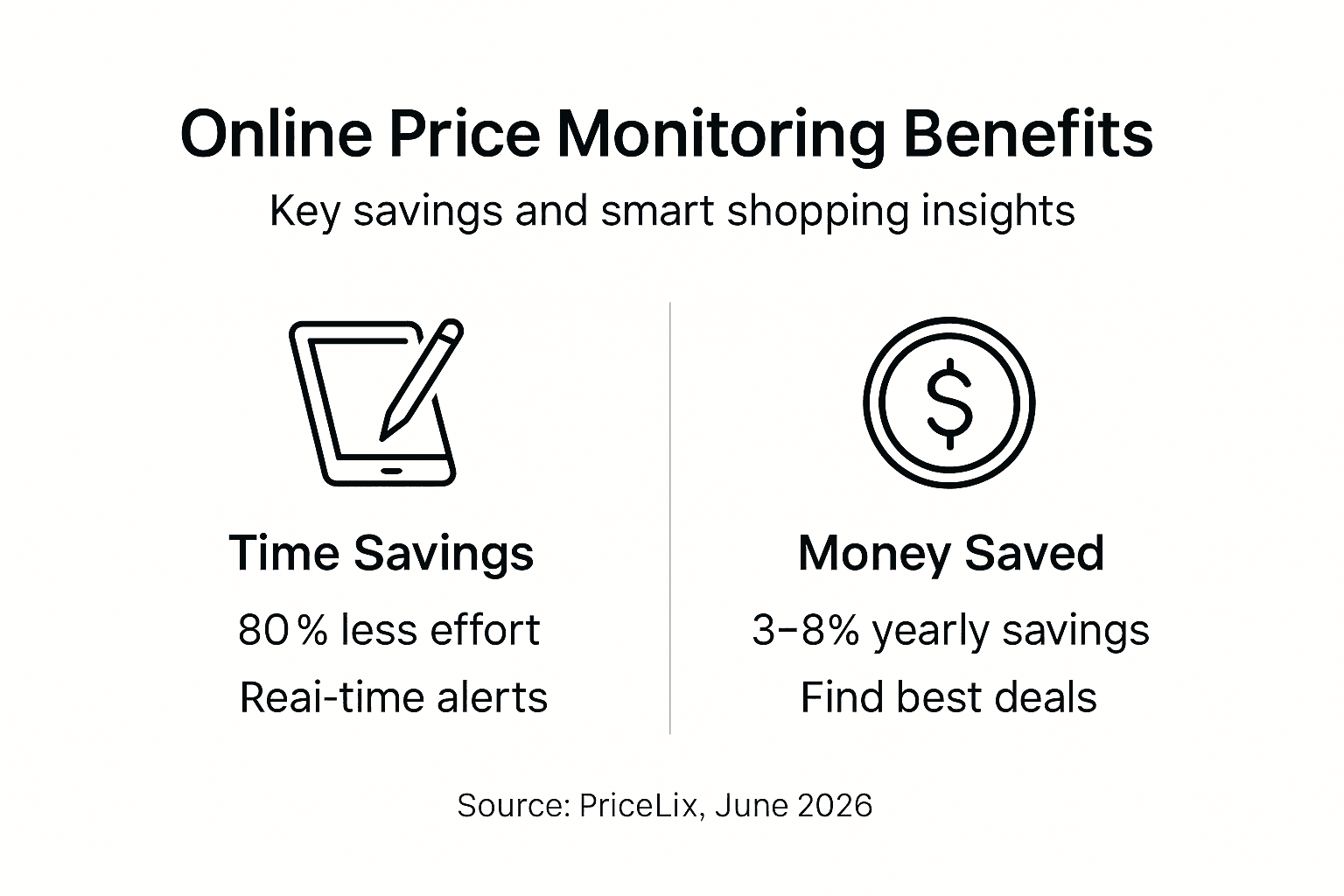
Second, time efficiency improves dramatically. Automation reduces manual monitoring time by up to 80%. Instead of checking multiple sites daily, you review consolidated alerts weekly. This frees time for other priorities while maintaining deal awareness.
Third, purchase confidence increases through data visibility. Price history charts show whether current prices are genuinely good or artificially inflated. You’ll know if waiting another week typically yields better deals or if buying now makes sense.
Compare the two approaches directly:
| Aspect | Manual Monitoring | Automated Tools |
|---|---|---|
| Annual Savings | 1-3% | 3-8% |
| Time Investment | 10-15 hrs/month | 2-3 hrs/month |
| Deals Captured | 30-40% | 80-90% |
| Purchase Confidence | Low (no data) | High (trends visible) |
| Store Coverage | Limited (3-5) | Extensive (1000+) |
Additional benefits include:
- Reduced impulse buying through deliberate tracking and alerts
- Better budgeting with predictable purchase timing
- Elimination of regret from discovering lower prices post-purchase
- Strategic shopping during optimal discount periods
Pro Tip: Prioritize tracking high-ticket items like electronics and appliances where even 5% savings mean $50-100 per purchase.
The time savings from automated price checks alone justify adoption, but combined with measurable cost reductions, the case becomes compelling. These tools don’t just save money; they make shopping less stressful and more strategic.
Practical Guide: How to Use PriceLix for Effective Price Monitoring
Getting started with systematic price monitoring takes minutes and delivers immediate value. Follow this step-by-step approach to transform your shopping strategy.
Step 1: Create your PriceLix account with minimal setup.
Visit the platform and register using your email. No browser extensions or software downloads required. The web-based dashboard works across all devices, letting you monitor prices from anywhere.
Step 2: Add products from multiple e-commerce sites.
Copy product URLs from Amazon, eBay, Walmart, or any supported retailer and paste them into your PriceLix dashboard. The system automatically imports product details, current pricing, and begins tracking. Build your list gradually, starting with items you’re actively considering.
Step 3: Configure personalized real-time alerts.
Set target prices or percentage drops for each item. When prices hit your thresholds, you’ll receive instant notifications. Customize alert frequency to avoid inbox overload while staying informed. Learn more about setting up price alerts effectively.
Step 4: Monitor historical price charts.
Review price graphs showing past fluctuations. Identify patterns like weekend sales, monthly cycles, or seasonal lows. This context helps you decide whether to buy immediately or wait for predictable drops. Understanding how to get price drop alerts maximizes your timing advantage.
Step 5: Use alerts and trends together.
When an alert arrives, check the price history before purchasing. If the current price matches historical lows, buy confidently. If it’s still above typical discount levels, wait. Combining real-time notifications with trend analysis delivers optimal results.
Pro Tip: Start with 10-15 high-priority items rather than tracking everything. This prevents alert fatigue while focusing on products where savings matter most.
This guide to monitoring product prices online provides deeper detail on advanced strategies, but these five steps cover essential functionality for immediate benefit.
Turning Price Monitoring Into Smart Shopping
Effective price monitoring transforms you from a reactive buyer into a strategic shopper. Instead of purchasing on impulse or arbitrary timing, you make data-driven decisions backed by real market intelligence.
The shift is fundamental. Reactive shoppers see an item they want and buy immediately, hoping the price is fair. Strategic shoppers track desired items, understand pricing patterns, and purchase when value peaks. This approach applies whether you’re buying a $30 kitchen gadget or a $1500 laptop.
Automated tools provide the infrastructure for this transformation without demanding excessive time or effort. They handle repetitive monitoring while you focus on decision-making. The result: increased savings, reduced effort, and eliminated purchase regret.
Key principles for smart shopping through monitoring:
- Track items before you urgently need them, allowing flexibility in purchase timing
- Set realistic price targets based on historical data, not arbitrary discounts
- Use price history to distinguish genuine sales from fake markups
- Combine alerts across multiple retailers to ensure you capture the absolute best deal
Consistent platform use, whether through PriceLix or similar tools, maximizes purchase value over time. Each successful capture of a price drop reinforces the strategy and compounds savings annually.
Smart shopping isn’t about obsessive penny-pinching. It’s about timing, data access, and effort minimization. Price comparison mechanics enable this by providing visibility manual methods cannot match.
Maximize Savings with PriceLix’s Advanced Price Monitoring Tools
Ready to stop overpaying and start shopping strategically? PriceLix offers real-time alerts across 1000+ stores with no browser add-ons needed. Its intuitive dashboards consolidate price data, making monitoring and buying simpler than ever.
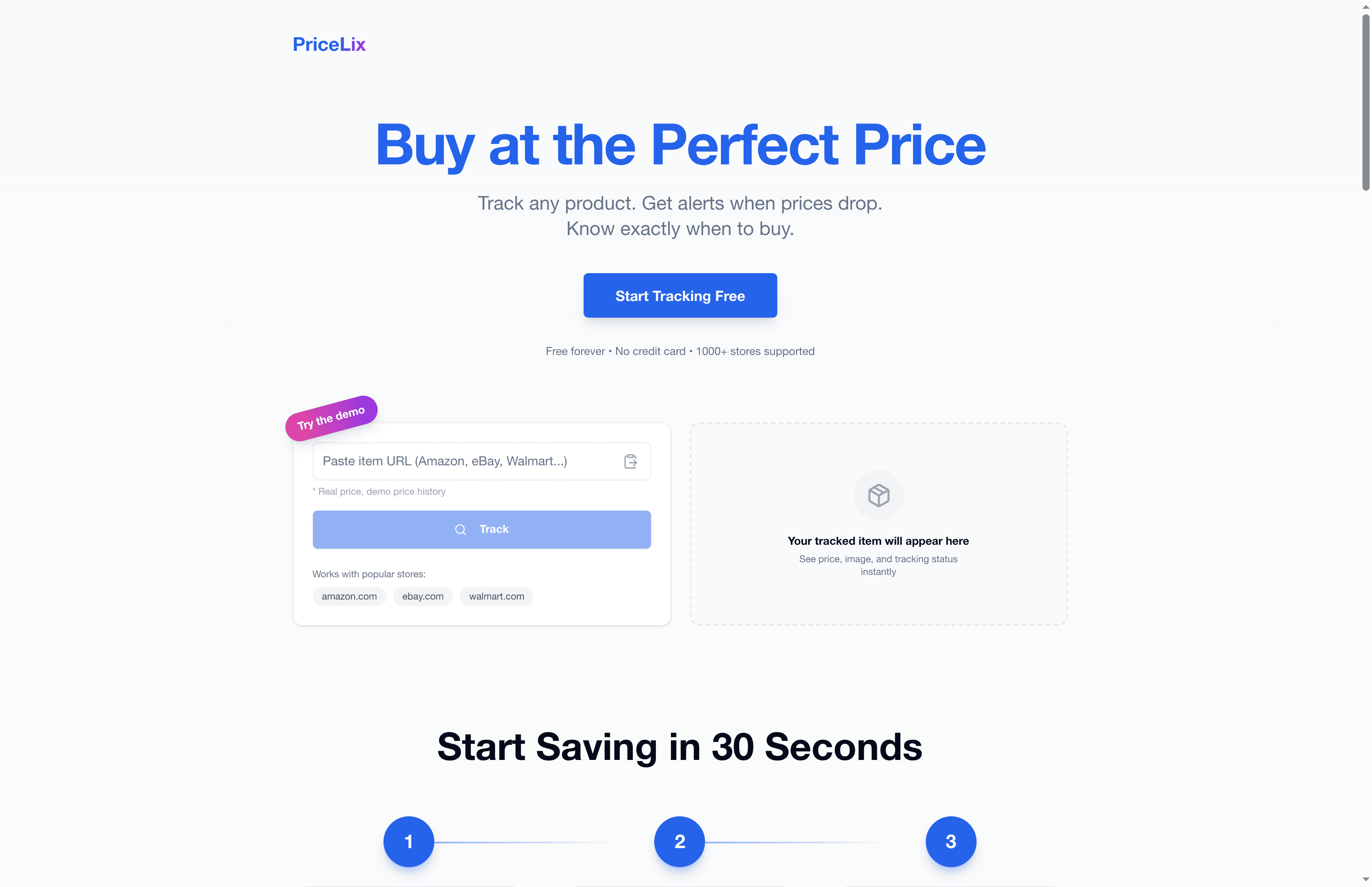
Leverage smart notifications and detailed history charts to never miss deals again. The platform tracks daily price changes automatically, freeing you from repetitive manual checks. Whether you’re watching electronics, home goods, or seasonal items, PriceLix ensures you buy at optimal moments.
Explore 7 effective types of online price tracking strategies and discover how the PriceLix platform implements them seamlessly. Join thousands of budget-conscious shoppers who’ve transformed their purchasing through systematic online price monitoring.
Pro Tip: Start by adding your top 5 wishlist items today for maximum immediate savings and quick platform familiarity.
Frequently Asked Questions
What products benefit most from price monitoring?
Electronics, appliances, and seasonal items show the highest price volatility and savings potential. Tech products often see 15-30% price swings between launches and sales periods, while appliances drop significantly during holiday promotions.
How quickly do price alerts notify me of drops?
Most platforms including PriceLix send alerts within 15-30 minutes of detected price changes. This speed ensures you can act on flash sales and limited-time promotions before they expire or inventory depletes.
Can I track prices without installing software?
Yes, modern platforms like PriceLix operate entirely through web browsers, requiring no downloads or extensions. Simply log into your dashboard from any device to add products and receive alerts via email or in-app notifications. Check this price alerts setup guide for details.
How does monitoring price history improve decisions?
Historical charts reveal whether current prices represent genuine deals or artificial discounts. If a “40% off” promotion still exceeds typical low prices from recent months, you know to wait. This prevents retailers from manipulating perceived savings.
What are best practices to avoid alert fatigue?
Limit tracking to 15-20 high-priority items and set realistic price thresholds. Configure alerts for 10-15% drops rather than any minor fluctuation. Review and prune your tracking list monthly, removing purchased items or products no longer needed.