
Price Comparison: Maximizing Savings Online
Searching for the best deal online can feel overwhelming when prices shift instantly on every platform. For budget-conscious shoppers, understanding price comparison is more than just hunting for the lowest sticker—it’s about navigating complex pricing tactics used by retailers worldwide. Whether you are shopping in the United States, Canada, or anywhere else, this guide untangles common myths and helps you make confident choices so you can truly maximize savings every time you buy online.
Table of Contents
- Defining Price Comparison And Common Myths
- Main Types Of Price Comparison Methods
- How Automated Price Tracking Works
- Key Factors Influencing Price Comparison
- Risks, Mistakes, And What To Avoid
- Comparing Price Comparison Tools And Alternatives
Key Takeaways
| Point | Details |
|---|---|
| Understanding True Value | Price comparison is about finding true value and not just the lowest price; consider total cost and quality. |
| Utilizing Technology | Leverage automated price tracking tools to optimize shopping decisions and save time. |
| Awareness of Consumer Behavior | Be mindful of psychological factors and market dynamics that influence pricing and purchasing decisions. |
| Avoiding Common Mistakes | Always consider hidden costs and product quality, and cross-reference prices before making purchases. |
Defining Price Comparison and Common Myths
Price comparison represents a strategic approach consumers use to evaluate and optimize purchasing decisions across various online platforms. By systematically analyzing prices from multiple retailers, shoppers can identify the most cost-effective options and maximize their savings potential.
The process involves more than simply finding the lowest price tag. Price comparison requires understanding complex market dynamics and consumer behavior patterns. Complex pricing mechanisms shape consumer decisions through intricate psychological and economic factors that influence purchasing choices.
Several common myths persist about price comparison that can mislead consumers:
- Myth 1: The lowest price always represents the best value
- Myth 2: Price comparison is too time-consuming to be worthwhile
- Myth 3: Online prices are consistent across all platforms
- Myth 4: Price tracking tools provide no real savings benefit
These misconceptions can prevent shoppers from making informed purchasing decisions. In reality, effective price comparison requires understanding nuanced pricing strategies and leveraging technological tools that automate the research process.
Price comparison is not just about finding the cheapest option, but about understanding the true value and timing of your purchase.
Modern price comparison techniques go beyond simple price matching. They incorporate sophisticated algorithms that track historical pricing trends, predict future price movements, and provide real-time alerts about potential savings opportunities. By understanding these advanced strategies, consumers can transform their shopping approach from reactive spending to proactive financial management.
Pro tip: Always compare prices across multiple platforms and use price tracking tools to set up alerts for your desired products.
Main Types of Price Comparison Methods
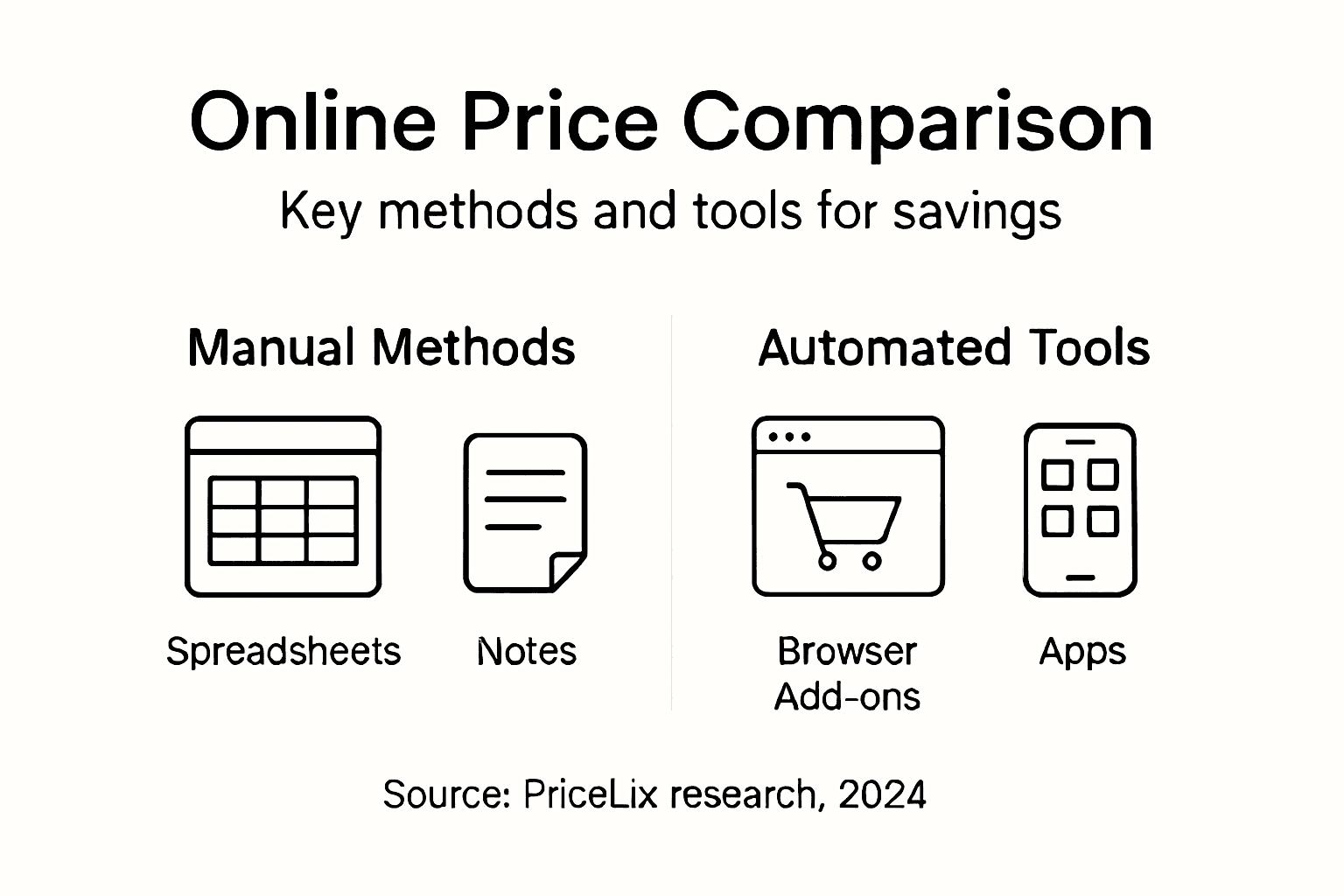
Price comparison strategies have evolved dramatically with the rise of digital technology, offering consumers multiple sophisticated approaches to finding the best deals. These methods range from manual research to advanced algorithmic tracking systems that provide real-time pricing insights across multiple platforms.
Competitive pricing models can be broadly categorized into three primary approaches:
- Manual Price Comparison: Personally checking prices across different websites
- Automated Price Tracking: Using tools that monitor price changes automatically
- Algorithmic Price Analysis: Leveraging advanced computational methods to predict pricing trends
Each method offers unique advantages and complexities for budget-conscious shoppers. Manual comparison requires significant personal time investment, while automated tools dramatically reduce research effort and provide more comprehensive market insights.
Here’s a side-by-side overview of common price comparison methods and how they serve different shopper needs:
| Method | Level of Automation | Time Investment | Market Insight Depth |
|---|---|---|---|
| Manual Price Comparison | None | Very High | Basic, often incomplete |
| Automated Price Tracking | Moderate | Low | Good, tracks multiple prices |
| Algorithmic Price Analysis | High | Minimal | Deep, includes predictions |
Effective price comparison isn’t just about finding the lowest price, but understanding the most strategic time to make a purchase.
Modern price comparison techniques incorporate sophisticated methods like cost-based, competitor-based, and demand-driven pricing strategies. These approaches go beyond simple price matching, utilizing complex algorithms that track historical pricing data, predict future fluctuations, and provide consumers with actionable purchasing intelligence.
The technology behind price comparison has transformed from basic spreadsheet tracking to intelligent systems that analyze massive datasets in real-time. By understanding these methods, consumers can make more informed purchasing decisions and potentially save significant money across various product categories.

Pro tip: Combine multiple price comparison methods to develop a comprehensive understanding of product pricing dynamics.
How Automated Price Tracking Works
Automated price tracking represents a sophisticated technological solution that transforms how consumers monitor product pricing across multiple online platforms. Web scraping techniques analyze pricing data in real-time, providing consumers with unprecedented insights into market pricing dynamics.
The core components of automated price tracking include:
- Data Collection: Continuously gathering pricing information from multiple e-commerce websites
- Price Analysis: Comparing historical and current pricing trends
- Alert Generation: Notifying users about significant price drops or increases
- Predictive Modeling: Forecasting potential future price movements
Modern price tracking systems utilize advanced computational methods that go far beyond simple price comparisons. These intelligent algorithms can process massive amounts of data, identifying patterns that individual shoppers would find impossible to track manually.
Automated price tracking transforms random shopping into a strategic, data-driven decision-making process.
The technological infrastructure behind these systems is remarkably complex. Machine learning algorithms continuously refine their pricing insights, taking into account factors like seasonal variations, market demand, and competitive pricing strategies. This approach allows consumers to make more informed purchasing decisions with minimal personal effort.
By leveraging these advanced tracking technologies, shoppers can access real-time pricing intelligence that was previously available only to professional market researchers. The systems provide comprehensive views of price fluctuations, helping consumers identify the optimal moment to make a purchase.
Pro tip: Configure multiple price alerts for your most desired products to maximize potential savings opportunities.
Key Factors Influencing Price Comparison
Price comparison is a complex process influenced by multiple interconnected variables that extend far beyond simple numerical calculations. Consumer behavior shapes market pricing dynamics in ways that can dramatically impact purchasing decisions.
Key factors that critically influence price comparison include:
- Market Competition: Number of sellers and product alternatives
- Consumer Purchasing Power: Individual income and economic conditions
- Product Availability: Supply chain dynamics and inventory levels
- Seasonal Variations: Time-based pricing fluctuations
- Psychological Pricing Perception: How consumers emotionally interpret price points
Each factor represents a complex ecosystem of interactions that determine how prices are perceived and compared. Consumer psychology plays an enormous role, with factors like reference pricing and perceived value significantly influencing purchasing decisions.
Price comparison is not just about finding the lowest number, but understanding the intrinsic value behind that number.
External economic conditions substantially impact price comparison mechanisms. Government regulations, market structures, and international trade policies create intricate pricing landscapes that shift continuously. Sophisticated price comparison tools must adapt rapidly to these dynamic environments.
Technology has transformed price comparison from a manual, time-consuming process to an instantaneous, data-driven strategy. Machine learning algorithms now process massive datasets, identifying pricing patterns that individual consumers could never manually track.
Pro tip: Always consider multiple factors beyond price, including product quality, shipping costs, and long-term value when making purchasing decisions.
Risks, Mistakes, and What to Avoid
Price comparison strategies offer significant potential savings, but they also come with inherent risks that consumers must carefully navigate. Price comparison risks can undermine consumer trust when shoppers fail to consider critical factors beyond the initial price point.
Common mistakes in price comparison include:
- Ignoring Hidden Costs: Overlooking shipping, taxes, and additional fees
- Neglecting Quality: Prioritizing lowest price over product reliability
- Trusting Outdated Information: Using stale or inaccurate pricing data
- Overlooking Return Policies: Disregarding potential exchange or refund complexities
- Failing to Compare Comprehensive Details: Focusing solely on base price
Consumers frequently make the error of believing that the cheapest option represents the best value. This oversimplification can lead to purchasing decisions that ultimately cost more in terms of product performance, durability, and long-term satisfaction.
Not all prices are created equal - the lowest number doesn’t guarantee the best deal.
Technology has introduced both solutions and challenges in price comparison. While automated tools provide unprecedented access to pricing information, they can also create a false sense of comprehensiveness. Sophisticated price comparison requires critical thinking and nuanced evaluation beyond algorithmic recommendations.
Understanding these risks allows consumers to develop more strategic approaches to online shopping. By maintaining a holistic view that considers multiple factors, shoppers can transform price comparison from a potentially misleading exercise into a powerful financial decision-making tool.
Pro tip: Always cross-reference price information from multiple sources and factor in total cost of ownership, not just the initial price tag.
Comparing Price Comparison Tools and Alternatives
Price comparison technologies have rapidly evolved, offering consumers increasingly sophisticated methods for tracking and analyzing pricing information across multiple platforms. Price comparison tools vary dramatically in their capabilities, functionality, and overall market approach.
Key types of price comparison tools include:
- Browser Extensions: Quick price tracking directly in web browsers
- Standalone Software: Comprehensive pricing analysis platforms
- Mobile Applications: On-the-go price monitoring tools
- Marketplace Integrated Systems: Native price comparison features
- Advanced Algorithmic Trackers: Machine learning-powered pricing insights
Each tool category offers unique advantages and potential limitations. Browser extensions provide immediate convenience, while standalone software delivers more comprehensive market analysis and deeper pricing intelligence.
The following table highlights key considerations when choosing a price comparison tool type:
| Tool Type | Best For | Typical Limitation |
|---|---|---|
| Browser Extension | Quick online checks | Limited product scope |
| Standalone Software | In-depth analysis | Requires installation |
| Mobile Application | Shopping on the go | Smaller interface, fewer filters |
| Marketplace Integration | Convenience, all-in-one | May lack independent results |
| Algorithmic Tracker | Data-driven strategies | Complex setup, tech-savvy users |
Not all price comparison tools are created equal - choose based on your specific shopping needs and technical comfort level.
Modern price comparison technologies go beyond simple price matching. Advanced systems incorporate predictive analytics, historical price trend tracking, and personalized recommendation engines that transform how consumers make purchasing decisions.
Technology has democratized pricing information, allowing individual shoppers access to insights previously available only to professional market researchers. By understanding the nuanced differences between various price comparison tools, consumers can select platforms that provide the most relevant and actionable pricing intelligence.
Pro tip: Test multiple price comparison tools to discover which provides the most accurate and comprehensive pricing insights for your specific shopping preferences.
Take Control of Your Savings with Smart Price Comparison
Navigating the complex world of online pricing can be overwhelming. You want to avoid costly mistakes like ignoring hidden fees or outdated price info and make sense of fluctuating prices influenced by market competition and seasonal changes. By understanding the true value behind each price and leveraging advanced tools like automated price tracking, you can shift from reactive shopping to proactive money saving.
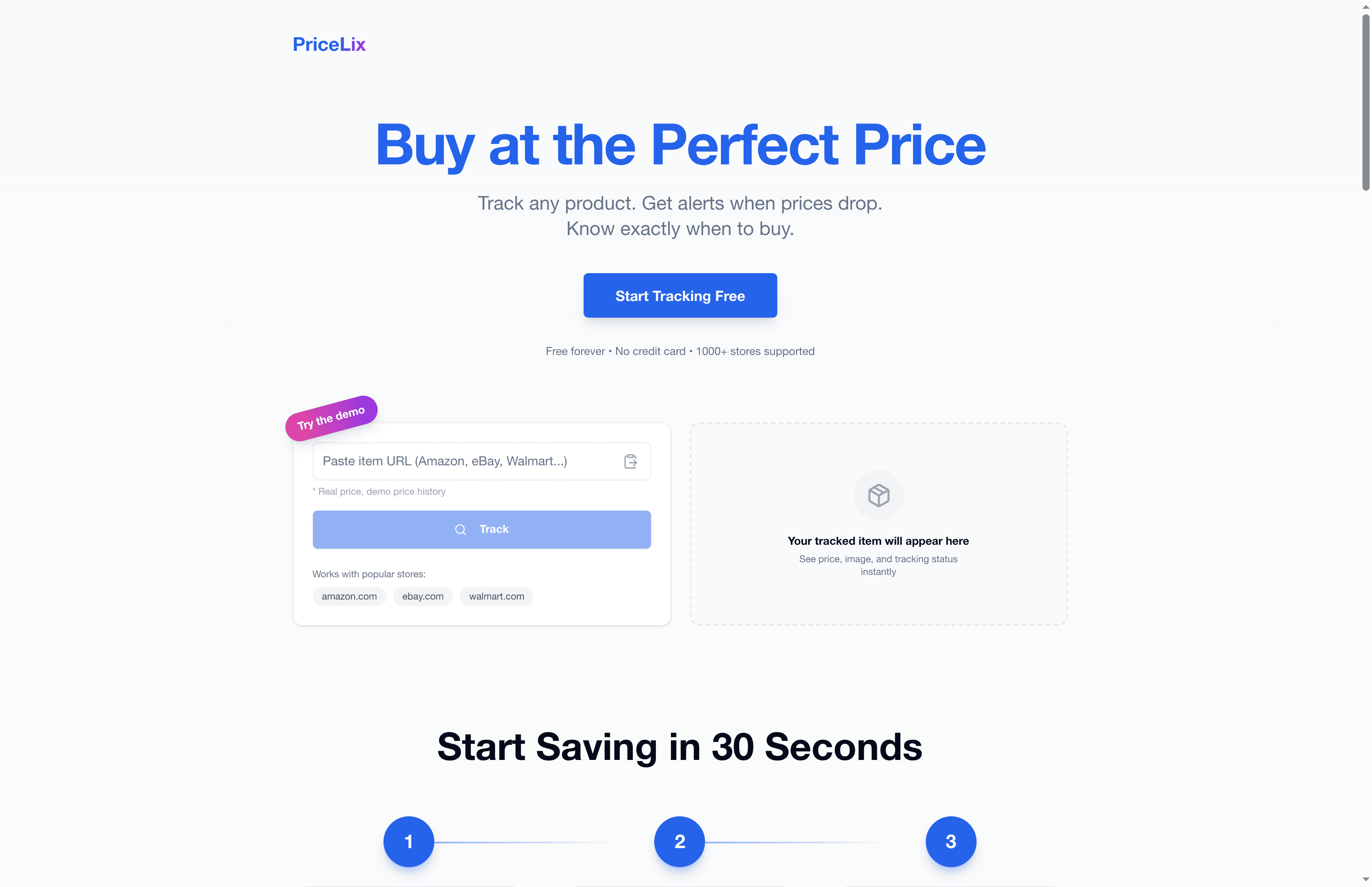
Start maximizing your savings today with PriceLix. Our platform simplifies the process of tracking prices across thousands of retailers including Amazon, eBay, and Walmart. Receive real-time alerts when prices drop and explore detailed price history charts that empower you to buy at the right time. Don’t waste hours on manual comparison or risk missing the best deals. Visit PriceLix now and transform your shopping strategy into an efficient, stress-free experience. Learn how automated price tracking works and master smarter purchasing decisions with PriceLix’s comprehensive tools.
Frequently Asked Questions
What is price comparison and why is it important?
Price comparison is a strategy that helps consumers evaluate and optimize their purchasing decisions by analyzing prices from multiple retailers. It allows shoppers to identify the most cost-effective options and maximize their savings potential.
What are the common myths about price comparison?
Common myths include the belief that the lowest price always represents the best value, that price comparison is too time-consuming, online prices are consistent across all platforms, and that price tracking tools offer no real savings benefits.
How do automated price tracking systems work?
Automated price tracking systems continuously gather pricing information from various e-commerce websites, analyze historical and current pricing trends, alert users about significant price changes, and even forecast potential future price movements.
What are the key factors affecting price comparison?
Key factors include market competition, consumer purchasing power, product availability, seasonal variations, and psychological pricing perceptions. These factors collectively influence how prices are perceived and compared.