
Price Tracking Workflow: Save 20-30% with Automation
Manually checking prices across dozens of retailers wastes hours each week and often results in overpaying by 15-20% or more. Automated price tracking platforms eliminate this burden by monitoring thousands of stores simultaneously, alerting you instantly when prices drop to your target thresholds. This structured workflow helps you capture the best deals effortlessly, saving both time and money while reducing the stress of comparison shopping.
Table of Contents
- Prerequisites: What You Need Before You Start
- Step-by-Step Workflow to Track Prices and Identify Best Deals
- Common Mistakes and Troubleshooting
- Expected Results and Measurable Outcomes
- Comparing Price Tracking Platforms: Features, Usability, and Tradeoffs
- Summary and Best Practices for Long-Term Savings
- Maximize Your Savings with PriceLix
- Frequently Asked Questions About Price Tracking Workflow
Key Takeaways
| Point | Details |
|---|---|
| Automated tracking reduces manual checks | Automated price tracking platforms reduce manual checking time by over 50%, improving deal capture likelihood. |
| Setting realistic thresholds prevents overpaying | Ignoring price history leads to premature purchases and 15-20% average overpayment. |
| Broad retailer coverage expands opportunities | Platforms tracking over 1000 US retailers broaden savings chances and reduce missed deals. |
| Price history guides optimal timing | Interpreting historical data reveals sale cycles and helps you buy when prices hit historic lows. |
| Typical savings range widely | Automated tracking tools save users 20-30% on Amazon purchases, with AI-enhanced tools reporting savings up to 70% on select items. |
Prerequisites: What You Need Before You Start
Before diving into automated price tracking, gather a few essentials to maximize your success. First, identify the exact product model or specific features you want to track. Vague searches yield irrelevant alerts, wasting your time and cluttering your dashboard. Knowing the precise brand, model number, or unique attributes ensures you receive alerts only for the items you truly want.
Next, choose a trustworthy platform that covers major US retailers. Look for services monitoring Amazon, Walmart, eBay, Target, and hundreds of smaller stores. Broad coverage increases your chances of finding the absolute lowest price. Platforms like PriceLix track over 1000 retailers without requiring browser extensions, offering convenience and security. Create an account and familiarize yourself with the dashboard layout, learning where to add products, view price history charts, and manage alert settings.
Set initial realistic price thresholds based on current market ranges. Research typical prices for your desired product across a few retailers to establish a baseline. If an item usually sells for $100, setting an alert at $50 might never trigger. Instead, aim for 10-20% below the average market price as a starting point. Adjust thresholds after reviewing historical data to align with actual sale cycles.
Use automated tools to cut manual effort significantly. Automated price tracking platforms reduce manual checking time by over 50%, freeing you to focus on purchasing decisions rather than repetitive searches. Understanding types of online price tracking helps you select the right monitoring approach for your shopping habits. Explore best price tracking strategies to refine your setup further.
Pro Tip: Start by tracking 3-5 high-priority items rather than dozens at once. This focused approach lets you learn the platform’s features and refine your alert settings without overwhelming your inbox with notifications.
With your prerequisites in place, let’s proceed to the step-by-step workflow to start tracking prices and spotting the best deals.
Step-by-Step Workflow to Track Prices and Identify Best Deals
Follow this proven sequence to automate price monitoring and capture optimal deals consistently.
-
Add desired products to your centralized tracking dashboard. Paste product URLs from Amazon, Walmart, or other supported retailers directly into your platform. Most tools automatically extract product details and begin monitoring immediately. Verify the product title and image match your intended item to avoid tracking the wrong variant.
-
Set customized alerts for price thresholds and discounts. Define your target price or percentage discount that triggers notifications. For example, set an alert at $75 for a $100 item or when prices drop 25% below current levels. Choose notification methods like email, SMS, or push notifications based on urgency. Daily digest emails work well for non-urgent items, while instant alerts suit time-sensitive deals.
-
Interpret price history charts to spot trends and sale cycles. Most platforms display historical pricing data over weeks or months. Look for recurring patterns like weekend sales, monthly promotions, or seasonal discounts. Identify the lowest recorded price to set realistic expectations. If a product regularly drops to $70 every quarter, waiting for that cycle saves more than buying at $85 during a minor discount.
-
Prioritize purchases when alerts match target prices. When you receive an alert, review the price history chart to confirm the current price represents a genuine deal. Compare the alert price against the 30-day average and historical low. If the current price sits within 5-10% of the historic low, it’s likely a strong buying opportunity.
-
Verify coupon codes and check competing deals before finalizing purchase. Before clicking “buy,” search for additional coupon codes that stack with the current discount. Cross-reference prices on competing retailers to ensure you’ve found the absolute best deal. Some platforms integrate coupon databases, automatically suggesting codes at checkout.
Users of AI-enhanced price tracking tools report savings up to 70% on select purchases by timing buys precisely and combining discounts strategically. Learning how to track prices for savings and following a comprehensive monitoring product prices guide sharpens your deal-hunting skills. Explore best price tracking strategies and browse price tracking tips and guides to refine your approach continuously.
| Workflow Step | Time Investment | Savings Impact |
|---|---|---|
| Add products | 2-3 minutes | Foundation for alerts |
| Set alerts | 3-5 minutes | 15-20% savings potential |
| Review history | 5-10 minutes weekly | Optimal timing decisions |
| Verify deals | 2-3 minutes per purchase | Additional 5-10% via coupons |
Pro Tip: Schedule a weekly 10-minute review session to check price history charts for all tracked items. This habit keeps you informed of emerging trends and prevents alert fatigue from poorly configured thresholds.
Now that you know the workflow, let’s look at common mistakes shoppers make and how to troubleshoot them for better results.
Common Mistakes and Troubleshooting
Avoiding these pitfalls ensures your price tracking workflow delivers maximum savings without frustration.
Impulsive buying without consulting price history. Receiving an alert doesn’t always mean you’ve found the best price. Always review the price history chart before purchasing. Ignoring price history leads to premature purchases and 15-20% average overpayment. A 10% discount might seem appealing, but waiting for the recurring 30% seasonal sale saves significantly more.
Setting unrealistic, data-based price alert thresholds. Alerts set too aggressively never trigger, while overly lenient thresholds flood your inbox with mediocre deals. Analyze 30 to 90 days of price history to identify realistic target prices. If a product’s historic low is $80 and current price is $110, setting an alert at $85 provides a reasonable compromise between savings and purchase probability.
Tracking prices across a single retailer. Relying on single retailer data or ignoring coupon verification causes $50-$100 missed savings per purchase. Different retailers offer varying base prices, promotions, and shipping costs. Multi-retailer tracking ensures you capture the absolute lowest total cost, including taxes and delivery fees.
Failing to verify coupon codes and discount validity. Outdated or invalid coupon codes waste time and lead to checkout frustration. Before finalizing a purchase, test coupon codes on the retailer’s site or use platforms that automatically apply and verify codes. Stack manufacturer coupons with retailer discounts when possible for deeper savings.
Neglecting regular alert reviews and setting adjustments. Market conditions shift, and static alert thresholds become outdated. Review and adjust your alert settings monthly based on updated price trends. Remove alerts for purchased items to reduce notification clutter and maintain focus on active targets.
Pro Tip: Use a spreadsheet to track alert triggers, purchase decisions, and actual savings achieved. This data reveals which alert thresholds work best and helps refine your strategy over time. Understanding algorithms price tracking impact further optimizes your approach.
Avoiding these mistakes boosts success; next, we examine the realistic results and measurable outcomes you can expect from this workflow.
Expected Results and Measurable Outcomes
Implementing a structured price tracking workflow delivers quantifiable benefits across savings, time efficiency, and purchasing confidence.

Typical savings of 20-30% on major platforms. Automated tracking tools save users 20-30% on Amazon purchases, with similar results on Walmart, eBay, and other major retailers. These savings accumulate quickly across multiple purchases, easily offsetting annual subscription costs for premium tracking services.
Up to 70% savings possible using AI-empowered tools. Advanced platforms leveraging machine learning identify optimal buying windows by analyzing millions of price points. Users of AI-enhanced price tracking tools report savings up to 70% on select purchases, particularly during flash sales or clearance events that human monitoring might miss.
Over 50% reduction in manual price monitoring time. Automation eliminates repetitive price checks, freeing hours each week. Instead of visiting dozens of retailer websites daily, you receive alerts only when prices hit your targets. This efficiency allows you to track more products simultaneously without increasing time investment.
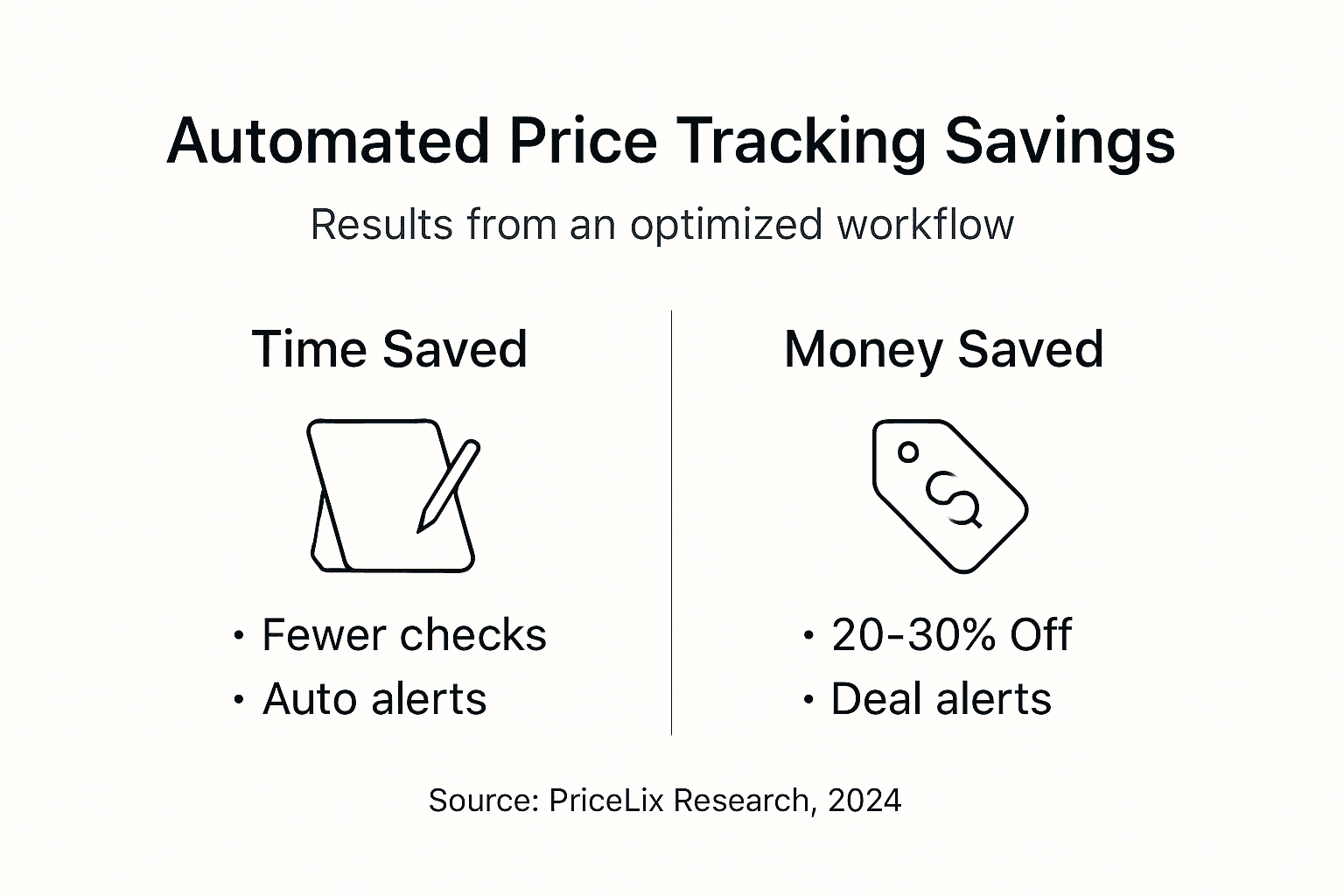
85% success rate of price alerts hitting near historic lows. Price alerts near historic lows succeed 85% of the time, reducing overpayments and manual effort by over 50%. Well-configured alerts based on thorough historical analysis consistently trigger during genuine sale events rather than minor fluctuations.
Significant decrease in impulse buying and overpayment risks. Structured workflows introduce deliberate decision points, reducing emotional purchases. Reviewing price history and comparing competing deals before buying ensures each purchase represents genuine value rather than manufactured urgency from retailers.
“Automated price tracking transformed my shopping habits. I’ve saved over $1,200 in six months by waiting for genuine deals rather than buying at inflated ‘sale’ prices. The time saved from manual checks lets me research products more thoroughly.”
Discover benefits of price trackers to understand the full value these tools provide beyond raw savings percentages.
Having seen the outcomes you can expect, let’s help you choose the right platform with a comparison of popular price tracking tools.
Comparing Price Tracking Platforms: Features, Usability, and Tradeoffs
Selecting the right platform maximizes your workflow effectiveness. Here’s how popular services compare across key dimensions.
Coverage breadth is crucial. Platforms tracking over 1000 US retailers broaden savings chances and reduce missed deals. Limited coverage forces you to use multiple tools or miss price drops on niche retailers. PriceLix monitors over 1000 stores, while CamelCamelCamel focuses exclusively on Amazon. Broader coverage provides more opportunities but may complicate dashboard navigation.
Alert customization and notification frequency vary widely. Premium platforms offer granular control over alert triggers, including percentage thresholds, absolute price targets, and stock availability notifications. Basic services provide only generic alerts. Customization prevents notification overload and ensures alerts align with your purchasing priorities.
Browser extension vs platform-only impacts usability and security. Extensions inject themselves into browsing sessions, raising privacy concerns and potential security vulnerabilities. Platform-only services like PriceLix require no installations, offering cleaner user experiences and better data protection. Extensions provide convenience for impulse tracking but sacrifice security.
Privacy considerations favor platforms not requiring extensions. Browser extensions often request broad permissions to read and modify webpage content, creating data leakage risks. Platform-based services limit data collection to items you explicitly track, respecting privacy without compromising functionality.
| Platform | Retailer Coverage | Alert Customization | Browser Extension | Privacy Focus |
|---|---|---|---|---|
| PriceLix | 1000+ US retailers | Highly customizable | Not required | Strong |
| CamelCamelCamel | Amazon only | Moderate | Optional | Moderate |
| Honey | 30,000+ stores | Limited | Required | Weak |
| Keepa | Amazon focus | Highly customizable | Optional | Moderate |
| PriceGrabber | 1000+ retailers | Moderate | Not required | Strong |
Pro Tip: Prioritize platforms offering mobile apps with push notifications. Instant alerts on your phone ensure you never miss time-sensitive deals, even when away from your computer. Understanding price comparison works helps you evaluate platform algorithms and data accuracy.
With platform options clear, let’s summarize best practices to sustain long-term savings success.
Summary and Best Practices for Long-Term Savings
Maintaining an effective price tracking workflow requires ongoing attention and refinement. Apply these best practices to maximize sustained savings.
-
Automate and customize alerts for efficient monitoring. Configure alerts based on historical data rather than arbitrary thresholds. Use percentage-based triggers for volatile products and absolute price targets for stable categories. Regularly test alert frequency to balance responsiveness with inbox management.
-
Use price history charts to time purchases wisely. Study 60 to 90 days of pricing data before setting alerts. Identify recurring sale cycles tied to holidays, product launches, or quarterly clearances. Patience pays; waiting for predictable price drops yields better savings than chasing minor discounts.
-
Verify coupons and discount authenticity before buying. Test coupon codes at checkout to avoid expired or invalid offers. Cross-reference manufacturer promotions with retailer sales to stack discounts legally. Read fine print for exclusions that might invalidate advertised savings.
-
Maintain multi-retailer tracking to find best market deals. Never assume one retailer consistently offers the lowest prices. Track the same product across Amazon, Walmart, eBay, and niche stores. Include shipping costs and taxes in total price comparisons for accurate evaluations.
-
Regularly update alert thresholds based on ongoing data. Market conditions evolve, making static alerts obsolete. Monthly reviews ensure thresholds reflect current pricing realities. Remove alerts for discontinued products and add new targets as your shopping needs change.
Understand monitor online prices benefits to appreciate the full strategic value of disciplined price tracking beyond immediate savings.
Now that you have best practices, discover how PriceLix can help streamline your price tracking workflow and maximize your savings.
Maximize Your Savings with PriceLix
Ready to stop overpaying and start capturing genuine deals effortlessly? PriceLix tracks prices across 1000+ US retailers without requiring browser extensions, protecting your privacy while delivering comprehensive market coverage. Our intuitive dashboard consolidates all tracked items in one place, with customizable alerts that notify you instantly when prices hit your targets.
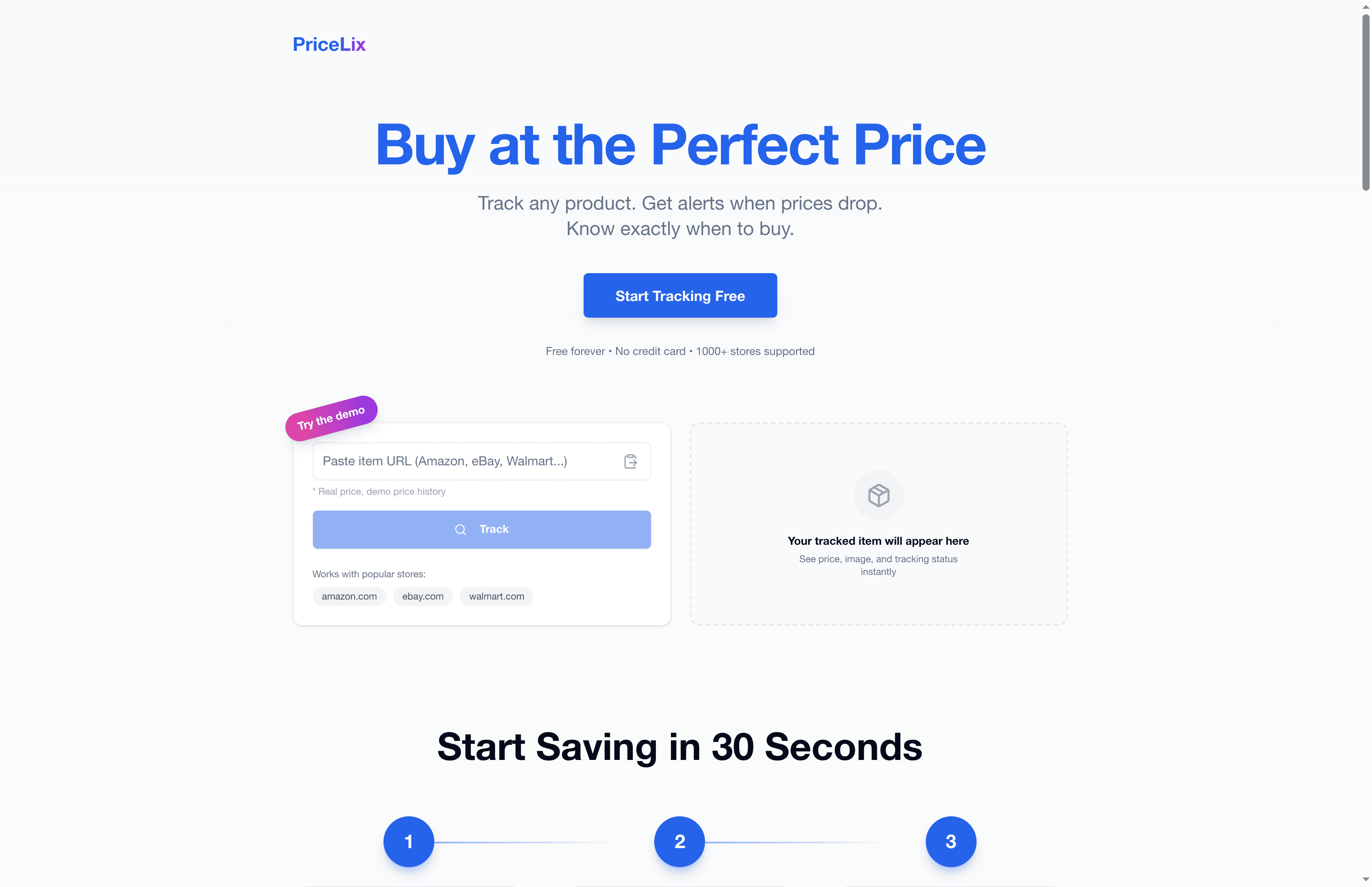
Leverage expert strategies and proven technology to save 20-30% or more on every purchase. Reduce manual effort by over 50% while never missing a price drop again. Explore types of online price tracking and implement best price tracking strategies using our powerful platform. Start tracking today at PriceLix and transform your shopping habits into consistent savings.
Frequently Asked Questions About Price Tracking Workflow
What platforms cover the most US retailers for price tracking?
PriceLix tracks over 1000 US retailers including Amazon, Walmart, eBay, Target, and hundreds of specialty stores, offering the broadest market coverage without requiring browser extensions. This extensive reach ensures you capture the absolute lowest prices across the entire retail landscape.
How do price alerts work and how can I customize them?
Price alerts monitor your tracked products continuously and notify you via email, SMS, or push notifications when prices drop below your defined thresholds. Customize alerts by setting percentage discounts, absolute price targets, or stock availability triggers tailored to each product’s priority.
Can I use price tracking without installing browser extensions?
Yes, platform-based services like PriceLix require no browser extensions, protecting your privacy and security while delivering full price tracking functionality. Simply add product URLs through the web dashboard or mobile app to start monitoring instantly.
How often should I monitor price history charts?
Review price history charts weekly for high-priority items and monthly for lower-priority products. This frequency balances staying informed of emerging trends with avoiding excessive time investment, ensuring you catch optimal buying windows without constant vigilance.
What are realistic savings expectations using automated price tracking?
Most users save 20-30% on average purchases through consistent price tracking, with potential savings reaching 70% on select items using AI-enhanced tools. Actual savings depend on patience, proper alert configuration, and willingness to wait for genuine deals rather than settling for minor discounts.