
What Is Predictive Shopping? Your 2026 Shopper's Guide
TL;DR:
- Predictive shopping uses AI to forecast individual needs based on real-time behaviors and contextual signals. It enables proactive recommendations, price alerts, and smarter timing, ultimately saving consumers money and reducing shopping friction. However, its accuracy depends on quality data, privacy considerations, and consistent platform reliability.
Predictive shopping sounds like something out of a sci-fi movie. But it’s already working quietly behind the scenes every time an online store suggests exactly what you were about to search for. What is predictive shopping, really? It’s AI using your behavior, context, and purchase history to anticipate what you need before you type a single word. And for anyone trying to save money and shop smarter, understanding how this technology works puts serious power in your hands.
Table of Contents
- Key takeaways
- What predictive shopping is and how it works
- Technologies already shaping predictive shopping
- Predictive shopping vs. traditional recommendations
- Practical benefits for online shoppers
- Challenges and misconceptions to know
- My honest take on predictive shopping
- Let Price-lix put predictive shopping to work for you
- FAQ
Key takeaways
| Point | Details |
|---|---|
| AI drives prediction | Predictive shopping uses machine learning to forecast your needs, not just react to clicks. |
| Real-time signals matter | Your location, browsing patterns, and even weather affect what gets predicted for you. |
| Tools already exist | Google’s Universal Cart and conversational AI agents are live predictive shopping examples today. |
| Data quality determines accuracy | Poor product data leads to bad predictions, so platform choice matters for shoppers. |
| Price alerts are a key benefit | Catching price drops at the right moment is one of the most practical wins predictive shopping offers. |
What predictive shopping is and how it works
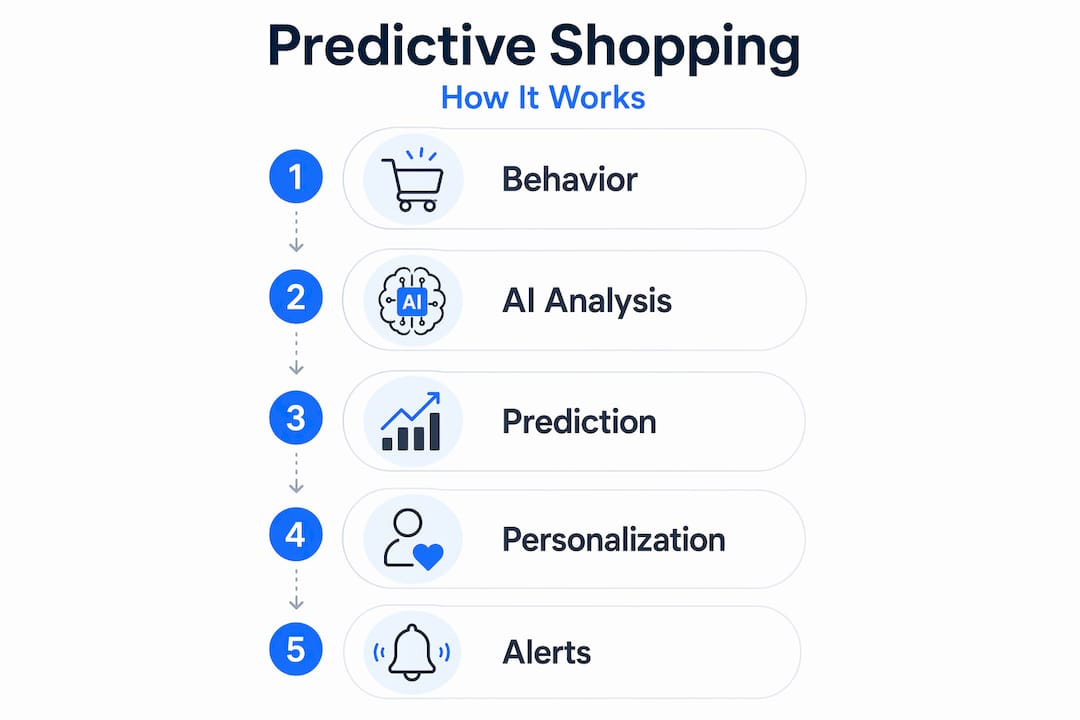
Predictive shopping is the process of using AI to anticipate needs before a shopper explicitly states them. Instead of waiting for you to search for a product and then showing you related items, predictive systems work upstream. They analyze what you’ve looked at, what you’ve bought, how long you hovered over a product, and even external signals like your location or the current weather.
Think about the difference between a store clerk who hands you a coupon after you’ve already paid, versus one who says “Hey, the jacket you looked at last week just dropped $40.” That second clerk is doing what predictive shopping does. The technology shifts the entire shopping experience from reactive to proactive.
Here’s what predictive shopping actually pulls from to make those forecasts:
- Purchase history: What you’ve bought before, how often, and at what price points
- Browsing behavior: Pages visited, time spent, items added or removed from carts
- Contextual signals: Your location, the device you’re on, the time of day, even current weather conditions
- Inferred preferences: Price sensitivity, brand loyalty, and category affinity detected from patterns
These inputs feed into machine learning models that don’t just look at what you did last. They forecast what you’re likely to do next. That’s the core difference between a basic recommendation engine and true predictive shopping.
Pro Tip: If you want to get better predictions from any shopping platform, make sure you’re logged in when browsing. Anonymous sessions give AI systems far less to work with, so your suggestions end up generic.
Technologies already shaping predictive shopping
The technology isn’t theoretical anymore. Two of the most talked-about implementations right now are Google’s Universal Cart and Microsoft’s Personalized Shopping Agent, and both offer a real glimpse into where shopping is heading.
Google’s Universal Cart is built around persistent cart tracking across retailers. Instead of managing separate carts on Amazon, Target, and Sephora, shoppers can track items in one place. The system then monitors price drops, flags stock changes, and even warns you when products might not be compatible with each other before you check out. That last feature alone can save you from a frustrating return.

Beyond the cart itself, Google also introduced the Universal Commerce Protocol, an open standard that brings together research, cart management, payment, and customer service into a single AI-powered journey. Retailers like Walmart and Target are already participating.
Microsoft’s approach takes a different angle. Their Personalized Shopping Agent works through conversational AI. Instead of typing “blue running shoes size 10,” you can describe what you need in plain language, ask follow-up questions, and get recommendations that adjust based on your answers. Natural language product discovery like this changes the experience from a search task to an actual conversation.
Here’s what both approaches share:
- They react in real time, not just at the start of a session
- They remember context across visits, not just within one session
- They use prediction to reduce friction at key decision points, like checkout or comparison
Pro Tip: When using AI-powered shopping tools, try describing what you need instead of searching by product name. Conversational queries like “something waterproof for hiking under $80” often surface better matches than exact keyword searches.
Predictive shopping vs. traditional recommendations
A lot of people assume predictive shopping is just a fancier word for “Amazon also bought” suggestions. It’s not. The difference matters.
| Feature | Traditional recommendations | Predictive shopping |
|---|---|---|
| Trigger | Based on what you clicked | Based on predicted intent before you act |
| Timing | Shown after browsing starts | Can surface before or during the session |
| Personalization | Segment-level patterns | Individual-level, real-time adjustment |
| Data used | Past purchase and click data | Behavioral, contextual, and real-time signals |
| Adaptability | Static within a session | Adjusts dynamically as you interact |
| Goal | Cross-sell and upsell | Reduce friction and match intent precisely |
Traditional recommendation systems learn from clicks and cart behavior to suggest what shoppers might want next. That’s useful. But predictive shopping goes further by adjusting in real time as micro-moments unfold. If you abandon a cart, hesitate on a page, or revisit a product three times in a week, a predictive system takes all of that as live signal and recalibrates.
The shift is from one-time campaign logic to continuous personalization. Retailers using predictive analytics in retail aren’t just sending you a weekly email with “you might also like.” They’re tracking your journey moment by moment and responding accordingly. For shoppers, that means less time wasted scrolling through irrelevant results and more moments where the right product shows up at exactly the right time.
Practical benefits for online shoppers
Understanding how predictive shopping works is one thing. Knowing how to actually use it to save money and avoid mistakes is where it gets practical. Here are the biggest real-world wins:
-
Price-drop alerts at the right moment: Predictive systems monitor price history and flag when a tracked item hits a target price. You don’t have to keep checking manually. The alert finds you. Price history is one of the most underused tools in smart shopping, and predictive platforms make it automatic.
-
Stock notifications before items sell out: If AI detects that a product is trending or inventory is dropping, it can alert you before you miss your window. This is especially valuable during sales events or product launches.
-
Guided product discovery: Conversational AI agents help you narrow down options through back-and-forth dialogue. Instead of reading 50 product descriptions, you answer a few questions and get a short, relevant list.
-
Compatibility warnings before checkout: One of the most practical benefits of predictive shopping is catching incompatible items before you pay. Google’s Universal Cart already does this for electronics. It’s the kind of thing that prevents a $200 mistake.
-
Smarter timing decisions: Predictive analytics in retail increasingly helps shoppers understand not just what to buy, but when. Knowing whether a price is at a seasonal low or about to spike is real money in your pocket. Tools that help you predict the best time to buy take the guesswork out of timing entirely.
Pro Tip: Use platforms that combine price history charts with alert settings. Seeing that a product has dropped to its lowest price in six months is far more useful than seeing that it dropped $5. Context is everything.
Challenges and misconceptions to know
Predictive shopping is impressive, but it’s not magic. A few things are worth keeping in mind before you rely on it completely.
-
It’s only as good as the data behind it: Prediction quality depends on structured, accurate product data. If a retailer’s product catalog is poorly maintained, even the best AI will produce irrelevant suggestions. This is why the platform you use matters.
-
Privacy is a real consideration: Predictive systems require access to behavioral data. Reputable platforms are transparent about what they collect and how they use it. Read privacy settings and opt for tools that give you control over your data.
-
AI assists, it doesn’t decide for you: Predictive shopping is a support tool. It can surface a great deal or warn you about a mismatch, but it can’t know your full context. You still need to apply your own judgment, especially for big purchases.
-
New accounts get weaker predictions: The less history a system has on you, the less accurate its forecasts. Cold-start limitations are real. Your experience improves significantly after consistent use.
Choosing trustworthy platforms that combine discount prediction tools with transparent data practices is the smartest move a shopper can make right now.
My honest take on predictive shopping
I’ve watched this space change fast. A few years ago, “predictive shopping” mostly meant a retailer emailing you about a product you already bought. Today, it means a system that tracks a product across a dozen retailers, watches the price move for weeks, and pings you at the exact moment you should buy.
What I’ve found is that most shoppers miss the biggest benefit. They focus on product recommendations, but the real value is in timing. Knowing when to buy matters more than knowing what to buy. Most people already know what they want. What they don’t know is whether today’s price is actually good, or whether waiting two weeks will save them $30.
The other thing I’ve learned is that AI is only as useful as the data pipeline feeding it. I’ve seen predictive tools fail spectacularly because the product feed was incomplete or outdated. That’s not an AI problem. That’s a data problem. Shoppers should pick platforms with a track record of accurate, up-to-date pricing and inventory information.
My honest opinion on the future of predictive shopping? The gap between “browsing online” and “getting exactly what you need at the best price” is going to keep closing. The shoppers who learn to use these tools actively, not just passively, will consistently pay less and waste less time.
— Serhii
Let Price-lix put predictive shopping to work for you
Predictive shopping is most powerful when it’s backed by real price data. That’s exactly what Price-lix is built for.
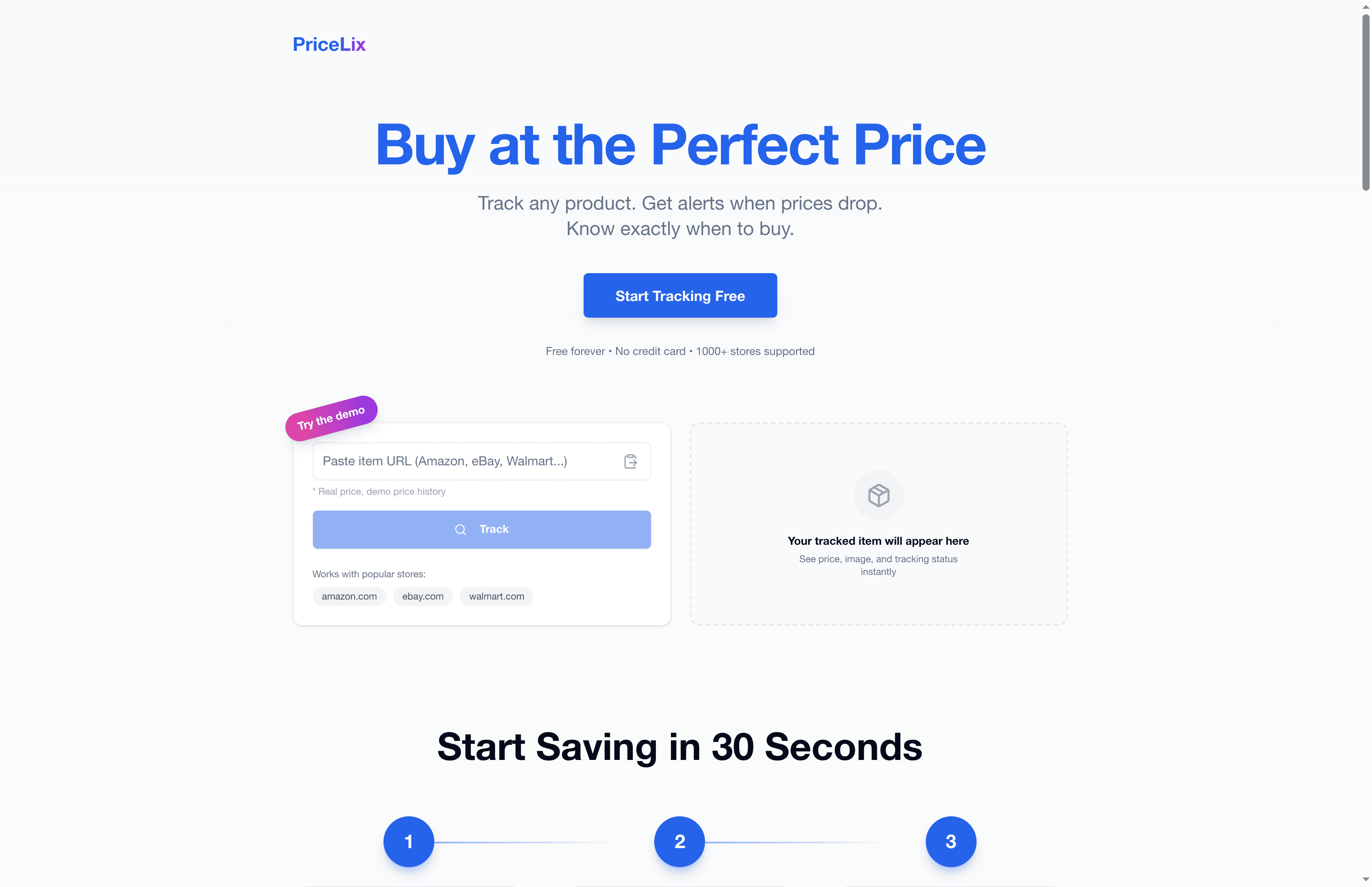
Price-lix tracks prices automatically across Amazon, eBay, Walmart, and over a thousand other stores. You set an alert, and we watch the price for you. When it drops, you know immediately. No refreshing product pages. No second-guessing whether the sale is real. Our price history charts show you exactly where today’s price sits in context, so you can tell a genuine deal from a fake markdown in seconds. If you’re ready to shop with data behind every decision, start tracking prices at Price-lix today.
FAQ
What is predictive shopping in simple terms?
Predictive shopping is when AI uses your behavior, purchase history, and real-time context to anticipate what you want to buy before you search for it. It moves the shopping experience from reactive to proactive.
How does predictive shopping work?
Predictive shopping analyzes behavioral signals like browsing history, cart activity, and contextual data like location and time of day. Machine learning models then forecast buying intent and surface relevant products, prices, or alerts at the right moment.
What are the main benefits of predictive shopping?
The biggest benefits include automatic price-drop alerts, stock notifications, guided product discovery through conversational AI, and compatibility warnings that prevent checkout mistakes.
Is predictive shopping the same as a recommendation engine?
No. Traditional recommendation engines react to what you’ve already done. Predictive shopping uses real-time signals to adapt dynamically as you interact, often anticipating needs before you express them.
How does predictive analytics in retail help me save money?
Predictive analytics tracks price history and market trends to tell you when a product is at its lowest price, when to wait, and when a sale is genuinely worth acting on. That timing intelligence is where the real savings come from.