
What Is Discount Prediction: a Shopper's Guide
TL;DR:
- Discount prediction uses data patterns and behavioral signals to forecast when and how much prices will drop. Retailers leverage algorithms, seasonal trends, and customer signals to time discounts strategically, making them more predictable for savvy shoppers. Automated tools and consistent tracking help consumers anticipate deals, but understanding retailer behavior remains essential for effective purchasing decisions.
Discounts feel random. One day a TV you’ve been eyeing drops $80, and the next week it bounces back up. But here’s the truth: what is discount prediction, and why should you care? Discount prediction is the practice of using data patterns and behavioral signals to anticipate when and how much a price will fall. Retailers have been doing it for years to protect their margins. Now, smart shoppers are turning the same logic around to get ahead of the deals instead of chasing them after the fact.
Table of Contents
- Key takeaways
- What discount prediction actually means
- Consumer signals that hint at upcoming discounts
- Manual tracking vs. technology-aided methods
- Practical tips to apply discount prediction in your shopping
- Risks and limits of discount prediction
- My take on where discount prediction is heading
- Stop guessing. Start tracking with Price-lix
- FAQ
Key takeaways
| Point | Details |
|---|---|
| Discounts follow patterns | Retailers use algorithms and seasonal data to time discounts, making them more predictable than they appear. |
| Consumer signals exist | Email frequency compression and retargeting ad shifts are observable hints that a discount is coming. |
| Manual vs. automated tracking | Logging promotions by hand works but technology tools catch price drops faster and at greater scale. |
| Prediction has real limits | Not every discount is foreseeable, and waiting too long risks missing the deal or a stockout. |
| Tools make it practical | Price tracking platforms automate the work of monitoring history and alerting you when prices move. |
What discount prediction actually means
Discount prediction is a form of predictive analytics. At its core, it means analyzing historical pricing data, seasonal trends, and behavioral signals to estimate when a discount is likely to occur and how deep it will go. Retailers have practiced this for years on their own customers. Now consumers are learning to use the same signals in reverse.
On the retailer side, predictive discount models use customer firmographics, purchase behavior, and price elasticity to decide exactly when to offer a markdown, to whom, and at what percentage. This is not guesswork. It is math applied to millions of transactions. The goal is to move inventory without leaving money on the table.
The inputs behind a solid discount prediction method include:
- Historical transaction data showing when products sold at full price versus discounted price
- Seasonality cycles tied to holidays, back-to-school periods, tax refund season, and end-of-quarter inventory pressure
- Price elasticity signals measuring how sensitive buyers are to small price changes
- Inventory pressure when stock levels are high and clearance becomes necessary
- Customer behavior patterns including cart abandonment rates and browsing frequency
AI-powered pricing systems analyze real-time demand and inventory to automate markdowns and optimize margins, which is now standard practice among mid-scale and large retailers. This means the prices you see are often the output of a machine learning model, not a human decision.
Pro Tip: Understanding dynamic pricing tactics helps you recognize when a price drop is genuine versus a temporary fluctuation designed to create urgency.
The deeper purpose here matters. Predictive models focus on raising intelligence and precision rather than indiscriminately lowering prices. Discounts are laser-targeted and contextually relevant to protect margins. As a shopper, that means the discount you see was likely planned, which also means it can be anticipated.
Consumer signals that hint at upcoming discounts
Retailers do not flip a switch randomly. Before most sales, there is a build-up in their marketing behavior that you can observe. Learning to read these signals is one of the most practical discount prediction strategies available to any shopper.
Here are the key patterns to watch:
-
Email frequency spikes. Marketing emails cluster within 48 hours before a sale goes live. If a brand emails you twice in one day when they normally send one per week, that compression is a signal. The standard sequence shortens from 5-day intervals to 3 messages in 48 hours as conversion events approach.
-
Retargeting ad language shifts. When you browse a product and the ads you see afterward shift from general awareness (“Check out our new collection”) to urgency language (“Only a few left” or “Prices drop Friday”), that progression is deliberate. Retargeting ads move consumers from awareness toward urgency and small incentives before the actual discount offer appears.
-
Sudden price micro-fluctuations. Sometimes a price dips by $2 to $5, then rises again. Retailers test price sensitivity in small segments before rolling out a larger discount. That micro-dip is a test run.
-
Predictable promotional timing windows. Month-end dates, paydays (the 1st and 15th of the month), and pre-holiday windows are not coincidences. Retailers know when consumers have money and plan promotions around those moments.
-
Cart and wishlist reminder escalation. If you abandoned a cart and suddenly start receiving more aggressive follow-up emails with free shipping offers or “special price just for you” language, a targeted discount is likely incoming.
Pro Tip: Subscribe to retailer emails specifically to track their communication cadence. You are not reading them for content. You are watching the clock on their promotional sequence.
Manual tracking vs. technology-aided methods
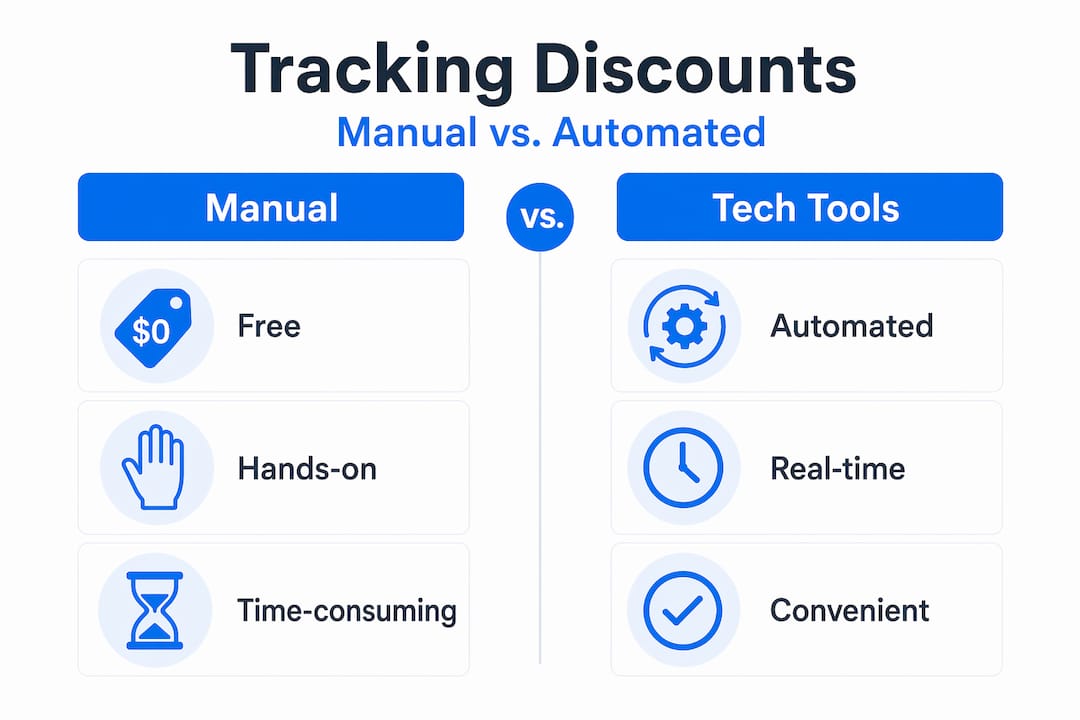
There are two broad approaches to understanding discount forecasts: doing it yourself or letting a tool do it for you. Both work. But they are not equal in effort or accuracy.
| Method | Pros | Cons |
|---|---|---|
| Manual logging | Free, builds intuition, no tech required | Time-intensive, easy to miss patterns, hard to scale |
| Spreadsheet tracking | Organized, visual, customizable | Requires discipline, still manual data entry |
| Browser-based alerts | Semi-automated, real-time notifications | Limited to supported stores, browser-dependent |
| Dedicated price tracking platforms | Fully automated, price history charts, multi-store coverage | Requires account setup |
Manual tracking involves logging every promotional email, ad, and price observation in a spreadsheet over several weeks. You note the date, the product, the price, and any marketing message you received. Done consistently, this reveals retailer sale patterns clustered around paydays or month-ends and gives you a baseline for calculating discount predictions on your own.

The limitations are real, though. Manual observation is slow. You will miss price changes that happen overnight or mid-day. And doing this across ten different stores simultaneously is not realistic for most people.
That is where automated tools earn their place. Platforms built for price tracking across stores remove the manual work entirely. They check prices daily, log every movement into a history chart, and send you an alert when a product hits your target price. The real-time price monitoring that these tools offer is something no spreadsheet can replicate at scale.
The best workflow combines both. Use manual observation to understand the promotional behavior of your most-watched retailers. Use automated tools to catch the actual price drop the moment it happens.
Practical tips to apply discount prediction in your shopping
You do not need a data science degree to use discount prediction strategies effectively. Here is a practical process you can start using today.
-
Build a short-term tracking log. For any product you plan to buy, spend two to three weeks logging its price every few days. Note any marketing emails you receive about it. This is your baseline for discount rate analysis.
-
Identify the retailer’s promotional calendar. Most major retailers run predictable sales tied to holidays, back-to-school season, and fiscal quarter endings. Cross-reference your product’s price history with these dates.
-
Watch for email frequency changes. When you notice a brand moving from weekly to near-daily email contact, treat that as a 48-hour alert that a sale is close.
-
Set a price floor target, not just a discount percentage. Instead of waiting for “20% off,” decide the exact dollar amount you are willing to pay. This makes it easier to act immediately when the price hits your number.
-
Factor in stockout risk. For high-demand items, waiting for a deeper discount can mean the product sells out entirely. Discount campaigns are often tied to inventory clearance, and once stock is gone, the price may jump. Know when the risk of waiting outweighs the potential savings.
-
Use price alerts rather than manual checks. Set an automated alert for your target price and step away. Checking prices manually every day introduces noise and can lead to impulsive purchases if you see a small temporary dip.
Staying consistent with this process turns discount prediction from a guessing game into something that actually informs your purchasing decisions.
Risks and limits of discount prediction
Discount prediction is a useful tool, but it is not a crystal ball. There are real limitations every shopper should understand before over-committing to a wait-and-see strategy.
- Randomized vendor promotions. Flash sales, clearance events, and third-party seller discounts on platforms like Amazon are often spontaneous. They do not follow the retailer communication sequences described above, making them nearly impossible to predict.
- Inaccurate pattern reading. Just because a retailer emailed you twice in one week does not guarantee a sale is coming. Sometimes it is just a new product launch or a loyalty program push.
- Analysis paralysis. This is the biggest trap. You spend so much time calculating discount predictions and watching patterns that you never actually buy. Meanwhile, the product sells out or the price rises. Discount pricing can train shoppers to wait indefinitely, which is a behavioral pattern that works against your actual goal.
- Retailer modeling shifts. Predictive discount models continually recalibrate in response to market shifts. A pattern that worked last quarter may not repeat next quarter because the retailer adjusted its algorithm.
Treat predictions as probabilities, not certainties. Set a deadline for yourself. If the discount does not materialize by a specific date, buy at the current price and move on.
My take on where discount prediction is heading
I have spent a lot of time watching how retailers and shoppers interact around pricing, and one thing stands out to me. Most shoppers treat discount prediction as a hunt for the lowest possible price. That is the wrong frame.
The real value is in timing intelligence, not waiting indefinitely. Knowing that a sale is likely in the next two weeks is not a reason to freeze. It is a reason to prepare: confirm your target price, set your alert, and be ready to move fast when it hits.
What I find genuinely interesting is how far upstream retailers are now thinking. Some brands are analyzing social media trends 12 to 18 months ahead to avoid reactive discounting entirely. They want to sell through inventory at full price. The discount is becoming a last resort, not a standard event. That shifts the dynamic for shoppers. Fewer predictable discount cycles means the signals matter more, not less.
I also caution against over-relying on automated tools without developing your own intuition. A price history chart tells you what happened. It does not tell you why. Understanding retail pricing strategies helps you interpret the context behind a price movement instead of just reacting to a number on a screen. Tools are a multiplier of good judgment, not a replacement for it.
— Serhii
Stop guessing. Start tracking with Price-lix
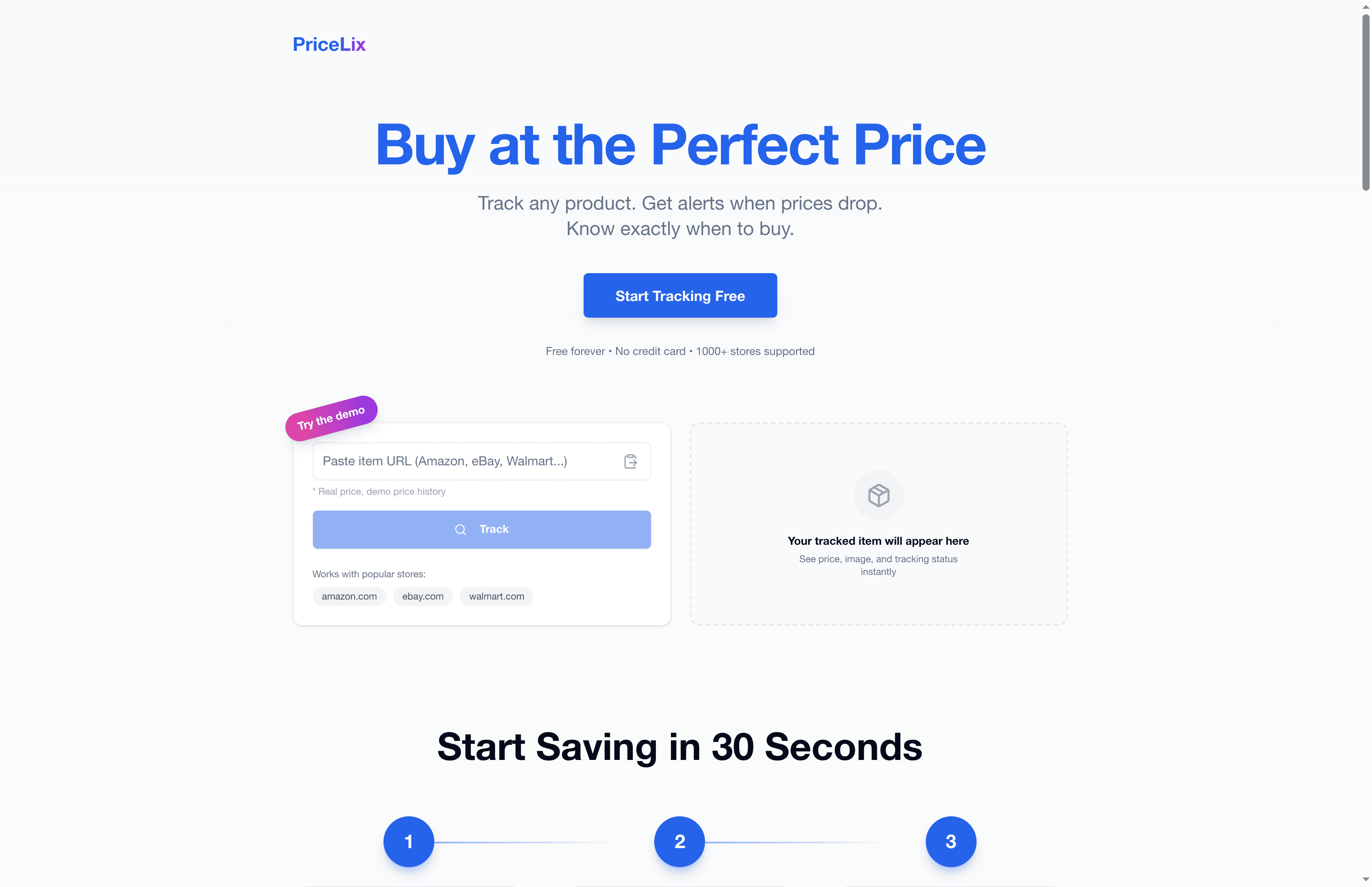
If you have been manually checking prices or missing deals because you did not get the alert in time, Price-lix was built exactly for that problem. The platform tracks prices automatically across Amazon, eBay, Walmart, and over a thousand other stores. You get real-time alerts the moment a price hits your target, plus full price history charts so you can see exactly when and how deep discounts have gone on any product.
Setting up your first tracked item takes less than a minute. No browser extensions, no complicated setup. You define your price target, and Price-lix watches for you around the clock. For shoppers who want to put discount prediction to work without spending hours on manual tracking, start tracking prices on Price-lix and let the data do the heavy lifting.
FAQ
What is discount prediction in simple terms?
Discount prediction is the process of using historical price data, seasonal patterns, and retailer behavior signals to estimate when a product price will drop and by how much.
What signals hint that a discount is coming soon?
A sudden increase in marketing email frequency, retargeting ad language shifting to urgency, and micro price fluctuations are the most reliable early signals of an upcoming discount.
How accurate is discount prediction for shoppers?
Accuracy depends on the product and retailer. Predictable sales tied to holidays or promotional calendars are easier to forecast, while flash sales and spontaneous vendor promotions are much harder to anticipate.
What is the biggest risk of waiting for a predicted discount?
The biggest risk is analysis paralysis. Waiting too long for a deeper discount can result in a stockout, a price increase, or simply losing time you could have spent using the product.
How does a price tracking tool help with discount prediction?
Price tracking tools automate the discount tracking workflow by logging every price change and alerting you instantly when your target price is reached, replacing manual monitoring with reliable, real-time data.