
What Is Price Drop Alert: Smarter Buying Decisions
Finding the best deal during busy holiday sales or major product launches can feel overwhelming when prices rise and fall so quickly. For shoppers who want to stretch their budget, automated price drop alerts provide an easy way to track discounts across online retailers without constant manual checking. Research shows that buyers are much more likely to act after seeing a significant price drop, which makes understanding how these alerts work and what misconceptions exist about them essential for anyone wanting to maximize savings.
Table of Contents
- Defining Price Drop Alerts And Common Misconceptions
- Types Of Price Drop Alert Tools Explained
- How Automated Price Drop Tracking Works
- Key Features And Shopper Benefits
- Risks, Costs, And What To Avoid
- Comparing Price Drop Alerts To Alternatives
Key Takeaways
| Point | Details |
|---|---|
| Understanding Price Drop Alerts | They notify consumers of price reductions, enabling smart purchasing while debunking myths about guarantees for the lowest price. |
| Types of Price Alert Tools | Various tools cater to specific user needs, from basic monitors to advanced analytics platforms, allowing for informed price tracking. |
| Automated Tracking Mechanism | It utilizes web scraping and machine learning to provide real-time data and alerts, enhancing consumer decision-making. |
| Considerations for Use | Awareness of psychological impacts and financial implications is essential to avoid impulsive purchases stemming from false urgency. |
Defining Price Drop Alerts and Common Misconceptions
Price drop alerts represent a strategic approach to online shopping that empowers consumers to track product prices and make smarter purchasing decisions. At their core, these digital monitoring tools notify shoppers when an item’s price falls below a predetermined threshold, helping budget-conscious buyers capitalize on potential savings.
Understanding how price drop alerts work requires debunking several common misconceptions. Consumer purchase behavior research reveals that price tracking is more nuanced than simply waiting for the lowest possible price. Consumers often have complex decision-making processes influenced by multiple factors beyond pure price point.
Here are the key characteristics of effective price drop alerts:
- Provide real-time tracking across multiple retail platforms
- Set custom price thresholds for specific products
- Generate instant notifications via email or mobile alerts
- Maintain comprehensive price history charts
- Support tracking across diverse product categories
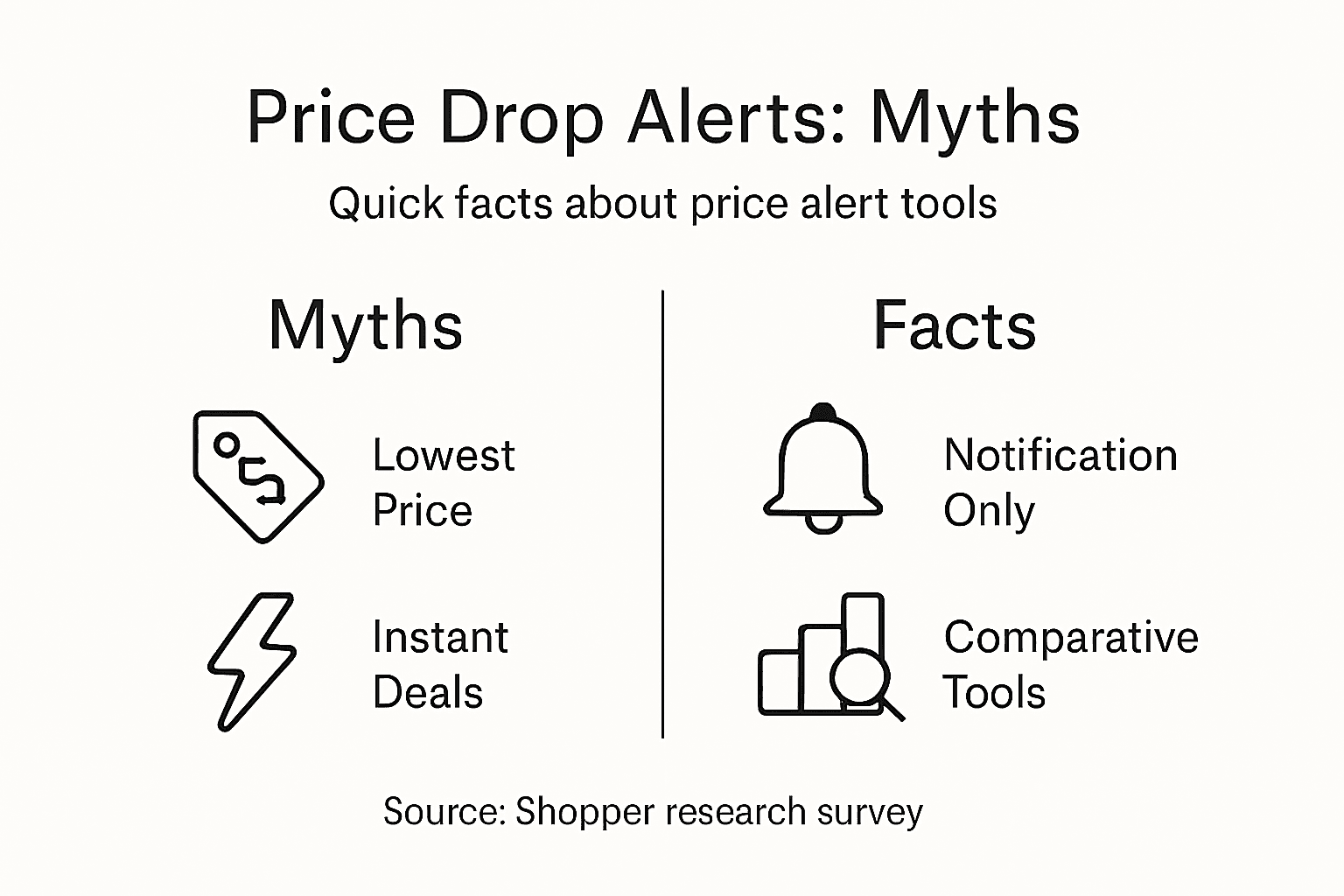
Many shoppers mistakenly believe that price drop alerts guarantee the absolute lowest price. In reality, these tools offer transparency and strategic insights, enabling more informed purchasing decisions rather than promising rock-bottom prices.
Pro tip: Configure multiple price alerts for the same product across different retailers to maximize your potential savings strategy.
Types of Price Drop Alert Tools Explained
Price drop alert tools have evolved significantly, transforming from simple tracking mechanisms to sophisticated digital monitoring platforms. Advanced price intelligence systems now offer comprehensive solutions that go beyond basic price notifications, providing strategic insights for savvy consumers and businesses alike.
The landscape of price tracking tools can be categorized into several distinct types, each designed to address specific consumer and business needs. These range from basic website change monitors to complex analytics platforms that integrate historical pricing data, competitor tracking, and predictive algorithms. Price monitoring technologies demonstrate remarkable diversity in their approach and capabilities.
Here are the primary types of price drop alert tools:
- Website Change Monitors: Basic tools that track simple price modifications
- Rule-Based Price Trackers: Customizable systems allowing specific alert configurations
- Comprehensive Price Intelligence Platforms: Advanced tools with deep analytics
- Competitor Price Tracking Systems: Specialized tools for comparative pricing insights
- AI-Powered Dynamic Pricing Alerts: Intelligent platforms using machine learning algorithms
Each type of price drop alert tool offers unique features tailored to different user requirements. Some focus on instant notifications, while others provide in-depth market analysis and predictive pricing trends. The key is selecting a tool that aligns with your specific shopping or business monitoring objectives.
Here’s a summary showing the distinct purposes and typical users of various price drop alert tool types:
| Tool Type | Main Purpose | Typical User |
|---|---|---|
| Website Change Monitor | Detect simple price updates | Occasional online shoppers |
| Rule-Based Tracker | Allow custom alert settings | Price-conscious consumers |
| Price Intelligence Platform | Analyze trends and competitors | Businesses seeking market insight |
| Competitor Tracking System | Compare rival pricing strategies | Retailers and brand managers |
| AI-Powered Alert | Predict price changes using AI | Tech-savvy shoppers and analysts |
Pro tip: Evaluate multiple price drop alert tools by testing their free versions to determine which best matches your specific tracking needs.
How Automated Price Drop Tracking Works
Automated price drop tracking is a sophisticated technological process that leverages advanced web scraping and data analysis techniques. Web scraping techniques enable these systems to collect real-time pricing information across multiple online retailers, transforming raw data into actionable insights for consumers and businesses.

The core mechanism of price tracking involves several intricate steps that work seamlessly in the background. Dynamic pricing algorithms play a crucial role in monitoring and analyzing price fluctuations, allowing users to set personalized alert thresholds and receive notifications when prices drop.
Key components of automated price drop tracking include:
- Web Crawling: Scanning multiple e-commerce platforms for current pricing data
- Data Extraction: Pulling precise price information from product pages
- Price Comparison: Analyzing historical and current pricing trends
- Alert Configuration: Customizing notification settings for specific price changes
- Machine Learning Integration: Predicting potential future price movements
The technology behind these tracking systems is remarkably complex. Advanced platforms use machine learning to understand pricing patterns, identify potential discount opportunities, and provide users with strategic purchasing recommendations. This goes far beyond simple price monitoring, offering intelligent insights that help consumers make more informed buying decisions.
Pro tip: Configure multiple price drop alerts with different threshold levels to capture both significant and minor price reductions.
Key Features and Shopper Benefits
Price drop alerts transform online shopping by providing strategic advantages that go far beyond traditional discount hunting. Real-time notifications empower consumers to capitalize on timely promotions, ensuring they never miss out on significant savings opportunities across multiple retail platforms.
The psychological impact of price drop alerts is profound, tapping into consumer decision-making processes in remarkably sophisticated ways. Emotional shopping triggers create an exciting experience that combines the thrill of finding a great deal with the practical benefit of financial savings, making the shopping journey more engaging and rewarding.
Key benefits of price drop alert systems include:
- Automated Savings: Continuous price monitoring without manual effort
- Instant Notifications: Immediate alerts for price reductions
- Cross-Platform Tracking: Compare prices across multiple retailers
- Personalized Thresholds: Custom alert settings for individual preferences
- Budget Protection: Prevent overpaying for desired products
The most advanced price drop alert systems go beyond simple price tracking. They incorporate machine learning algorithms that analyze historical pricing trends, predict future price movements, and provide contextual insights that help consumers make more informed purchasing decisions. This transforms price tracking from a passive monitoring tool into an active financial strategy.
Pro tip: Set multiple price drop alerts for the same product with progressively lower thresholds to maximize your potential savings strategy.
Risks, Costs, and What to Avoid
Price drop alerts, while powerful shopping tools, come with potential psychological and financial pitfalls that consumers must carefully navigate. Consumer buying psychology reveals that price tracking can trigger impulsive decision-making, leading shoppers to make purchases based on perceived savings rather than actual need.
Understanding the potential risks associated with price drop alerts is crucial for making intelligent purchasing decisions. These tools can create a false sense of urgency, compelling consumers to buy products they might not have originally intended to purchase, potentially undermining their financial planning and budget management strategies.
Key risks and potential downsides to be aware of include:
- Impulse Purchase Triggers: Alerts may encourage unnecessary spending
- Psychological Manipulation: Price drop notifications can create artificial urgency
- Data Privacy Concerns: Tracking systems collect significant personal shopping data
- False Economy: Buying discounted items that provide minimal actual value
- Subscription Fatigue: Potential costs associated with premium alert services
Most price drop alert systems operate on sophisticated algorithms that analyze pricing trends, but they cannot account for individual financial circumstances. Consumers must maintain critical thinking and resist the emotional pull of seemingly attractive discounts, always evaluating whether a purchase genuinely aligns with their long-term financial goals.
Pro tip: Always cross-reference price drop alerts with your personal budget and actual product needs before making a purchase.
Comparing Price Drop Alerts to Alternatives
Navigating the landscape of online shopping tools requires understanding the nuanced differences between price drop alerts and alternative tracking methods. Consumer purchasing research demonstrates that while price drop alerts provide immediate notifications, alternative approaches offer unique advantages that can complement or sometimes surpass traditional alert systems.
The spectrum of price tracking technologies ranges from simple manual comparisons to sophisticated automated platforms. Each method brings distinct capabilities and limitations, making it crucial for consumers to evaluate which approach best suits their specific shopping needs and financial goals.
Comparative tracking methods include:
- Manual Price Checking: Direct website comparison without automation
- Spreadsheet Tracking: Personal logging of price fluctuations
- Browser Extensions: Real-time price comparison tools
- Coupon and Discount Aggregators: Broader savings strategies
- Comprehensive Price Intelligence Platforms: Advanced analytical tracking
While price drop alerts excel at providing instant notifications, alternative methods might offer deeper insights, such as comprehensive price history analysis, trend prediction, and cross-platform comparisons. Savvy shoppers often combine multiple approaches to create a robust price monitoring strategy that maximizes potential savings and minimizes purchasing risks.
This comparison highlights key differences between price drop alerts and alternative methods:
| Method | Notification Style | Insight Depth | Automation Level |
|---|---|---|---|
| Price Drop Alert | Instant digital alerts | Moderate | High |
| Manual Price Checking | No alerts, manual review | Low | None |
| Spreadsheet Tracking | Custom logs, periodic review | Moderate | Low |
| Browser Extension | In-browser pop-up alerts | Moderate-high | Medium |
| Coupon Aggregator | Promotion summaries | Broad, non-specific | Medium |
| Intelligence Platform | Custom analysis, reports | High | High |
Pro tip: Experiment with multiple price tracking methods to develop a personalized strategy that balances automation with strategic decision-making.
Make Smarter Buying Decisions with Real-Time Price Drop Alerts
The article highlights how price drop alerts can empower you to avoid impulse purchases and navigate complex pricing trends with confidence. If you want to stop wasting time manually checking for deals and instead automate tracking prices across your favorite retailers, PriceLix has the perfect solution. Our platform offers custom price thresholds, instant notifications, and detailed price history charts to help you capture genuine discounts and protect your budget.
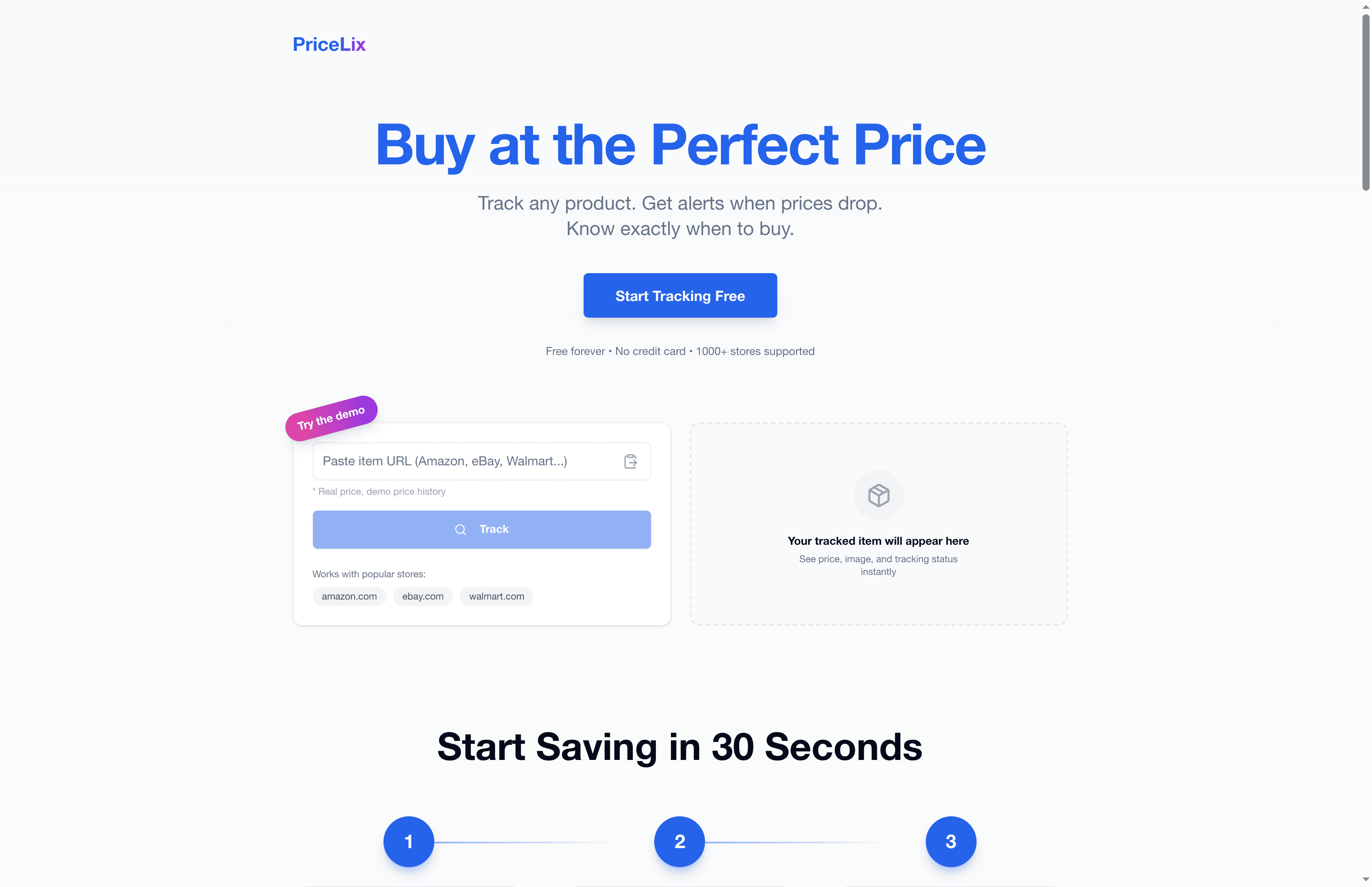
Take control of your shopping strategy today by exploring how PriceLix brings advanced price tracking directly to you without the hassle of browser extensions or complicated tools. Join savvy shoppers who rely on PriceLix’s automated alerts to stay ahead during holiday sales, new product launches, and seasonal price drops. Get started now at PriceLix Landing Page and experience the easiest way to make smarter, more informed purchasing decisions.
Frequently Asked Questions
What are price drop alerts?
Price drop alerts are digital monitoring tools that notify consumers when the price of a product falls below a set threshold, helping shoppers make informed purchase decisions and maximize savings.
How do automated price drop tracking systems work?
Automated price drop tracking systems utilize web scraping and data analysis techniques to collect real-time pricing information from various retailers. They analyze price fluctuations and send notifications when preferred price points are reached.
What are the benefits of using price drop alerts?
Price drop alerts provide real-time notifications for price reductions, cross-platform tracking for comparing prices, customizable alert settings, and help prevent overspending by keeping shoppers informed about discounts.
What should I be cautious about when using price drop alerts?
While price drop alerts can help identify good deals, they may also encourage impulse buying or create a false sense of urgency. It’s essential to evaluate your personal budget and actual product need before making a purchase.