
Why Monitor Online Prices: Maximize Every Purchase
Finding the best deal online is more than just luck for budget-conscious shoppers—it requires the right tools and knowledge. With prices shifting rapidly across e-commerce platforms, knowing exactly when and where to buy can make a real difference in your savings. Modern price monitoring tools now collect and compare prices from multiple retailers and deliver real-time updates and alerts, empowering you to make informed decisions and avoid overpaying, whether you shop in Canada, Germany, or the United States.
Table of Contents
- What Online Price Monitoring Means Today
- Core Benefits Of Tracking Online Prices
- How Price Monitoring Tools Work
- Key Risks, Limitations, And How To Avoid Them
- Comparing Price Monitoring To Manual Checking
Key Takeaways
| Point | Details |
|---|---|
| Modern Price Monitoring | Uses automated systems to track and alert users of real-time price changes across multiple retailers. |
| Smart Decision-Making | Provides data-driven insights that help shoppers make informed buying decisions, avoiding impulse purchases. |
| Efficiency and Time Savings | Automated tools significantly reduce the time spent on price checks while increasing the accuracy of tracking. |
| Market Awareness | Helps users identify hidden pricing strategies and avoid artificially inflated prices, making for a more transparent shopping experience. |
What Online Price Monitoring Means Today
Price monitoring has transformed from something only large corporations used to track inventory into a tool everyday shoppers use to avoid overpaying. What started as occasional manual price checks has evolved into continuous, automated surveillance of thousands of products across retailers worldwide.
Today’s online price monitoring is fundamentally different from yesterday’s approach. It’s no longer about checking a price once and hoping it doesn’t drop the next week. Instead, tracking product prices across e-commerce sites happens automatically and continuously, capturing real-time changes, historical trends, and competitor promotions all in one place.
Modern price monitoring operates on a simple foundation: collect data, compare it, and alert you when opportunities emerge. Governments and consumer protection agencies now use systematic collection and comparison of retail prices to help citizens make informed buying decisions and protect their purchasing power against volatile markets.
Here’s what today’s price monitoring actually delivers:
- Real-time price updates across multiple retailers simultaneously
- Historical price charts showing whether a product is at its lowest price or artificially marked down
- Automated alerts that notify you the moment a price drops below your target
- Competitor price tracking so you know if one retailer is overcharging compared to others
- Stock availability monitoring to catch products when they’re in stock at desired prices
- Promotion trend analysis showing when items typically go on sale
The technology powering this has evolved dramatically. What once required manual spreadsheets and daily website visits now happens through AI-driven systems that scan pricing data faster than any human could. These systems identify patterns, track historical trends, and predict future price movements based on seasonal cycles and market behavior.
Price monitoring today isn’t a luxury—it’s the standard expectation for anyone shopping online seriously.
For budget-conscious shoppers, this shift matters enormously. You’re no longer playing guessing games about timing your purchases. Instead, you have actual data showing you whether now is genuinely a good time to buy or whether waiting two weeks could save you significant money.
The real difference between now and ten years ago? Speed and scale. Modern price monitoring captures data from thousands of retailers simultaneously, processes it instantly, and delivers insights in seconds. This democratizes information that used to be available only to businesses with dedicated staff monitoring competitors.
Pro tip: Start by monitoring products you’re already planning to buy, not everything on your wishlist—this helps you understand normal price patterns before making purchasing decisions.
Core Benefits of Tracking Online Prices
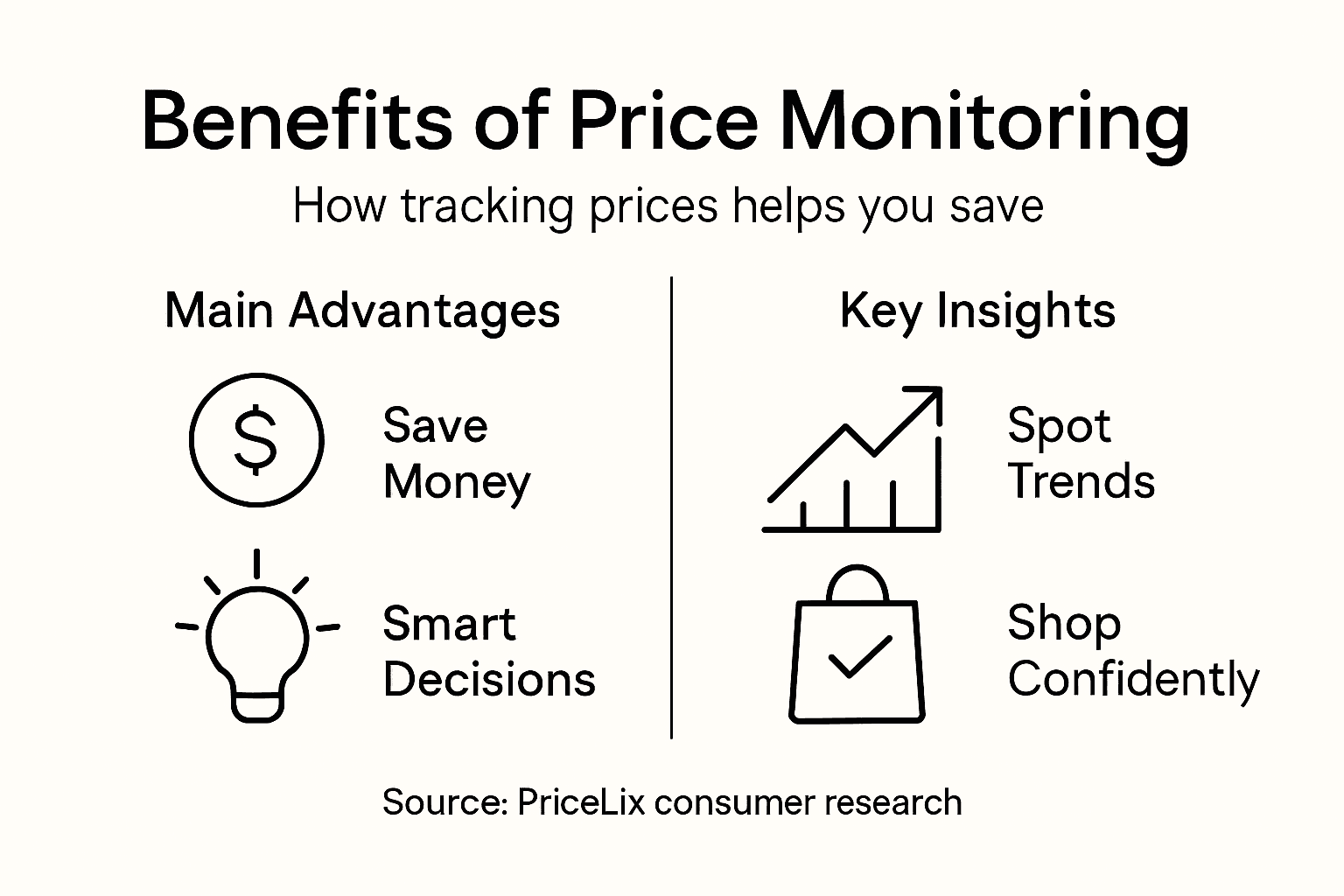
Tracking prices isn’t about obsessing over every dollar. It’s about making smarter decisions with the information available to you. When you monitor prices, you gain clarity on what products actually cost and when you’re getting a genuine deal versus falling for fake markdowns.
The most immediate benefit is catching price drops before they disappear. Products rarely stay at their lowest price for long. By monitoring, you see the moment a price falls and can act within hours rather than days, securing savings that others miss entirely.
Here’s what tracking actually gives you:
- Accurate savings calculation showing real discounts versus inflated original prices
- Timing intelligence revealing when products typically go on sale
- Price pattern recognition helping you distinguish genuine deals from artificial scarcity tactics
- Competitor price visibility ensuring you never overpay at one retailer when another charges less
- Budget alignment allowing you to wait for prices to hit your target before purchasing
- Confidence in decisions knowing your purchase timing is data-driven, not guesswork
Beyond personal savings, price tracking provides more frequent and detailed measurement of pricing data, which helps you understand market behavior patterns. You’ll notice seasonal trends, identify flash sales before they happen, and recognize when prices are artificially inflated.
Another critical benefit: avoiding regret purchases. How many times have you bought something only to see it drop 20% the next week? Tracking eliminates this frustration by showing you historical price data before you commit to a purchase.
Price tracking transforms shopping from a reactive guessing game into a proactive strategy backed by real data.
For budget-conscious shoppers managing tight spending plans, this matters significantly. Every percentage point saved multiplies across annual purchases. Someone buying groceries, electronics, or seasonal items can realistically save hundreds annually by purchasing at optimal times rather than whenever they need something.
Tracking also reveals hidden pricing strategies. You’ll notice how retailers mark up prices before sales, use phantom discounts, or create artificial urgency. This knowledge protects your wallet from manipulation.
The transparency that comes from monitoring extends beyond individual products. You understand your spending patterns better, anticipate when to buy based on historical data, and make purchasing decisions aligned with actual market conditions rather than marketing pressure.
Pro tip: Focus on tracking the 10-15 items you buy regularly or have been planning to purchase—this gives you the most actionable data without overwhelming yourself with noise.
How Price Monitoring Tools Work
Price monitoring tools operate on a straightforward principle: scan retailer websites, capture price data, compare it, and alert you when something changes. But the mechanics behind this simplicity involve several coordinated steps working together seamlessly.

At their core, these tools automatically collect prices from multiple retailers. Instead of you visiting Amazon, Walmart, and ten other sites daily, the tool does this work behind the scenes. It gathers data on products you’re tracking, stores that information, and continuously updates it as prices fluctuate.
Here’s how the basic workflow functions:
- You add a product to your tracking list with a target price
- The tool scans that product across connected retailers in real-time
- Price data is collected and stored in a historical database
- The system compares current prices against your target and past prices
- You receive an alert the moment conditions match your criteria
- Historical charts show you the complete price journey
The technology behind this relies on automated collection mechanisms from multiple retailers to provide comprehensive market data. Modern tools integrate with thousands of e-commerce platforms, capturing pricing changes faster than any human could manually track.
These tools offer specific capabilities that make them effective:
- Real-time data collection scanning prices multiple times daily across retailers
- Historical price charting showing price trends over weeks and months
- Smart price alerts notifying you when items hit your target price
- Multi-retailer comparison displaying the lowest current price across all tracked stores
- Stock status tracking alerting you when items become available at desired prices
- Trend analysis identifying seasonal patterns and typical sale windows
The accuracy of price monitoring depends on how frequently tools scan retailer websites. Most reliable tools check prices multiple times daily, ensuring you catch genuine price drops within hours rather than days.
The best price monitoring tools work invisibly in the background, delivering actionable intelligence without requiring any effort from you.
What separates effective tools from basic ones is their ability to handle product variations. When you’re tracking a specific item, the tool must distinguish between different colors, sizes, or seller options to ensure price accuracy.
These systems also combat common retail tactics like price manipulation. By tracking historical data, tools reveal when retailers artificially inflate original prices before discounts, showing you whether a “50% off” deal is genuine or manufactured.
The dashboard consolidates everything you’re monitoring in one place, eliminating the need to check multiple websites manually. This centralized approach saves time and ensures you never miss a price opportunity.
Here’s a quick summary of how leading price monitoring tools improve shopping decisions:
| Tool Feature | Shopper Benefit | Real-World Impact |
|---|---|---|
| Price Alerts | Quick notification of drops | Snap up deals before they vanish |
| Historical Tracking | See genuine lowest prices | Know when to buy or wait |
| Multi-Retailer Scan | Compare across many stores | Avoid overpaying, spot best offer |
| Trend Analysis | Identify sale patterns | Plan purchases for peak savings |
Pro tip: Set your target price slightly below the lowest price you’ve seen in the product’s history—this triggers alerts only for genuinely exceptional deals, not just minor fluctuations.
Key Risks, Limitations, And How to Avoid Them
Price monitoring tools are powerful, but they’re not without complications. Understanding the limitations helps you use them effectively and avoid frustration when prices don’t behave as expected.
The biggest challenge is volatile pricing that changes constantly. A product might drop 15% in the morning, spike 20% by afternoon, then settle somewhere in between by evening. Tools capture these fluctuations, but you need realistic expectations about timing and price stability.
Regional price differences present another significant hurdle. The same item costs different amounts depending on your location, the seller’s warehouse, and delivery distance. A tool tracking a product might show lower prices you can’t actually access due to shipping restrictions or regional exclusivity.
Website restrictions also limit data collection accuracy. Some retailers actively block automated price scraping to protect their pricing strategies. Volatile pricing and website restrictions challenge accurate data collection, requiring tools to use adaptive technology and scheduled data collection approaches.
Common limitations you’ll encounter include:
- Price delays where tools lag behind actual current prices by hours
- Product variation confusion when similar items have slightly different specifications but appear as one listing
- Out-of-stock alerts showing low prices for unavailable inventory
- Currency fluctuations affecting prices on international marketplaces
- Flash sales that expire before you can complete a purchase
- Seller-specific pricing varying between marketplace sellers for identical products
Manual tracking methods amplify these risks. Checking prices yourself introduces human error, inconsistency, and missed opportunities simply because you can’t monitor constantly.
The solution isn’t perfect price monitoring—it’s smart monitoring that acknowledges real-world complications.
To navigate these limitations effectively, choose tools using automation and scheduled data collection. This reduces manual errors and ensures consistent tracking even when websites change their structure or pricing frequently.
Understand that price alerts represent opportunities, not guarantees. When you receive a notification, act quickly but verify the price before purchasing. Sometimes prices revert within minutes, or stock disappears before checkout completes.
Set realistic target prices based on historical data. If a product’s lowest historical price was $50, don’t set your alert for $35 expecting results. This prevents alert fatigue from chasing unrealistic targets.
Monitor products strategically rather than everything. Focus on items you’re actually planning to buy soon, not everything on your wishlist. This keeps alerts meaningful and actionable.
Pro tip: Cross-reference price alerts with the actual retailer website before purchasing—occasionally tools capture pricing errors or regional pricing that won’t apply to your location.
Comparing Price Monitoring to Manual Checking
Let’s be honest: manually checking prices across multiple retailers is exhausting. You might do it once or twice, feel productive, then never do it again. Automated price monitoring eliminates this friction entirely.
Manual price checking requires you to visit multiple websites, note prices, compare them mentally, and remember what you found. Even if you’re organized, this process takes 15-30 minutes per product and only captures a single snapshot in time.
To better understand the advantages and drawbacks of different price tracking methods, see the comparison below:
| Aspect | Manual Price Checking | Automated Price Monitoring |
|---|---|---|
| Time Investment | High, repeated efforts | Minimal, mostly initial setup |
| Consistency | Inconsistent, easily skipped | Continuous, never misses changes |
| Data Depth | One-time snapshots | Tracks price trends over months |
| Scale | Few products manageable | Tracks dozens simultaneously |
| Risk of Error | Missed deals, human mistakes | Reduces errors, captures more cases |
Here’s why manual checking fails at scale:
- Time consumption requiring 15-30 minutes per product to check multiple retailers
- Human error misremembering prices or missing cheaper options
- Incomplete data capturing only one moment rather than price trends
- Reactive timing checking when you remember instead of when prices actually drop
- Missed opportunities sleeping through flash sales or overnight price changes
- Inconsistency checking sometimes but not regularly enough for reliable data
Automated monitoring works continuously without your involvement. Automated price monitoring detects price changes instantly, providing real-time competitor tracking that manual methods cannot match. While you sleep, work, or live your life, the system tracks thousands of prices simultaneously.
The speed difference is dramatic. Manual checking discovers a price drop days or weeks after it happens. Automated tools catch the same drop within hours or minutes, often when stock is still available at the low price.
Automated monitoring isn’t just faster—it’s fundamentally different because it runs 24/7 while you do literally anything else.
Consider the accuracy factor. When manually comparing prices, you might miss regional variations, different seller options, or product variations. Automated tools track all of these distinctions consistently, showing you the actual lowest price available to you specifically.
Manual checking also creates decision fatigue. You gather information, make a choice, then second-guess yourself later when you see the price drop. Automated alerts remove this psychological burden by showing you objective data about whether now is genuinely a good time to buy.
The cost-benefit analysis heavily favors automation. Spending 30 minutes manually saving $15 on a purchase feels productive in the moment. But that same $15 saved with an automated tool required zero effort from you. Over a year of regular purchases, the time savings compound dramatically.
Automated monitoring also scales effortlessly. Checking 3 products manually is manageable. Checking 50 products is impossible. With automation, 50 products requires the same effort as 3.
Pro tip: If you’re seriously trying to save money on regular purchases, switch to automated monitoring immediately—the time and money you recover justify the minimal setup effort involved.
Take Control of Your Shopping with PriceLix
The article highlights the challenge of keeping up with constantly changing online prices and avoiding overpaying due to missed discounts or confusing promotions. It stresses the importance of real-time price updates, automated alerts, and historical price tracking—all vital tools for turning shopping guesswork into confident, data-driven decisions. If you want to eliminate the frustration of manual checking and unpredictable deals, PriceLix offers exactly the solution you need.
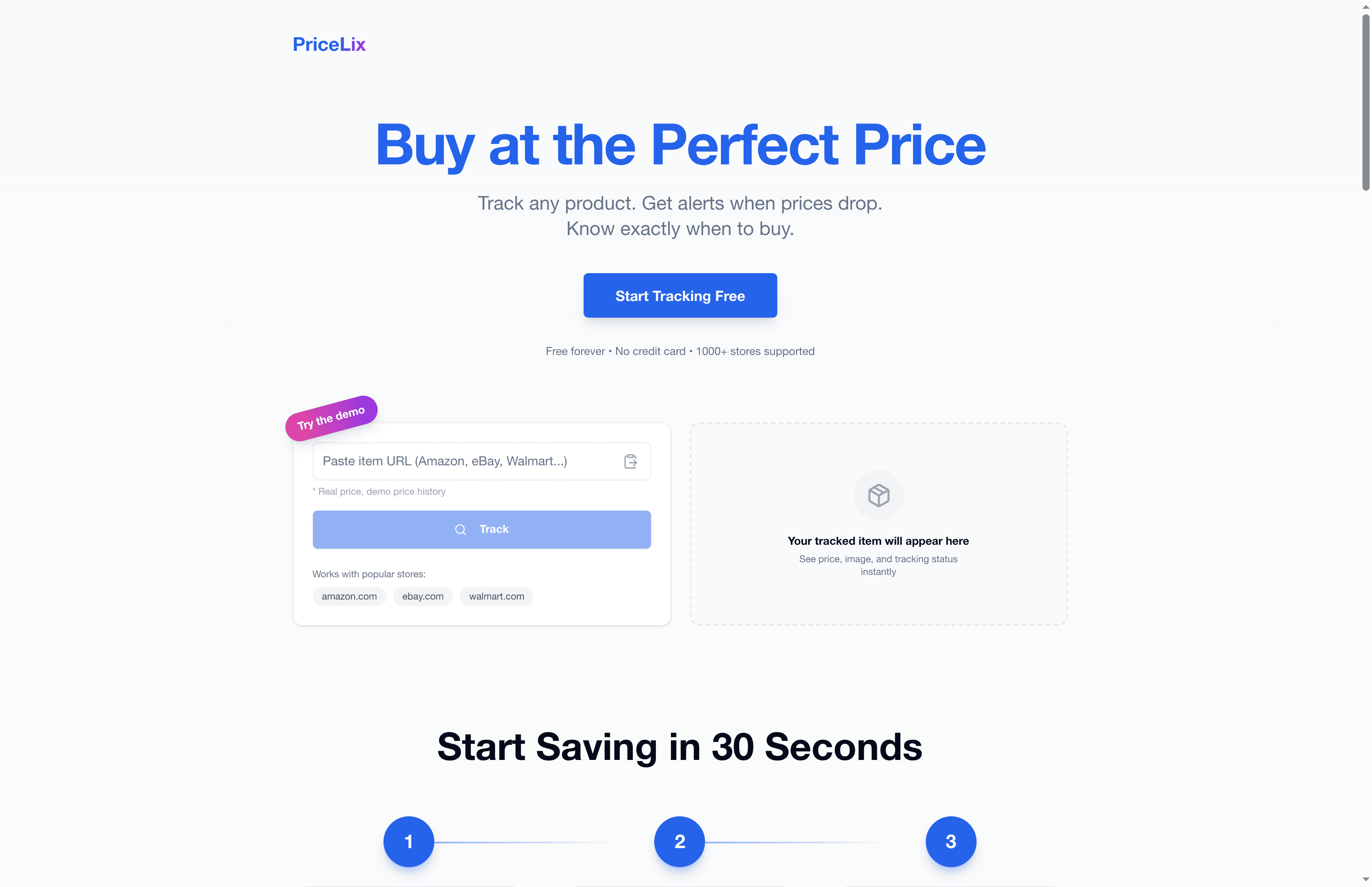
With PriceLix, you get instant access to automatic price tracking across thousands of retailers including Amazon and Walmart. The platform’s user-friendly dashboard consolidates your tracked items, sends you immediate alerts on price drops, and shows detailed price history charts so you know precisely when to buy. Stop losing money on impulse purchases or waiting too long for sales. Visit PriceLix now and experience smarter, stress-free shopping by leveraging cutting-edge price monitoring technology. Do not miss out on maximizing every purchase by acting today.
Explore how PriceLix simplifies price monitoring and start capitalizing on the best deals right away. Your wallet will thank you.
Frequently Asked Questions
What is online price monitoring?
Online price monitoring refers to the continuous tracking of product prices across multiple retailers to capture real-time changes, historical trends, and alerts for price drops or promotions.
How can price monitoring tools help me save money?
Price monitoring tools can help you save money by alerting you to price drops, providing historical price data to ensure you’re purchasing at the best time, and allowing you to compare prices across different retailers.
Are there risks or limitations to using price monitoring tools?
Yes, risks include volatile pricing, regional differences in prices, and potential delays in alert notifications. It’s important to set realistic expectations and monitor specific products that you plan to purchase.
What should I focus on when tracking prices?
Focus on tracking products that you are actually planning to buy soon, rather than everything on your wishlist. This helps you understand normal price patterns and makes your alerts more actionable.