
Guide to monitoring deals: save smart in 2026
Missing a great deal by just a few hours feels frustrating, especially when you’ve been watching that product for weeks. Online prices fluctuate constantly, and without a systematic approach, even savvy shoppers lose out on significant savings. This guide walks you through proven methods to monitor deals effectively, from selecting the right tools to timing your purchases perfectly. You’ll learn how to automate price tracking, verify deal authenticity, and maximize your savings across major e-commerce platforms in 2026.
Table of Contents
- What You Need: Tools And Prerequisites For Monitoring Deals
- How To Monitor Deals Step-By-Step Effectively
- Common Pitfalls And Troubleshooting When Monitoring Deals
- What To Expect: How To Verify Deals And Maximize Savings
- Unlock Smarter Savings With PriceLix
- FAQ
Key takeaways
| Point | Details |
|---|---|
| Preparation matters | Setting up the right tools and accounts before deal hunting saves time and increases success rates. |
| Automation wins | Automated alerts and tracking eliminate manual checking while capturing price drops in real time. |
| Verification prevents waste | Confirming deal authenticity before purchase protects against expired offers and inflated discounts. |
| Timing drives savings | Understanding seasonal trends and sale cycles helps you buy at optimal price points. |
What you need: Tools and prerequisites for monitoring deals
Before diving into deal monitoring, you need the right foundation. The tools you choose determine how efficiently you track prices and how quickly you can act on genuine discounts.
Start with price tracking platforms that automate the monitoring process. Using deal monitoring tools streamlines tracking and increases accuracy compared to manual checking. Browser extensions like Honey and Rakuten offer instant price comparisons while you shop, but dedicated platforms provide deeper historical data and more reliable alerts.
Create accounts on your preferred e-commerce sites to enable wishlists and notification features. Amazon, Walmart, and Target all offer native price watching capabilities, though their alerts tend to be less aggressive than third-party tools. Set up email filters to organize deal notifications into dedicated folders, preventing alert fatigue while keeping important updates accessible.
Browser notifications work well for immediate alerts, but RSS feeds offer more control over when and how you receive updates. Email alerts provide a middle ground, delivering summaries at scheduled intervals without constant interruptions. Choose the notification method that matches your shopping rhythm and response time.
Pro Tip: Layer multiple tracking methods for high-value items. Combine a browser extension for quick checks with a dedicated platform for historical analysis and a mobile app for on-the-go alerts.
Here’s a comparison of popular types of online price tracking tools:
| Tool Type | Best For | Cost | Learning Curve |
|---|---|---|---|
| Browser Extensions | Quick comparisons while browsing | Free | Minimal |
| Mobile Apps | On-the-go monitoring | Free to $5/month | Low |
| Dedicated Platforms | Comprehensive tracking across sites | Free to $10/month | Moderate |
| Email Subscriptions | Curated deal lists | Free | Minimal |
Different platforms excel at different discount methods, so diversifying your toolkit ensures broader coverage. Extensions catch instant opportunities, while platforms provide strategic insights for planned purchases.
How to monitor deals step-by-step effectively
With your tools configured, follow this systematic workflow to capture the best deals without wasting time on false alerts.
-
Identify your target products and research their typical price ranges. Check historical data to establish a baseline, understanding what constitutes a genuine discount versus standard pricing fluctuations.
-
Set realistic price thresholds in your tracking tools. A price tracking workflow automation can save 20-30% on purchases by optimizing timing, but only if your thresholds reflect actual market conditions rather than wishful thinking.
-
Configure alerts for multiple trigger points. Set one alert for your ideal price and another for acceptable compromises, giving you flexibility when deals appear during limited-time sales.
-
Schedule regular check-ins for high-priority items. While automation handles most monitoring, weekly manual reviews help you spot patterns and adjust thresholds based on emerging trends.
-
Create a purchase decision framework before deals arrive. Define your maximum acceptable price, must-have features, and deal-breaker conditions to avoid impulse buying when alerts trigger.
-
Monitor competitor pricing across platforms. The same product often shows different discounts on Amazon versus Walmart, and monitoring product prices online across multiple retailers reveals the true best deal.
-
Time your purchases around known sale events. Black Friday, Prime Day, and end-of-season clearances offer predictable discount windows, but lesser-known events like Amazon’s Subscribe and Save promotions can deliver comparable savings.
-
Execute purchases quickly when genuine deals appear. Popular items at steep discounts sell out within hours, so having payment information saved and shipping addresses confirmed eliminates friction during checkout.
Pro Tip: Set alerts for 10-15% below current prices rather than waiting for unrealistic 50% drops. Moderate but achievable discounts appear more frequently and still generate significant savings over time.
The key to effective monitoring lies in balancing automation with strategic oversight. Let tools handle the repetitive checking while you focus on analyzing patterns and making informed decisions.

Common pitfalls and troubleshooting when monitoring deals
Even experienced deal hunters encounter obstacles that undermine their monitoring efforts. Recognizing these pitfalls helps you avoid wasted time and missed opportunities.
Chasing expired or fake discounts ranks as the most common mistake. Retailers sometimes show inflated original prices to make discounts appear larger than they actually are. Many shoppers waste effort chasing false or expired deals without proper verification, losing both time and trust in the monitoring process.
Verify deal authenticity by checking price history charts before purchasing. If a product’s “original price” only existed for a brief period or never appeared in historical data, the discount is likely artificial. Cross-reference prices across multiple retailers to confirm you’re seeing a genuine reduction.
Alert fatigue develops when you track too many items or set thresholds too high. Your inbox fills with notifications for minor price changes, causing you to miss truly significant deals buried in the noise. Limit active tracking to 10-15 high-priority items and adjust thresholds to trigger only on meaningful drops.
Scammers exploit deal hunters by creating fake urgency through countdown timers and limited stock warnings. Always verify seller ratings and check if the same urgency tactics appeared on the listing weeks earlier, indicating manufactured scarcity rather than genuine time pressure.
Troubleshooting common issues:
- Alerts not triggering: Verify your notification settings and check spam folders for filtered messages
- Inaccurate price data: Some tools struggle with dynamic pricing, so manually confirm prices before purchasing
- Missed deals: Expand your tracking to include multiple platforms and enable mobile notifications for faster response times
- Tool conflicts: Using too many browser extensions simultaneously can cause performance issues and missed updates
- Overwhelm: Focus on price drop strategies smart online shoppers use rather than trying to monitor everything at once
The solution to most monitoring problems involves simplification rather than adding more tools. Streamline your tracking list, refine your thresholds, and focus on products where discounts genuinely impact your budget.
What to expect: How to verify deals and maximize savings
Successful deal monitoring extends beyond receiving alerts. Verification and strategic timing transform notifications into actual savings.
Confirm actual discounts by examining the complete purchase price, including shipping, taxes, and any required subscriptions. A product showing 30% off loses appeal when expedited shipping costs negate half the savings. Calculate your total out-of-pocket expense before assuming you’ve found a deal.
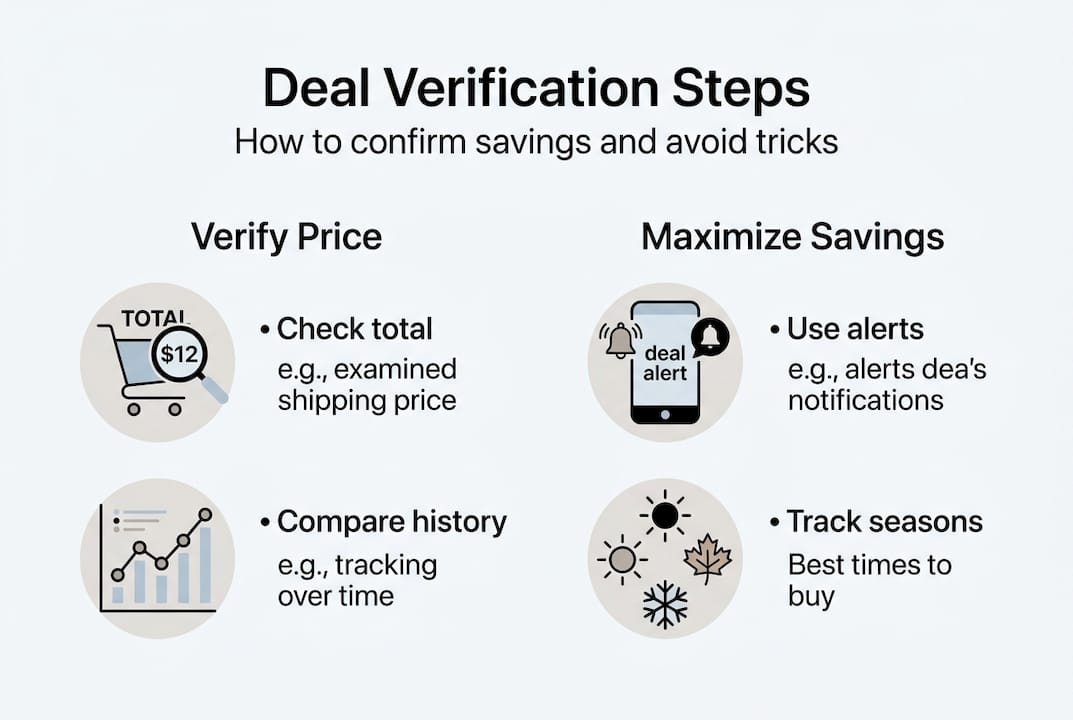
Understanding seasonal pricing trends 2026 enhances deal timing and savings by revealing when specific product categories typically see their deepest discounts. Electronics drop in January and November, while outdoor furniture hits bottom prices in August and September.
Here’s how different deal types and timing affect potential savings:
| Deal Type | Average Savings | Best Timing | Verification Difficulty |
|---|---|---|---|
| Flash Sales | 15-25% | Midweek mornings | Low |
| Seasonal Clearance | 30-50% | End of season | Low |
| Lightning Deals | 20-40% | Prime Day, Black Friday | Medium |
| Price Errors | 50-90% | Random | High |
| Coupon Stacking | 25-45% | Holiday weekends | Medium |
Signals indicating a genuinely good deal:
- Price matches or beats historical lows from the past 12 months
- Multiple retailers show similar discounts simultaneously, confirming market-wide price drops
- The discount applies to current-generation products, not just outdated inventory
- Reviews and ratings remain strong, indicating quality hasn’t been compromised
- The seller has established credibility with thousands of positive transactions
Adjust your monitoring strategy based on results. If you consistently miss deals on a specific platform, tighten your alert thresholds or enable push notifications. When a particular product category never reaches your target price, reassess whether your expectations align with market realities.
Pro Tip: Track your actual savings in a simple spreadsheet. Recording the original price, deal price, and purchase date reveals which monitoring strategies deliver the best returns and which products justify the tracking effort.
Continual refinement separates casual deal seekers from shoppers who consistently secure the best prices. Review your monitoring performance monthly, identifying patterns in successful purchases and adjusting your approach for upcoming shopping cycles.
Unlock smarter savings with PriceLix
Manual deal monitoring works, but automation multiplies your results while reducing effort. PriceLix handles the tedious tracking work, freeing you to focus on making smart purchase decisions.
The platform monitors prices across thousands of retailers simultaneously, catching drops you’d miss even with dedicated daily checking. Real-time alerts arrive the moment prices hit your targets, giving you first access to limited-inventory deals before they sell out.
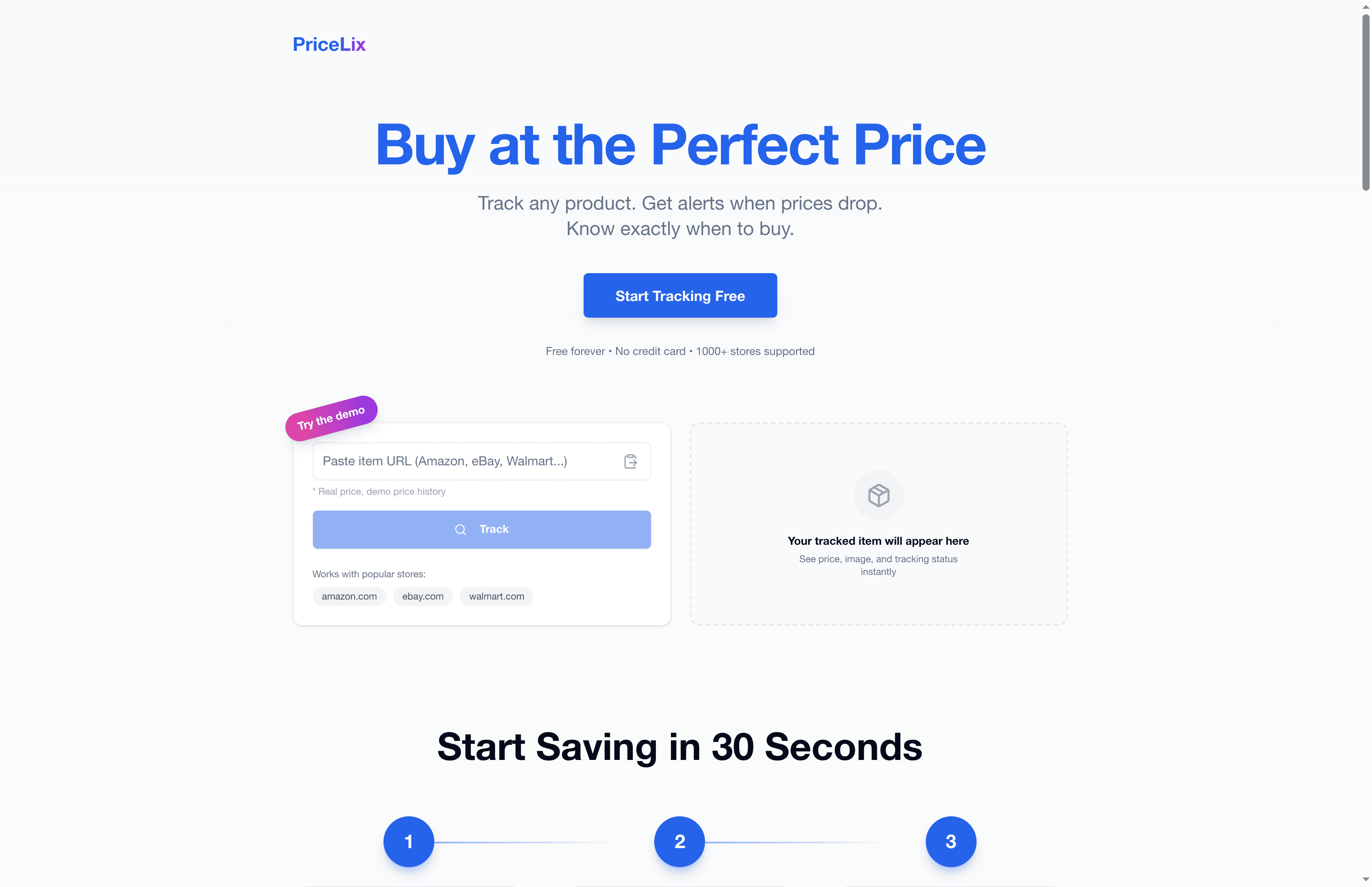
Explore comprehensive guides on mastering discount tracking 2026 and learn how to track online prices for savings using proven strategies that seasoned bargain hunters rely on. Visit PriceLix to start automating your deal monitoring and stop missing the savings you deserve.
FAQ
What is the best tool to monitor online deals?
The most effective approach combines browser extensions for instant comparisons with dedicated platforms for comprehensive tracking. Using a combination of browser extensions and mobile apps covers the widest range of deals across different shopping contexts. PriceLix offers cross-platform monitoring with historical data analysis, while extensions like Honey provide quick checkout savings.
How often should I check for deal updates?
Relying on automated alerts eliminates the need for constant manual checking. Automated alerts allow checking deals in real time without manual effort, notifying you immediately when prices drop. For high-priority items, a weekly manual review supplements automated monitoring by revealing pricing patterns that inform better threshold settings.
Can I monitor deals across multiple websites at once?
Cross-platform monitoring is not only possible but essential for finding the best prices. Many deal monitoring tools support cross-site tracking to save users time and ensure you’re comparing prices across Amazon, Walmart, Target, and other major retailers simultaneously. This approach reveals which platform consistently offers better deals for specific product categories, helping you prioritize where to shop.
How do I avoid fake discounts and pricing tricks?
Verify deals by checking price history charts that show whether the claimed original price actually existed. Compare the current deal price against the lowest price from the past six to twelve months rather than trusting the retailer’s stated discount percentage. Cross-reference prices across multiple sites and read recent reviews to confirm the product quality hasn’t declined, which sometimes accompanies steep discounts on older inventory.
When is the best time to buy specific products?
Timing varies by category, but patterns emerge across industries. Electronics see deepest discounts during Black Friday and January clearance events, while clothing drops in price at season transitions. Home goods and furniture hit bottom prices during holiday weekends, and back-to-school items discount heavily in late August. Tracking historical pricing data for your target products reveals their specific discount cycles, allowing you to time purchases for maximum savings.
Recommended
- Guide to finding best deals: smart strategies for 2026 | PriceLix
- Why Monitor Prices Online in 2026: Save Up to 8% Smartly | PriceLix
- Maximize holiday savings with price monitoring in 2026 | PriceLix
- Price tracking workflow 2026: Save 40% with alerts | PriceLix
- Disney Schnäppchenangebote 2026: So sparst du bis 30%