
Price comparison best practices for online shopping 2026
Online shopping offers endless choices, but navigating price variations across retailers can feel overwhelming. You might find the same product at wildly different prices, wonder if a discount is genuine, or miss the best buying window entirely. Smart price comparison isn’t about checking every store manually. It’s about using strategic tools and timing to ensure you never overpay. This guide reveals proven best practices that help you track prices effectively, stack savings, and avoid common pitfalls that cost shoppers money in 2026.
Table of Contents
- Setting Criteria For Effective Price Comparison
- Top Tools And Methods To Track Prices Effectively
- Timing Purchases And Stacking Savings For Maximum Benefit
- Common Pitfalls And How To Overcome Them
- Discover Smart Price Comparison Tools At Pricelix
- What Is The Most Reliable Way To Track Price Changes Online?
Key takeaways
| Point | Details |
|---|---|
| Use multiple tracking tools | Cross-reference price history and alerts across platforms to catch genuine deals and avoid fake discounts. |
| Calculate total purchase cost | Factor in shipping, taxes, returns, and warranties to compare identical SKUs accurately across retailers. |
| Time purchases strategically | Plan buying windows 3 weeks ahead to catch optimal price drops during seasonal sales or post-release periods. |
| Stack savings layers | Combine coupons, cashback programs, loyalty rewards, and price matching to maximize total savings per purchase. |
| Avoid common traps | Watch for dynamic pricing, fake MSRP claims, alert fatigue, and analysis paralysis that derail smart shopping. |
Setting criteria for effective price comparison
Before diving into tools and tactics, you need clear criteria to evaluate price comparison strategies. The listed price rarely tells the full story. Shipping fees, taxes, return policies, and extended warranties can swing the total cost dramatically. Always calculate total cost including shipping, taxes, returns, warranties and compare identical SKUs across 3 or more retailers to ensure you’re making apples-to-apples comparisons.
Set evaluation standards that balance thoroughness with simplicity. Your criteria should include total cost accuracy, retailer reliability, ease of use, and data precision. Trying to check every possible store leads to decision fatigue. Instead, focus on 3 to 5 trusted retailers and use tools that automate the heavy lifting. Understanding how price comparison works helps you prioritize what matters most for your shopping habits.
Consider these core factors when building your comparison framework:
- Total cost transparency beyond the sticker price
- SKU matching to verify you’re comparing identical products
- Retailer reputation for delivery speed and customer service
- Return policy flexibility if the product doesn’t meet expectations
- Warranty coverage that protects your purchase long term
Pro Tip: Create a simple checklist with your top 5 criteria and score each retailer option. This prevents overwhelm and keeps your decision process consistent across different purchases.
Top tools and methods to track prices effectively
Price tracking tools transform how you monitor deals and verify discounts. Popular platforms like Honey, Rakuten, and CamelCamelCamel offer browser extensions that work seamlessly while you shop. These tools monitor historical price trends, helping you spot genuine savings versus inflated “discounts” based on fake original prices. Use price tracking tools and browser extensions to set alerts that notify you automatically when prices drop to your target threshold.
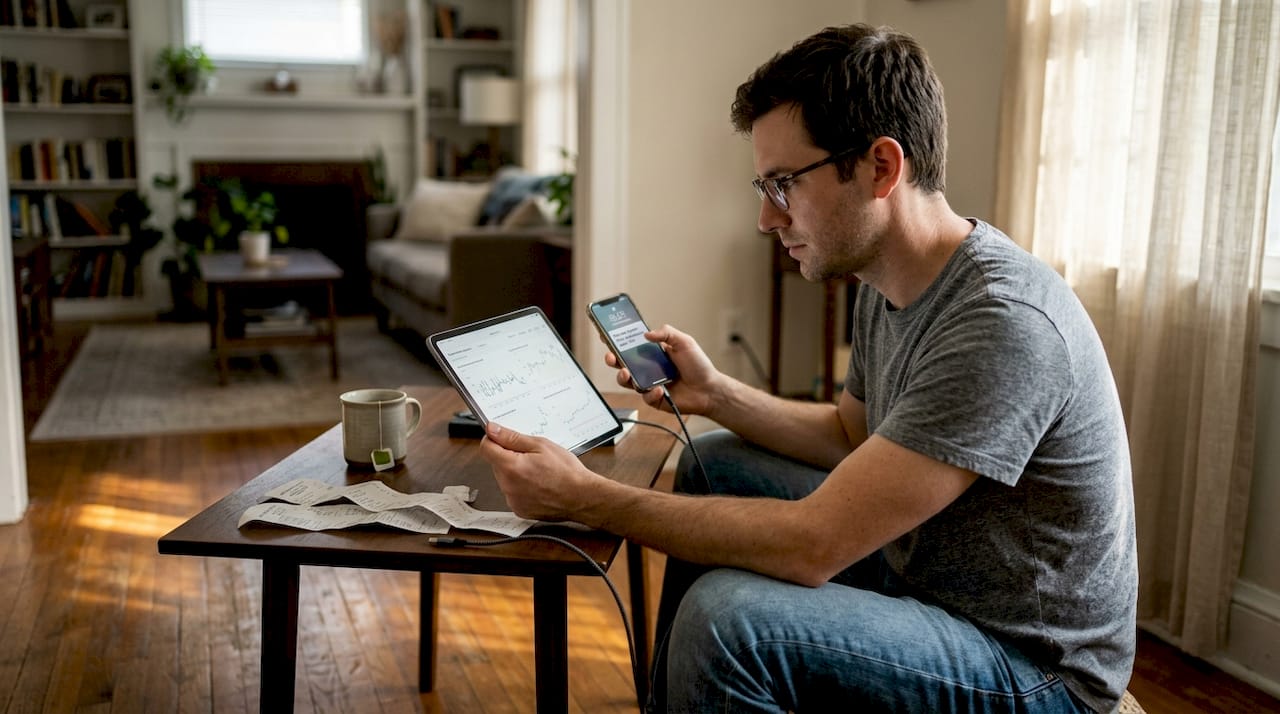
The data behind tracking tools is compelling. Prices change 2.5 times per day on average across major retailers, and shoppers who use tracking save 20 to 30 percent compared to those who don’t. Setting up alerts means you buy at optimal moments without constantly checking websites manually. This automation saves time and ensures you never miss a price drop on items you’ve been watching.
Different tools excel at different tasks. CamelCamelCamel specializes in Amazon price history with detailed charts. Honey applies coupon codes automatically at checkout across hundreds of stores. Rakuten focuses on cashback rewards that stack on top of sale prices. Exploring best price tracking strategies 2026 reveals how combining multiple platforms covers blind spots and increases your chances of finding the lowest price.
Consider these tool categories for comprehensive tracking:
- Browser extensions for real-time shopping alerts
- Dedicated price history platforms for trend analysis
- Cashback aggregators that layer savings on purchases
- Retailer-specific apps for exclusive member discounts
Pro Tip: Use at least two tracking tools to cross-check data. If one platform shows a “deal” but another reveals the price was lower last month, you’ll know to wait for a better drop. Check out this price tracking checklist 2026 to streamline your setup process.
Timing purchases and stacking savings for maximum benefit
Timing transforms good deals into great ones. Track purchases 3 weeks ahead to identify patterns and buy during optimal windows. Electronics typically drop post-release as newer models launch, while apparel sees deep discounts at end of season. Impulse purchases bypass comparison entirely, costing you money you could have saved with minimal planning.
Stacking savings layers multiple discounts into a single transaction. Combine coupons, cashback, loyalty rewards, and price matching to maximize total savings. For example, use a retailer coupon code, earn cashback through Rakuten, apply credit card rewards points, and request a price match if you find the item cheaper elsewhere. Each layer compounds, turning a 10 percent discount into 25 percent or more in total savings.
Dynamic pricing algorithms adjust costs based on your browsing history and location. Use incognito mode or clear cookies to see unbiased prices. Retailers track your interest and may raise prices if they detect repeated visits to the same product page. A fresh browser session often reveals lower baseline prices, giving you a better starting point for comparisons.
Follow this sequence to stack discounts effectively:
- Set price alerts 3 weeks before your target purchase date
- Monitor price history to identify the typical low point
- Activate cashback browser extensions before shopping
- Apply coupon codes at checkout for additional percentage off
- Use loyalty points or credit card rewards to reduce final cost
- Request price matching if a competitor offers a lower rate
Pro Tip: Create a savings calendar that marks major sale events like Black Friday, Cyber Monday, and Prime Day. Planning purchases around these windows can double your savings compared to random buying. Explore this price tracking workflow to automate the entire process and free up your time.
Common pitfalls and how to overcome them
Dynamic pricing creates frequent shifts that confuse shoppers. Retailers adjust prices multiple times daily based on demand, competitor rates, and inventory levels. Without tracking price history, you can’t verify whether a “discount” is genuine or inflated from an artificially high baseline. Cross-checking historical data reveals the real trend and protects you from fake urgency tactics.
Fake MSRP claims trick shoppers into thinking they’re getting massive savings. A product listed at $100 “reduced” from $200 might never have sold at the higher price. Beware dynamic pricing, fake discounts, alert fatigue, and analysis paralysis by verifying price history over weeks or months. Limit alert subscriptions to 10 to 15 items to avoid notification overload that causes you to ignore important drops.
Analysis paralysis strikes when you have too many options and can’t decide. Set clear savings targets before you start comparing. If your goal is saving $50 on a $300 purchase, stop searching once you hit that threshold. Chasing an extra $5 through hours of additional research wastes time better spent elsewhere. Diversify tracking tools to cover blind spots, but don’t let perfection prevent action.
Here’s how pitfalls and solutions compare:
| Pitfall | Impact | Solution |
|---|---|---|
| Dynamic pricing | Prices shift unpredictably, hiding true value | Track 3+ weeks of history to verify genuine drops |
| Fake MSRP discounts | Inflated “savings” mislead shoppers | Cross-check price charts across multiple tools |
| Alert fatigue | Too many notifications cause important ones to be ignored | Limit tracking to 10-15 high-priority items |
| Analysis paralysis | Endless comparison prevents purchasing | Set clear savings goals and stop when reached |
| Tool blind spots | Single platform misses better deals elsewhere | Use 2-3 complementary tracking services |
Pro Tip: If you find yourself spending more than 30 minutes comparing prices for a purchase under $100, you’ve hit analysis paralysis. Set a timer and make your best decision when it expires. Understanding types of price tracking helps you choose the right approach for different product categories and avoid overthinking low-stakes purchases.
Discover smart price comparison tools at PriceLix
Applying these best practices becomes effortless when you have the right platform supporting your shopping decisions. PriceLix automates price tracking across Amazon, eBay, Walmart, and over a thousand other stores, sending you real-time alerts when prices drop to your target thresholds. You’ll access detailed price history charts that reveal genuine deals versus fake discounts, helping you buy at optimal moments without manual monitoring.
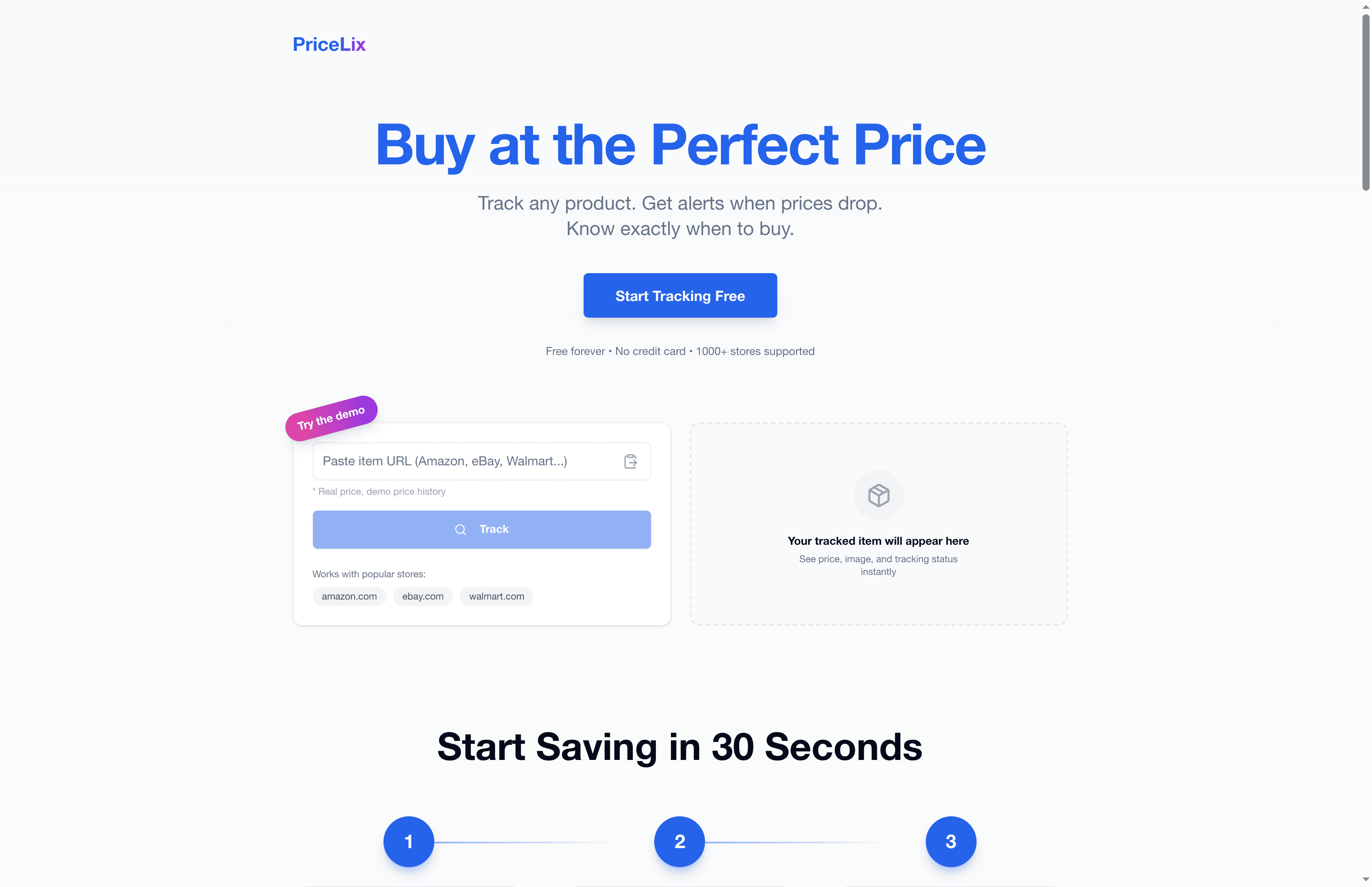
The platform’s user-friendly dashboard consolidates all your tracked items in one place, eliminating the need for multiple browser extensions or complex tools. Whether you’re planning purchases weeks ahead or catching flash sales during holiday events, PriceLix gives you the data and automation to maximize savings on every transaction. Explore best price tracking strategies 2026 and learn how to track online prices for savings to start optimizing your shopping habits today.
What is the most reliable way to track price changes online?
What is the most reliable way to track price changes online?
Use a combination of browser extensions and dedicated price alert platforms that monitor price history and notify you of drops. Look for tools with accurate SKU matching and user-friendly alerts. Cross-referencing data from multiple sources helps verify genuine deals and avoid fake discounts. Explore features of modern price trackers to understand what capabilities matter most for your shopping needs.
How can I avoid falling for fake discounts when comparing prices?
Always check the price history over time to compare with the advertised discount. Use multiple price tracking tools to verify consistent pricing data across platforms. If a “sale” price matches the typical average over the past month, it’s not a real deal. Understanding price trends and authentic deals helps you spot inflated MSRP claims and make informed decisions.
What is the best timing strategy to get the lowest prices?
Plan purchases about 3 weeks in advance and watch for key seasonal sales. Avoid impulse buys and aim to buy post-release for electronics or end of season for apparel. Setting price alerts ensures you catch optimal windows without constant manual checking. Learn more about smart timing for price drops to maximize your savings on every purchase.
How many price tracking tools should I use simultaneously?
Two to three complementary tools provide the best balance between coverage and manageability. Using too many creates alert fatigue, while relying on just one leaves blind spots. Choose platforms that specialize in different areas, like one for price history, another for cashback, and a third for coupon codes. This approach maximizes savings without overwhelming you with notifications.
Can I stack multiple discounts on a single purchase?
Yes, combining coupons, cashback programs, loyalty rewards, and price matching can compound savings significantly. Apply retailer coupon codes first, then earn cashback through browser extensions, use credit card rewards points, and request price matching if needed. Each layer reduces your final cost, often turning a 10 percent discount into 25 percent or more in total savings.