
Unlock savings with real-time price data alerts
Online shoppers using real-time price alerts save up to 20% more per purchase compared to those relying on guesswork. Missing flash sales and sudden price drops costs you money every time you shop online. This guide reveals how real-time price data transforms your shopping strategy, enabling you to buy at the optimal moment and capture significant savings across thousands of stores.
Table of Contents
- Understanding Real-Time Price Data
- Financial Benefits Of Using Real-Time Price Data
- Common Misconceptions About Real-Time Price Tracking
- Comparison Of Manual And Automated Real-Time Price Tracking
- Limitations And Challenges Of Real-Time Price Data
- How PriceLix Empowers Smarter Shopping With Real-Time Data
- Practical Tips For Leveraging Real-Time Price Data
- Summary And Next Steps To Smarter Shopping
- Explore PriceLix To Save More With Real-Time Price Tracking
- FAQ
Key takeaways
| Point | Details |
|---|---|
| Real-time updates enable optimal buying | Price data refreshed in seconds helps you purchase at the lowest point |
| Automated alerts multiply savings | Notifications increase your chances of catching best deals by 40% |
| Price history prevents impulse purchases | Combining current data with historical trends ensures smarter decisions |
| Manual tracking wastes time | Automated tools eliminate 20-30 minutes of daily checking effort |
| Platform choice matters | Tools like PriceLix simplify monitoring across 1000+ stores seamlessly |
Understanding real-time price data
Real-time price data displays current product prices updated frequently, often within minutes or seconds. Major e-commerce platforms refresh their pricing dynamically, and sophisticated tracking systems capture these changes instantly through automated retailer website scans and API connections.
This capability matters because online prices fluctuate constantly. A product priced at $89 in the morning might drop to $72 by afternoon during a flash sale. Real-time price data updates vary on major platforms with frequent refreshes enabling timely purchase decisions. Without live monitoring, you see only static snapshots that miss the best moments to buy.
Key components of effective real-time price tracking include:
- Data update speed: How quickly the system captures new prices
- Coverage breadth: Number of retailers and products monitored
- Alert mechanisms: Methods for notifying you of significant changes
- Historical integration: Combining current data with past price patterns
- Accuracy verification: Ensuring displayed prices match actual retailer offerings
Understanding how price comparison works helps you appreciate why real-time data surpasses traditional sale browsing. Instead of waiting for advertised promotions, you access live price intelligence that reveals unadvertised discounts and limited-time opportunities competitors miss.
Financial benefits of using real-time price data
Shoppers using automated real-time price alerts achieve an average savings of 15-20% per purchase. This measurable advantage stems from buying at optimal price points rather than accepting whatever price appears during your random browsing sessions.

Real-time alerts dramatically improve your likelihood of securing the lowest available price. Studies indicate alert users capture bottom prices approximately 40% more often than manual checkers. This difference compounds over dozens of annual purchases, translating to hundreds of dollars in retained savings.
Combining price history charts with live data amplifies savings potential further. You avoid buying during artificial peaks and recognize genuine deals versus minor fluctuations. The price tracking workflow 2026 demonstrates how strategic timing based on data patterns can push total savings above 40% on major purchases.
Time efficiency represents another crucial financial benefit. Manual price checking consumes 20-30 minutes daily for dedicated bargain hunters. Automated systems handle this work continuously, freeing your time while delivering superior results. The price alert benefits retailers use extend beyond consumers, showing how even sellers leverage these tools for competitive intelligence.
Smart shoppers capitalize on advantages invisible to others:
- Flash sales lasting only hours get caught immediately
- Personalized discounts trigger targeted notifications
- Price errors benefiting buyers get captured before correction
- Regional pricing variations reveal better deals in different markets
- Bundle and coupon stacking opportunities surface through alert combinations
Statistic spotlight: Average annual savings for active price tracking users exceed $400 across typical household purchases, with electronics and appliances showing the highest per-item savings potential.
Common misconceptions about real-time price tracking
Many shoppers mistakenly believe price tracking only captures advertised sales and scheduled promotions. This misconception causes them to ignore dynamic pricing and flash discounts that generate the biggest savings. Real-time systems excel at catching unadvertised drops that static sale calendars never reveal.
Another widespread misunderstanding involves personalized pricing. Shoppers underestimate how frequently retailers adjust prices based on demand signals, inventory levels, and competitive pressure. These rapid changes create windows of opportunity lasting minutes, not days.
Data latency concerns lead some buyers to dismiss automated tracking entirely. They assume delays between actual price changes and alert delivery negate the benefits. Quality tracking platforms refresh data every few minutes, making latency negligible for practical shopping decisions.
The biggest misconception suggests manual checking provides equivalent results with more control. This belief ignores human limitations in monitoring dozens of products across multiple stores simultaneously. Manual methods guarantee missed opportunities due to simple timing gaps.
Assuming all tracking tools offer similar performance creates disappointment when inferior services fail to deliver. Why use price trackers depends heavily on choosing platforms with genuine real-time capabilities rather than daily batch updates marketed as “real-time.”
Additional myths to dispel:
- Browser extensions are required for effective tracking (false, cloud platforms work better)
- Price tracking only benefits extreme bargain hunters (everyday shoppers gain substantial savings)
- Alerts create information overload (proper threshold settings prevent noise)
- Historical data is unnecessary when you have real-time updates (history provides essential context)
Pro Tip: Always verify the update frequency of your tracking tools before relying on alerts. Demand specifics about refresh rates and data sources to ensure genuinely real-time monitoring.
Comparison of manual and automated real-time price tracking
Manual price checking demands 20-30 minutes of daily effort for shoppers monitoring just 10-15 products. This time investment grows exponentially with more items or stores, becoming unsustainable for comprehensive deal hunting. Automated systems handle unlimited products across thousands of retailers with near-zero active user time.
| Aspect | Manual Tracking | Automated Tracking |
|---|---|---|
| Daily time required | 20-30 minutes | Under 1 minute |
| Data refresh speed | Once per manual check | Every 2-5 minutes |
| Stores monitored | 3-5 typically | 1000+ simultaneously |
| Missed deals risk | High during sleep/work | Minimal, continuous monitoring |
| Historical data | Manual spreadsheets | Automatic charts and trends |
| Alert customization | Not possible | Flexible thresholds and filters |
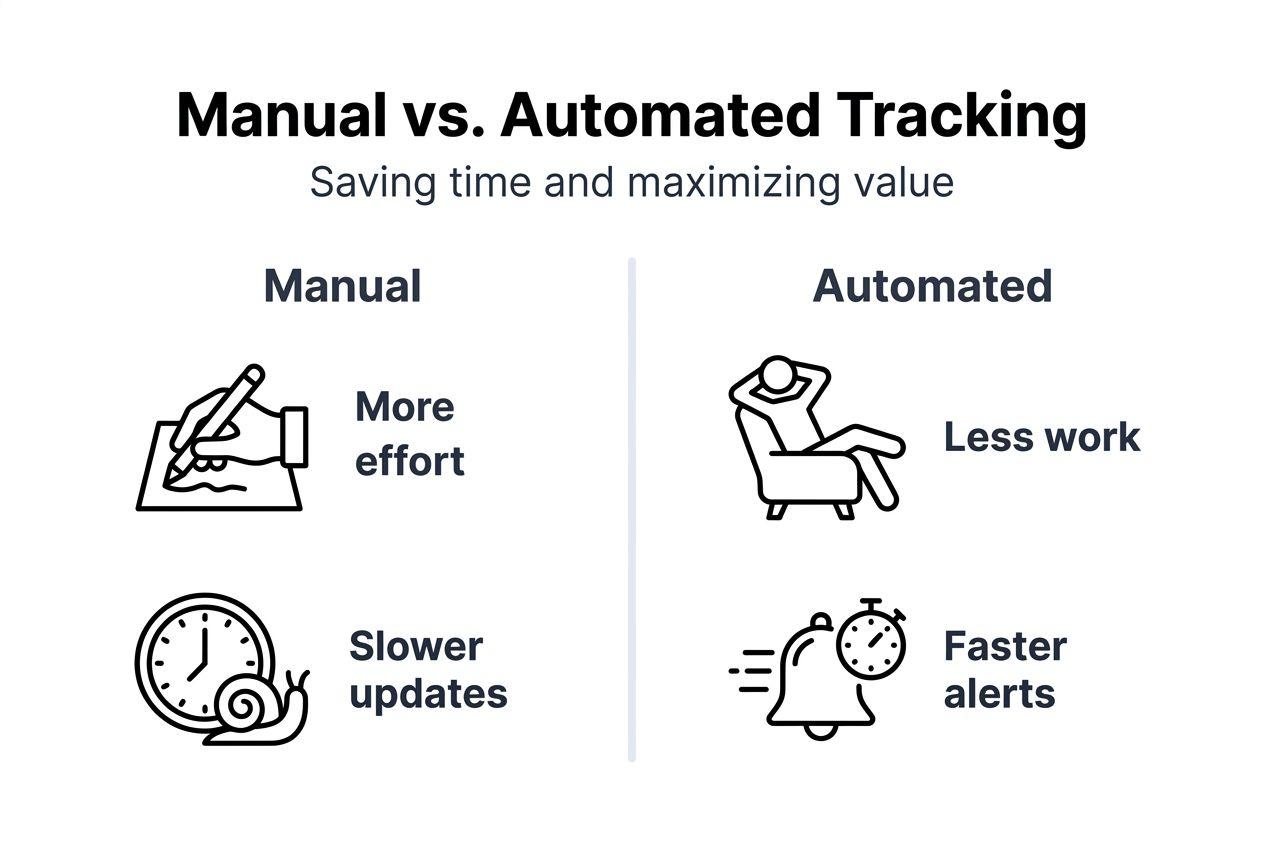
Accuracy differences favor automation significantly. Human checkers make transcription errors, forget to check certain stores, and miss price changes occurring between manual sessions. Automated systems capture every fluctuation with precise timestamping and reliable logging.
Flash sales present the clearest advantage for automation. A lightning deal lasting three hours during your workday gets completely missed through manual checking. Automated alerts notify you instantly via email or mobile notification, enabling quick purchase decisions before the opportunity expires.
Consolidation benefits make automation vastly superior for serious shoppers. Manual tracking requires visiting each retailer individually, logging prices, and comparing results manually. Automated dashboards present all tracked items in a unified interface with instant sorting by best current deal or largest recent drop.
Exploring types of online price tracking reveals options beyond simple alerts:
- Threshold alerts (notify when price drops below your target)
- Percentage drop alerts (trigger on 10%, 20%, or custom decreases)
- Historical low alerts (notify when prices match previous bottoms)
- Stock monitoring (combine price tracking with availability checking)
- Competitor comparison (track identical products across stores)
Pro Tip: Automate alerts but review price history data to ensure smart purchase timing. A price drop might be significant but still above historical averages, suggesting further patience could yield better results.
Limitations and challenges of real-time price data
Extreme volatility during major sales events like Black Friday challenges even sophisticated tracking systems. Prices might change every few minutes, creating alert fatigue and making it difficult to identify truly optimal purchase moments. Strategic timing becomes more art than science during these periods.
Data refresh latency, though minimal in quality systems, still creates brief windows where displayed prices lag actual retailer updates. During high-demand flash sales, even a two-minute delay can mean missing deals that sell out instantly. This limitation requires shoppers to act quickly when alerts arrive.
Stock availability represents a persistent challenge for price tracking platforms. A product might show an excellent price but be out of stock, requiring manual verification before purchase. Some tracking tools lack inventory integration, forcing users to cross-check availability independently.
Over-reliance on alerts without contextual analysis leads to poor decisions. A 15% price drop might seem attractive but could be insignificant if the product historically drops 30% during seasonal sales. Understanding price trends for smarter online purchases prevents premature buying.
Additional challenges to consider:
- Regional pricing variations not reflected in single-location tracking
- Coupon stacking opportunities requiring manual research beyond price data
- Shipping costs changing the total value equation unexpectedly
- Product version differences creating false equivalencies in comparisons
- Retailer-specific promotions like loyalty rewards affecting final prices
Effective real-time price tracking requires combining automated tools with smart human judgment. The data provides intelligence, but you make final purchase decisions based on comprehensive evaluation including timing, necessity, and total cost.
How PriceLix empowers smarter shopping with real-time data
PriceLix delivers comprehensive price tracking across over 1000 stores without requiring browser extensions or complicated setup. The platform’s cloud-based architecture means your price monitoring runs continuously, even when your devices are off.
Automated daily price checks eliminate manual effort entirely. The system scans tracked products multiple times daily, capturing price changes as they occur and logging historical data for trend analysis. This automation ensures you never miss significant drops due to timing gaps.
The user-friendly dashboard consolidates all tracked items in a single, intuitive interface. You see current prices, recent changes, historical charts, and active alerts at a glance. Color-coded indicators highlight the best current deals and notify you of new opportunities instantly.
Flexible alert customization lets you define exactly when to receive notifications. Set specific price targets, percentage drop thresholds, or historical low alerts for each product individually. This granular control prevents alert fatigue while ensuring you catch deals matching your criteria.
Key platform advantages include:
- No software installation or browser extensions needed
- Support for major retailers including Amazon, eBay, Walmart, and specialized stores
- Historical price charts showing 90+ days of data trends
- Mobile-responsive design for tracking on any device
- Email and push notification options for instant alerts
- Bulk import capabilities for tracking entire wishlists
PriceLix prioritizes simplicity without sacrificing power. The platform handles technical complexities like data refresh scheduling, retailer API integration, and alert delivery infrastructure, letting you focus purely on smart buying decisions.
Practical tips for leveraging real-time price data
Maximizing real-time price data value requires strategic application beyond passive alert monitoring. Implement these proven approaches to capture the biggest savings and avoid common mistakes.
-
Review price history charts before acting on any alert to confirm whether the current price represents a genuine deal or temporary fluctuation above historical norms.
-
Set personalized price drop thresholds based on product value and urgency rather than using generic percentages that might trigger too frequently or too rarely for your needs.
-
Monitor high-demand periods like holiday sales more closely, adjusting alert settings temporarily to catch limited-time opportunities during peak shopping events.
-
Combine multiple tracking strategies by using threshold alerts for must-have items and percentage drop alerts for flexible purchases where timing is less critical.
-
Regularly update tracking preferences every few weeks to reflect changing shopping priorities, removing items you’ve purchased or lost interest in to maintain a focused alert stream.
-
Cross-reference total cost including shipping and taxes rather than focusing solely on base price, as delivery fees can eliminate apparent savings from low product prices.
-
Establish purchase rules defining when you’ll buy regardless of further potential drops, preventing endless waiting that delays necessary purchases indefinitely.
Implementing best price tracking strategies 2026 creates a systematic approach:
- Track items immediately when you identify a need rather than waiting until purchase urgency forces hasty decisions
- Use longer monitoring periods for big-ticket items where patience yields significant savings
- Accept good deals rather than holding out for perfect prices that may never materialize
- Set calendar reminders for seasonal pricing patterns learned from historical data
Pro Tip: Use alerts to identify patterns rather than act immediately on every drop. Products often show cyclical pricing with multiple dips, so recognizing these cycles helps you time purchases for maximum savings.
Summary and next steps to smarter shopping
Real-time price data fundamentally changes how smart shoppers approach online purchasing. By providing continuous monitoring and instant alerts, these systems ensure you buy at optimal moments rather than accepting whatever prices appear during random browsing.
Automated tools eliminate the time burden of manual checking while delivering superior accuracy and coverage. The efficiency gains let you track dozens of products across thousands of stores effortlessly, multiplying your savings potential without lifestyle disruption.
Combining real-time alerts with historical price analysis creates the most powerful approach. Current data shows what’s available now, while historical trends reveal whether today’s price represents a genuine opportunity or suggests waiting for better timing.
Strategic timing around sales events helps navigate price volatility effectively. Understanding seasonal patterns and retailer promotion cycles lets you anticipate major drops rather than reacting to every minor fluctuation.
Getting started requires choosing a reliable platform that offers:
- Genuine real-time data refresh rates
- Comprehensive store coverage matching your shopping preferences
- Flexible alert customization preventing notification overload
- Historical data integration for informed decision making
- User-friendly interfaces requiring minimal learning curve
Platforms like PriceLix make smart shopping accessible by handling technical complexities while delivering actionable price intelligence directly to your inbox or mobile device.
Explore PriceLix to save more with real-time price tracking
Ready to stop overpaying and start capturing the savings real-time price data enables? PriceLix transforms how you shop online by automating the tedious work of price monitoring across over 1000 retailers.
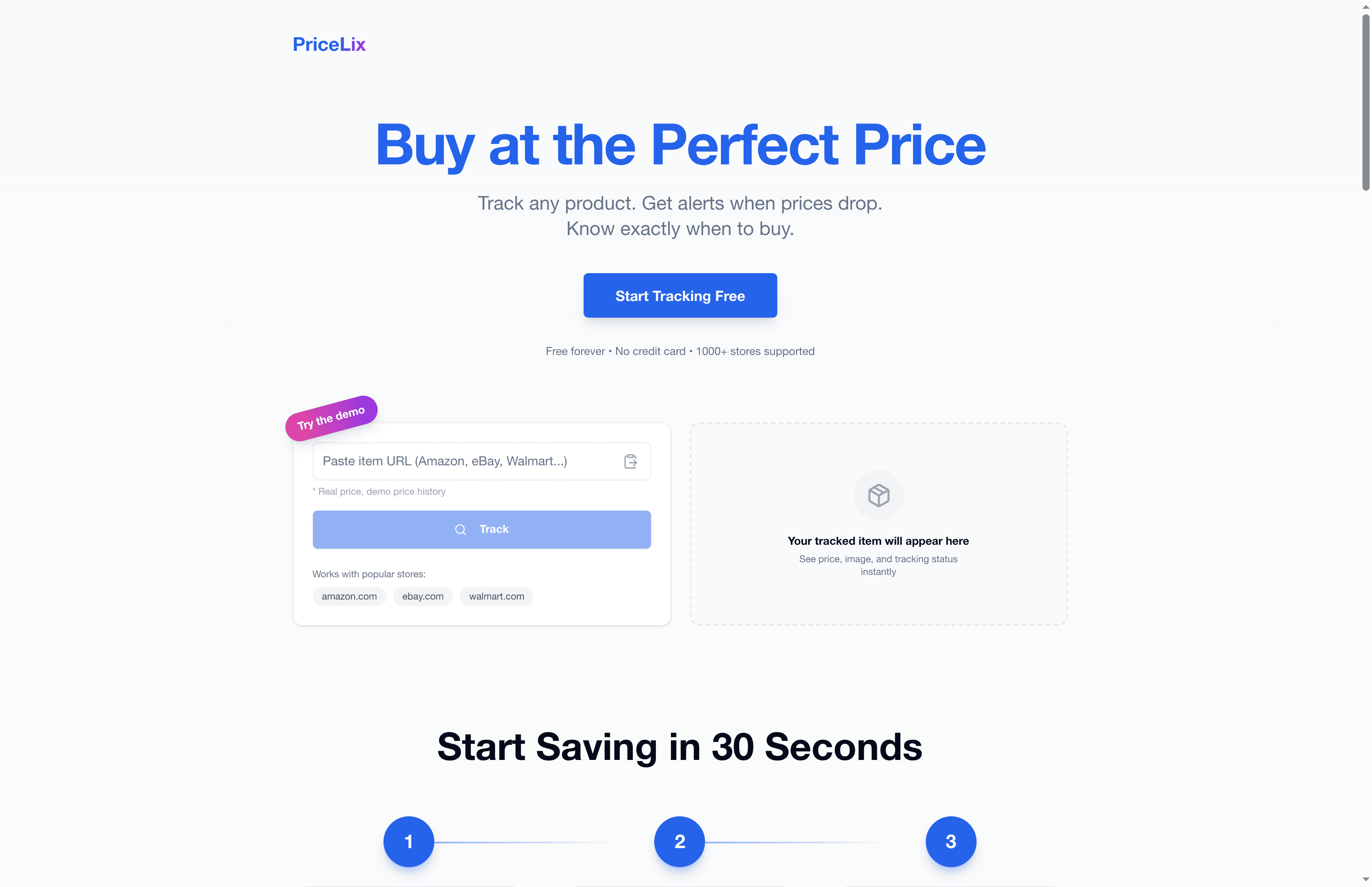
The platform’s intuitive dashboard and customizable alerts bring professional-grade price intelligence to your fingertips without requiring technical expertise or time-consuming setup. Track your favorite products, set your price targets, and let PriceLix notify you the moment deals matching your criteria appear.
Simplify your shopping process while catching opportunities others miss. Start tracking today and experience how real-time price data converts browsing into strategic purchasing that keeps more money in your pocket.
FAQ
What is real-time price data, and how does it work?
Real-time price data displays live product prices updated frequently, typically every few minutes, by automatically fetching current information from retailer websites. This continuous monitoring captures price changes as they happen, enabling you to see fluctuations instantly rather than discovering them hours or days later. The system works through automated scans of e-commerce platforms that detect updates and log them for comparison and alert triggering.
How much can I save using real-time price alerts?
Automated real-time price alerts save shoppers 15-20% per purchase on average compared to buying without tracking. These savings result from purchasing at optimal price points rather than accepting whatever price appears during casual browsing. The effect compounds over multiple purchases throughout the year, often exceeding $400 in total annual savings for active users.
Are automated price trackers better than manual checking?
Automated tracking delivers faster updates, greater accuracy, and vastly less time consumption than manual checking. While manual methods require 20-30 minutes daily and risk missing rapid price changes, automated systems monitor continuously without user effort. The types of online price tracking available through automation far exceed what’s practical manually, making automation the clear choice for serious savers.
What should I watch out for when using real-time price data?
Beware of data latency during volatile sales events, as even brief delays can cause you to miss extremely short-lived deals. Avoid impulse buying by always combining price alerts with historical trend analysis to confirm you’re getting a genuine bargain rather than a minor fluctuation. Always verify stock availability and calculate total cost including shipping and taxes before purchasing, as displayed base prices don’t tell the complete story.
Recommended
- Price tracking workflow 2026: Save 40% with alerts | PriceLix
- Why Monitor Price History: Unlocking Savings and Confidence | PriceLix
- Real-Time Price Changes Explained: Maximizing Savings | PriceLix
- Price Alert Benefits: 78% Retailers Use to Save Big in 2025 | PriceLix
- News – Khanduapata
- Agenda Digitale: Strumenti Completi per tracciare comportamenti, ident – Sara Conti