
Your Online Shopping Checklist for Smarter Purchases
TL;DR:
- Verify seller legitimacy before making a purchase to avoid scams and fake stores.
- Use price history tracking and reviews critically to ensure deals are genuine and reliable.
Online shopping is fast and convenient, but it’s also where a lot of money gets lost to scams, fake reviews, and misleading deals. This online shopping checklist exists because the process of buying something online deserves more than a quick scroll and a click. Think of it as your personal buying protocol, the kind of structured approach that separates shoppers who consistently get good deals from those who get burned. Work through each item below before you hit “confirm order” and you will shop with a level of confidence most people never reach.
Key takeaways
| Point | Details |
|---|---|
| Verify sellers first | Always confirm a seller’s legitimacy before entering payment details or trusting their pricing. |
| Reviews can be engineered | Star ratings alone are unreliable; look for review patterns, dates, and multiple source confirmation. |
| Credit cards are your shield | Use a credit card or payment service for every online purchase to protect against fraud and disputes. |
| Track prices before you buy | Checking price history prevents you from paying “sale” prices that are actually the regular price. |
| Keep your records | Save confirmation emails and screenshots so you can resolve disputes quickly and cleanly. |
1. Your online shopping checklist starts with seller verification
Before you think about the product, think about who you are buying it from. This is the single step most shoppers skip, and it is the one that costs them the most.

Start with stores you already know. Established retailers have larger user bases and verifiable review histories, which means you have actual data to work with before you spend a cent. If a site is new to you, that is not automatically a red flag, but it does mean you need to do some homework.
Look for these trust signals on any unfamiliar store:
- A physical address and a working phone number listed on the site
- A verifiable BBB listing or consumer protection registration
- An “About Us” page that tells a real story, not two generic paragraphs
- Contact methods beyond a single email address
Also watch out for typo-squatted URLs. These are fake sites built to look like known brands, with names like “Amaz0n.com” or “Walm-art.store.” Suspicious new shops and mismatched domains are classic signs of a fraud operation. If you found the store through a social media ad, apply extra scrutiny. Social media ads are not vetted the way search results are, and scammers use them constantly.
Pro Tip: Search the store name plus the word “scam” or “review” before you buy. Three minutes of research can save you three weeks of dispute calls.
2. Evaluate product details and reviews carefully
You found a product with a 4.8-star rating and 2,000 reviews. That sounds great. The problem? Those numbers may have been manufactured.
The FTC has specifically warned that fake review patterns are common, including sudden bursts of five-star reviews, reviewers who have only ever reviewed that one product, and suspiciously similar language across dozens of comments. A product that gained 500 reviews in a single week is not necessarily popular. It may simply be gamed.
Here is how to evaluate reviews properly:
- Check review dates. A sudden spike is a red flag.
- Read the one and two-star reviews first. Those tend to be real.
- Cross-reference the product on forums like Reddit or independent review sites.
- Look for verified purchase labels and reviewer history.
Pricing matters here too. If a deal looks too good to be true, treat it like a warning, not an opportunity. A $400 product selling for $90 from an unknown seller is almost never a steal. It is usually a counterfeit, a scam, or a bait-and-switch.
Pay attention to warranty exclusions too. A product sold by an unauthorized reseller may void the manufacturer’s warranty entirely, even if the item itself is genuine.
Return and refund policies are also part of deal quality. If a seller offers no returns, or their policy is buried in three pages of fine print, that tells you something important about how they expect the transaction to go.
3. Lock down your payment security
How you pay is as important as what you pay. The right payment method gives you a safety net. The wrong one leaves you with almost no recourse.
Follow these steps every time you pay online:
- Use a credit card or a service like PayPal. Credit cards offer meaningful purchase protection and dispute rights that debit cards and wire transfers simply do not match.
- Consider a virtual card for unfamiliar retailers. Many banks now offer single-use or limited-use virtual card numbers. If the retailer is new to you, use one.
- Never save payment info on shared devices. A logged-in browser on a family computer or a public machine is a real exposure risk.
- Check for https and a padlock icon. If the checkout page is not encrypted, leave immediately.
- Use one dedicated card for online shopping. Using the same card for all online purchases makes it much easier to spot anything unusual in your statement.
- Monitor your statements regularly. Small unauthorized charges often go unnoticed for months if you are not actively looking.
Pro Tip: Save your confirmation emails and screenshots of the checkout page. Electronic purchase records are the fastest way to resolve disputes with your bank or the retailer.
4. Verify shipping details and delivery timelines
Shipping is where a surprising number of scams play out. The item looks real, the checkout feels normal, and then you wait. And wait. And nothing arrives.
Before you complete any purchase, check the following:
- Estimated delivery dates. Does the timeline make sense given where the seller is located?
- Shipping costs. Are they disclosed upfront, or do they balloon at checkout?
- Tracking availability. Every legitimate shipment from a major retailer comes with real tracking. Fake tracking numbers are a documented scam signal, particularly during holiday shopping seasons.
- Packaging quality indicators. Budget sellers sometimes ship fragile items with no protection. Check reviews for mentions of damaged deliveries.
Customer service responsiveness is also a shipping-related issue. If something goes wrong with your order, you need to be able to reach someone. According to BBB analysis, unresponsive customer support is the most frequently reported issue in online shopping scams, showing up in 46% of cases. Test it before you buy. Send a question to their support contact. If they don’t reply, move on.
| Shipping signal | What it means |
|---|---|
| Real-time tracking provided | Low risk, standard practice |
| Estimated delivery window only | Moderate risk, follow up closer to date |
| No tracking offered at all | High risk, reconsider the purchase |
| Tracking number invalid at carrier site | Very high risk, likely a scam |
5. Apply price history tracking before committing
This step alone has saved me more money than any coupon or promo code. Price history tracking tells you what a product actually costs over time, not just what the seller wants you to think it costs today.
Retailers mark products up before “sales” constantly. A product labeled “33% off” may have been at that exact price three weeks ago with no discount label at all. Without a price history chart, you have no way of knowing. With one, the deception is obvious in seconds.
Price tracking platforms let you monitor price drops automatically and alert you when a product hits your target price, so you never have to manually check the same listing repeatedly. For anyone buying electronics, home goods, or anything above $50, this step is non-negotiable.
You can also use price history data to time purchases around actual sale cycles, like Black Friday or major product launches, rather than trusting retailer-created urgency. For deeper guidance, the Price-lix resource on ways to save money shopping online is worth bookmarking.
6. Validate coupon codes before you assume they work
Coupons feel like free money. They are not always. Coupon codes can be expired, region-restricted, or stacked in ways that violate the seller’s terms and trigger a higher final price than expected.
Always apply the coupon before you enter your payment details and verify that the cart total reflects the correct discount. Read the terms for minimum purchase requirements, excluded items, and single-use restrictions. A coupon that takes $20 off but requires a $200 minimum order is only useful if you were already planning to spend that amount.
Also check whether cashback programs or store credit stack with the coupon. Some do. Many do not. Understanding this upfront prevents a frustrating post-purchase realization.
7. Run a final pre-checkout decision check
Before you click “buy,” run through this quick triage table. It takes about 60 seconds and it will stop a bad purchase more reliably than any gut feeling.
| Check | Green flag | Red flag |
|---|---|---|
| Seller legitimacy | Known retailer or verified third party | New shop, no contact info, vague address |
| Reviews | Consistent, dated, verified purchases | Burst patterns, generic praise, no negatives |
| Price vs. history | Near historical average or lower | Suspiciously low or false “discount” markup |
| Payment options | Credit card, PayPal accepted | Wire transfer or gift cards only |
| Return policy | Clear, accessible, reasonable window | Hidden, absent, or final sale only |
| Shipping info | Tracked, estimated date provided | Vague, no tracking, overseas with no ETA |
If you see more red flags than green, step away. There are always other sellers, other deals, and other days to buy.
My honest take on checklist shopping
I’ve been tracking online purchases and testing shopping strategies for years, and the single biggest mistake I see people make is trusting star ratings without questioning them. A 4.7 out of 5 feels authoritative. It feels like data. But star ratings can be misleading due to fake and incentivized reviews, and most shoppers never look past the number.
The second mistake is skipping seller verification when the price is attractive. I get it. A great price creates excitement, and excitement shuts down skepticism. But I’ve learned the hard way that the most dangerous scam is the one that feels like a bargain.
What actually works, in my experience, is keeping the checklist short enough that you’ll actually use it. You don’t need to do a 45-minute investigation for every $12 purchase. But for anything above $30, and absolutely for anything above $100, walking through seller legitimacy, reviews, pricing history, and payment security is worth every minute.
Keep your receipts. I cannot overstate this. Saved confirmation emails and screenshots have resolved disputes for me in hours that would have taken weeks without documentation. Make it a habit.
— Serhii
Stop overpaying. Let Price-lix do the heavy lifting
You’ve got the checklist. Now add the tool that automates the hardest part of it.
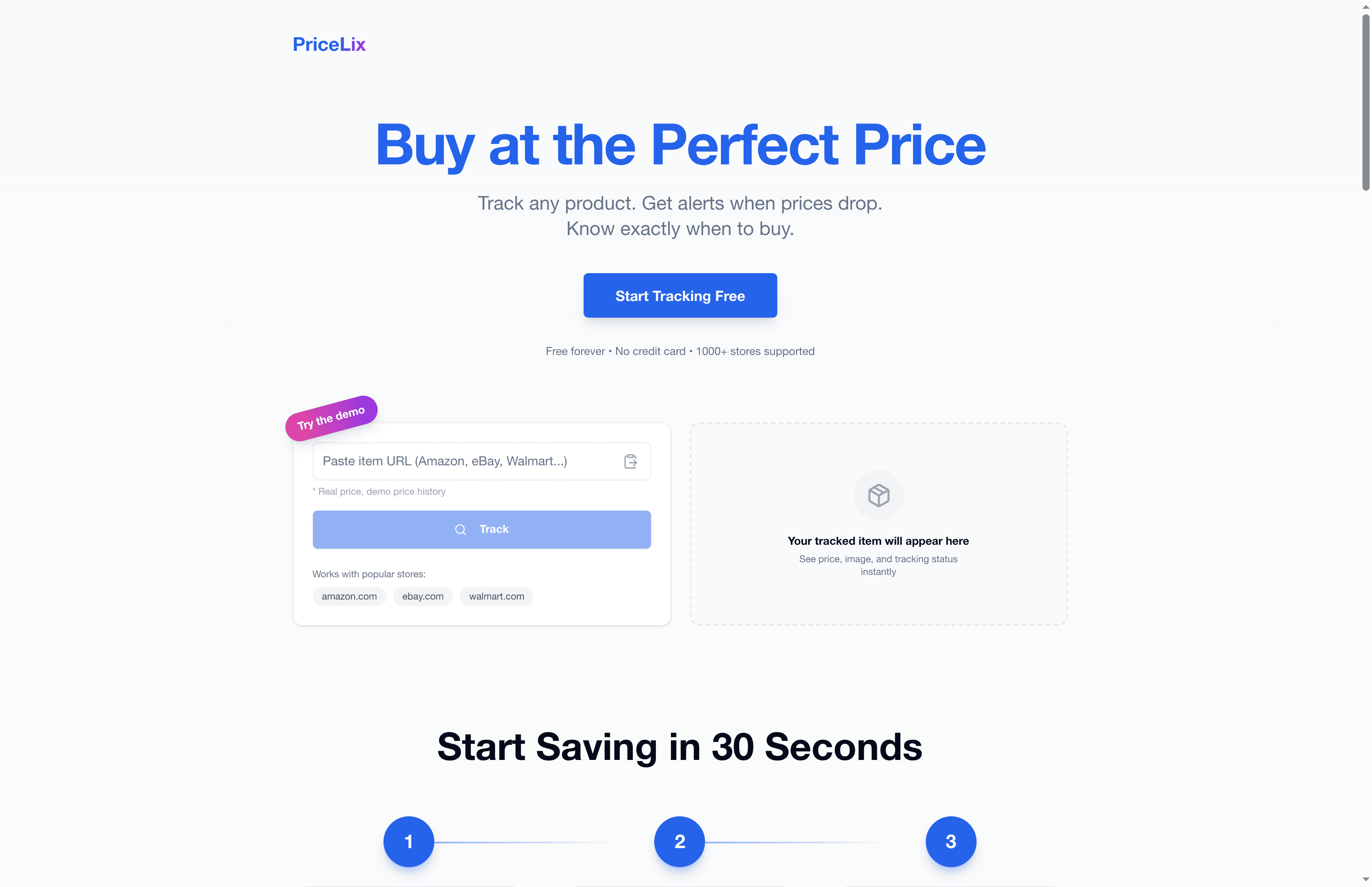
Price-lix is a price tracking and comparison platform that monitors products across Amazon, eBay, Walmart, and over a thousand other stores. It sends you real-time alerts when prices drop and shows you full price history charts so you can see at a glance whether a “deal” is actually a deal. No browser extensions needed. No manual checking. Just set it up and let it run.
Use Price-lix alongside this checklist and you cover two of the biggest risks in one move: verifying the price is real and knowing the right time to buy. You can also check out the Price-lix guide on spotting fake discounts for more ways to protect yourself before checkout.
Start tracking smarter at price-lix.com.
FAQ
What should be on every online shopping checklist?
Every purchase checklist should cover seller legitimacy, product review quality, pricing history, payment security, and return policy terms. These five areas catch the majority of online shopping risks before they cost you money.
How do I know if online reviews are fake?
Look for sudden spikes in review volume, reviewers who have only rated one product, and repetitive language across multiple reviews. The FTC specifically warns about review burst patterns as a key signal of engineered feedback.
Is it safer to use a credit card for online purchases?
Yes. Credit cards offer dispute rights and purchase protection that debit cards do not. Using the same card consistently for online shopping also makes it easier to catch unauthorized transactions quickly.
What is a fake tracking number and how do I spot it?
A fake tracking number is one that returns no results or invalid status when entered at a real carrier’s site like UPS or USPS. BBB data shows that fake tracking numbers appear in roughly 10% of online shopping scam reports and almost always coincide with non-delivery.
How can price tracking tools improve my shopping decisions?
Price tracking tools show you a product’s full price history, which reveals whether a “sale” is genuine or manufactured. Platforms like Price-lix also send alerts when prices hit your target, so you buy at the right time rather than at the retailer’s preferred time.