
Ways to Save Money Shopping Online in 2026
TL;DR:
- Waiting for sales alone can cause shoppers to miss out on significant savings.
- Combining techniques like price tracking, coupons, cashback, and timing can save up to 40% or more per purchase.
Most shoppers think they’re being smart by waiting for a sale. But the truth is, focusing only on the sticker price is one of the most common ways to leave money on the table. The real ways to save money shopping online involve stacking multiple strategies at once: price tracking, coupons, cashback, and smart timing. Done right, systematic savings methods can get you 20 to 40% off your purchases, sometimes more. This guide breaks down every tactic worth your time, in plain language, with no fluff.
Table of Contents
- Key takeaways
- 1. Understand the real ways to save money shopping online
- 2. Build a coupon strategy that actually works
- 3. Use price tracking to time purchases perfectly
- 4. Stack discounts like a pro
- 5. Use strategic cart abandonment to unlock discounts
- 6. Leverage cashback portals correctly
- 7. Compare tools before you commit to one
- 8. Build timing and budgeting habits that compound over time
- My honest take on saving money online
- Start tracking prices smarter with Price-lix
- FAQ
Key takeaways
| Point | Details |
|---|---|
| Sticker price is misleading | Always calculate real cost including shipping, taxes, and fees before deciding on a deal. |
| Stack discounts for maximum savings | Combining sale prices, coupons, and cashback can push total savings above 40%. |
| Price history prevents overpaying | Use price history tools to spot fake discounts and time purchases at genuine lows. |
| Cart abandonment earns discounts | Leaving items in your cart triggers discount emails in roughly 40% of cases. |
| Timing and discipline compound savings | Planning purchases around seasonal sales and waiting before buying non-essentials builds long-term savings habits. |
1. Understand the real ways to save money shopping online
Before you start chasing discounts, you need a clear framework for evaluating deals. Not every “sale” is worth your money.
The most important shift you can make is calculating the real cost of any purchase. Smart shoppers add up price, shipping, taxes, and any handling fees, then subtract discounts. A $30 item with $15 shipping and no coupon can easily cost more than a $40 item with free shipping and a 20% off code. Do that math every single time.
Seller reputation matters just as much as price. Before checking out with a seller you do not recognize, read reviews, look at their return policy, and confirm contact information. A deal that leads to a scam is not a deal at all. Price-lix’s guide on spotting fake discounts is worth bookmarking if you shop across multiple platforms.
You also need to understand coupon stacking rules. Many retailers allow you to combine a site-wide promo code with a category coupon, but not all do. Check store policies before you build your discount stack. Trying to use incompatible codes at checkout wastes time and sometimes locks you out of the best offer.
Pro Tip: Before buying anything online, open a quick notes app and write out: price + shipping + tax, minus any discounts. If it still beats your local option, buy it. If it does not, hold off.
2. Build a coupon strategy that actually works
Coupon codes are free money, but only if you use them correctly. Random Googling for codes wastes time and often turns up expired ones.
Start by signing up for retailer newsletters. Most stores send a 10 to 15% off code within minutes of subscribing. Use a dedicated email address for shopping to keep things organized. From there, visit verified coupon aggregator sites before every purchase instead of searching from scratch.
Here is where most shoppers trip up. First-purchase coupon codes often expire within 7 to 14 days. Set a calendar reminder the moment you get one. If you wait until you “need something,” the code is gone. Treat coupon codes like perishable goods.
The real power is online coupon strategies built around stacking. Pair a coupon code with a cashback portal, then use a rewards credit card on top. Coupon stacking combined with sale prices and cashback can push total savings past 40% on everyday items. That is not an edge case. That is a repeatable system.
3. Use price tracking to time purchases perfectly
This is where most shoppers are genuinely bleeding money without realizing it. Retailers adjust prices constantly, sometimes multiple times per day. Without a price history tool, you have no idea whether today’s price is high, low, or right in the middle.
Price history tools protect you from fake discounts by showing you what a product actually sold for over the last 6 to 12 months. When you see a “50% off” badge but the price history shows the item was at this price for the past three months, that chart becomes gold. You just avoided a manufactured sale.

Price-lix tracks prices automatically across Amazon, eBay, Walmart, and over a thousand other stores. You add an item to your watchlist, set a target price, and get alerted when it drops. No browser extensions required. No manual checking every day.
Pro Tip: For big-ticket purchases like laptops, appliances, or TVs, always check at least 90 days of price history before buying. If the current price is near the historical low, buy. If it is near the high, wait.
4. Stack discounts like a pro
Stacking is the single most powerful tactic in this entire article. One discount is good. Three discounts on the same purchase is where the real savings happen.
Here is a step-by-step stack you can use on most major retailers:
- Start with a sale or clearance item. Do not stack on full-price items unless you have no other choice.
- Apply a coupon code. Use a verified aggregator site or your inbox to find one.
- Activate a cashback portal before clicking through. Sites like these pay you a percentage of your purchase back.
- Pay with a rewards credit card. Add another 1 to 5% back on top.
- Check if gift cards are available at a discount. Some membership clubs sell gift cards at 10 to 15% below face value.
- Meet the free shipping threshold. Adjust your cart to avoid paying for shipping.
When you layer all six of these together, you are not saving 10%. You are realistically saving 30 to 45% on a single order. This is how savvy shoppers get best online shopping deals that most people walk right past.
5. Use strategic cart abandonment to unlock discounts
This one feels counterintuitive, but it works. Load your cart, get to checkout, and then stop. Close the tab. Walk away.
Roughly 40% of abandoned carts trigger a follow-up email from the retailer within 24 to 48 hours. That email often includes a 10 to 20% discount or free shipping to bring you back. Retailers would rather close the sale at a small discount than lose you entirely.
This tactic works best for items you genuinely want but are not in a rush to buy. Do not use it for time-sensitive deals, since the item might sell out or the original price might jump. But for standard products on mid-to-large retailers, it is worth the wait every time.
A few things to keep in mind: you need to be logged into your account for this to work. Guest checkout users rarely receive follow-up emails. Also, do not check out right after receiving the discount email. Sometimes waiting another 24 hours triggers a second, better offer.
6. Leverage cashback portals correctly
Cashback portals are one of the easiest cheap online shopping tips to implement. But they are also the most misunderstood.
The way cashback tracking works is simple: when you click through a cashback portal to a retailer’s site, a cookie tracks your session. When you complete a purchase, the portal collects a referral fee from the retailer and shares part of it with you. That is your cashback.
The problem is that ad-blockers and privacy extensions block the tracking scripts that make this work. If you are running an ad-blocker and wondering why your cashback never confirms, that is why. The fix is simple: whitelist the cashback portal and the retailer’s site, or use a dedicated browser profile just for shopping.
Also, cashback tracking breaks if you switch devices mid-purchase, use incognito mode, or change networks between clicking the portal and completing the order. Keep the whole purchase on one device, one browser, one network.
Pro Tip: Screenshot your cashback activation confirmation before you complete any purchase. If tracking fails and you need to file a claim, that screenshot is your evidence.
7. Compare tools before you commit to one
Not all savings tools are equal. Here is a practical comparison of the main categories you will encounter:
| Tool type | Best for | Key limitation |
|---|---|---|
| Price tracking platforms | Timing purchases at genuine lows | Requires setup and patience |
| Coupon aggregator sites | Fast discount code lookup | Codes may be expired or invalid |
| Cashback portals | Passive rebates on purchases | Tracking failures with ad-blockers |
| Browser extensions | Automatic coupon application | May conflict with other extensions |
| Price comparison sites | Finding the cheapest seller fast | Does not account for seller reputation |
The most effective approach is building a layered system using two or three of these together. Use a price tracking platform like Price-lix for timing, a coupon aggregator for codes, and a cashback portal for rebates. Each tool covers a gap the others leave open. That is your discount monitoring system working all at once.
One pitfall to flag: browser extensions from different services sometimes conflict with each other. If your coupon extension is active when you click through a cashback portal, the cashback tracking may fail. Disable coupon extensions before activating cashback, then apply your code manually.
8. Build timing and budgeting habits that compound over time
The technical tactics above work better when you pair them with smart shopping habits. This is the part most articles skip.
Shop seasonally. The best online shopping deals for electronics land in November and January. Apparel goes on deep clearance in February and August. Outdoor gear drops in September. If you can plan non-urgent purchases around these windows, you capture discounts without needing a coupon at all.
Here are the habits that separate serious savers from casual ones:
- Maintain a running shopping list and only buy what is on it during impulse-prone browsing sessions.
- Apply a 72-hour waiting period before buying anything over $50 that was not already planned. Most impulse urges fade completely.
- Set a monthly spending budget for online purchases and track it in a simple spreadsheet.
- Use store pickup instead of shipping when possible. It eliminates shipping costs and often lets you inspect the item before accepting it.
- Know your rights: the FTC requires sellers to ship within the promised timeframe or 30 days. If a seller misses that window, you are entitled to a full refund. Keep order confirmation records.
The last point matters more than most shoppers realize. Knowing your consumer rights removes the pressure to accept bad deals or delayed orders without recourse.
My honest take on saving money online
I’ve watched a lot of shoppers chase the wrong thing. They obsess over finding one giant discount instead of building a system that saves them money on every single order. That is the wrong game.
In my experience, the shoppers who consistently save the most are not the ones who find the best one-off deal. They are the ones who stack four modest advantages on every purchase. A 10% coupon plus 5% cashback plus 3% credit card rewards plus free shipping adds up to real money over a year.
I’ve also seen cashback tracking fail more times than I can count. Nine times out of ten, it is an ad-blocker or someone switching from their laptop to their phone mid-checkout. The fix takes 30 seconds. But people assume the system is broken and give up on cashback entirely, which costs them hundreds of dollars annually.
My honest advice: stop hunting for magic deals. Smart shopping is about value and alignment with your needs, not just grabbing any sale. Build the system, follow it consistently, and let the savings accumulate.
— Serhii
Start tracking prices smarter with Price-lix
You now have the full picture on saving tips for online shopping. The next step is putting the price tracking piece on autopilot.
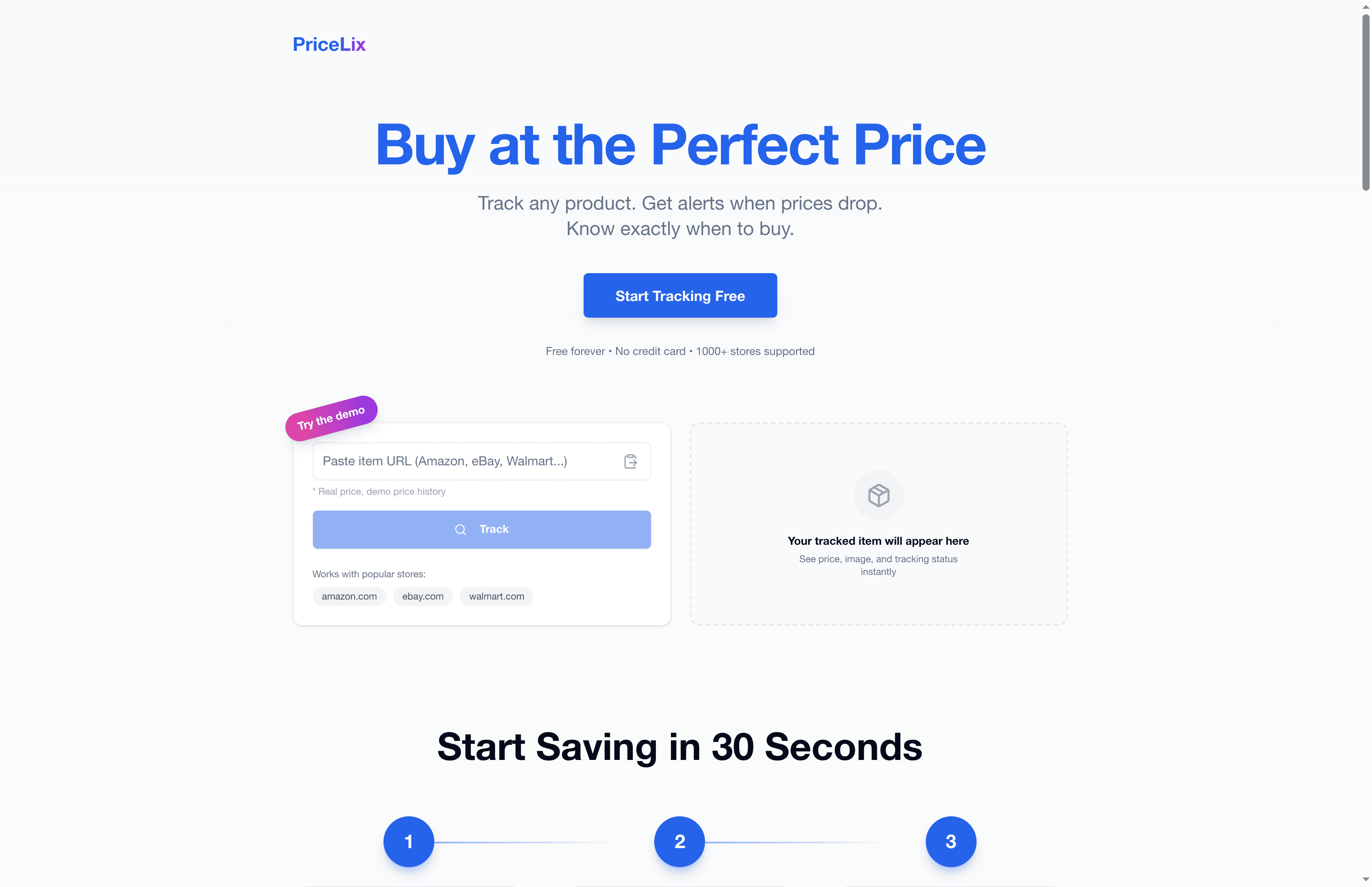
Price-lix makes it simple to track prices across Amazon, eBay, Walmart, and thousands of other stores. You set a target price, and Price-lix sends you a real-time alert the moment that item hits your number. No manual checking. No missing a drop while you were busy. The platform’s price history charts show you months of data at a glance, so you always know whether a “sale” is real. If you are serious about finding the best online shopping deals consistently, Price-lix is where you start.
FAQ
How much can you realistically save shopping online?
Using a layered approach of coupons, cashback, and rewards cards, shoppers consistently save 20 to 40% on purchases. Stacking all methods together can push savings past 40% on eligible items.
What are the best ways to find discount codes for online purchases?
Sign up for retailer newsletters to get first-purchase codes, and use verified coupon aggregator sites before every checkout. Set calendar reminders since many codes expire within 7 to 14 days.
Why is my cashback not tracking correctly?
Ad-blockers, incognito mode, and switching devices mid-purchase all break cashback tracking cookies. Whitelist your cashback portal, complete the entire purchase on one browser and device, and screenshot your activation for proof.
Does cart abandonment actually work for getting discounts?
Yes. Leaving items in your cart and walking away triggers discount follow-up emails in roughly 4 out of 10 cases, typically offering 10 to 20% off or free shipping. You must be logged in for the tactic to work.
How do price history tools help you avoid fake discounts?
Price history tools display a product’s actual price over the past 6 to 12 months. If a “sale” price matches the item’s regular price, the chart shows it immediately, preventing you from falling for manufactured markdowns.