
7 types of online deals every smart shopper should know
TL;DR:
- Not all online deals are equally valuable; understanding deal types helps you save more.
- Combining and tracking deals with tools maximizes savings and prevents overpaying.
- Setting up price alerts and stacking discounts is key to consistent online shopping savings.
Online shopping is supposed to save you money. But with so many deal types flying at you, flash sales ending in 10 minutes, BOGO offers, bundle discounts, and free shipping thresholds, it can feel like the store is winning more than you are. Most shoppers grab whatever looks like a deal without stopping to ask: is this actually the best price? The truth is, not all discounts are created equal. Some deals look big but deliver little. Others are quietly the best value on the page. This guide breaks down the major types of online deals, shows you how to calculate real savings, and explains how to use price tracking tools so you never overpay again.
Table of Contents
- How to recognize and compare different online deal types
- 7 online deal types explained: From percentage offs to bundles
- Stacking and combining deals: How to maximize your savings
- How to track and alert on deals across multiple platforms
- Our take: Expert advice for maximizing online deal strategies
- Start maximizing your online savings today
- Frequently asked questions
Key Takeaways
| Point | Details |
|---|---|
| Know deal types | Recognizing each major deal type helps you compare offers and choose the best value. |
| Maximize stacking | Combining different deal classes and monitoring stacking policies can compound your savings. |
| Leverage price alerts | Real-time deal and price drop alerts ensure you never miss out on the best online discounts. |
| Volume deals for big carts | Tiered and volume-based deals give the biggest payoff when purchasing multiple items. |
| Focus beats FOMO | Target a strategic mix of deals rather than chasing every single promo for real long-term savings. |
How to recognize and compare different online deal types
Now that we’ve highlighted where confusion starts, let’s break down the deal types you’re most likely to see and how to recognize what offers real value.
When you land on a product page, you might see “20% off,” “Save $15,” “Buy 2 get 1 free,” or “Free shipping over $35.” Each of these works differently, and each has a different impact on your wallet depending on what you’re buying. Understanding online deals at a structural level is the first step toward spending less.
Percentage-based discounts reduce the item cost by a fixed percentage, like 20% off, making them straightforward for sitewide sales where customers can quickly gauge value. Dollar-off deals are simpler but can be misleading: $5 off a $10 item is incredible, but $5 off a $200 item barely moves the needle.

Here’s a quick comparison of the major deal types:
| Deal type | How it works | Best for | Watch out for |
|---|---|---|---|
| Percentage off | Fixed % reduction | Sitewide sales, apparel | Low-value items where % is tiny |
| Dollar off | Flat dollar reduction | High-ticket items | Small discounts on cheap products |
| Volume/tiered | More you buy, more you save | Household goods, bulk | Buying more than you need |
| BOGO | Buy one, get one free or discounted | Clothing, food | Needing the second item |
| Free shipping | No shipping cost, often with min spend | Orders near the threshold | Padding cart to hit minimum |
| Bundle | Multiple items at a reduced combined price | Gifts, tech accessories | Bundles with items you don’t want |
| Flash sale | Deep discount for a limited time | Electronics, seasonal | Impulse buys, fake urgency |
When comparing deals, keep these factors in mind:
- The percentage or dollar value off relative to the original price
- Minimum spend thresholds that require you to spend more to unlock the deal
- Stacking policies that allow or block combining multiple discounts
- Shipping costs that can quietly cancel out your savings
- Time limits that create pressure but shouldn’t rush a bad decision
A deal that looks good on the surface can fall apart once you factor in shipping or a required minimum. Always do the math before you click buy.
7 online deal types explained: From percentage offs to bundles
With a framework in place, it’s time to dig deeper into what each major deal type actually means for your wallet.
-
Percentage-based discounts. These are the most common. A 30% off sale on a $100 jacket saves you $30. Clean and easy to calculate. Best for clothing, electronics, and sitewide promotions.
-
Dollar-off discounts. A flat reduction like “$20 off your order.” The value depends entirely on the original price. On a $500 TV, $20 off is almost nothing. On a $40 item, it’s significant.
-
Volume and tiered discounts. Volume-based discounts encourage larger purchases through tiered pricing, like 10% off $50 or 20% off $100, or bulk buys. These are great for household staples, office supplies, or anything you use regularly. The risk is buying more than you actually need.
-
BOGO deals. BOGO offers give you a free or discounted second item, which boosts purchase volume and helps stores clear inventory. These work best when you genuinely need or want both items. Otherwise, you’re spending money to “save” money.
-
Free shipping. This one is underrated. Free shipping discounts, especially when paired with a minimum order value, are often valued more than an equivalent percentage-off deal because they remove a cost that feels like a penalty. They also tend to increase average order size, which is why stores use them so often.
-
Bundles. A bundle groups related products at a lower combined price than buying each separately. Think a phone case plus screen protector plus charger for $35 instead of $55. Great for gifts or tech setups. Just make sure you actually want everything in the bundle.
-
Flash sales and new/referral deals. Flash sales offer steep discounts for a very short window, sometimes just hours. Referral and new customer deals reward first-time buyers or people who bring in friends. Both can be excellent, but they reward speed and planning.
When you’re tracking online price tracking options across stores, knowing which deal type you’re looking at helps you compare apples to apples.
“Free shipping discounts, often tied to a minimum order value, are valued more highly by shoppers than an equivalent percentage off and consistently increase average order size.”
Pro Tip: Some Shopify-based stores allow you to stack a product discount with a free shipping code. Always check the store’s discount policy page or test codes at checkout before assuming they won’t combine.
Using price tracking strategies alongside your knowledge of deal types puts you in a much stronger position than just reacting to whatever a store promotes.
Stacking and combining deals: How to maximize your savings
It’s not just about finding deals. Using them together smartly can have a huge effect. Here’s how stacking works and what to watch out for.
Stacking means applying more than one discount to a single order. It sounds simple, but the rules vary a lot by platform. Shopify’s discount combinations allow product, order, and shipping discounts to stack if the store enables it, but same-type discounts compete and only the higher one wins. Also, compounding is not additive: 10% off plus another 10% off equals 19% off, not 20%.
Here’s a real-world example of how stacking math works:
| Scenario | Original price | Discount 1 | Discount 2 | Final price | Actual savings |
|---|---|---|---|---|---|
| Two 10% off codes | $100 | 10% off = $90 | 10% off $90 = $81 | $81 | 19% |
| 20% off + free shipping | $100 | 20% off = $80 | $8 shipping waived | $80 | 28% effective |
| BOGO + 10% off | $50 (pair) | BOGO = $25 | 10% off $25 = $22.50 | $22.50 | 55% |
Amazon tends to be more restrictive with stacking, while many independent Shopify stores are more flexible. Walmart occasionally allows coupon codes on top of sale prices, but it varies by product and seller.
Following price comparison best practices means always checking your cart total after applying each code, not just assuming the best combination was automatically selected.
Pro Tip: Before checkout, remove and re-add discount codes in different orders. Some platforms apply the first code entered as the base, which can affect how the second one compounds. A quick test can save you a few extra dollars.
For deeper bargain hunting strategies, stacking a tiered volume deal with free shipping is often the most powerful combination available on a single order.
How to track and alert on deals across multiple platforms
After you’ve spotted which deals are best and how to combine them, the next question is: how do you never miss the price drops and flash sales again?
Manually checking prices across Amazon, Walmart, eBay, and dozens of other stores every day is exhausting. That’s where price tracking tools come in. Real-time alerts boost lowest price buys by 60%, and multi-store tracking cuts missed deals by 45%. Those are numbers worth paying attention to.
Here are the main tools available right now:
- Browser extensions: Honey, Rakuten, Coupert, and CamelCamelCamel are popular options. They work directly in your browser and can surface coupons automatically or show price history on Amazon product pages.
- Dedicated apps: Tools like AnyTracker let you monitor prices on items across multiple stores from a single dashboard.
- Built-in platform tools: Amazon has a “Track price” feature on some items. Google Shopping shows price history on select products.
- Specialized tracking platforms: These go further by monitoring thousands of stores simultaneously and sending you alerts the moment a price drops to your target.
Setting up alerts is straightforward. You find the product you want, set a target price, and the tool notifies you when it hits that number. No more refreshing pages. No more missing a 48-hour flash sale while you were busy.
The key is to track online prices across more than one store at a time. A product might be $89 on Amazon today but $74 on Walmart tomorrow. Without multi-store tracking, you’d never know.
Using smart price tracking tips alongside price alert platforms means you’re always in the loop without doing the legwork yourself.
Our take: Expert advice for maximizing online deal strategies
Here’s something most deal guides won’t tell you: flash sales are overrated. Everyone chases them. The countdown timer triggers urgency, and urgency triggers impulse buys. But the shoppers who consistently save the most aren’t the ones refreshing flash sale pages. They’re the ones who set up tiered volume deals combined with active price alerts across Amazon, Walmart, and other platforms, capturing 20 to 40% savings without the stress.
Chasing every single promo leads to choice fatigue. You end up buying things you didn’t need just because a deal appeared. That’s not saving money. That’s spending money faster.
The smarter move is to build a core strategy: master tiered volume deals for items you buy regularly, and set up automated price alerts for bigger purchases. Let the tools do the watching. You just buy when the price is right.
For anyone serious about monitoring product prices long-term, consistency beats hustle every time. A calm, systematic approach to deal-hunting will always outperform reactive, emotion-driven shopping.
Start maximizing your online savings today
Ready to level up your savings with less effort? Everything we’ve covered, recognizing deal types, stacking discounts, and setting up alerts, becomes a lot easier when you have the right tool doing the heavy lifting.
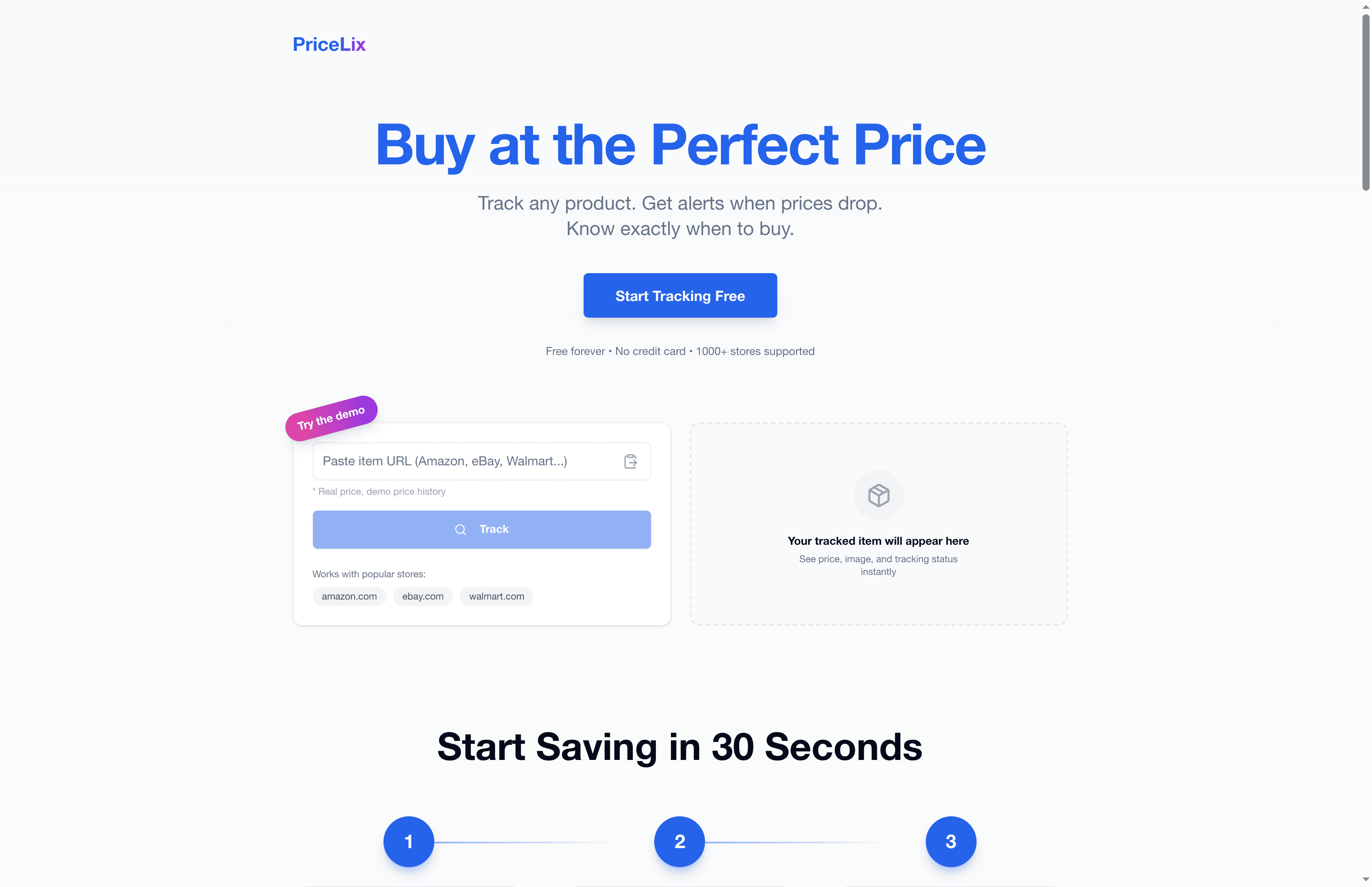
PriceLix tracks prices automatically across Amazon, Walmart, eBay, and over a thousand other stores. You set your target price, and PriceLix sends you an alert the moment it drops. No browser extensions required. No manual checking. Just real-time data and price history charts that show you exactly when to buy. If you’re serious about never overpaying again, PriceLix is the next logical step. Start tracking today and let the savings come to you.
Frequently asked questions
What is the most valuable type of online deal?
Free shipping discounts are often considered more valuable than equivalent percentage-off deals, especially when paired with minimum order thresholds, because they remove a cost that shoppers perceive as a penalty.
Can I stack multiple deals or discounts on one order?
You can sometimes stack different deal types, but most platforms restrict stacking deals of the same type, and compounding is not additive, so always check your cart before checkout for the final savings total.
How can I get alerted about the best online deals?
Setting up real-time price drop alerts using browser extensions or apps like Honey, CamelCamelCamel, or a dedicated tracking platform is the fastest way to catch the best deals before they expire.
Are volume-based deals or flash sales better for savings?
Volume-based discounts yield higher savings on larger carts and reward planned purchases, while flash sales can deliver quick deep discounts but carry a higher risk of impulse buying.