
Unlock maximum savings by understanding online deals
That $49.99 deal you’re eyeing might have been $39.99 yesterday and could drop to $34.99 tomorrow. Online prices shift constantly, driven by algorithms analyzing demand, competition, and even your browsing history. Most shoppers assume listed prices reflect fair market value, but retailers change prices multiple times daily to maximize revenue. Understanding how these fluctuations work and leveraging price tracking tools transforms you from a reactive buyer into a strategic shopper who consistently captures genuine savings instead of falling for manufactured urgency.
Table of Contents
- Key takeaways
- How online price fluctuations impact your deals
- What price tracking tools do and how they work
- Common pitfalls and how to avoid them when tracking deals
- Strategies to maximize savings with online deals and trackers
- Get started with smarter price tracking today
- FAQ
Key Takeaways
| Point | Details |
|---|---|
| Dynamic price volatility | Prices shift frequently as dynamic pricing algorithms adjust for demand, inventory and personalized signals. |
| Price tracking alerts | Price trackers monitor changes and alert you when prices hit predefined thresholds or when a genuine discount appears. |
| Beware fake sales | Fake sales, surge pricing, and alert fatigue can distort value and lead to rushed purchases. |
| Proactive tracking beats reactive | Setting price thresholds and actively monitoring prices yields better savings than waiting for a price drop. |
| Smart tracking plus shopping | Pair price tracking with savvy buying habits to maximize overall savings. |
How online price fluctuations impact your deals
Retailers deploy sophisticated dynamic pricing algorithms that adjust prices based on inventory levels, competitor pricing, time of day, and demand forecasts. These systems recalibrate constantly. Prices typically change 2.5 times per day on average, with up to 50% weekly variation due to dynamic pricing and personalized surges. A laptop listed at $899 on Monday morning might jump to $949 by Tuesday afternoon when demand spikes, then drop to $849 on Wednesday to match a competitor’s sale.
Personalized pricing takes this further by showing different prices to different shoppers based on browsing history, location, device type, and purchase patterns. You might see $79.99 for headphones while someone in another city sees $69.99 for identical inventory. This creates unpredictable volatility that makes comparing deals across sessions nearly impossible without tracking tools. The same product page refreshed an hour later can display a different price with no explanation.
“While dynamic pricing boosts retailer revenue by 12.3%, it also increases cart abandonment by 8.7% as shoppers lose trust in listed prices.”
This constant flux affects your purchasing decisions in several ways:
- Artificial urgency convinces you to buy immediately when prices might drop tomorrow
- Missed opportunities happen when you purchase without knowing historical price ranges
- Decision fatigue sets in from trying to determine if current prices represent good value
- Trust erosion makes you question whether any deal is genuine
Understanding these online pricing tactics helps you recognize patterns. Electronics often drop prices on weekends when competition intensifies. Fashion retailers slash prices mid-season to clear inventory. Recognizing typical fluctuation patterns for your desired products establishes realistic expectations and prevents impulsive purchases during artificial urgency campaigns. Tracking real-time price changes transforms chaotic volatility into predictable opportunities.
What price tracking tools do and how they work
Price trackers use techniques like scraping, headless browsers, proxies, and historical data to monitor prices and alert users to drops below threshold levels such as historical lows or a 15-20% discount. These tools visit product pages multiple times daily, capturing current prices and comparing them against historical databases spanning months or years. When prices hit your predefined thresholds, automated alerts notify you via email, push notifications, or SMS.
The technical process involves several steps:
- Data collection through automated web scraping that mimics human browsing
- Price validation comparing captured data against previous records to confirm accuracy
- Threshold monitoring checking current prices against user-defined alert levels
- Alert generation sending notifications when conditions are met
- Historical analysis building price charts showing trends over weeks or months
Most trackers support major retailers like Amazon, Walmart, Target, Best Buy, and hundreds of smaller stores. Setup takes under 15 minutes. You paste a product URL, set your desired price threshold, and the tracker handles monitoring. Some platforms offer browser extensions for one-click tracking while browsing, while others provide dashboards consolidating all tracked items in one interface.
Pro Tip: Set up price alerts 3-6 months before you actually need to purchase. This captures full price cycles including seasonal sales, clearance events, and competitor-driven drops that shorter tracking windows miss entirely.
Choosing the right tracker depends on your shopping habits and preferred retailers:
| Feature | Basic trackers | Advanced trackers |
|---|---|---|
| Supported stores | 10-50 major retailers | 1000+ stores including niche sites |
| Alert frequency | Daily summaries | Real-time notifications |
| Historical data | 30-90 days | 12+ months |
| Price predictions | None | AI-powered forecasts |
| Cost | Free | Free to $5/month |
Proactive tracking prevents impulse purchases driven by artificial urgency. When you’ve monitored a product for weeks, you know whether a “limited time offer” represents genuine savings or normal price fluctuation. This knowledge shifts power from retailers to you. Instead of reacting to whatever price appears today, you make informed decisions based on comprehensive data. Setting up price alerts strategically across different types of online price tracking maximizes your coverage. Explore camelcamelcamel alternatives and Keepa alternatives to find tools matching your specific needs.

Common pitfalls and how to avoid them when tracking deals
Fake sales represent the most deceptive challenge. Retailers inflate original prices weeks before a sale, then advertise massive discounts that bring prices to normal or slightly below normal levels. A jacket “originally $199, now $99” might have sold for $89 three weeks ago. Without historical data, these manufactured discounts appear attractive. Common issues include fake sales caused by pre-inflated prices, alert fatigue from too many notifications, region-based price discrepancies, and dynamic pricing volatility.
Alert fatigue undermines even the best tracking systems. When you track 50 products and receive notifications for every minor fluctuation, important alerts get buried in noise. You start ignoring notifications entirely, defeating the purpose of automated monitoring. This happens when thresholds are set too high or too many low-priority items are tracked simultaneously.
Analysis paralysis strikes when you wait indefinitely for the absolute lowest price. You track a product for months, watching prices fluctuate between $85 and $110. When it hits $87, you hesitate, hoping for $85. The price jumps to $105 and stays there for weeks. You’ve missed a genuine opportunity waiting for a marginally better deal. Perfect becomes the enemy of good.
Pro Tip: Set alert thresholds at 15-20% below current prices for items you need within 3 months. This captures significant drops without triggering alerts for minor fluctuations that add noise without value.
Additional pitfalls include:
- Regional price mismatches where tracked prices don’t match what you see due to location-based pricing
- Out of stock alerts notifying you of great prices on unavailable inventory
- Shipping cost blindness focusing solely on product price while ignoring total cost
- Coupon stacking confusion missing additional savings from combining tracker deals with coupons
Combat these issues by verifying historical price charts before trusting advertised discounts. Limit active tracking to 10-15 high-priority items you genuinely plan to purchase. Set realistic thresholds that trigger only for meaningful drops. Review and prune your tracking list monthly, removing items you no longer need or that show minimal price variation. Understanding price drop strategies and implementing best price tracking strategies helps you avoid these common mistakes while maximizing tracker effectiveness.
Strategies to maximize savings with online deals and trackers
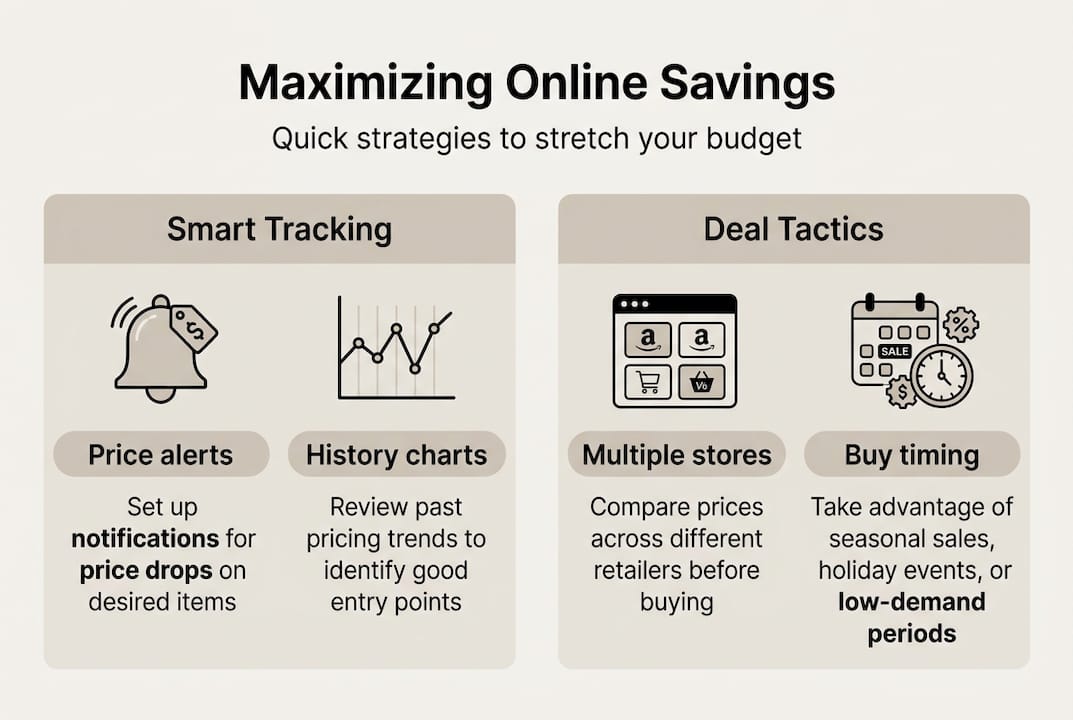
Proactive setup of price trackers and planning purchases 1-6 months ahead yields better savings than reactive buying. This approach captures full price cycles including seasonal clearances, competitor price wars, and inventory liquidations that reactive shoppers miss. Start tracking holiday gifts in July, back-to-school items in May, and electronics during spring for fall purchases.
Follow this systematic approach:
- Identify needs early by listing products you’ll purchase within 6 months
- Research typical price ranges using historical data to establish baseline expectations
- Set strategic thresholds at 15-20% below current prices for significant drops
- Compare across retailers since choosing stores with lower price variability often saves more than relying solely on coupons
- Monitor competitor timing as retailers often match or beat competitor sales within days
- Combine with coupons stacking tracker alerts with cashback, credit card rewards, and promotional codes
Store selection significantly impacts savings potential. Some retailers maintain relatively stable prices with occasional deep discounts, while others fluctuate constantly with smaller variations. Tracking the same product across multiple stores reveals which retailer offers the most favorable pricing patterns for your needs.
| Strategy | Reactive approach | Proactive approach |
|---|---|---|
| Planning horizon | Same day to 1 week | 1-6 months ahead |
| Price knowledge | Current price only | Full historical context |
| Savings potential | 5-10% average | 20-40% average |
| Purchase timing | When need arises | When price is optimal |
| Stress level | High urgency | Calm confidence |
Pro Tip: Track products across 3-5 competing retailers simultaneously. Prices rarely hit lows at all stores simultaneously, giving you multiple opportunities to capture optimal deals instead of waiting for one specific retailer.
Discipline separates successful tracker users from those who waste the tool’s potential. When alerts trigger, verify the deal is genuine by checking historical charts, reading recent reviews to ensure product quality hasn’t declined, and confirming total cost including shipping and taxes. Resist the urge to buy simply because you received an alert. Ask whether you still need the item and whether the price represents meaningful savings over your threshold.
Balance patience with pragmatism. If a tracked item hits 18% below your baseline and you need it within two weeks, buy it. Waiting for a theoretical 22% drop risks missing the current deal entirely. Set clear purchase deadlines when you begin tracking. This prevents indefinite waiting and provides decision-making structure. Implement these price alert setup techniques and price drop timing strategies systematically. Review your best tracking strategies quarterly to refine your approach based on what’s working.
Get started with smarter price tracking today
Transforming these strategies into consistent savings requires the right platform and resources. PriceLix consolidates price tracking across 1000+ retailers, providing historical charts, real-time alerts, and expert guidance for maximizing your shopping efficiency. Our platform eliminates the complexity of managing multiple trackers while delivering the comprehensive coverage serious savers need.
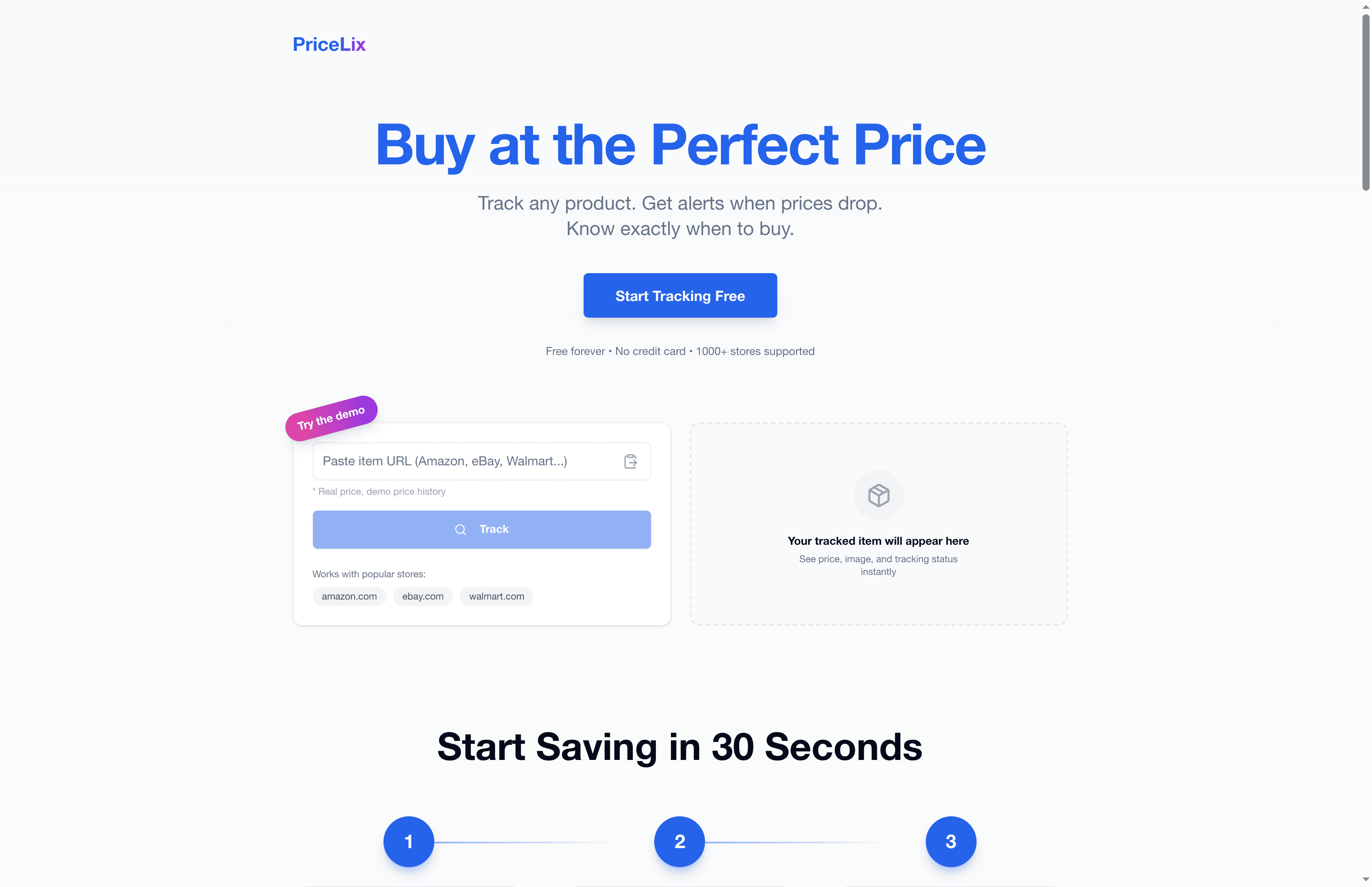
Access detailed guides on setting up price alerts effectively, compare price tracker alternatives to find tools matching your needs, and join thousands of smart shoppers who’ve reclaimed control over their online purchasing decisions. Visit PriceLix today to start tracking your first products and discover how much you’ve been overpaying.
FAQ
How do price tracking tools know when prices drop?
Price trackers scrape websites regularly using automated tools to capture current prices and compare them against historical databases. They monitor products multiple times daily, checking whether current prices hit or fall below your predefined thresholds like historical lows or percentage drops. When conditions are met, automated alerts notify you immediately via email or push notifications. Learn more about setting up price alerts effectively.
Are all discounts found by trackers genuine savings?
No, not all discounts represent genuine savings due to tactics like pre-inflated original prices and fake sales. Retailers sometimes raise prices weeks before a sale, then advertise large discounts that bring prices to normal levels. Using historical price data from your tracker helps verify whether a discount truly represents below-average pricing or just marketing manipulation. Always check price history charts before assuming a deal is legitimate.
How can I avoid getting overwhelmed by tracking alerts?
Set realistic price thresholds at 15-20% below current prices rather than triggering on every minor fluctuation. Limit your active tracking list to 10-15 high-priority items you genuinely plan to purchase within 3-6 months. Turn off alerts for low-priority products or items with minimal price variation. Review and prune your tracking list monthly, removing products you no longer need. Implementing strategic price tracking strategies keeps notifications actionable instead of overwhelming.