
Top 7 advantages of price history tracking for smart shoppers
You add something to your cart, wait a few days, and then buy it — feeling pretty good about yourself. Then a friend mentions they grabbed the exact same item for $40 less. Sound familiar? Online retailers use dynamic pricing, meaning the price you see depends on when you visit, your location, and even your browsing history. The playing field is not level. Price history tracking tools give you the data to fight back, showing you exactly what a product has cost over time so you can spot real deals and skip the fake ones. This article walks you through the top seven advantages of using price history tracking, plus honest limitations and expert-backed tips to shop smarter starting today.
Table of Contents
- What is price history tracking?
- 1. Uncover the real best deals
- 2. Maximize your yearly savings
- 3. Outsmart dynamic pricing
- 4. Build shopping confidence and avoid buyer’s remorse
- 5. Simplify shopping decisions with price trend insights
- 6. Alerts and automation: Save time and effort
- 7. Understand the limitations: Privacy and coverage
- Quick comparison: How price history tracking stacks up
- Ready to save more? Get started with price tracking today
- Frequently asked questions
Key Takeaways
| Point | Details |
|---|---|
| Genuine deal detection | Price history data helps you spot real discounts versus fake markdowns. |
| Yearly savings boost | Automated tracking can save you over $100 per year with little effort. |
| Beat dynamic pricing | Track trends to buy when prices dip instead of paying more during surges. |
| Confidence in purchases | Historical price charts make buying decisions easier and reduce regret. |
| Know the limits | While trackers are powerful, be aware of privacy considerations and rare missed sales. |
What is price history tracking?
Price history tracking is exactly what it sounds like. A tool monitors a product’s price over days, weeks, or months and logs every change. You get a visual chart showing highs, lows, and averages. That chart becomes gold when you’re deciding whether today’s “sale” is actually a deal or just clever marketing.
Consumer Reports notes that price trackers reveal deceptive retail practices, including prices that vary by user, helping shoppers cut through the noise. Understanding why tracking price history matters is the first step toward smarter spending.
Here are the main types of price history tools available:
- Browser extensions: Install once, and they show price history right on the product page.
- Dedicated websites: Search any product and pull up a full price history chart without installing anything.
- Mobile apps: Get alerts and track prices from your phone on the go.
- Platform-specific trackers: Tools built for Amazon, eBay, or Walmart with deep data on those stores.
Each type has its strengths. Dedicated websites like PriceLix work across price history charts from over a thousand stores, no extension required.
1. Uncover the real best deals
Now that you know what price history tracking is, let’s talk about its biggest benefit: making sure you’re actually getting a real deal.
Retailers are smart. They inflate prices before a sale event, then slash them back to normal and call it a discount. Without historical data, you’d never know. With a price history chart, you can see that the “50% off” TV was at that exact price three weeks ago.
Honey users save an average of $126 per year, with some reporting an 18% reduction in their annual Amazon spending. That’s real money, not rounding errors.
Here’s what price history tracking exposes:
- Fake markdowns: Prices raised right before a sale to make the discount look bigger.
- Seasonal surges: Items that spike in price around holidays or back-to-school season.
- True lowest price: The actual floor price a product has hit, so you know when to pull the trigger.
Pro Tip: Before buying anything over $30, pull up its price history. If the current price is near the all-time low, buy now. If it’s near the high, wait.
Understanding why monitor price history can save you from falling for marketing tricks that cost you real money every single time.
2. Maximize your yearly savings
Finding real deals is powerful, but the ongoing benefit is just how much money you can save, year after year.
“One user reduced their Amazon spending by 18% simply by waiting for tracked prices to drop before buying.” — Honey Review, Making Sense of Cents
Let’s put some numbers on the table:
| Shopping behavior | Estimated yearly savings |
|---|---|
| No price tracking | $0 |
| Occasional manual checking | $30 to $60 |
| Consistent price alert use | $126+ per year |
| Optimized tracking across stores | $200+ per year |
The average Honey user saves $126 yearly, and that’s just from one tool focused mostly on Amazon. Expand your tracking across multiple retailers and the savings compound fast.

Automated price alerts do the heavy lifting. You set a target price, and the tool notifies you when the item hits it. No spreadsheets. No daily checking. Just a notification that says “time to buy.” Check out this price tracking checklist to set yourself up for consistent savings.
3. Outsmart dynamic pricing
Recurring savings aren’t random. Price trackers help you beat retailers’ dynamic pricing games.
Dynamic pricing means a retailer’s algorithm adjusts prices in real time based on demand, competition, time of day, and even your personal data. The house always wins — unless you have historical data showing you the pattern.
Retailers actively use dynamic pricing, but price tracking tools counter this by revealing the cycles behind those changes. Here’s how to use that data:
- Search the product on a price history platform.
- Study the chart for recurring low points, like mid-month dips or post-holiday drops.
- Set a price alert at or just above the historical low.
- Wait for the notification instead of buying at the current inflated price.
- Buy with confidence knowing you timed it right.
Understanding real-time price changes helps you recognize when an algorithm is working against you and when to hold off.
4. Build shopping confidence and avoid buyer’s remorse
Protecting your wallet is one thing. Protecting your peace of mind is another advantage worth exploring.
Buyer’s remorse is real. You spend $300 on a laptop, then see it drop to $240 two days later. That stings. Price history data eliminates most of that risk. When you can see that today’s price is the lowest it’s been in six months, you buy without second-guessing yourself.
“Knowing the price history of a product before buying is like having a receipt from the future — it tells you whether you’re getting a fair deal right now.”
Dynamic pricing is countered by tracking, and the confidence that comes from data-backed decisions is a genuine benefit that goes beyond just dollars saved.
Here’s where this matters most:
- Big-ticket items: Electronics, appliances, and furniture where a $50 to $200 swing is common.
- Time-sensitive purchases: Holiday gifts or back-to-school items where you feel pressure to buy fast.
- Gifts for others: When you want to be sure you’re not overpaying for something you’re giving away.
Learn how price history transforms online shopping and why confident buyers consistently spend less over time.
5. Simplify shopping decisions with price trend insights
Once you’re confident about timing and price, the next advantage is cutting through decision overwhelm with clear visuals.
Shopping online can feel like drinking from a firehose. Dozens of sellers, competing prices, sponsored listings, and countdown timers all designed to rush you into a bad decision. Price trend charts cut through all of that.
Consumer Reports highlights that price trackers simplify complex pricing data into actionable insights, helping shoppers avoid volatility-driven mistakes. A simple upward or downward trend line tells you more than a page of product reviews.
Here’s what trend data helps you do:
- Spot the best buying window: See if prices typically drop in January or spike in November.
- Compare sellers at a glance: Know which retailer consistently offers the lowest price.
- Avoid panic buying: A chart showing stable prices tells you there’s no rush.
- Plan ahead: If you know prices drop after the holidays, you can wait and save.
Pro Tip: Look at 90-day and 180-day price history views, not just 30-day. Short windows can hide seasonal patterns that longer views reveal clearly.
Explore how price trends drive smarter purchases and reduce the mental load of every buying decision.
6. Alerts and automation: Save time and effort
Now that you see how trend data helps choices, let’s look at how automation makes savings nearly effortless.
Most people don’t track prices because it sounds like work. Checking a product page every day, writing down prices, comparing notes — nobody has time for that. Automated alerts solve this completely.
Here’s how to set up a price alert in three steps:
- Find the product on a price tracking platform like PriceLix.
- Set your target price based on the historical low or your personal budget.
- Get notified by email or app when the price drops to your target.
That’s it. You go about your life, and the tool does the watching. Average users save $126 per year with this kind of passive tracking, and power users who optimize across multiple stores can hit $200 or more annually.
Pro Tip: Set alerts for items you want but don’t urgently need. These are the purchases where patience pays off the most, and automation makes patience effortless.
See the full breakdown of types of online price tracking to find the method that fits your shopping habits best.
7. Understand the limitations: Privacy and coverage
Every tool has limits. To maximize your advantage, it’s important to know where price trackers aren’t perfect.
Price history tracking is genuinely useful, but it’s not magic. Here are the honest limitations:
- Flash sales under 6 hours: Trackers often miss lightning deals and short-window promotions because they don’t check prices fast enough.
- Not all retailers covered: Smaller stores and niche marketplaces may not be tracked at all.
- Data collection: Some tools log your browsing behavior. Always read the privacy policy before signing up.
- Delayed updates: Some trackers only check prices once or twice a day, so real-time accuracy varies.
These are minor trade-offs compared to the savings potential. The key is choosing a tool that’s transparent about its data practices and covers the stores you actually shop at. Understand the full role of price history to set realistic expectations and get the most from your tracker.
Quick comparison: How price history tracking stacks up
With a clear-eyed look at trade-offs, here’s a summary table to help you decide if price history tracking fits your shopping style.
| Feature | With price tracking | Without price tracking |
|---|---|---|
| Spot fake sales | Yes, instantly | No, rely on retailer claims |
| Beat dynamic pricing | Yes, with historical data | No, pay whatever is shown |
| Automate savings | Yes, via alerts | No, manual effort required |
| Yearly savings potential | $126 to $200+ | Near $0 |
| Buyer’s remorse risk | Low | High |
| Flash sale coverage | Limited | Depends on luck |
| Privacy considerations | Varies by tool | Not applicable |
Dynamic pricing is a retailer advantage that disappears the moment you start tracking. The table above makes it clear: the benefits far outweigh the minor limitations for almost every type of shopper. Explore the best price tracking strategies to put this comparison into action.
Ready to save more? Get started with price tracking today
You’ve seen the evidence. Real deals hidden behind fake markdowns. Dynamic pricing working against you every time you shop. Hundreds of dollars left on the table every year. The fix is straightforward: start tracking prices before you buy.
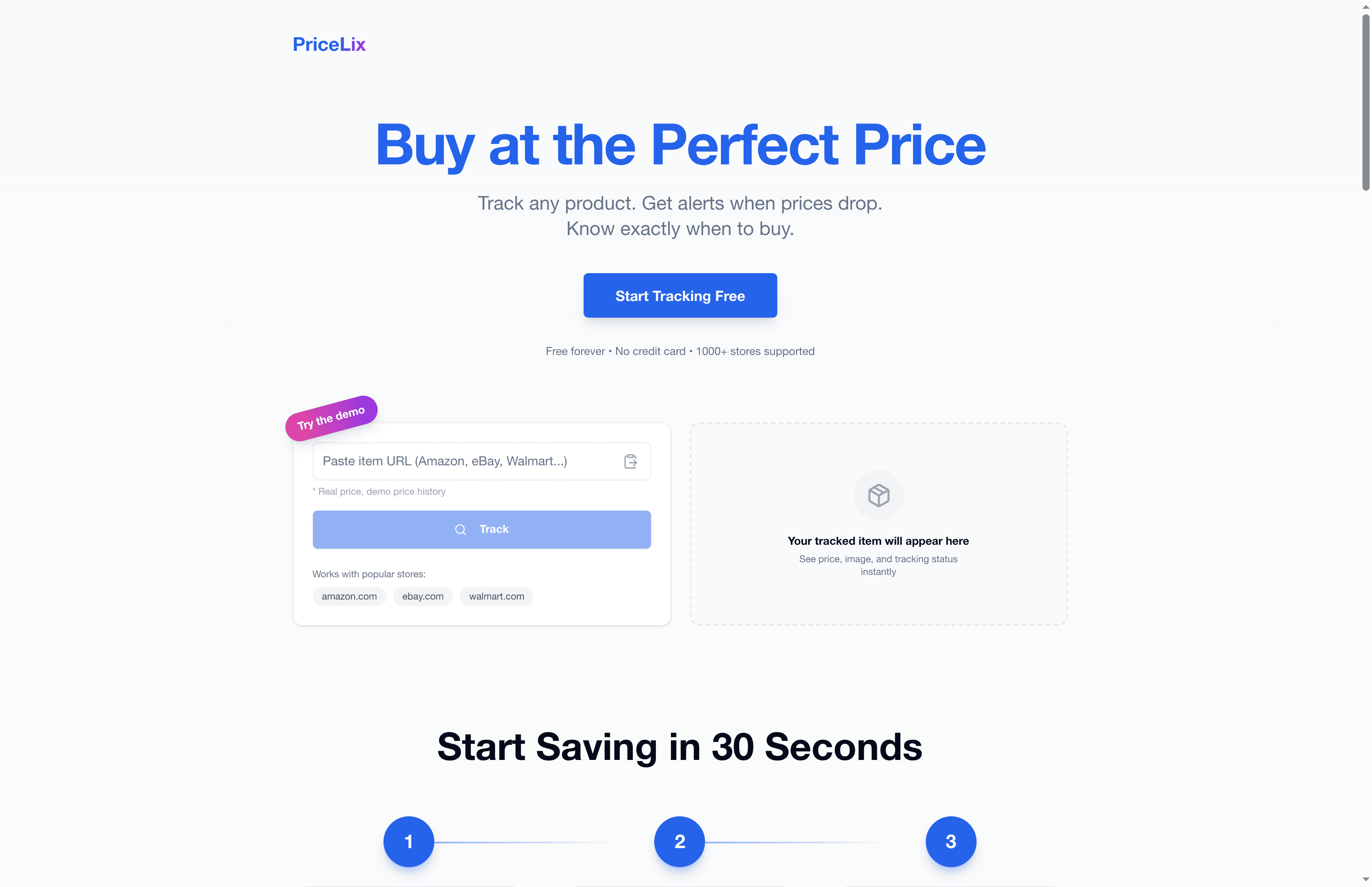
PriceLix makes it simple. No browser extension needed. Just start using PriceLix to track products across Amazon, eBay, Walmart, and over a thousand other stores. Set alerts, view price history charts, and buy only when the price is right. If you want to go deeper before diving in, discover more about price history tracking and see exactly how the data works in your favor. Your next purchase doesn’t have to be a gamble.
Frequently asked questions
Do price history trackers work on all retail sites?
Most price history trackers cover major retailers like Amazon, Walmart, and eBay, but not all retailers are covered, especially smaller or niche stores. Always check which stores your chosen tool supports before relying on it.
Will using a price history tracker slow down my shopping?
Not at all. Automated tools work quietly in the background and only reach out when a price drops to your target. Average users save $126 per year without any extra daily effort on their part.
How much can the average shopper save with price history tracking?
Studies show typical users save $126 a year, and consistent trackers who monitor multiple stores can push that figure past $200 annually.
Are there privacy risks when using price history trackers?
Some tools collect browsing data to function, so it’s worth checking the privacy policy before you sign up. Tools that collect browsing data vary widely in how they handle and store your information.
What is the main drawback of price history tracking?
The biggest limitation is that trackers can miss lightning deals and short flash sales that last only a few hours, and coverage depends entirely on which stores the tool monitors.