
Digital Couponing Explained: Save More Every Time
TL;DR:
- Many shoppers assume digital coupons are simple to use, but they often encounter failures due to expiry or restrictions.
- Understanding coupon types, activation timing, and retailer policies helps maximize savings while avoiding common pitfalls.
Most shoppers believe digital coupons are plug-and-play. You grab a code, paste it at checkout, watch the price drop. Done. But digital couponing explained properly looks a lot messier than that. Codes fail. Offers expire mid-session. Clipping windows close before you even get to your cart. Coupon redemption climbed 14% in early 2026 versus the prior year, which means more shoppers are hunting deals than ever before. But hunting and actually saving are two very different things. This article breaks down the mechanics, the traps, and the strategies that separate casual clippers from genuine deal-getters.
Table of Contents
- Key takeaways
- How digital couponing actually works
- Types of digital coupons and how retailers use them
- Common pitfalls that trip up savvy shoppers
- Strategies to maximize your digital coupon savings
- My honest take on digital couponing
- Take your savings further with Price-lix
- FAQ
Key takeaways
| Point | Details |
|---|---|
| Digital coupons have strict rules | Eligibility, expiry, minimum spend, and stacking limits determine whether a discount actually applies. |
| Clipping timing matters | Activate or clip coupons before checkout begins to avoid automatic denial at the register. |
| Most promo codes fail | Nearly 7 in 10 online codes don’t work, so test early and keep backup offers ready. |
| Loyalty programs cut both ways | They unlock exclusive coupons but also expose your purchase data to targeted pricing. |
| Tech tools multiply your savings | Price tracking platforms let you combine coupon timing with historical low prices for maximum impact. |
How digital couponing actually works
Let’s start at the foundation. A coupon counts as digital when savings are delivered as a code, barcode, or offer stored directly in a loyalty account. That covers three main formats you’ll encounter as a shopper.
Promo codes are the most familiar. You type a string of characters into a box at checkout, and the system either validates or rejects it. App or barcode coupons live inside a retailer’s mobile app. You scan them at a physical register, or they trigger automatically when you’re logged in. Account-stored offers are pre-loaded onto your loyalty profile. The discount fires when the system recognizes your account during checkout, no code required.
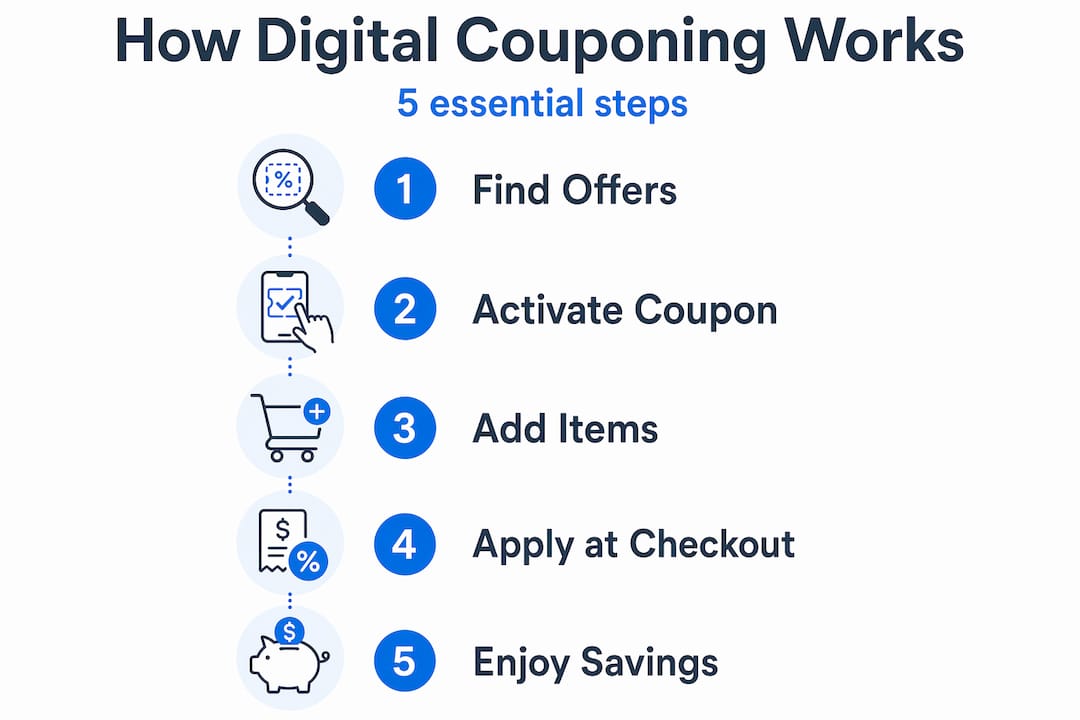
What happens behind the scenes is more complex than most shoppers realize. Checkout systems validate coupons by running through a sequence: Is the coupon active? Does the shopper meet the eligibility criteria? Is the cart above the minimum spend threshold? Has the usage limit been hit? Only when all those checks pass does the system apply the discount and log the transaction.
Here’s where people get burned. The coupon’s text might say “20% off your order,” but the underlying coupon rules define a much tighter scope. Maybe it excludes sale items, brand-name electronics, or anything shipped from a third-party seller. The fine print isn’t just fine. It’s the actual contract.
- Promo codes work on a specific product category, not store-wide
- Minimum purchase thresholds often exclude taxes and shipping fees
- Per-account usage limits reset by calendar period, not purchase date
- Some codes are single-use and tied to a specific email address
Pro Tip: Before you add items to your cart, search for a coupon’s full terms on the retailer’s site. Knowing what’s excluded upfront saves you from restructuring an entire order at the last second.
Types of digital coupons and how retailers use them
Not every digital coupon works the same way, and retailers have built very different systems to manage them. Understanding these systems helps you work within them.
| Coupon type | How it’s activated | Stackable with sales? | Expiry behavior |
|---|---|---|---|
| Promo code | Entered manually at checkout | Depends on retailer policy | Fixed date, often short window |
| Loyalty account offer | Auto-applied when account is scanned | Usually yes, with limits | Tied to promotional period |
| App clip coupon | Clipped inside retailer app | Often yes, on non-promoted items | Disappears after event ends |
| Email code | Entered manually or via link | Rarely stackable | Short, often 48 to 72 hours |
| Browser-based offer | Auto-applied by plugin or login session | Varies widely | Session-based or date-fixed |
Instacart offers one of the most instructive examples of a loyalty-based clipping system. Logged-in customers can filter and clip coupons linked to their account, and those coupons are applied automatically when they scan their loyalty barcode at checkout. When you clip an offer, the button shifts from “Clip” to “Show items.” That visual confirmation matters. It tells you the offer is now attached to your account and will be recognized at the register.

One nuance that catches shoppers off guard: coupons on platforms like Instacart stack on top of sale prices but won’t combine with certain promotional events. So if an item is already part of a “Buy 2 Get 1” deal, your clipped coupon may not reduce the price further. This kind of stacking policy is retailer-specific and often buried in terms.
Loyalty programs unlock exclusive coupon access that non-members can’t see. That’s a real benefit. But it also means retailers know exactly what you buy, when you buy it, and how price-sensitive you are. We’ll get into why that matters in the next section.
Filtering and sorting tools inside retailer apps or coupon pages are genuinely useful when you learn to use them. You can sort by highest value, expiry date, or product category. Prioritizing coupons that expire soonest, especially on items already on your list, is one of the fastest ways to stop leaving money on the table.
Common pitfalls that trip up savvy shoppers
Here’s a number worth sitting with: nearly 7 in 10 online coupon codes fail to work. And shoppers burn an average of 62.5 minutes per session trying to find codes that actually apply. That is not bargain hunting. That is wasted time dressed up as savings.
The failures cluster around a few predictable problems.
- Expired codes: Promo codes lose half their effectiveness within 24 hours of being published. By the time a code makes the rounds on deal forums, it’s often dead.
- Wrong activation timing: Many shoppers clip a coupon after they’ve already started building their cart. Some systems require the coupon to be linked to your account before eligibility is assessed, not at the moment you hit “apply.”
- Exclusion surprises: You pick 15 items, head to checkout, apply the code, and find out 11 of those items are excluded. The discount barely registers.
- Impulse trap: You spend $80 to hit the minimum threshold for a $5 coupon. That’s not saving. That’s the retailer winning.
The privacy angle deserves an honest mention. Retailers collect your purchase data through loyalty programs and use it for targeted advertising and, in some cases, differentiated pricing. If a retailer’s algorithm figures out you always buy a specific brand of coffee and you never wait for a sale, don’t be surprised if your personalized offers look different from a friend’s. This is a real tradeoff: you get savings, and the retailer gets data.
Pro Tip: Use a separate email address for coupon-driven loyalty accounts if you want to limit targeted marketing from flowing into your main inbox. You still get the discounts without the ad saturation.
Sticking to your shopping list sounds obvious, but it’s where most coupon strategies break down. A coupon for something you weren’t planning to buy is not a deal. It’s a marketing mechanism, and it works beautifully on distracted shoppers.
Strategies to maximize your digital coupon savings
This is where understanding digital coupons pays off in actual dollars. Here’s a practical system you can run without spending hours on deal sites.
-
Start with your shopping list, not the coupon page. Know what you need before you search for discounts. This keeps you from buying things you wouldn’t have purchased otherwise.
-
Clip relevant coupons well before checkout. Coupons tied to loyalty IDs must be activated before checkout begins for them to trigger automatically. Clipping while you’re already at the payment screen is often too late.
-
Test promo codes early in checkout. Apply codes when your cart is stable but before you’ve committed to shipping details. If the code fails, you haven’t wasted time completing a full order. Discard non-working codes immediately and move on.
-
Layer your sources. A single coupon source is limiting. Stack your approach: enroll in the retailer’s loyalty program, subscribe to their email list for member-only codes, and check community deal groups on social platforms. These channels release offers at different times, so you catch more valid windows.
-
Check stackability before you shop. Digital coupons can compound savings when stacked with existing sale prices, but only when the retailer allows it. Read the stacking policy before you build your cart around a coupon that may not layer.
-
Use price tracking alongside couponing. A 15% coupon on an item that’s already marked up 20% from its historical average is not a good deal. When you know a product’s actual price history, you can judge whether a coupon-plus-current-price actually beats the item’s typical low. This is where bargain hunting strategies that combine coupons with price data become genuinely powerful.
-
Prioritize coupons by value and expiry. Sort your clipped offers by expiry date, and cross-reference with your planned purchases. Don’t let high-value coupons expire on items you intended to buy anyway. That’s free money walking out the door.
The shoppers who consistently save the most don’t find more coupons than everyone else. They waste fewer of them.
My honest take on digital couponing
I’ll be straight with you. When I first started tracking my own couponing behavior, I thought I was ahead of the game. I had a browser folder full of deal sites, three loyalty apps on my phone, and an email inbox that was basically a coupon newsletter archive.
What I actually had was a time problem. I was spending more time chasing discounts than the discounts were worth. The 62-minute average search session statistic didn’t surprise me at all. I’d lived it.
What changed things for me was shifting from reactive couponing to planned couponing. I stopped browsing coupon pages looking for inspiration and started clipping only after I knew what I needed. That alone cut my failed-code frustration in half.
The privacy thing is real, and I think about it more than most shoppers do. Yes, loyalty programs give you access to better coupons. But joining these programs exposes your purchase behavior to pricing algorithms that don’t always work in your favor. I use loyalty programs, but I’m deliberate about which ones and how much purchase history I let them accumulate.
The single biggest lesson? Couponing works best as a layer on top of smart price tracking, not as a standalone strategy. A coupon on an overpriced item is still an overpriced item. Pair your coupon with knowledge of what that product actually costs over time, and suddenly the math gets a lot more interesting.
— Serhii
Take your savings further with Price-lix
Digital couponing is one piece of the savings puzzle. The other piece is knowing whether the base price is actually good before the coupon ever enters the picture.
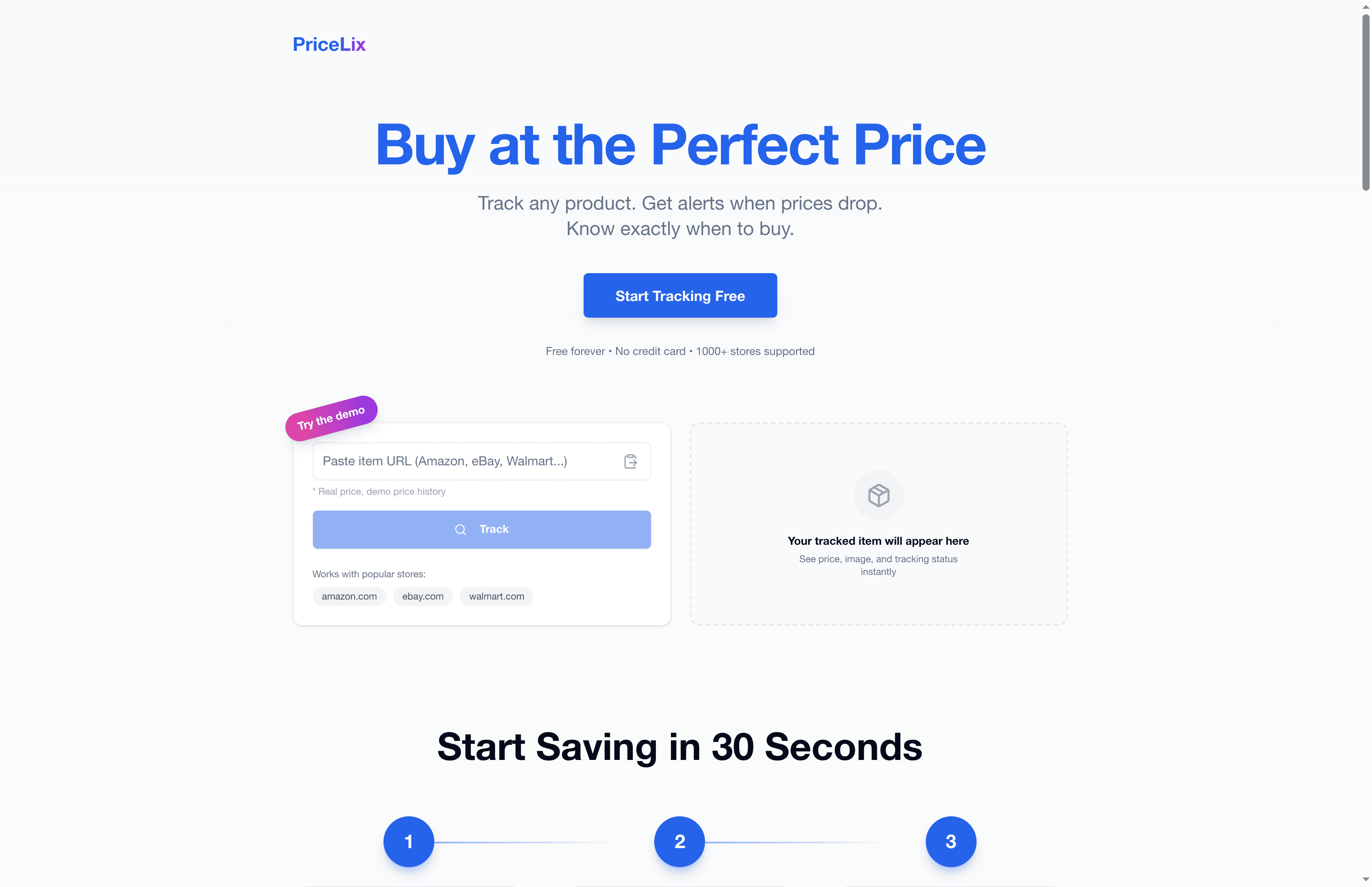
Price-lix tracks prices across Amazon, eBay, Walmart, and over a thousand other retailers automatically. You set up a product, and the platform monitors it daily, sending you alerts the moment the price drops. Pair that with your clipped coupons, and you’re no longer guessing. You’re buying at a documented low with a discount stacked on top. That’s where real savings live. Check out the Price-lix guide to maximizing your online discounts and the team’s deeper breakdown of monitoring discounts effectively to build a complete savings system. Start tracking for free at price-lix.com.
FAQ
What does digital couponing mean?
Digital couponing refers to using online or app-based discount offers, including promo codes, account-stored offers, or scannable barcodes, to reduce prices at checkout. Unlike paper coupons, digital versions are validated electronically through loyalty accounts or checkout systems.
Why do so many online coupon codes fail?
Nearly 7 in 10 online coupon codes don’t work due to expiry, product exclusions, or account eligibility issues. Codes shared on deal forums often expire within 24 hours of being posted.
How do I clip and use digital coupons correctly?
Clip or activate your coupons in the retailer’s app or loyalty account before you begin checkout. Systems like Instacart’s link clipped offers to your loyalty ID, which is scanned at purchase to trigger the discount automatically.
Can I stack digital coupons with sale prices?
Sometimes. Many loyalty-based coupons stack on top of sale prices, but retailers usually block stacking during certain promotional events. Always check the specific stacking policy in the coupon’s terms before shopping.
Is it safe to join loyalty programs for digital coupons?
Loyalty programs offer real savings, but retailers use your purchase data for targeted marketing and can apply differentiated pricing based on your shopping behavior. Use a separate email account if you want to limit data exposure while still accessing discounts.