
Top strategies for monitoring discounts and maximizing savings
TL;DR:
- Effective price tracking requires setting clear discount thresholds and timing around seasonal sales.
- Using multiple tools, wishlists, coupons, and cashback stacking maximizes online savings.
- Automating alerts and adopting a strategic approach helps avoid obsession and boosts deal success.
Prices online change hundreds of times a day. A laptop you checked this morning might be $80 cheaper by tonight, and you’d never know. Most shoppers miss these drops not because they aren’t paying attention, but because manually tracking prices across dozens of stores is practically impossible. The good news? There’s a smarter way to do it. In this article, we’ll walk through proven strategies for monitoring discounts effectively, so you stop overpaying and start actually catching the deals that matter.
Table of Contents
- Set your discount goals and deal criteria
- Leverage browser extensions and price tracking tools
- Integrate wishlists, coupons, and cashback programs
- Compare and adapt strategies to your shopping style
- The real secret: less chasing, more smart stacking
- Turn these strategies into real savings
- Frequently asked questions
Key Takeaways
| Point | Details |
|---|---|
| Clarify your discount targets | Know the price drop range you’ll act on to avoid decision fatigue and maximize savings. |
| Stack browser tools and shopping habits | Combine extensions, wishlists, coupons, and cashback for reliable discounts across retailers. |
| Adapt strategies for your style | Personalize price monitoring with single or multi-tool setups and choose when to act based on your needs. |
| Automate for less stress | Let automated price alerts and lists do the heavy lifting so you never miss a key sale. |
Set your discount goals and deal criteria
With the savings challenge in mind, start by getting clear on what discounts matter to you. This is the step most shoppers skip, and it costs them time, energy, and money.
Without a target, you end up chasing every sale that appears and buying things you didn’t really need because the price looked good. That’s not saving. That’s just spending with extra steps.
Here’s a simple numbered approach to setting your deal criteria:
- Pick your minimum discount threshold. Decide that you’ll only buy when a product hits at least 15% to 25% off its regular price. This keeps you from jumping on weak deals.
- Separate price from value. Ask yourself: does this item serve me right now? A 40% discount means nothing if you don’t need the product for six months.
- Factor in the real cost. Always include shipping fees, applicable tax, and any applicable coupon or cashback offer before deciding if a deal clears your threshold.
- Map your shopping calendar. Big-ticket items like electronics, appliances, and furniture follow predictable discount cycles. Build your purchase timing around those windows.
For building stronger habits around best price tracking strategies, knowing your own baseline is the first requirement.
One important nuance: balance waiting for price lows versus missing the use-value of the product. Smart shoppers use normal discount bands of 10% to 25% as a realistic baseline rather than holding out for the all-time lowest price.
Pro Tip: For electronics, furniture, and appliances, align your purchase timing with January clearance events, back-to-school season, and November holiday sales. These are where the biggest markdowns reliably land.
Leverage browser extensions and price tracking tools
With your criteria defined, next comes choosing the best technology for the job. The right tools do the heavy lifting so you don’t have to check prices manually every day.
Here’s a quick look at the leading options and where each one shines:
| Tool | Best For | Weakness |
|---|---|---|
| CamelCamelCamel | Amazon price history | Amazon only |
| Honey / PayPal | Multi-retailer coupons | Limited price history depth |
| Capital One Shopping | Broad retailer alerts | Requires account |
| PriceLix | Multi-store tracking, no extension needed | Web-based setup |
Browser extensions and sites like CamelCamelCamel, Honey/PayPal, and Capital One Shopping provide price history and drop alerts across multiple retailers. Each has its place, but none of them does everything perfectly on its own.

That’s why stacking tools gives you the best coverage. For example, use CamelCamelCamel for Amazon purchases and a multi-retailer tracker for everything else. This way, you’re not flying blind on any platform.
If you want to go deeper on your options, this breakdown of types of price tracking tools covers everything from dedicated websites to app-based trackers.
Here’s what to look for in any price tracking tool before you commit to it:
- Price history charts that show how a product’s price has moved over weeks or months
- Customizable alerts that notify you only when the price hits your specific target
- Coupon integration that automatically applies codes at checkout
- Multi-retailer support so you aren’t locked to one store’s ecosystem
- No extension requirement if you prefer a cleaner browser experience
Pro Tip: Don’t rely on just one tool. Stack an Amazon-specific tracker with a multi-retailer option. You’ll catch more drops and have better price history data to make confident decisions. If you’re just starting with tracking online prices, even one solid tool beats none.
Integrate wishlists, coupons, and cashback programs
Tech tools aren’t enough on their own. Combine them with smart shopping habits and you can amplify your savings significantly.
The wishlist is your secret weapon here. When you add an item to a retailer’s wishlist, many platforms will notify you when that item goes on sale. You’re essentially setting a passive price watch without needing any third-party tool.
But the real power comes from stacking wishlists, coupons, and cashback together. Here’s the order of operations:
- Add the item to your wishlist on the retailer’s site to passively monitor for price changes.
- Search for active coupons using a coupon aggregator or your browser extension before checkout.
- Activate cashback through a cashback portal like Rakuten or your credit card’s shopping program before you land on the product page.
- Time your purchase around a major sale event (Black Friday, Prime Day, end-of-season clearance) to stack the discount on top of your coupon and cashback.
- Calculate the real final price including shipping and tax before clicking buy.
This method of stacking wishlists, coupons, and cashback can push your effective savings well past what any single discount would offer.
Many top cashback users save more than 10% per order during major sale events. That adds up fast across a year of regular online shopping. And when you combine these strategies with careful timing around seasonal sales, the cumulative savings become hard to ignore.
For a deeper look at timing and stacking, these price drop strategies cover exactly how to sequence your moves for maximum impact.
Key takeaway: The order matters. Activating cashback before visiting the store page, and applying coupons before entering payment info, ensures neither reward gets missed.
Compare and adapt strategies to your shopping style
Finally, bring it all together with a comparison and tailored recommendations. Not every approach works for every shopper, and that’s fine.
Here’s a side-by-side look at two common tracking setups:
| Approach | Effort Level | Best For | Savings Potential |
|---|---|---|---|
| Single tool (e.g., CamelCamelCamel) | Low | Amazon-only shoppers | Moderate |
| Multi-tool stack | Medium | Cross-retailer shoppers | High |
| Full stack (tools + coupons + cashback) | Medium-High | Frequent deal seekers | Maximum |
Multi-tool stacks outperform all-in-ones in most cases, but your style should balance effort with actual use. If a system feels like a second job, you won’t stick with it.
Ask yourself these questions to find your right fit:
- Do you buy mostly from one retailer, or across many?
- How much time per week are you willing to spend on tracking?
- Are you shopping for planned purchases or impulse deals?
- Do you prefer automated alerts or manual checking?
Based on your answers, you can decide between two modes:
- Set-and-forget: Use automated alerts for items on your list and ignore everything else. Great for focused shoppers.
- Hands-on tracking: Actively monitor multiple items, compare price histories, and jump on deals. Better for bargain hunters with time to spare.
For a full guide to monitoring product prices across different shopping styles, there’s more detail on matching strategies to your actual habits.
And here’s the quote worth keeping in mind:
“Don’t wait forever for the lowest price and miss the product’s use-value.”
For practical help with comparing shopping strategies before committing to one method, it helps to see real examples of what each approach actually costs in time versus what it saves.
The real secret: less chasing, more smart stacking
Here’s what most advice gets wrong: it treats discount monitoring like a game where the goal is to find every possible deal. That mindset burns you out. You end up obsessing over 50-cent price differences on items you barely care about.
Real savings don’t come from chasing everything. They come from stacking the right tools, timing, and rewards on purchases you were already planning to make. That’s where the leverage is.
The shoppers who consistently save the most aren’t the ones refreshing price pages every hour. They’ve set up smart alerts, aligned their buying calendar with seasonal cycles, and activated cashback on autopilot. Then they walk away and let the system work.
If you want to master discount tracking without losing your sanity, here’s the honest rule: automate everything you can, manually track only what matters most to you, and stop feeling guilty about every deal you miss. Good enough really is good enough.
Pro Tip: Set up price alerts for your top three to five most-wanted items and completely ignore everything else. Less FOMO, more actual savings.
Turn these strategies into real savings
You now have a clear framework: set your criteria, pick the right tools, stack your discounts, and match the approach to your style. The strategies work. The question is whether you’ll act on them.
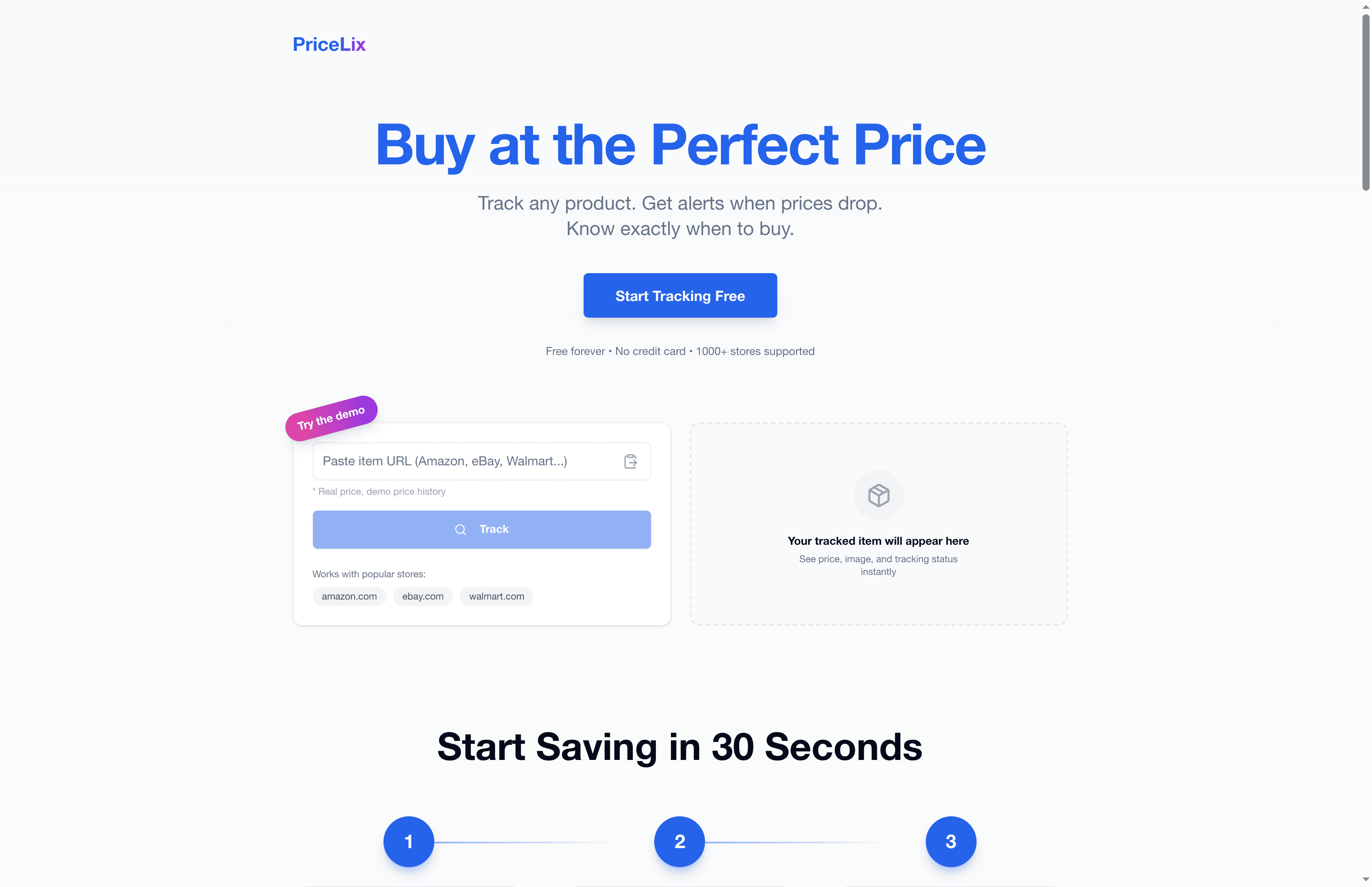
That’s exactly where PriceLix price tracker fits in. PriceLix automates daily price checks across Amazon, Walmart, eBay, and over a thousand other stores, so your alerts run in the background while you live your life. No extensions needed, no manual checking. Just real-time price drop notifications when items on your list hit your target price.
Ready to put this into practice? Start with the price tracking checklist to set up your first alerts in minutes and make every purchase count.
Frequently asked questions
What tools alert me when prices drop online?
Top tools like CamelCamelCamel, Honey, and Capital One Shopping send alerts for online price drops across many retailers. PriceLix also offers multi-store tracking without requiring a browser extension.
How can I stack discounts and cashback for maximum savings?
Add desired items to wishlists, find valid coupons, and activate cashback before visiting the product page. Time it around seasonal sales for the biggest combined discount impact.
Should I wait for the absolute lowest price before buying?
Waiting for the lowest-ever price often means missing out on the product’s actual value. Use normal discount bands of 10% to 25% as a smarter, more realistic target instead.
Are browser extensions safe for tracking discounts?
Most major extensions are safe when downloaded from official browser stores, but always check reviews and the extension’s privacy policy before installing anything.
When is the best time to monitor deals for electronics?
The biggest electronics discounts typically land in January and November, aligning with post-holiday clearance and major retail sales events like Black Friday.