
How price algorithms work: a tech-savvy shopper's guide
You check Amazon for a laptop, find a great price, and return hours later to discover it jumped $50. This isn’t random. Amazon changes prices 2.5 million times per day, driven by sophisticated algorithms analyzing demand, competitors, and your behavior in real time. These pricing algorithms determine what you pay for nearly everything online, from electronics to groceries. Understanding how they work gives you power to spot patterns, time purchases better, and avoid overpaying. This guide reveals the mathematical models, technical methods, and strategic insights that help savvy shoppers navigate dynamic pricing and secure better deals.
Table of Contents
- Key takeaways
- How pricing algorithms determine prices
- Techniques powering price algorithms: rules, machine learning, and more
- Challenges and nuances in algorithmic pricing
- How savvy shoppers can use knowledge of pricing algorithms to save
- How PriceLix helps you shop smarter with dynamic pricing insights
- FAQ
Key Takeaways
| Point | Details |
|---|---|
| Dynamic pricing drivers | Algorithms adjust prices in real time using demand, competitor prices, inventory levels, and customer browsing data. |
| Elasticity guides testing | Price elasticity shows how sensitive demand is to changes, guiding which items retailers test most aggressively. |
| Data streams used | Retailers combine inventory, competitor prices, historical sales, and customer behavior to calculate optimal price points. |
| Combining methods | Rule based guardrails, machine learning forecasts, and optimization techniques work together to set prices while staying within cost and calendar constraints. |
How pricing algorithms determine prices
Pricing algorithms apply dynamic pricing models that maximize revenue by continuously adjusting prices based on real-time data. At their core, these systems solve for the optimal price point where revenue equals price multiplied by demand: R = p × d(p). The demand function d(p) represents how many units sell at a given price, and algorithms constantly recalculate this relationship as market conditions shift.
The mathematical foundation relies on price elasticity, which measures how sensitive demand is to price changes. When elasticity is high, small price drops trigger large sales increases. Electronics typically show elasticity around negative 1.72, meaning a 10% price cut could boost demand by 17.2%. Groceries show lower elasticity near negative 0.8, so price changes have less dramatic effects on volume.
Algorithms incorporate multiple data streams to refine these calculations:
- Current inventory levels and storage costs that increase holding expenses
- Competitor prices scraped from rival websites every few minutes
- Historical sales data revealing seasonal patterns and demand curves
- Customer browsing behavior indicating purchase intent and price sensitivity
| Product category | Average price elasticity | Sensitivity level |
|---|---|---|
| Electronics | negative 1.72 | High |
| Clothing | negative 1.45 | Moderate to high |
| Groceries | negative 0.80 | Low to moderate |
| Luxury goods | negative 0.50 | Low |
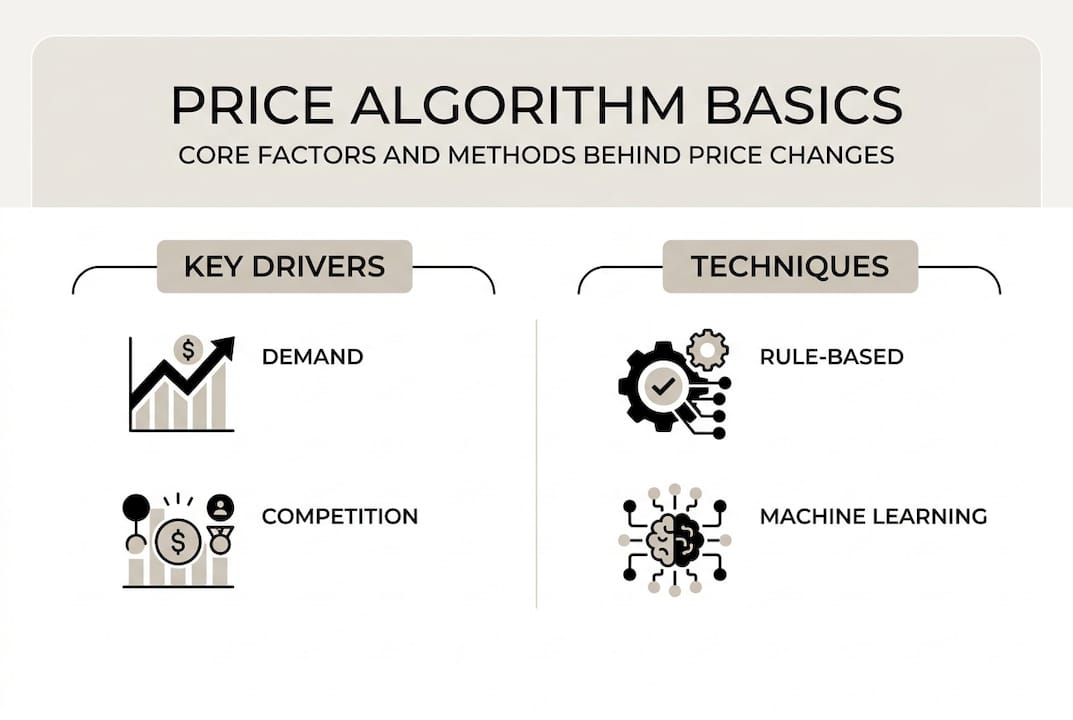
The system continuously tests price points to map the demand curve accurately. If a retailer drops a TV price by $30 and sales triple, the algorithm learns that demand is highly elastic at that range. It then calculates whether the volume increase offsets the margin loss. For shoppers, this means prices fluctuate most on high-elasticity items where retailers experiment aggressively to find the sweet spot.
Pro Tip: Track items with high price elasticity like electronics during low-demand periods. Algorithms often test lower prices when fewer shoppers are active, giving you opportunities to catch experimental discounts before prices stabilize.
Understanding this mathematical framework helps you master online pricing tactics by recognizing when algorithms are testing prices versus when they’ve settled on optimized rates. Watch for rapid changes as signals of active experimentation.
Techniques powering price algorithms: rules, machine learning, and more
Modern pricing systems layer multiple technical approaches to balance speed, accuracy, and business constraints. No single method handles every scenario, so retailers combine complementary techniques that work together.
Rule-based systems form the foundation, applying straightforward if-then logic to prevent pricing disasters. These guardrails ensure prices never drop below cost, stay within acceptable ranges of competitors, and respect promotional calendars. If inventory exceeds 90 days of supply, a rule might trigger automatic 15% discounts. While simple, rules provide stability and prevent algorithms from making erratic decisions during data anomalies.
Machine learning models add sophistication by learning patterns from historical data. Hybrid pricing algorithms use ML forecasts to estimate price elasticity for thousands of products simultaneously, predicting how demand shifts with price changes. Regression models analyze past sales to forecast future demand at different price points. Neural networks identify complex relationships between weather, holidays, competitor actions, and purchase behavior that humans would miss.
Reinforcement learning techniques like Thompson sampling manage the explore-exploit tradeoff. Algorithms must balance exploiting known profitable prices with exploring new price points to discover better opportunities. Thompson sampling uses Bayesian probability to decide when to test experimental prices versus stick with proven winners. This prevents algorithms from getting stuck in local optima where they miss superior pricing strategies.
Optimization solvers handle complex constraints that pure ML cannot address alone:
- Maintaining consistent price relationships across product bundles and sizes
- Respecting legal requirements like minimum advertised prices from suppliers
- Balancing inventory turnover rates across multiple warehouses
- Coordinating prices across online and physical store channels
These solvers use linear or nonlinear programming to find the best prices that satisfy all constraints simultaneously. When a retailer has 50,000 products with interdependent pricing rules, optimization algorithms calculate the entire price structure in seconds.
Pro Tip: Retailers blend these methods to avoid wild price swings that confuse customers. If you see gradual price adjustments over days, the system is likely using conservative ML models. Sudden jumps indicate rule-based responses to competitor moves or inventory triggers.
The technical sophistication behind real-time price changes explained means algorithms continuously learn and adapt. Each purchase or abandoned cart feeds back into the models, refining future predictions and making pricing increasingly personalized and dynamic.
Challenges and nuances in algorithmic pricing
Pricing algorithms face constant tension between maximizing short-term profits and maintaining long-term customer trust. This balancing act creates edge cases and unintended consequences that affect both retailers and shoppers.

Price wars and flash sales force algorithms into rapid repricing cycles that can spiral out of control. When competitors use automated systems that react to each other, prices can cascade downward in minutes. One retailer drops a price by 5%, triggering a competitor’s algorithm to undercut by another 3%, which prompts the first system to drop further. These feedback loops squeeze margins and create unstable pricing that confuses customers who see the same item at wildly different prices within hours.
Flash sales and surge pricing represent algorithmic experimentation at its most aggressive. Systems test extremely low prices for short windows to measure demand elasticity, then quickly revert to normal rates. This explore phase gathers data but risks customer backlash when shoppers miss the window or feel manipulated by artificial scarcity.
Consumer perception poses the biggest challenge to algorithmic pricing adoption. 68% of consumers feel exploited by dynamic pricing, particularly when they discover personalized prices based on browsing history or location. The same hotel room shown at different prices to different users creates fairness concerns and damages brand trust. Retailers must calibrate algorithms to optimize revenue without crossing into territory customers perceive as predatory.
| Perspective | Advantages | Disadvantages |
|---|---|---|
| Retailer | Maximizes revenue through optimized pricing; responds instantly to market changes; reduces manual pricing work | Risks price wars; requires significant technical investment; may damage customer relationships if perceived as unfair |
| Consumer | Can find better deals during algorithmic testing phases; benefits from competitive pressure on prices | Faces unpredictable prices; may pay more due to personalization; experiences confusion from rapid changes |
Algorithmic collusion presents another nuance where competing retailers’ systems learn to maintain high prices without explicit coordination. When algorithms observe that aggressive price cuts trigger retaliation, they may independently converge on higher stable prices that benefit all sellers at consumer expense. Regulators increasingly scrutinize this emergent behavior as potential antitrust violations.
Inventory management creates complex feedback loops. Algorithms that aggressively discount slow-moving items can train customers to wait for sales, reducing full-price purchases. Systems must balance clearing inventory against maintaining price integrity and avoiding a race to the bottom.
Pro Tip: Watch for parallel pricing across competitors as a signal of algorithmic collusion. If multiple retailers maintain identical prices despite different cost structures, their systems may have converged on a high-price equilibrium. Compare across more platforms to find outliers offering better deals.
These challenges explain why algorithms price tracking impact extends beyond simple supply and demand. The systems shape market dynamics, consumer behavior, and competitive strategies in ways that create both opportunities and risks for savvy shoppers who understand the underlying mechanics.
How savvy shoppers can use knowledge of pricing algorithms to save
Understanding how algorithms work gives you tactical advantages to identify better deals and avoid overpaying. These strategies exploit algorithmic patterns and limitations to shift the advantage back to informed consumers.
Using incognito modes and clearing cookies prevents personalized price inflation based on your browsing history. Algorithms track repeat visits to gauge purchase intent, sometimes raising prices for users who view items multiple times. Private browsing eliminates this tracking, showing you baseline prices rather than personalized markups. Clear cookies and cache regularly, or use different browsers and devices to compare prices for the same item.
Cross-platform comparison exploits the fact that algorithms optimize for different objectives on each marketplace. Amazon’s system prioritizes market share and fast inventory turnover, while specialty retailers focus on margin protection. The same product often shows price variations of 15-30% across platforms as each algorithm pursues different strategies. Check at least three retailers before purchasing.
Timing purchases around algorithmic patterns maximizes savings:
- Monitor surge pricing windows during peak demand like weekends, holidays, and product launches when algorithms raise prices automatically
- Target low-elasticity items during off-peak hours when systems test lower prices to stimulate demand during slow periods
- Track price history for 30-60 days to identify the typical range and catch prices during exploration phases when algorithms test discounts
- Set price alerts at your target threshold to get notified instantly when algorithmic adjustments hit your desired price point
- Buy during flash sales that represent algorithmic experiments where systems gather elasticity data by testing extremely low prices briefly
Focus on high-elasticity categories like electronics and clothing where algorithms adjust prices most frequently. These items show the widest variation between peak and off-peak pricing, creating larger savings opportunities. Groceries and essentials with low elasticity rarely show significant algorithmic discounts.
Compare prices immediately before checkout, not just during initial research. Algorithms update prices continuously, and the rate you saw an hour ago may have changed. Mobile apps often show different prices than desktop sites as algorithms test device-based pricing strategies.
Leverage algorithmic competition by adding items to carts across multiple retailers simultaneously. Some systems detect abandoned carts and trigger retention discounts via email within 24 hours. This tactic works best for higher-value items where retailers have margin to offer personalized discounts.
Pro Tip: Use price tracking tools that monitor algorithmic changes automatically rather than checking manually. Algorithms adjust prices hundreds of times daily, and automated tracking catches the brief windows when experimental prices drop below normal ranges.
These tactics help you best price tracking strategies 2026 by working with algorithmic patterns rather than against them. The goal is recognizing when systems are testing prices, responding to competition, or clearing inventory so you can time purchases for maximum savings.
How PriceLix helps you shop smarter with dynamic pricing insights
Navigating the complex world of algorithmic pricing requires tools that match the sophistication of retailer systems. PriceLix bridges this gap by giving you the same data-driven advantages that retailers use, but focused on maximizing your savings rather than their profits.
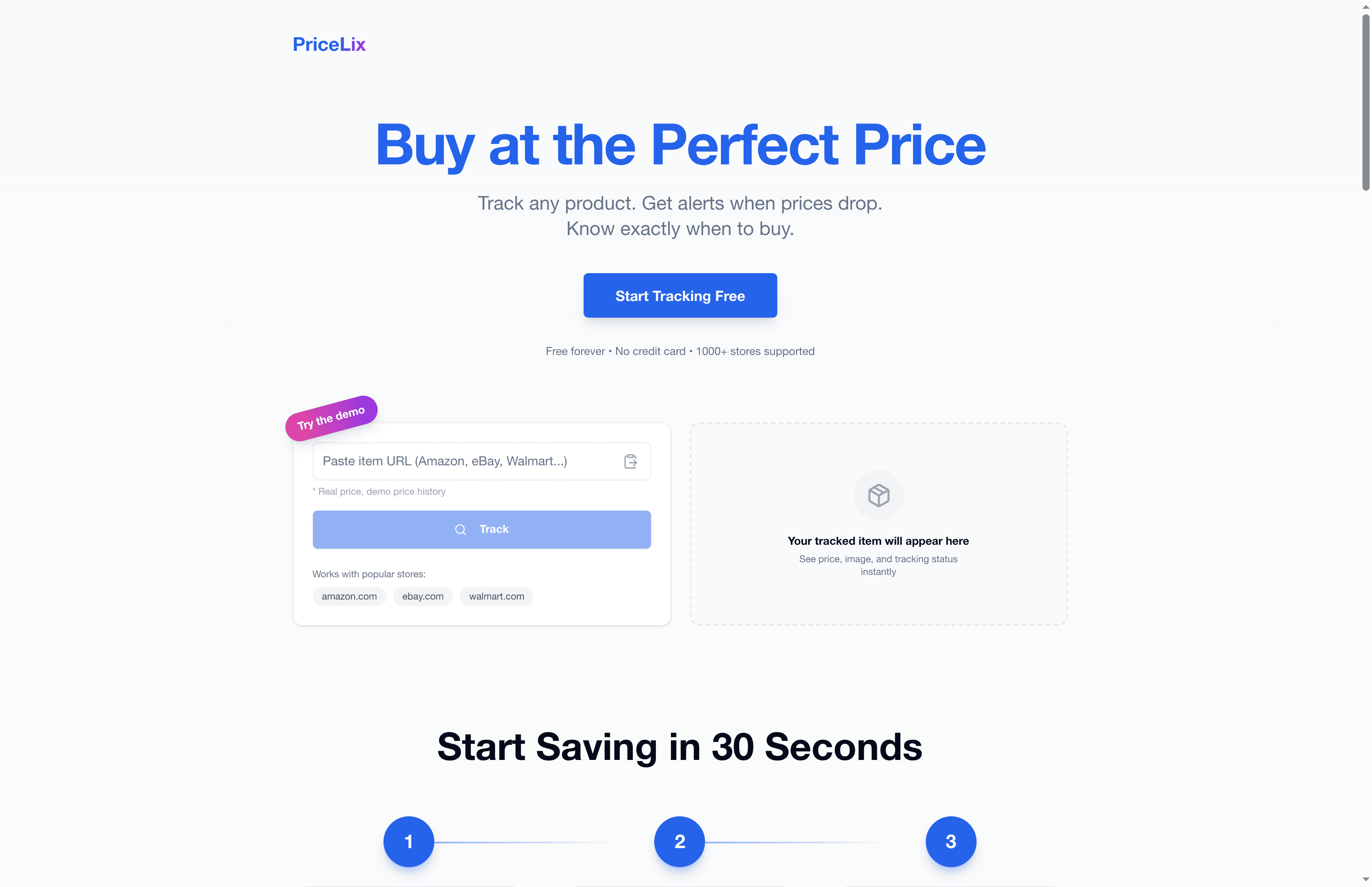
Our platform automatically tracks prices across thousands of retailers, capturing the constant algorithmic adjustments that happen too fast for manual monitoring. You get instant alerts when prices drop into your target range, ensuring you never miss the brief windows when algorithms test lower prices or respond to competitor moves. The detailed price history charts reveal patterns in algorithmic behavior, showing you the typical range, seasonal trends, and optimal buying windows for each product.
PriceLix tools and insights help you master online pricing tactics by consolidating everything into one dashboard. Instead of manually checking multiple sites and trying to remember prices, you set your targets once and let automated tracking handle the rest. Our system monitors daily price checks across Amazon, eBay, Walmart, and over a thousand other stores, giving you comprehensive coverage that catches deals regardless of which platform’s algorithm adjusts first.
The platform removes the complexity from price tracking without requiring browser extensions or technical knowledge. You simply add items you want to track, set your desired price threshold, and receive notifications when algorithmic adjustments create savings opportunities. This approach lets you apply best price tracking strategies 2026 without the manual effort, turning algorithmic complexity into actionable savings.
FAQ
What are price algorithms in e-commerce?
Price algorithms are automated systems that use real-time data, artificial intelligence, and mathematical models to set and adjust product prices continuously. They analyze demand patterns, competitor pricing, inventory levels, and customer behavior to optimize revenue. These systems make millions of pricing decisions daily across online marketplaces, replacing manual price setting with dynamic adjustments that respond instantly to market conditions.
Why do prices change frequently on online stores?
Prices fluctuate constantly because algorithms continuously optimize for maximum profit by testing different price points and responding to competitors. Systems update prices based on current supply levels, competitor moves detected through automated scraping, and shifts in consumer demand patterns. This dynamic approach allows retailers to capture more revenue during high-demand periods while stimulating sales during slow times through strategic discounts.
How can I avoid paying higher prices due to dynamic pricing?
Use incognito browsing and clear cookies to prevent personalized price inflation based on your browsing history. Compare prices across multiple platforms since each retailer’s algorithm optimizes differently, creating price variations of 15-30% for identical items. Monitor price history and set alerts to buy during algorithmic testing phases when systems experiment with lower prices, and avoid peak demand windows when surge pricing automatically raises rates. Track prices with best price tracking strategies 2026 to identify optimal buying moments.
Do retailers use algorithms to charge different prices to different customers?
Yes, many retailers implement personalized pricing where algorithms adjust prices based on individual browsing history, location, device type, and purchase patterns. Systems track repeat visits and may raise prices for users showing high purchase intent. This practice, while legal in most contexts, creates fairness concerns as different customers see different prices for identical items. Using private browsing and comparing across devices helps reveal and avoid these personalized markups.
What time of day offers the best prices from pricing algorithms?
Algorithms often test lower prices during off-peak hours like early morning (2-6 AM) and mid-week periods (Tuesday-Thursday) when fewer shoppers are active. Systems use these slow periods to gather elasticity data by experimenting with discounts that stimulate demand. Weekend and evening prices typically run higher as algorithms respond to increased traffic with surge pricing. Monitoring prices across different times reveals these patterns for specific retailers and product categories.