
Timing Purchases for Savings: Your Practical Guide
TL;DR:
- Timing purchases around predictable clearance cycles and following the 30-day waiting rule leads to greater savings than chasing short-term discounts.
- Using price history tools and stacking discounts with coupons and rewards ensures you verify genuine deals and maximize savings.
Most people think a sale is a sale. If something is 30% off, you’re saving money, right? Not always. Retailers are sophisticated, and the art of timing purchases for savings goes much deeper than reacting to whatever discount badge shows up on your screen. The shoppers who consistently pay less aren’t the ones who click the fastest. They’re the ones who know when to buy, why prices drop when they do, and how to verify whether a deal is actually a deal.
Table of Contents
- Key takeaways
- Timing purchases for savings: the fundamentals
- Seasonal purchasing tips by category
- Tools and techniques to lock in genuine deals
- Building the savings mindset that makes timing work
- My honest take on why most shoppers still overpay
- Start saving smarter with Price-lix
- FAQ
Key takeaways
| Point | Details |
|---|---|
| Timing beats chasing discounts | Buying during predictable clearance cycles saves more than reacting to random sale events. |
| Use the 30-day waiting rule | Delaying nonessential purchases for 30 days reduces impulse buys and builds savings discipline. |
| Seasonal windows are category-specific | Electronics, appliances, furniture, and apparel each have distinct optimal buying months. |
| Price history confirms real deals | A “sale” price may still be higher than the item’s historical average. Always verify. |
| Stack savings for maximum impact | Combining timing with coupons, card rewards, and loyalty points multiplies your discount. |
Timing purchases for savings: the fundamentals
Here’s the thing most shoppers miss: timing is about behavior and strategy, not just showing up on Black Friday. Retailers operate on predictable inventory cycles. They need to move old stock before new models arrive and clear floor space before the next season’s merchandise ships in. That pressure creates real discounts, and if you understand the calendar, you can position yourself to catch them every time.
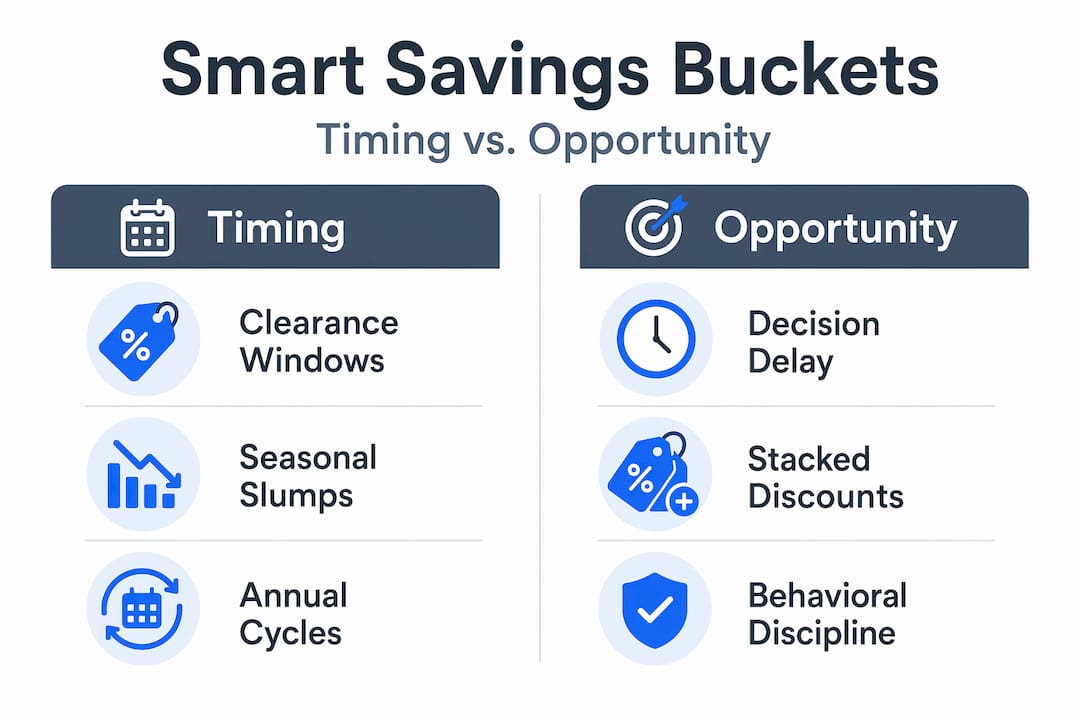
Think of savings through timing as having two separate buckets. The first is about when retailers are most motivated to cut prices, which is tied to model years, seasons, and inventory pressure. The second is about your own behavior, specifically avoiding impulse purchases that blow your budget before the good deals even arrive.
The 30-day rule that actually works
One of the most powerful purchase timing hacks available costs you nothing. Delay any nonessential purchase for 30 days before buying. If you still want it after a month, it’s likely a genuine need or want. If the urge fades, you just saved the full price. This one habit separates reactive shoppers from strategic ones.
Here’s the practical workflow that ties both buckets together:
- Add items to a wishlist immediately when you spot something you want. Don’t buy yet.
- Set a delay. Give yourself 30 days minimum for nonessential items and 90 days for big-ticket purchases.
- Mark your calendar for the next relevant sale window (more on those windows in the next section).
- Track the price during that waiting period using a price history tool to confirm you’re not overpaying.
- Buy only when the timing and price align. Not just when the countdown timer says “2 hours left.”
Pro Tip: Mapping a wishlist with a decision delay and buying during calibrated windows is one of the most effective savings pipelines you can build. It sounds simple because it is.
This approach filters out manufactured urgency, which retailers use constantly. Flash sales, limited-stock warnings, and “today only” banners are designed to make you skip the strategic thinking. Don’t let them.
Seasonal purchasing tips by category
Knowing the general principle is useful. Having a category-by-category map of the best time to buy is far more useful. Waiting for seasonal and clearance cycles consistently produces deeper savings than chasing short-term random sales. Here’s why: retailers mark down inventory when demand drops, not when you need the item most.
The table below gives you an at-a-glance seasonal guide for common purchases:
| Category | Best months to buy | Why |
|---|---|---|
| Winter coats and cold-weather gear | January, February | Post-holiday clearance clears seasonal inventory |
| Furniture | January, July | Retailers rotate showroom inventory twice a year |
| Large kitchen appliances | May, November | Memorial Day and Black Friday drive 20–35% drops |
| Laptops and electronics | August, November | Back-to-school and holiday promotions |
| Outdoor and patio furniture | August, September | Late summer deals move unsold seasonal stock |
| Cars | December, end of month | Model-year changeovers motivate dealer discounts |
| Gym equipment | January, after Super Bowl | Gyms and retailers sell off excess post-resolution season |
Now here’s how to use that table practically. Work through these steps at the start of each quarter:
- List every major purchase you’re planning in the next six months.
- Match each item to its optimal buying window using the guide above.
- Set calendar reminders two weeks before each window opens.
- Build a price baseline now so you know what “normal” looks like before the sale arrives.
- Have the budget ready. The biggest mistake people make is finding the perfect timing window but not having the cash available.
Timing purchases around predictable clearance windows can cut costs by 30 to 70%, particularly when you’re willing to wait several months. That’s not a small number. On a $1,000 appliance, that’s $300 to $700 back in your pocket.
Tools and techniques to lock in genuine deals

Knowing when to buy is only half the equation. You also need to know if the price you’re seeing is actually better than what it’s been historically. This is where most shoppers get burned. A retailer can inflate a price for a few weeks, then “discount” it back to normal and call it a sale.
The tools that prevent this from happening to you:
- Price history charts: A price history view shows you every price point an item has had over the past 12 to 24 months. If today’s “sale” price is higher than the item’s average, you’ll see it immediately.
- Price drop alerts: Set an alert at your target price and get notified when the item actually hits it. No daily checking required.
- Browser-based price tracking: Shopping browser extensions automate deal tracking and verify whether a sale price beats past prices without any manual effort on your part.
- Cross-retailer comparison: The same item can vary by 15 to 25% across major retailers at any given moment. Checking one store is not enough.
Price-lix does exactly this. It monitors prices across Amazon, eBay, Walmart, and over a thousand other stores, gives you a full price history chart, and fires off alerts the moment your target price is hit. You can read more about building an effective monitoring system in this price tracking checklist to understand how it pays off.
Pro Tip: Add items to your cart at full price and leave them there. Many retailers trigger automated discount emails to cart abandoners within 24 to 48 hours. Combine that with your price tracking alert and you’ve layered two discount mechanisms on top of each other.
The other move smart shoppers make is stacking discounts. Timing the purchase right gets you a lower base price. Then you stack on a coupon code, pay with a credit card that offers purchase rewards, and apply any loyalty points you’ve accumulated. Each layer is modest on its own. Combined, they regularly push your effective discount past what any single sale offers.
Building the savings mindset that makes timing work
Strategy without discipline doesn’t hold. You can know every optimal shopping window by heart and still blow your savings if you haven’t built the right habits around them.
Here’s the behavioral side that actually makes timing purchases pay off:
- Save in advance for planned purchases. If you know you need a new refrigerator and the best window is November, start setting aside money in September. Don’t wait for the sale and then scramble.
- Use the 90-day rule for big-ticket items. The 30-day wait works for smaller nonessential purchases, but anything over $500 deserves 90 days of consideration and price monitoring.
- Automate micro-savings. Round-up savings programs round up each debit card purchase and move the difference into savings automatically. The average outcome is around $360 per year from spending that was happening anyway. That’s a budget for a well-timed electronics purchase.
- Set a specific savings goal tied to each planned purchase. “I want to buy a new laptop during back-to-school season” is much more motivating than a vague savings goal. Give the money a destination.
- Review your wishlist monthly. Items that no longer feel worth waiting for? Remove them. Items approaching their best buying window? Check the price history and prepare to act.
The long game here is significant. Shoppers who apply even basic discount timing strategies consistently report spending hundreds less per year on the same purchases. The seasonal purchase list approach combined with a 90-day rule isn’t glamorous, but it works every single time.
My honest take on why most shoppers still overpay
I’ve watched people spend hours hunting for coupon codes and still pay more than necessary because they bought at the wrong time. And I’ve seen others walk into a major appliance purchase in late November, armed with nothing but a price history chart and a calendar reminder set six weeks earlier, and walk away paying 28% less than the same item cost in August.
The uncomfortable truth is that most overpaying isn’t about missing a sale. It’s about buying on the retailer’s timeline instead of your own. The house always wins when you shop reactively.
What actually shifts the outcome is combining behavioral discipline with the timing windows. Waiting is the hard part for most people. But retailers clear inventory at season changes, and that cycle runs on autopilot whether you’re ready for it or not. The shoppers who save consistently are the ones who build a simple calendar, stick to the waiting rule, and verify every “deal” with a price history check before they commit.
I’ve found that verifying price history is the single step most budget-conscious shoppers skip. They see a discount badge and assume it’s real. Sometimes it is. But the best price tracking strategies take the guesswork out entirely. You’re no longer trusting a retailer’s math. You’re looking at the data yourself.
Build the calendar. Use the waiting rules. Check the history. Repeat.
— Serhii
Start saving smarter with Price-lix
Knowing the theory is great. Actually catching the right price at the right moment is where the real savings happen.
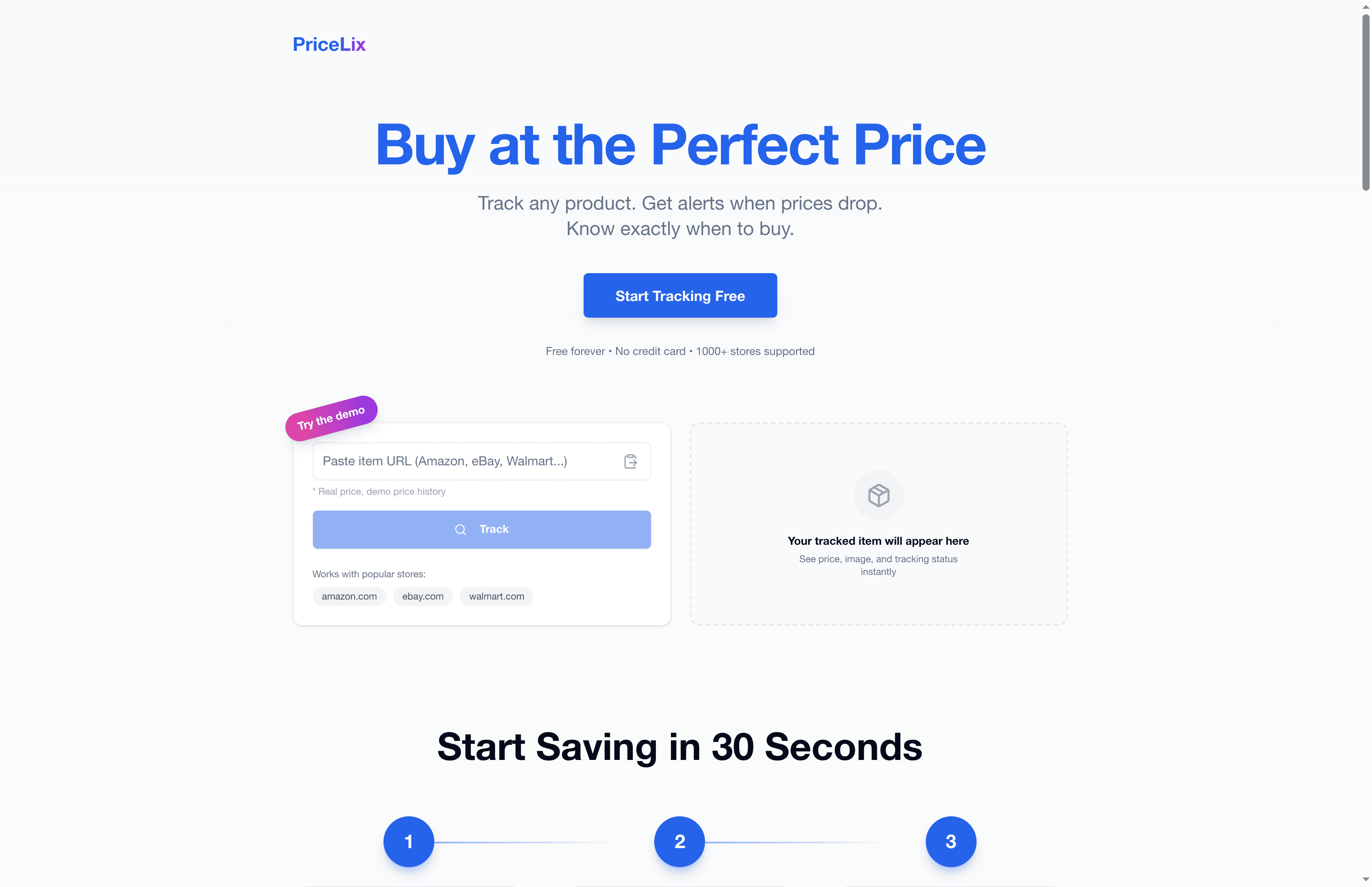
Price-lix was built for exactly this. You add items you’re planning to buy, and Price-lix tracks prices automatically across Amazon, Walmart, eBay, and over a thousand other retailers. When the price hits your target, you get an alert. No daily checking. No spreadsheets. Just a clean dashboard showing you price history charts, current prices, and the moment to act. If you want to go deeper on how to build a full price monitoring workflow, the Price-lix blog has you covered. Start building your wishlist and let the timing do the work at price-lix.com.
FAQ
What is the best time of year for major appliance purchases?
Memorial Day and Black Friday weeks typically produce the steepest appliance discounts, often in the 20 to 35% range, as retailers clear inventory before new models arrive.
How does the 30-day waiting rule help you save money?
Delaying any nonessential purchase by 30 days reduces impulse spending and filters out artificially urgent deals, so you only spend on things you genuinely need or want.
Why should I check price history before buying during a sale?
A sale price is only a real deal if it’s below the item’s historical average. Price history charts show you every price point an item has had, making it easy to spot inflated “original” prices that make discounts look bigger than they are.
When is the best time to buy outdoor furniture?
Late summer, specifically August and September, is when retailers discount outdoor and patio furniture most aggressively, since demand drops sharply as the season ends and they need to clear floor space for fall inventory.
Can I combine timing strategies with other discounts?
Absolutely. Buying during the optimal seasonal window gives you a lower base price, and you can layer coupon codes, credit card rewards, and loyalty points on top for a deeper combined discount than any single sale would offer on its own.