
Smart market timing strategies to maximize savings
TL;DR:
- Most shoppers believe attending sales guarantees the best prices, but research shows many discounts are comparable or cheaper outside sale periods. Dynamic pricing algorithms cause prices to fluctuate constantly based on demand, competition, inventory, and browsing behavior, making timing critical for savings. Smart shoppers track price histories, start early, and avoid impulse buys, using tools like PriceLix to optimize purchase timing and maximize savings.
Most shoppers believe that showing up during a big sale event means they’re getting the best price available. That belief is costing them real money. Research shows that 83% of products were actually cheaper or the same price at some other point in the year outside of Black Friday. The truth is, market timing for online shoppers isn’t about rushing to checkout during a flash sale. It’s about understanding how prices actually move, reading the signals, and buying when the data says it’s the right moment. This guide breaks all of that down for you, step by step.
Table of Contents
- How dynamic pricing shapes your shopping outcomes
- Decoding deal calendars and promo windows
- Smart timing tactics: beyond the hype
- Psychology, edge cases, and post-sale strategies
- A smarter path: why market timing is more than chasing sales
- Maximize your savings with PriceLix
- Frequently asked questions
Key Takeaways
| Point | Details |
|---|---|
| Dynamic pricing rules | Online prices can change multiple times a day and are rarely lowest during big sales. |
| Timing beats hype | Checking price history and aligning with sale cycles yields better deals than rushing into events. |
| Category exceptions | Premium products often keep value during sales, so timing strategies should adapt by category. |
| Evidence over assumptions | Always use data and tools to confirm the real deal instead of relying on discount labels. |
| Post-sale patience | Prices usually take time to reset after sales events, so waiting can sometimes pay off more. |
How dynamic pricing shapes your shopping outcomes
With the myth of best sale prices debunked, let’s look at the mechanics behind those shifting numbers.
You’ve probably noticed that a product you viewed yesterday costs something different today. That’s not a glitch. That’s dynamic pricing, and it’s running constantly across almost every major e-commerce platform. Retailers use algorithms that adjust prices in real time based on a range of signals.
Here’s what typically triggers a price change:
- Demand spikes: When lots of people view or add a product to their cart, the price can go up automatically.
- Competitor moves: If a competing retailer drops their price, algorithms often respond by adjusting to stay competitive.
- Inventory levels: Low stock often pushes prices higher. Surplus inventory drives them down.
- Time of day and week: Some categories see lower prices on weekday mornings when traffic is lighter.
- Your browsing history: Some platforms personalize pricing based on your past behavior and location.
“Retail market timing for shoppers works because e-commerce prices change dynamically in response to demand, supply, and competition, not just once in a while, but constantly.”
What makes this particularly tricky is that dynamic pricing doesn’t just affect the initial purchase. Research from Harvard has found that dynamic pricing affects returns behavior too. When prices fluctuate significantly after a purchase, some buyers return items and repurchase at the lower price. Timing affects more than just what you pay at checkout. It can shape your entire post-purchase experience.
Here’s a quick comparison of how price shifts look across common triggers:
| Trigger | Typical price direction | Time frame |
|---|---|---|
| High demand / viral product | Up | Hours to days |
| Competitor price cut | Down | Hours |
| Low inventory | Up | Days to weeks |
| Post-sale normalization | Up | Days after event |
| Slow sales / overstock | Down | Weeks |
This table makes the pattern clear. Prices don’t just drop during sales events. They respond to dozens of inputs at once. Understanding dynamic pricing insights helps you recognize when a price you’re seeing is actually a genuine low, versus a temporary dip or an inflated anchor. Smart shoppers also keep an eye on seller price changes because even small shifts can signal bigger swings ahead.
Decoding deal calendars and promo windows
Now that we know prices move dynamically, let’s zero in on how shopping seasons and promo periods shape market timing.

Big shopping events like Black Friday, Cyber Monday, Amazon Prime Day, and back-to-school season create enormous behavioral shifts. Shoppers delay purchases, hold back on buying, and wait for the marquee event. Shoppers delay purchases and pile into deal windows, which actually gives retailers pricing power during those moments, not less.
Let me hit you with some numbers. A major consumer research study found that 83% of products checked were either the same price or cheaper at some other point in the year compared to their Black Friday price. That stat should change how you approach every “limited time” sale you see.
Here’s a quick comparison to show what shopping event weeks actually look like versus quieter periods:
| Factor | Event week (e.g., Black Friday) | Off-peak period |
|---|---|---|
| Shopper competition | Very high | Low |
| Retailer pricing power | High | Moderate to low |
| Likelihood of a genuine low | Lower than expected | Higher |
| Stock availability | Can be limited | Usually better |
| Price manipulation tactics | More common | Less aggressive |
So when should you act? Here’s a checklist to align your timing with real savings opportunities:
- Start tracking early. Add items to your watchlist 60 to 90 days before a known sale event so you have a baseline price in hand.
- Look for the pre-event dip. Retailers sometimes quietly lower prices a week or two before the big event to build momentum.
- Check prices immediately after the event. Clearance windows in the days following major sales can deliver genuine lows on unsold inventory.
- Target mid-week, off-peak windows. Prices for many categories are softer on Tuesday and Wednesday mornings.
- Don’t wait for a single date. The execution window, meaning the optimal moment to actually buy, is often a rolling period rather than one specific day.
The key insight here is patience. Knowing how to predict the best time to buy is a skill that takes practice, but once you internalize these cycles, you’ll start to see the patterns clearly.
Smart timing tactics: beyond the hype
With the promotional calendar in mind, it’s time to get tactical. Here’s how advanced shoppers really win.
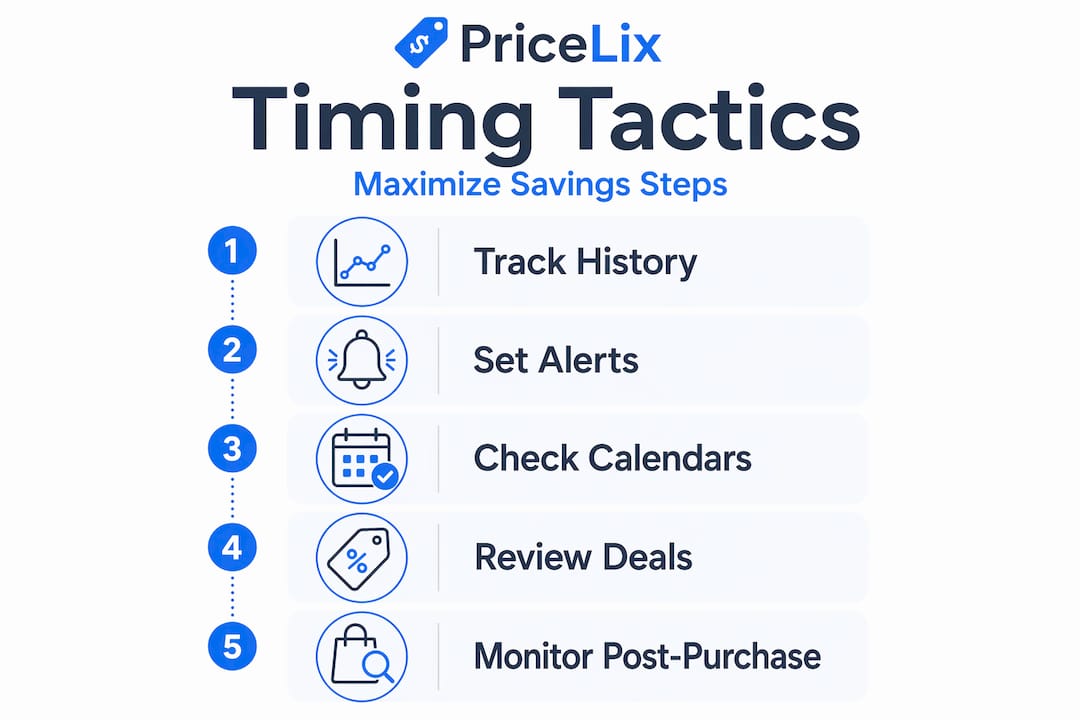
The most powerful tool in your timing arsenal isn’t a coupon. It’s a price history chart. A price history chart shows you every recorded price for a specific product over weeks or months. When you look at one, you immediately see whether the current “discount” is actually a low, or just a temporary markdown from an inflated anchor price.
Here’s what to look for when analyzing price history:
- The 90-day low: Is the current price close to the lowest price recorded in the last three months? If yes, that’s meaningful.
- Pattern repetition: Does the price drop predictably around certain dates or events? If so, you can plan around that.
- Sudden spikes followed by “discounts”: Some retailers raise the reference price weeks before a sale just to make the discount look bigger. Price history exposes this immediately.
- Gradual declines: If a product has been slowly dropping in price over several months, waiting a bit longer may pay off even more.
Understanding price history charts is genuinely one of the best habits you can build as an online shopper. It’s the difference between reacting to a sale and actually verifying one.
Pro Tip: Never trust the discount percentage label alone. A product marked “40% off” might still be more expensive than it was three weeks ago. Always pull up the price history before you act. Learning why monitoring price history matters will sharpen your instincts fast.
Price alerts are the other half of the equation. Once you know what a realistic price low looks like for a specific item, you can set a target price and get notified the moment it hits. This removes the need to check manually every day and protects you from missing a short price dip that only lasts a few hours.
To build a genuinely effective timing strategy, follow these principles drawn from best price tracking strategies:
- Set target prices based on history, not hope. Use actual data to define what a “good price” looks like for each product.
- Layer alerts with calendar awareness. If a product tends to drop around seasonal transitions, set your alert threshold slightly above the historical low so you catch it on the way down.
- Avoid one-click impulse buying during hype events. Give yourself a 24-hour rule. If it’s truly a low, it will still be there tomorrow.
- Track across multiple stores. The same product often has very different price rhythms on different platforms.
The research backs this up. Checking price history, aligning with promo calendars, and requiring evidence that a deal is near a recent low is the practical methodology that separates real savings from theater.
Psychology, edge cases, and post-sale strategies
There’s more to timing than just knowing when to act. Let’s decode the human side and the niche exceptions that can make or break your results.
One of the most overlooked risks in post-sale shopping is a concept called discount anchoring. Discount anchoring happens when you’ve seen a product at a dramatically low sale price and now expect prices to keep falling or stay near that level after the event ends. In reality, that’s rarely how it works.
After major promotional windows, prices normalize slowly as shoppers reference the lowest price they’ve seen. Retailers know this. They often reset to a slightly higher price shortly after a sale, banking on the fact that you’re still mentally comparing to the sale price rather than the pre-sale baseline. This makes you feel like you missed out, and it can push you into a second, less-favorable purchase.
“After promo windows end, the psychological residue of the discount can actually trap buyers into expecting further drops that never arrive.”
Here’s what to watch for in the post-sale environment:
- Prices rising 5 to 15% within 48 to 72 hours after a major event. This is a standard retailer tactic to begin restoring margin.
- “Second wave” sale promotions that appear a week after the main event. These sometimes offer genuine deals on leftover inventory, but rarely beat the pre-event lows.
- New model or version announcements that cause older model prices to drop naturally. This is one of the most reliable genuine price drops you’ll ever see.
- Category seasonality. Air conditioners in winter, winter coats in spring. Predictable seasonal clearance often beats any promotional event in its category.
Now for the exceptions. Not every category plays by the same rules. Research shows that for certain premium products like earbuds and sneakers, willingness to pay at higher price points didn’t collapse during sale events and in some cases actually strengthened. Premium buyers aren’t deterred by full price during deal season. In fact, some premium items see price increases during sale events because demand from new buyers enters the market.
For these categories, waiting for a sale event is a flawed strategy. The better move is to track price history year-round and act on organic dips rather than event-based discounts. The advantages of price history tracking become especially clear when you’re shopping in these premium categories where conventional wisdom fails most buyers.
A smarter path: why market timing is more than chasing sales
Here’s an honest perspective that most shopping guides won’t tell you. The obsession with sale event dates is itself a form of retail manipulation. When you anchor your buying decisions to Black Friday or Prime Day, you’re playing by the retailer’s rules. You’re shopping on their timeline, under artificial urgency, with their framing of what counts as a “deal.”
Real market timing is quieter than that. It’s building your own price portfolio over weeks and months. It’s knowing that the laptop you want has a 90-day low of $749, so when an alert fires at $759, you’re already primed to act with confidence. It means you don’t need a countdown timer or a flash sale banner to tell you it’s a good moment. You already know.
What most shoppers consistently overlook is the time-of-day dimension. Prices on high-velocity items can shift within hours. Early morning, particularly between 6 and 9 a.m. on weekdays, tends to show softer pricing on many platforms because traffic is lower and algorithms haven’t ramped up demand signals yet.
Post-purchase vigilance is another edge that few people use. After you buy something, keep tracking it for a short window. Many retailers offer price protection policies. If the price drops within 30 days of purchase, you can often claim a refund on the difference. That’s free money left on the table by most shoppers.
The winning approach isn’t about being glued to a deal site during Cyber Week. It’s about having a complete guide to monitoring product prices working for you continuously, so every purchase is grounded in actual data rather than promotional noise.
Maximize your savings with PriceLix
Ready to put these strategies in motion? Let’s make market timing effortless.
Everything covered in this guide, tracking price history, setting target alerts, reading dynamic pricing signals, and avoiding post-sale anchoring, requires consistent data. That’s exactly what PriceLix was built to deliver.
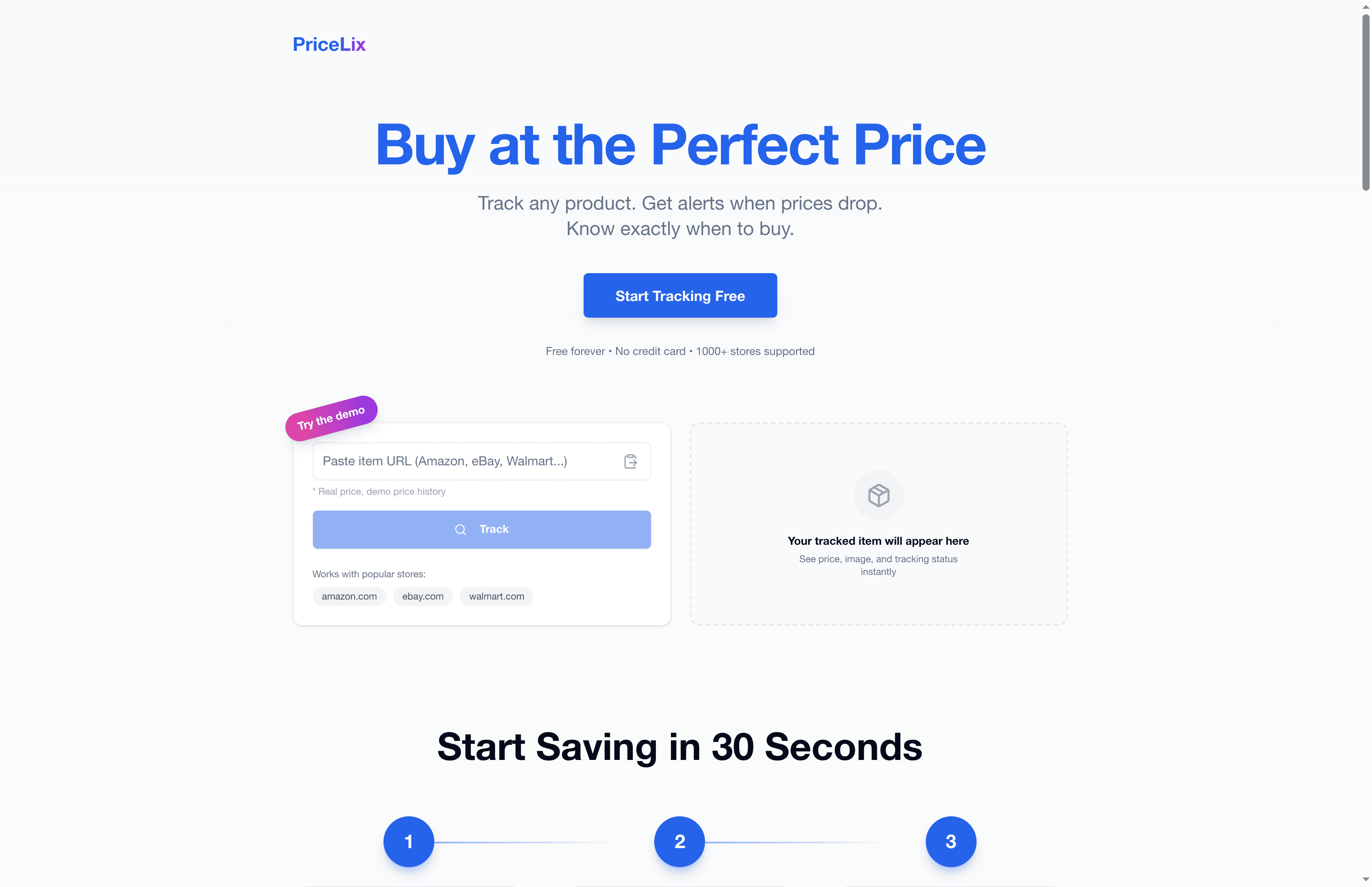
PriceLix automatically monitors prices across Amazon, eBay, Walmart, and over a thousand other stores, then alerts you the moment a tracked item hits your target price. No browser extensions needed. No manual checking. Just a clean dashboard that does the heavy lifting for you. Whether you’re shopping smart during a sale event or hunting off-peak lows, understanding the types of price tracking available through a platform like PriceLix gives you a genuine edge. Start tracking today and stop leaving money on the table.
Frequently asked questions
Does shopping early or late in a sale event get the best price?
Not always. Research shows that 83% of products were cheaper outside Black Friday, so checking price history matters more than the timing within the event itself.
What is discount anchoring and why does it matter after sales events?
Discount anchoring is when you expect prices to keep dropping after a sale, but prices normalize slowly as shoppers hold onto the memory of the lowest price they saw, making patience essential rather than assuming further drops.
Do all categories benefit from waiting for sale events?
No. Some premium categories like certain sneakers and earbuds actually maintain or raise prices during sale events because premium buyer demand holds steady or increases.
How can I avoid overpaying due to dynamic price changes?
Track price history, set alerts for target prices, and always compare to recent lows rather than just current discounts, because e-commerce prices shift constantly and the “discount” label alone means very little.