
Seasonal discount strategies: maximize your savings all year
TL;DR:
- Most shoppers miss deeper discounts during off-season clearance periods.
- Timing purchases with price tracking tools and seasonal windows maximizes savings.
- Automation and discipline are key to avoiding impulse buys and verifying genuine deals.
Billions of dollars in discounts hit online stores every year, yet most shoppers still overpay. Black Friday and Cyber Monday 2025 online sales hit record highs, but here’s the uncomfortable truth: not every sale is a real deal. Retailers are smart. They know how to make you feel like you’re winning when you’re actually leaving money on the table. The good news? With the right timing, the right tools, and a few proven strategies, you can flip the script. This guide breaks down exactly how to stack, time, and track discounts so you save more all year long, not just during the big shopping holidays.
Table of Contents
- Understanding key seasonal sales periods
- How to time your purchases for maximum savings
- Leveraging digital tools and price trackers
- Stacking and verifying discounts for bigger savings
- Why most shoppers miss out on the biggest seasonal savings
- Take charge of your seasonal savings with PriceLix
- Frequently asked questions
Key Takeaways
| Point | Details |
|---|---|
| Know the sales calendar | Planning around seasonal events like Black Friday and Prime Day can unlock the steepest discounts. |
| Leverage tracking tools | Using price trackers and alerts ensures you never miss real savings or fall for fake deals. |
| Stack discounts smartly | Combine coupons, cashback, and verified markdowns to maximize your total savings every time you shop. |
| Wait and save more | Holding off on non-urgent purchases until off-season or clearance windows can dramatically boost your discount. |
| Adopt a strategic mindset | True savings come from setting a budget, tracking prices, and resisting the urge to chase every flashy deal. |
Understanding key seasonal sales periods
Now that you know how much is at stake, let’s break down when the biggest opportunities to save actually occur.
Most shoppers think about deals only when a sale banner appears in their inbox. But the real pros plan months ahead. Key seasonal events like Black Friday, Cyber Monday, Back-to-School, and Prime Day follow predictable patterns every single year. Once you understand those patterns, you can position yourself to strike at exactly the right moment.
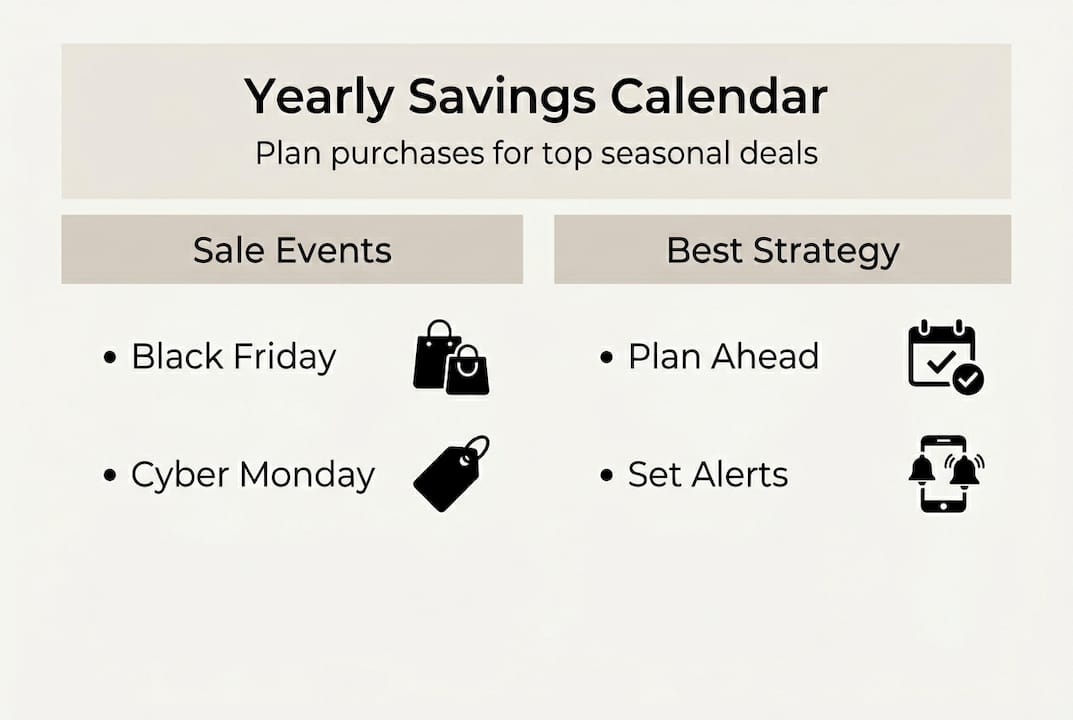
Here’s a quick look at the major annual sales events, their typical timing, average discount ranges, and what categories tend to shine:
| Sales event | Typical timing | Avg. discount | Best categories |
|---|---|---|---|
| Black Friday | Late November | 20-40% | Electronics, appliances |
| Cyber Monday | Early December | 15-35% | Tech, software, fashion |
| Amazon Prime Day | Mid-July | 20-50% | Amazon products, smart home |
| Back-to-School | July to September | 10-30% | Laptops, supplies, clothing |
| Presidents’ Day | Mid-February | 15-25% | Mattresses, furniture, TVs |
| Memorial Day | Late May | 10-30% | Outdoor gear, appliances |
| End-of-season clearance | Feb, July, late Aug | 30-70% | Apparel, seasonal goods |
A few things stand out here. First, the biggest percentage discounts often happen during clearance periods, not the headline events. Second, most major sales don’t just pop up overnight. Retailers typically start rolling out deals one to two weeks before the actual event date. If you wait for the day itself, you may miss the deepest cuts.
Here are the key categories to watch during each major season:
- Electronics and tech: Best around Black Friday, Cyber Monday, and Prime Day
- Furniture and mattresses: Presidents’ Day and Memorial Day are your windows
- Clothing and apparel: End-of-season clearance in February and August
- Outdoor and garden: Late spring sales and post-summer clearance
- Toys and games: Post-holiday sales in January and pre-holiday in October
Stat callout: Shoppers who plan purchases around predictable seasonal windows consistently capture deeper discounts than those who buy on impulse during peak sale days.
The takeaway is simple. Build your shopping calendar around these windows. Know what you need, know when the best time to buy it is, and set yourself up to act fast when prices drop.
How to time your purchases for maximum savings
Once you know what and when to target, the next step is learning how to time your actual purchases.

Timing is everything in deal hunting. And the counterintuitive truth is that the best time to buy is often when nobody else is shopping. Buying off-season and waiting for clearance consistently delivers the largest percentage savings across almost every product category.
Think about it. Winter coats are cheapest in late February. Patio furniture drops in price after Labor Day. Laptops hit their lowest points right after the back-to-school rush ends. Retailers need to move inventory, and if you’re patient, they’ll practically pay you to take it.
Here’s a step-by-step plan for building your seasonal shopping calendar:
- List your planned purchases for the year. Include everything from clothing and electronics to home goods and sports gear.
- Assign each item a seasonal window. Match items to the sales events or off-season periods where they typically see the deepest discounts.
- Set a reminder two weeks before each window. This gives you time to compare prices and research before the sale starts.
- Apply the 90-day rule for non-essentials. If you don’t need it right now, wait. Most items cycle through a discount within 90 days.
- Track price history before you buy. Never assume a sale price is the lowest it’s been. Use a tracker to verify.
You can also explore price drop strategies that go beyond seasonal timing and help you catch deals as they happen in real time.
Pro Tip: Split your annual shopping needs by season. Buy summer clothing in August, winter gear in March, and tech right after the holiday rush. You’ll rarely pay full price again.
Patience is a skill. It’s also a strategy. The shoppers who save the most aren’t the ones refreshing deal sites on Black Friday morning. They’re the ones who already know what they want, have tracked the price for weeks, and are ready to pull the trigger the moment the number hits their target.
Leveraging digital tools and price trackers
Perfect timing only matters if you can spot a real discount. Here’s how tech tools make that easy.
Here’s the problem with shopping during a big sale: you often have no idea if the price you’re seeing is actually good. Retailers can and do inflate original prices before marking them down. A “40% off” tag might be based on a price the product was listed at for only a few days six months ago.
This is where price tracking tools earn their keep. Tools like CamelCamelCamel and Honey help shoppers verify true discounts and automate tracking so you’re never flying blind.
Here’s what to look for in a solid price tracker:
- Price history charts: Shows the full pricing timeline so you can see if the current deal is genuinely low
- Drop alerts: Notifies you instantly when a tracked item hits your target price
- Historical low indicators: Flags when a price matches or beats its all-time low
- Multi-store comparison: Checks prices across Amazon, Walmart, eBay, and other retailers simultaneously
- Coupon and cash-back integration: Surfaces available promo codes and cash-back offers at checkout
Here’s a quick comparison of popular tracking tools:
| Tool | Price history | Alerts | Multi-store | Free tier |
|---|---|---|---|---|
| CamelCamelCamel | Yes | Yes | Amazon only | Yes |
| Honey | Limited | Yes | Yes | Yes |
| Google Shopping | Basic | Limited | Yes | Yes |
| PriceLix | Yes | Yes | 1,000+ stores | Yes |
For a deeper look at how these platforms stack up, check out this guide to best price alert platforms and explore price tracking strategies that work across different shopping habits.
Pro Tip: Use two trackers at once. One for Amazon-specific items like CamelCamelCamel, and one multi-store tracker for everything else. You’ll catch deals that a single tool would miss.
Understanding online price tracking is a foundational skill for any serious deal hunter. Once you see how prices actually move over time, you’ll never trust a sale badge at face value again.
Stacking and verifying discounts for bigger savings
Once you’ve identified the best price, it’s time to push your savings even further with some stacking tricks.
Finding a good deal is step one. Maximizing it is step two. Most shoppers stop at the sale price. But experienced deal hunters know you can often layer multiple savings on top of each other to dramatically cut the final cost.
Stacking coupons and cash-back deals boosts total savings, but it’s essential to verify those deals against historic prices before celebrating. A 20% coupon on an inflated price is not a win.
Here’s a step-by-step deal-stacking process:
- Find the item and check its price history using a tracker. Confirm the current price is genuinely low.
- Search for active promo codes. Tools like Honey automatically apply codes at checkout.
- Stack a cash-back offer. Platforms like Rakuten or your credit card’s shopping portal may offer additional rebates.
- Check for store-specific loyalty points or rewards. Many retailers let you earn points on sale items.
- Confirm the final stacked price against the historical low. If it beats or matches the all-time low, you’ve found a real deal.
Be aware of dynamic pricing tactics that retailers use to manipulate perceived value. And always set up price drop alerts so you’re notified the moment a stacked deal becomes available.
“Dynamic pricing can boost retailer revenue but leads to higher cart abandonment when shoppers detect insincere markdowns.”
According to retail discount statistics, shoppers who recognize fake markdowns are far more likely to abandon their cart entirely. That’s the retailer’s loss and your reminder to always verify.
Pro Tip: A “true discount” is only real if the price is at or near its historical low AND you’ve exhausted available promo codes and cash-back options. Anything less is just a partial win.
Why most shoppers miss out on the biggest seasonal savings
Here’s the honest take: knowing the tactics is only half the battle. The other half is mindset.
FOMO (fear of missing out) is a retailer’s best friend. Flash sales, countdown timers, and “only 3 left” warnings are engineered to make you act before you think. And they work. Even shoppers who know better get caught up in the urgency and buy things they didn’t plan for at prices that aren’t actually that great.
Retailers also routinely inflate “before” prices to make discounts look more dramatic. Dynamic pricing boosts retailer revenue but can spike cart abandonment when shoppers catch on. The problem is most shoppers don’t catch on.
True experts set budgets and automate alerts rather than chasing every deal that lands in their inbox. They decide what they need before the sale starts, set a target price, and walk away from anything that doesn’t hit the mark. No exceptions.
The price tracking checklist approach is what separates occasional deal-hunters from year-round savings pros. It’s not about shopping more. It’s about shopping smarter, with discipline and the right tools backing every decision.
Take charge of your seasonal savings with PriceLix
Ready to apply these savings strategies? Empower your next shopping spree with the right tools.
All the timing knowledge in the world won’t help if you’re still manually checking prices every day. That’s where PriceLix steps in. PriceLix automates the entire tracking process across more than 1,000 stores, including Amazon, Walmart, and eBay, so you never miss a real price drop.
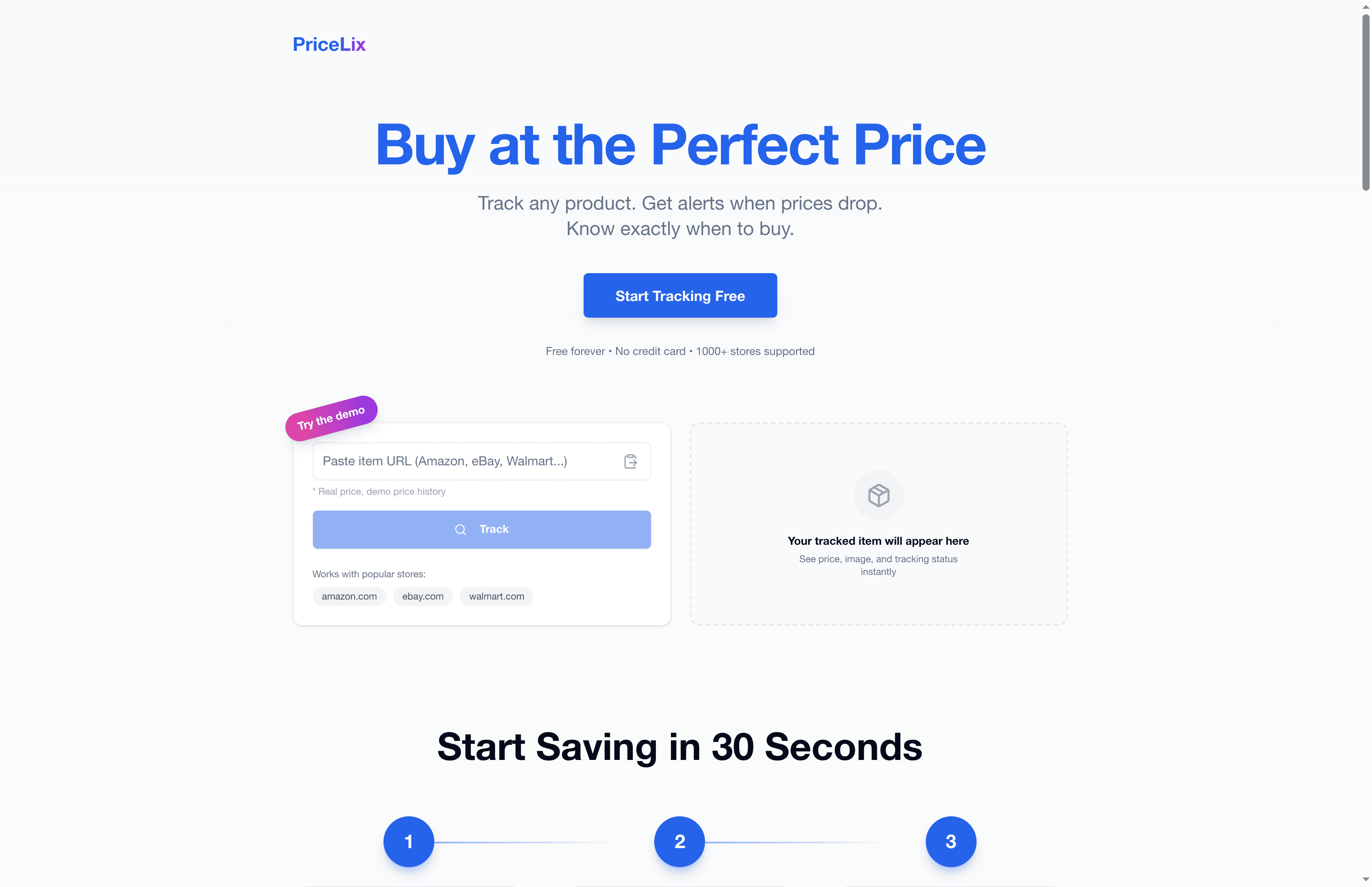
Set your target price, sit back, and let PriceLix do the watching. The moment a price drops, you get an alert. No browser extensions needed. No spreadsheets. Just clean, automated savings delivered straight to you. Whether you’re hunting for Black Friday deals or planning an off-season buy, PriceLix gives you the price history and real-time alerts to shop with total confidence. Start tracking today and stop overpaying for good.
Frequently asked questions
What are the best times of year to find major discounts?
Key sales periods include Black Friday, Cyber Monday, and Prime Day, but the deepest percentage cuts often come during off-season clearance windows in February, July, and late August.
How can I tell if a discount is really a good deal or just marketing?
Always compare the sale price to the item’s price history using a tracker. Price trackers verify whether a so-called discount is genuine or just based on an inflated original price.
Are price tracking tools free to use?
Yes, most tools including Honey and CamelCamelCamel offer free core features like price history and basic alerts, with optional premium upgrades for more advanced functionality.
Is it better to wait for the next major sale or buy when I see a moderate discount?
Waiting 90 days for non-essentials almost always yields better savings, but if you have a time-sensitive need, a verified moderate discount backed by price history data is still a smart buy.