
Factors Affecting Online Prices: Save More in 2026
You probably think online shopping always gets you the lowest price. That’s what most people believe, and it’s costing them hundreds of dollars every year. The truth is, online prices shift constantly based on hidden factors most shoppers never notice. Supply chain negotiations, algorithmic pricing, demand surges, and seasonal cycles all work behind the scenes to determine what you pay. This guide reveals exactly how these forces operate and shows you how to use that knowledge to save real money on every purchase.
Table of Contents
- The basics: What drives online prices?
- How supply chain dynamics shape your checkout total
- The invisible hand: Algorithms, demand surges, and dynamic pricing
- Special offers, coupons, and seasonal swings
- Smart shopper strategies: Take control of your online purchases
- Unlock more savings with PriceLix
- Frequently asked questions
Key Takeaways
| Point | Details |
|---|---|
| Multiple factors drive pricing | Online prices reflect costs, competition, algorithms, and promotions working together. |
| Supply chains aren’t everything | Many price changes result from retailer strategy and tech, not just cost increases. |
| Timing and tracking save money | Shopping with awareness of trends and tools can cut your costs significantly. |
| Strategies beat surprises | Using the right steps helps you sidestep price traps and spot the best deals online. |
The basics: What drives online prices?
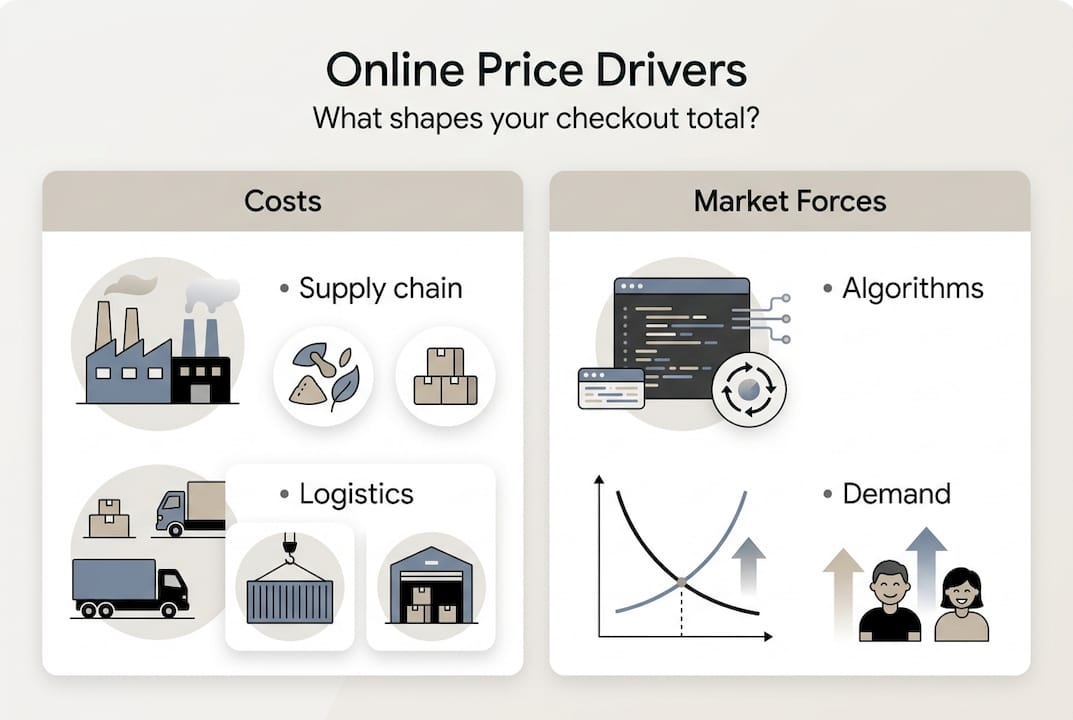
Online prices aren’t random numbers pulled from thin air. Retailers calculate them using multiple inputs like supply chain costs, competitor pricing, inventory levels, and demand forecasts. What surprises most shoppers is how retail markups stayed stable during 2022 inflation even when upstream costs jumped.
Here’s what really moves the needle on your checkout total:
- Supply chain negotiations between manufacturers and retailers determine base costs and markups
- Bargaining power shifts during shortages or high demand, affecting who absorbs cost increases
- Inventory management drives clearance pricing and restocking cycles
- Economic triggers like inflation, fuel costs, and labor shortages create pressure points
The key insight? Cost increases don’t always translate to higher prices for you. Retailers and manufacturers constantly negotiate who takes the margin hit. During inflation, high-cost products often see manufacturers absorb more of the increase because they have stronger bargaining power. This means the expensive electronics you’re eyeing might not jump in price as much as you’d expect.
Understanding why prices fluctuate gives you an edge. When you know what drives changes, you can predict when to buy and when to wait.
How supply chain dynamics shape your checkout total
Supply chains are where the real pricing action happens, long before products hit online shelves. When costs rise at the manufacturer level, retailers face a choice: pass it along to you, absorb it themselves, or negotiate a middle ground. Recent research shows retail markups remained stable during inflation despite upstream cost spikes, proving retailers don’t automatically raise prices when their costs go up.

Here’s how different product categories handle cost pressure:
| Product Category | Typical Markup | Cost Pass-Through | Who Absorbs Increases |
|---|---|---|---|
| Electronics | 15-25% | Low | Manufacturers |
| Clothing | 50-100% | Medium | Split |
| Groceries | 10-20% | High | Consumers |
| Home Goods | 30-50% | Medium | Split |
This table reveals something crucial: expensive, high-demand items like electronics often protect you from cost increases because manufacturers have more negotiating power. They’d rather maintain market share than risk losing shelf space. Budget items and groceries? Those costs come straight to your wallet.
“Manufacturer bargaining power is higher for high-cost products and during inflation, leading to margin reallocation rather than across-the-board price increases.”
Pro Tip: Track real-time price changes on big-ticket items during economic uncertainty. Counterintuitively, these products may hold steady or drop while everyday essentials creep up. Monitor online price trends to spot these patterns before they affect your budget.
The invisible hand: Algorithms, demand surges, and dynamic pricing
While supply chains set the foundation, algorithms control what you actually see at checkout. Modern retailers use sophisticated pricing software that adjusts prices multiple times per day based on competitor moves, your browsing history, inventory levels, and even the device you’re using. Algorithms react to browsing behavior and external events to maximize revenue.
Here’s how algorithmic pricing differs from traditional strategies:
| Traditional Pricing | Algorithmic Pricing |
|---|---|
| Set weekly or monthly | Changes hourly or daily |
| Based on cost plus margin | Based on demand signals |
| Same for all customers | Personalized by user |
| Manual competitor checks | Automated competitor tracking |
| Reactive to market | Predictive of trends |
You’re experiencing dynamic pricing when you notice these signs:
- Price differences across devices: The same item costs more on mobile than desktop
- Location-based pricing: Prices change when you use a VPN or travel
- Time-sensitive fluctuations: Morning prices differ from evening prices
- Browsing history impact: Items you’ve viewed multiple times increase in price
- Scarcity messaging: “Only 2 left” or “5 people viewing” creates urgency
To outsmart these tactics, clear your cookies before shopping, compare prices across devices, and use incognito mode. Better yet, leverage algorithm-based pricing knowledge to your advantage by shopping during off-peak hours when demand signals are lower. Understanding online pricing tactics turns you from a target into a strategic buyer.
Special offers, coupons, and seasonal swings
Promotions aren’t random acts of generosity. Retailers strategically slash prices during specific periods to clear inventory, compete for attention, or capitalize on shopping momentum. Retailers shift pricing based on seasonality and demand spikes, not just cost changes.
Key promotional periods and their pricing logic:
- Post-holiday clearance (January-February): Retailers dump excess inventory at 40-70% off to make room for spring stock
- Back-to-school (July-August): Electronics and clothing see competitive pricing as brands fight for student dollars
- Black Friday/Cyber Monday: Planned markdowns on select items, but watch for artificial inflation beforehand
- Prime Day and competitor responses: Creates a pricing war across platforms for 48-72 hours
- End of quarter (March, June, September, December): Sales teams push volume, leading to aggressive discounting
Coupon stacking is where savvy shoppers multiply savings. Combine manufacturer coupons with store promotions, cashback apps, and credit card rewards. Some retailers allow stacking up to three different discount types on a single purchase.
Pro Tip: Use price history tools before buying “sale” items. Many promotions aren’t actually discounts but returns to normal pricing after artificial inflation. Check seasonal price trends to verify you’re getting a genuine deal. Apply price comparison best practices to confirm the promotion beats competitor pricing.
Smart shopper strategies: Take control of your online purchases
You now understand what moves prices behind the scenes. Here’s your action plan to turn that knowledge into consistent savings. Awareness of pricing practices helps consumers make smarter shopping choices.
Five essential actions for beating online price traps:
-
Set up price tracking on target items: Add products to a tracking tool 2-4 weeks before you need them. This reveals true price ranges and identifies the best buying window.
-
Compare across platforms, not just stores: The same product often appears on Amazon, Walmart, eBay, and manufacturer sites at different prices. Check all of them.
-
Time purchases strategically: Buy electronics in January or September, clothing at season-end, and home goods during holiday weekends. Avoid buying right before major shopping events when prices often inflate.
-
Clear digital footprints before shopping: Use incognito mode, clear cookies, and compare prices across devices to avoid personalized price increases based on your browsing history.
-
Verify promotions with price history: Before clicking “buy” on a sale item, check if the current price is actually lower than the 30-day average. Many “discounts” are marketing tricks.
The most effective bargain hunting strategies combine multiple tactics. Don’t just wait for sales. Use price tracking strategies to monitor items actively, set alerts for your target price, and buy when the data says it’s right. Understanding why price history matters transforms you from a reactive shopper into a strategic buyer who controls when and how much you spend.
Unlock more savings with PriceLix
Ready to put these insights into action? You’ve learned how supply chains, algorithms, and seasonal patterns affect what you pay. Now it’s time to automate the hard work and let the data guide your purchases.
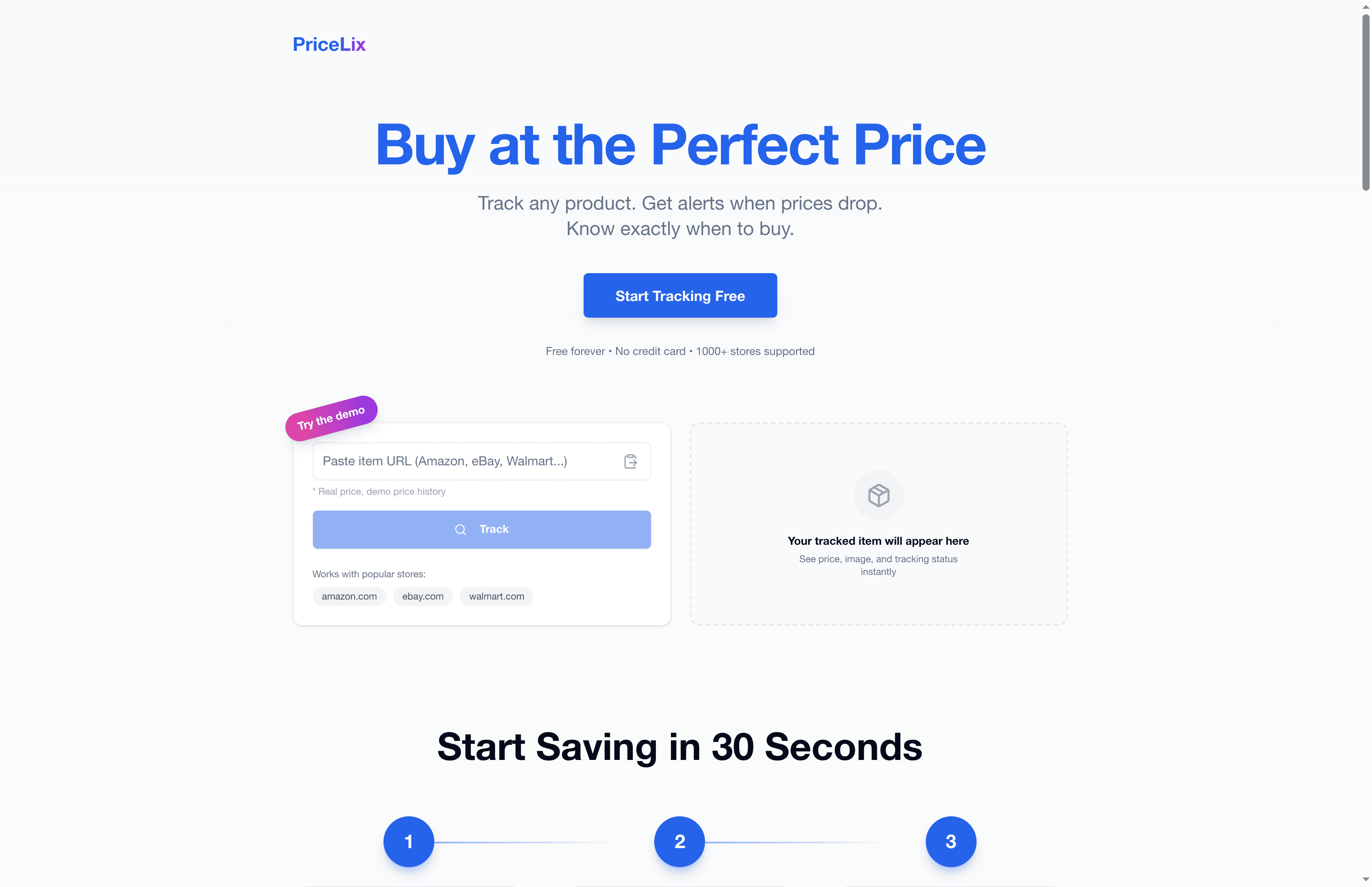
PriceLix tracks prices automatically across over a thousand stores, sending you alerts the moment your target items drop to your ideal price point. Instead of manually checking multiple sites or wondering if a sale is legitimate, you get real-time notifications backed by detailed price history charts. The platform consolidates everything into one dashboard, so you can monitor dozens of products without the hassle of browser tabs or spreadsheets.
Whether you’re waiting for the perfect moment to buy that laptop, tracking seasonal deals on home goods, or just want to stop overpaying, PriceLix gives you the tools and insights to shop smarter. Start tracking your first items today and watch how quickly the savings add up.
Frequently asked questions
Why do online prices change so frequently?
Online prices change often due to algorithms responding to demand, competitor pricing, and supply chain costs. Retailers adjust multiple times daily to maximize revenue and stay competitive.
Is it better to buy online during sales or wait?
Sales can offer genuine savings, but using price tracking and knowing seasonal pricing patterns ensures you’re getting the best deal. Many “sales” return items to normal pricing after artificial inflation.
How do supply chain issues affect online prices?
When supply chain costs rise, prices may increase, but retailers often adjust margins or delay passing changes to consumers. High-cost products typically see less price impact than budget items.
Can I really outsmart algorithmic pricing?
Yes, by tracking prices, clearing cookies, and shopping at off-peak times, you can avoid or benefit from algorithm-based price swings. Using price history data gives you the upper hand against dynamic pricing tactics.