
Online pricing trends in 2026: Smart strategies for savings
TL;DR:
- Online pricing in 2026 is driven by continuous systems responding to demand, inventory, competition, and user behavior.
- Retailers adjust prices multiple times daily, making smart data-driven monitoring essential for consumers to save money.
Forget the idea that online deals follow a neat schedule. In 2026, consumer-facing pricing is shaped less by “discount calendars” and more by continuous price-management systems that respond to demand signals, competitor moves, and your own browsing behavior in real time. The rules have changed, and most shoppers are still playing by the old ones. This guide breaks down exactly what’s driving prices right now, what the data actually shows, and how you can use that knowledge to stop overpaying and start buying smarter.
Table of Contents
- What drives online pricing trends in 2026?
- Recent data: How much are prices really rising?
- How do retailers adapt, and what does it mean for you?
- Smart strategies to save using 2026 pricing trends
- A fresh perspective: Why 2026 is the year to rethink “deal hunting”
- Make smarter shopping decisions with PriceLix
- Frequently asked questions
Key Takeaways
| Point | Details |
|---|---|
| Pricing is more dynamic | Retailers in 2026 use smart systems and real-time data to change prices frequently. |
| Grocery costs are rising | Shoppers should budget for US grocery price increases of about 2.5% this year. |
| Deal hunting is changing | Tracking trends and adapting buying strategies beats waiting for traditional sales. |
| Smart shopping pays off | Using automated tools and price alerts helps capture the best deals amid shifting prices. |
What drives online pricing trends in 2026?
The days of circling “Black Friday” on the calendar and expecting the best deal of the year are fading fast. In 2026, pricing is driven by sophisticated systems that never sleep. Understanding how those systems work is step one to beating them.
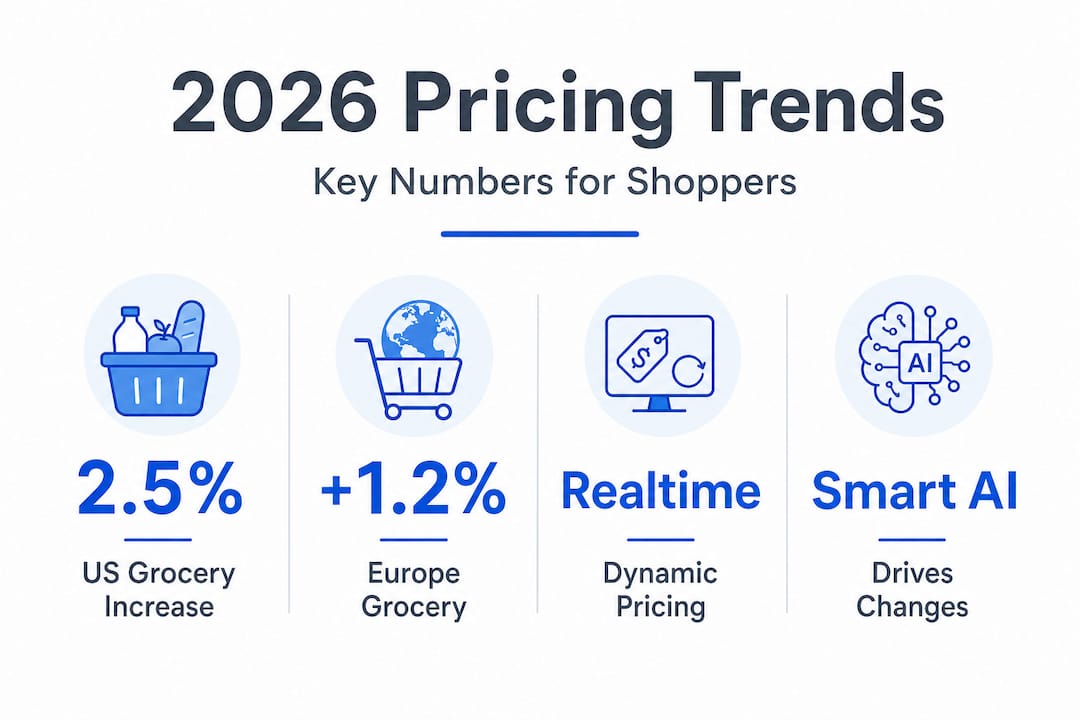
At the core, continuous price-management systems now integrate demand intelligence, inventory forecasting, competitive context, and automation to set and adjust prices across millions of SKUs every day. That’s not a small tweak to how retail works. That’s a complete restructuring.
Here’s what that looks like in practice for the four key forces shaping prices right now:
| Pricing driver | How it works | Impact on shoppers |
|---|---|---|
| Demand intelligence | Algorithms detect spikes in search volume and adjust prices upward | Prices rise before peak demand hits |
| Inventory forecasting | Low stock triggers price increases, overstocking triggers discounts | Unpredictable price swings |
| Competitive context | Retailers match or undercut competitors within minutes | Prices can drop suddenly but briefly |
| Behavioral data | Your browsing history and cart behavior influence what price you see | Personalized pricing becomes more common |
What’s particularly eye-opening is the behavioral data piece. Retailers are increasingly using what you’ve clicked, searched, and abandoned in your cart to inform their discount strategy. If their system detects you’ve looked at a product three times this week, it may decide you don’t need a discount to convert. You’re already close to buying.
This is why it’s worth understanding online pricing tactics before you start shopping, not after you’ve already handed over your card details.
Key forces reshaping online pricing in 2026:
- Automation has replaced manual pricing teams at most large retailers
- Price changes can happen dozens of times per day on a single product
- “Free shipping” thresholds are being quietly raised to offset rising logistics costs
- Subtle upward adjustments are becoming standard practice, not exceptions
“The house always wins if you don’t know the rules of the game. In 2026, knowing how pricing systems operate is the closest thing to an advantage a consumer has.”
Pro Tip: Clear your cookies and browse in incognito mode before making a big purchase. It won’t always work, but it limits the behavioral data retailers can use to suppress the discount you might otherwise see.
And if you want a deeper look at the mechanics behind price volatility, dynamic pricing explained is worth your time. It covers exactly how retailers flip prices and what patterns to watch for.
Recent data: How much are prices really rising?
Let’s hit you with some numbers, because this is where it gets real. Understanding the scale of price increases in 2026 helps you know where to focus your tracking efforts and which categories deserve the most attention.
US grocery prices: a 2.5% increase is forecast
US grocery prices are forecast to keep rising in 2026, with the USDA’s Economic Research Service projecting a 2.5% increase. That might sound modest, but it compounds onto the increases from prior years, and it hits some categories harder than others.
Here’s a snapshot of where those increases are concentrated:
| Category | Estimated 2026 change (US) | Consumer impact |
|---|---|---|
| Eggs and dairy | High variability, above average | Direct weekly budget pressure |
| Fresh produce | Moderate increase | Seasonal patterns still apply |
| Packaged goods | Gradual upward drift | Shrinkflation also a factor |
| Beverages | Stable to slight increase | Less pronounced than food |
Europe: a more stable picture
Across the Atlantic, the story is somewhat different. European grocery retail shows a stable 2026 environment with an expected slight volume increase, suggesting that while prices aren’t plummeting, the extreme volatility seen in prior years is easing. For European shoppers, the focus is less on avoiding sharp hikes and more on finding value in a flat but competitive market.
Where price changes hit hardest
The impact is not evenly spread. Here’s where US consumers are feeling it most in 2026:
- Essential categories like groceries and household staples are under consistent upward pressure
- Electronics continue to see both price drops (new model launches) and sudden spikes (supply chain disruption)
- Apparel and home goods are more volatile, driven by seasonal clearance cycles and shifting consumer demand
- Travel-adjacent products like luggage and accessories see pricing linked to booking trends
Understanding these price trends by category helps you decide when to act immediately and when to wait it out. Not every product requires the same urgency.
And when you’re making smarter online purchases, it helps to know which categories are worth setting price alerts for versus which ones have enough price history to predict a better window.

How do retailers adapt, and what does it mean for you?
Now that you know the data, let’s get into what retailers are actually doing and what it means for your wallet on a practical level.
Retailers in 2026 are not waiting for seasonal calendars to move inventory. They’re relying on smart systems and making real-time adjustments based on margin targets, logistics costs, and customer behavior. Here are the key moves they’re making:
-
Raising free shipping thresholds. Executives anticipate higher free-shipping thresholds and gradual upward price adjustments to offset rising costs. If your usual free shipping minimum was $35, expect to see it creep toward $50 or higher. This subtly increases the average order value without advertising a price hike.
-
Using micro-discounts to simulate deals. Instead of a big 30% off event, retailers are running targeted 5% to 10% drops to specific customer segments based on browsing data. If you’re not in that segment, you don’t see the deal.
-
Adjusting prices based on time of day. Some major platforms now run pricing experiments by hour. Early morning shoppers in certain categories have reported better prices than evening browsers.
-
Leveraging loyalty program data. Retailers use loyalty program purchase histories to identify price-sensitive customers and offer them subtle discounts while charging regular prices to less price-conscious buyers.
-
Deploying countdown timers and urgency signals. “Only 3 left in stock” or “Price drops in 2 hours” are often algorithmically generated to encourage faster conversions, not genuine scarcity warnings.
Understanding seller price changes at this level gives you a real edge. When you know the tactics, they lose their power over your buying decisions.
“Retailers are not your friends when it comes to pricing. They’re optimizing for their margins. You need to optimize for yours.”
The silver lining? These systems also create windows. When demand dips briefly or inventory spikes in a category, prices drop fast. If you’re watching, you can catch those windows. That’s exactly where price optimization tips become genuinely valuable.
Pro Tip: Before adding an item to your cart, check its price on at least two competing retailers. Many pricing algorithms adjust downward when they detect cross-site comparison behavior via referral data.
Smart strategies to save using 2026 pricing trends
Here’s the practical part. Knowing the landscape is great. Acting on it is what actually saves you money.
A structural shift toward value-seeking behaviors, including deal-driven and cost-conscious habits, is already underway across consumer segments. You’re not alone in tightening your approach, and the tools available to support that shift are better than ever.
How to use price alerts effectively
Price alerts are one of the most powerful tools available to shoppers right now. Instead of guessing when a price will drop, you set a target price and get notified automatically. Here’s how to make them work:
- Set alerts on products you plan to buy in the next 30 to 90 days, not everything you’ve ever glanced at
- Target a realistic drop of 10% to 20% below the current listed price
- Use platforms that pull from multiple retailers so you’re comparing true market prices, not just one store’s version
- Check factors affecting prices for each product category so your target price is grounded in what’s actually achievable
Use price history, not just current price
A current price of $79.99 looks like a deal until you see that the product was $54.99 three months ago. Price history tools are what separate informed shoppers from everyone else. When you can see a product’s full price timeline, you stop reacting to manufactured urgency and start making data-backed decisions.
Plan around trend-driven timing, not calendar-driven events
In 2026, the best deals are not clustered around specific dates. They appear when:
- A new product version launches and the old model drops
- Inventory builds up faster than demand (often mid-season in apparel)
- A competitor drops their price and triggers a ripple effect across platforms
- A product’s demand intelligence signals a quiet period
Following real-time price changes in the categories you care about helps you spot these windows before they close.
Watch the shipping math
As free shipping thresholds rise, the true cost of a purchase changes. A product listed at $42 with a $50 free shipping minimum costs more than a product at $46 with free shipping included. Always calculate total delivered cost, not just the product price.
Pro Tip: If you’re close to a free shipping threshold, look for a low-cost essential you actually need to top up the order rather than paying a $6.99 shipping fee on a $42 item.
A fresh perspective: Why 2026 is the year to rethink “deal hunting”
Here’s something that most shopping guides won’t tell you: the concept of “deal hunting” is quietly becoming obsolete, and chasing deals the old way is actually costing you money.
Think about the last time you waited for a major sale event to buy something. You marked the date, refreshed the page, and watched the “sale” price appear. But was that price actually a discount? In many cases, retailers raise prices in the weeks before big sale events, then apply a percentage off that inflated base. You felt like you won, but the math often tells a different story.
In 2026, the most effective approach is not hunting for deals. It’s monitoring trends and acting on data. These are two completely different mindsets.
Deal hunting is reactive. It waits for a retailer’s signal and responds. Trend monitoring is proactive. It watches price history, identifies patterns, and buys when the data says the price is genuinely low, regardless of whether there’s a sale banner on the page.
The uncomfortable truth is that waiting for Black Friday is rarely the best path to savings anymore. Studies and price history data consistently show that many “Black Friday” prices appear earlier in the season, and some products never return to their pre-event pricing afterward.
What actually works now is making smarter purchases through continuous, low-effort monitoring. Set alerts. Review price histories. Understand the category dynamics. That’s it. It takes a few minutes to set up and saves you from bleeding money on manufactured urgency.
The shoppers who thrive in 2026’s pricing environment are not the ones who work harder at finding deals. They’re the ones who work smarter by letting data do the watching for them.
Make smarter shopping decisions with PriceLix
If this guide has made one thing clear, it’s that 2026 pricing is not something you can navigate effectively by guessing or relying on old patterns. You need data, and you need it updated continuously.
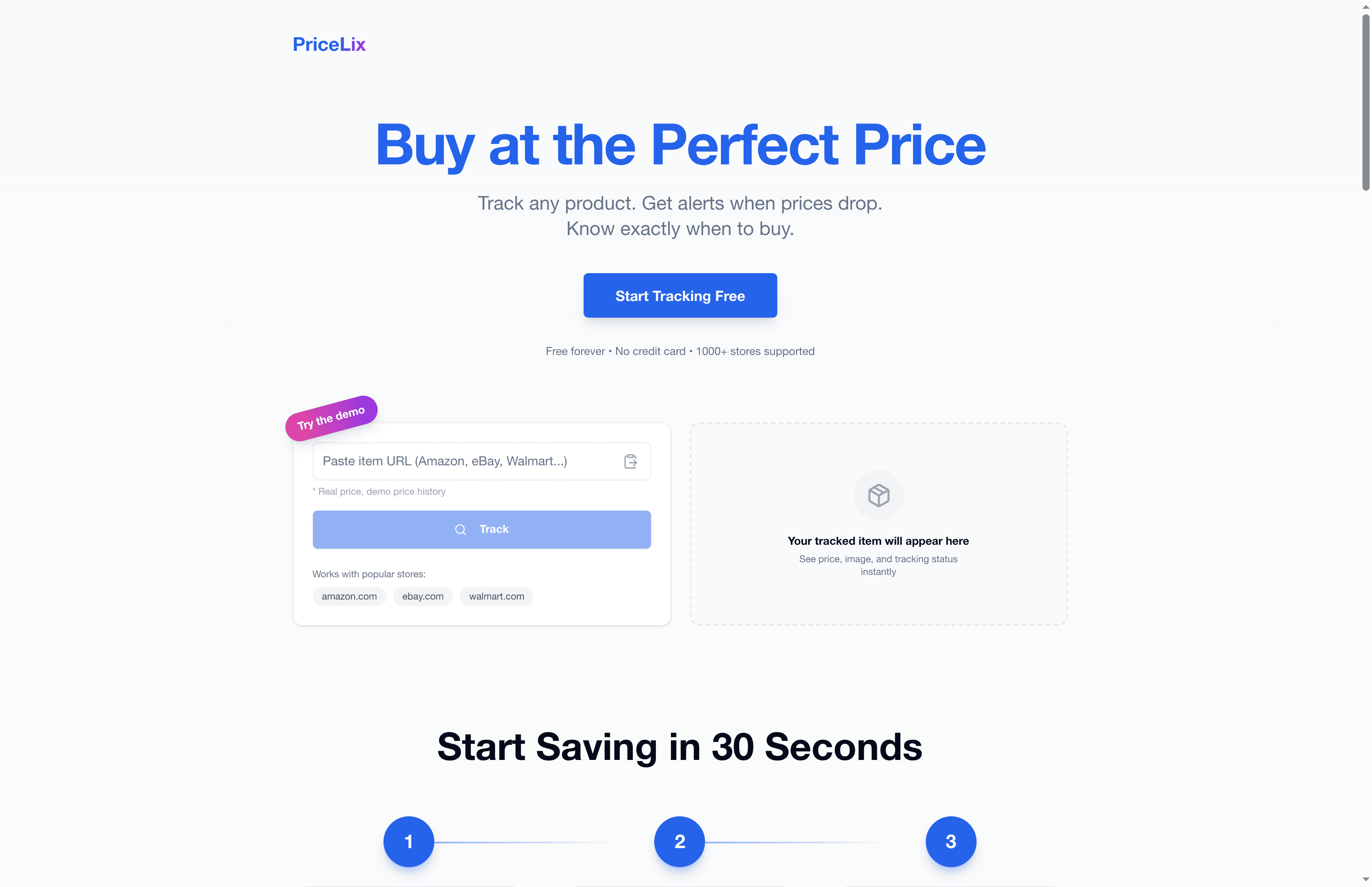
That’s exactly what PriceLix is built for. The platform tracks prices automatically across Amazon, eBay, Walmart, and over a thousand other stores, so you always know when a price is genuinely low versus when it just looks that way. With real-time alerts, detailed price history charts, and a single dashboard for all your tracked items, PriceLix removes the manual effort from smart shopping entirely. You set your target, and PriceLix watches until it’s hit. No browser extensions, no daily manual checks, no guessing. Just clear, actionable data that tells you when to buy and when to wait.
Frequently asked questions
Are discounts less predictable in 2026 than previous years?
Yes, discounts in 2026 depend more on real-time data and automation than fixed retail calendars, as continuous price-management systems have replaced traditional seasonal sale strategies at most major retailers.
How much are grocery prices expected to rise in 2026?
US grocery prices are forecast to rise by about 2.5% in 2026 according to the USDA’s Economic Research Service, with categories like eggs and dairy seeing above-average increases.
Should I wait for big holiday sales to get the best deal in 2026?
No, many deals now depend on data-driven price changes rather than fixed sale dates, and calendar-based discount strategies are losing reliability fast, making flexible timing and active price tracking consistently better approaches.
What can I do to save more when prices keep rising?
Use price tracking tools with alerts, review price history before any significant purchase, and stay flexible with your timing so you can act when data shows a genuine price low rather than a retailer-manufactured one.