
Retail pricing strategies explained for smart shoppers
TL;DR:
- Retailers design pricing strategies that manipulate consumer perception, often without offering genuine discounts. Understanding techniques like psychological, competition-based, and dynamic pricing enables shoppers to identify real deals and avoid misleading tactics. Using price tracking tools and price history analysis empowers consumers to make confident, informed purchasing decisions year-round.
Every shopper has felt that rush of clicking “add to cart” during a sale, convinced they’re getting a steal. But here’s the uncomfortable truth: retailers spend enormous resources designing pricing strategies that nudge you toward buying, sometimes without a genuine discount in sight. The price tag isn’t just a number. It’s the result of a carefully engineered system. Understanding how retail pricing actually works puts the power back in your hands, so you stop reacting to marketing theater and start making purchases you feel genuinely confident about.
Table of Contents
- The five pillars of retail pricing strategies
- Psychological pricing: How prices shape your perception
- Competition-based pricing: Why prices look the same everywhere
- Dynamic pricing and asymmetric price changes
- How to decode deals: Spotting real vs. fake discounts
- Our take: Why mastering retail pricing is every shopper’s superpower
- Supercharge your savings with PriceLix
- Frequently asked questions
Key Takeaways
| Point | Details |
|---|---|
| Pricing pillars explained | Understanding five core pricing strategies helps you decode retail offers and maximize your savings. |
| Psychological pricing impact | Tactics like charm prices and reference points directly affect your buying decisions—stay alert. |
| Competition shapes prices | Retailers watch each other’s prices closely, so genuine bargains require extra research. |
| Dynamic and asymmetric pricing | Most small price changes are increases, not decreases—timing matters when aiming for true deals. |
| Spotting fake discounts | Look past promo labels and check price histories to find authentic savings. |
The five pillars of retail pricing strategies
With an overall sense of pricing complexity established, let’s break these pillars down for online shoppers.
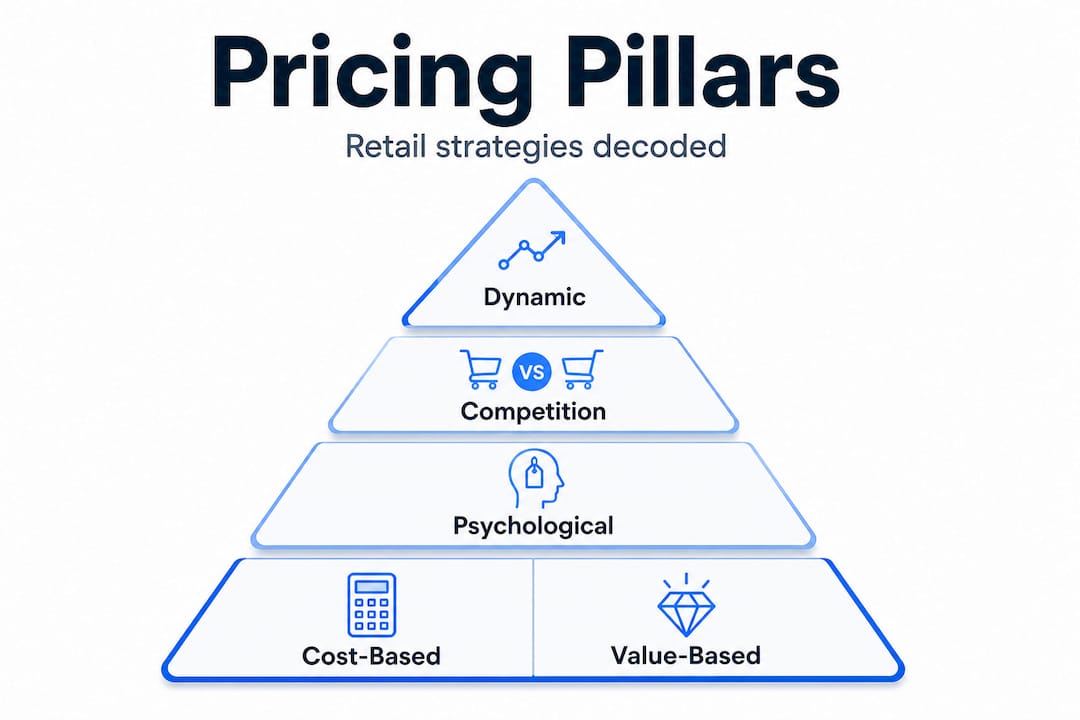
Retail pricing isn’t random. Behind every number is a deliberate strategy designed to balance profit, competition, and consumer psychology. According to key retail frameworks, pricing strategies can be organized into five main approaches. Once you recognize them, they’re hard to unsee.
Here’s a plain-language breakdown of each one:
- Cost-based pricing: The retailer calculates what a product costs them to source or produce, then adds a markup. Simple in theory, but it tells you nothing about whether that markup is fair or inflated.
- Competition-based pricing: Prices are set relative to what rivals charge. This creates a false sense of “market value” that may shift daily.
- Value-based pricing: The price reflects what the retailer believes you are willing to pay, not what the product actually costs. Premium brands live here.
- Psychological/presentation-based pricing: Tactics designed to shape how you perceive a price. Think $9.99 instead of $10.00, or “was $200, now $89.”
- Dynamic pricing: Prices adjust automatically based on demand, inventory levels, time of day, or competitor moves. This is increasingly common on platforms like Amazon.
Here’s a quick comparison to help frame these strategies:
| Pricing strategy | Driven by | Shopper impact |
|---|---|---|
| Cost-based | Production/supply costs | Generally stable, predictable |
| Competition-based | Rival prices | Prices cluster, savings are rare |
| Value-based | Perceived customer value | Higher on premium or exclusive items |
| Psychological | Perception and bias | Can feel like a deal even when it’s not |
| Dynamic | Demand, time, inventory | Prices fluctuate constantly, timing matters |
Getting comfortable with these pricing terms decoded gives you a real edge. Most shoppers operate blind to this framework, which is exactly where retailers want them.
Psychological pricing: How prices shape your perception
Psychological tactics deserve special attention since they go straight to how we all shop online. Let’s make them work for, not against, you.
Psychological pricing is when retailers set prices specifically to influence how those prices feel, not just to reflect product value. It’s one of the oldest tricks in retail, but it’s more sophisticated now than ever.

The most well-known example is charm pricing explained, where a product is listed at $49.99 instead of $50. That one-cent difference feels meaningless, yet studies show it meaningfully changes buying behavior. Our brains anchor on the left digit, so $49 registers as significantly cheaper than $50, even though it’s barely a dollar off.
But charm pricing is just the start. Here are the most common psychological tactics used against online shoppers:
- Anchor pricing: A high “original” price is shown next to a lower “sale” price. Your brain uses the inflated number as a reference point, making the sale price look like a great deal even if it’s the normal everyday price.
- Decoy pricing: A middle-tier option is priced strategically to make the premium option seem like the obvious value choice. You end up spending more than you planned.
- Scarcity and urgency messaging: “Only 3 left!” or “Sale ends in 2 hours!” These trigger fear of missing out, pushing you to skip careful evaluation.
- Phantom markdowns: This is where it gets sneaky. The “original” price listed was never the actual selling price. The product was always sold at the “discounted” rate.
The house always wins when you shop on impulse. Phantom markdowns are specifically designed to exploit anchor pricing. You feel like you’re winning. You’re not.
Psychological pricing techniques are studied extensively as part of broader pricing strategy research, and retailers know exactly which emotional levers to pull.
To spot these tactics in the wild:
- Look for a “sale” that never seems to end
- Check if the original price ever appears in real checkout history
- Be skeptical of extreme percentage-off claims on items you haven’t tracked before
- Browse online pricing tactics to understand how these patterns show up on major platforms
For products where discounts are frequently advertised, like luxury goods, it pays to also cross-reference an authentic discounts guide to validate whether the markdown is real.
Pro Tip: Before you trust a sale price, look up the item’s price history over the past 90 days. If the “sale” has been running the entire time, that’s your red flag.
Competition-based pricing: Why prices look the same everywhere
While competition-driven pricing creates the illusion of a single fair market value, dynamic and real-time strategies add another layer.
Ever noticed that a popular gadget costs nearly the same at Amazon, Walmart, and Target all at once? That’s not coincidence. Competitor-based pricing relies on systematic monitoring, where retailers use automated tools to track rivals and adjust prices accordingly. For popular products, prices end up clustering tightly together, making genuine deals harder to find without digging.
Here’s how you can use this knowledge to your advantage:
- Identify price-matched items. Check whether the retailer you’re buying from offers a formal price-match policy. Best Buy, Target, and Walmart all have versions of this.
- Screenshot competitor prices. Before contacting customer service, document the lower price with a date-stamped screenshot.
- Submit your price match request. Most retailers process these online or in-store within minutes.
- Confirm the match applies. Some exclusions apply: marketplace sellers, limited-quantity deals, and open-box items often don’t qualify.
Here’s an example of how prices for a popular product might cluster:
| Retailer | Listed price | Price match available? |
|---|---|---|
| Amazon | $129.99 | No formal policy |
| Walmart | $129.00 | Yes |
| Best Buy | $129.99 | Yes |
| Target | $130.00 | Yes |
On popular items, a few dollars is often all that separates competitors. The real savings from retail price matching come when you stack it with coupon codes, cashback programs, or purchase timing strategies.
Pro Tip: Alternative marketplaces and direct-to-consumer brands often break the competitive pricing mold entirely. A brand selling directly through its own website sidesteps the “race to match” dynamic, and you can sometimes find prices that are 10 to 20 percent lower than major retailers.
Dynamic pricing and asymmetric price changes
With these moving pieces, let’s wrap up with practical applications for shoppers on how to decode sales and spot true deals.
Dynamic pricing is the most aggressive strategy in a modern retailer’s toolkit. Prices adjust constantly, driven by algorithms that factor in real-time demand, inventory levels, competitor moves, and even the time of day. It happens on Amazon hundreds of millions of times per day. Most shoppers never notice.
Here’s what makes dynamic pricing particularly tricky: it doesn’t just go down. An analysis of asymmetric retail pricing looking at 79 billion price points confirms that small price increases occur more frequently than small price decreases, especially outside major promotional windows. In plain terms: prices quietly creep up more often than they quietly drop.
That’s the asymmetric pattern. A retailer might run a teaser sale to get you browsing, then gradually increase the price over the following days. You see the discount, feel urgency, and buy before you’ve had a chance to track whether the price was genuinely low.
Here’s how to respond to real-time price changes with a clear action plan:
- Start tracking before you need to buy. Add any item you’re interested in to a price tracker at least two to four weeks before a major sale event.
- Set a target price alert. Decide what you’re willing to pay and get notified only when it hits that number.
- Watch for post-sale price climbs. After a promotional period ends, monitor whether prices revert or continue rising. This tells you a lot about the real baseline.
- Review price history charts. A 90-day price history will show you whether today’s “deal” is genuinely low or just back to normal.
- Compare across stores, not just over time. Even if a price is at its historical low on one platform, another retailer may be selling it cheaper right now.
Understanding dynamic pricing strategies means accepting that prices are never fixed. The best defense is information, not luck. Tracking seller price changes over time gives you a baseline that no amount of promotional messaging can fake.
How to decode deals: Spotting real vs. fake discounts
Having uncovered the actionable steps to outsmart pricing games, let’s consider what these strategies mean for your long-term shopping habits.
Fake discounts are more common than most shoppers realize. Advertised discounts can be deliberately misleading, using “phantom markdown” tactics where the inflated original price was never actually charged to real shoppers. The result is that you feel like you’re saving $80 when, in reality, you’re paying the normal price with extra theater.
Here’s how to tell real deals from the noise:
- Check price history, not just the sale tag. This is the single most powerful habit you can build as an online shopper.
- Watch for deals that never expire. A perpetual “limited-time offer” is a red flag that the discount is baked into the pricing permanently.
- Be skeptical of dramatic slashes. A “70% off” claim on a product with no credible price history almost always signals anchor pricing abuse.
- Verify the sale period through official sources. Major retail events like Black Friday or Prime Day have confirmed start and end dates. Cross-reference those before assuming urgency.
- Compare across multiple stores before buying. One platform’s “deal” may be another’s everyday price.
Pro Tip: Don’t buy during the first wave of a major sale. Retailers often discount aggressively on day one to generate buzz, but prices sometimes drop further midway through the event as inventory levels fluctuate.
For a deeper look at spotting fake discounts, you can find specific examples of how phantom markdowns appear across product categories.
Also worth consulting: an authentic savings guide is a useful reality check when shopping for higher-end products where inflated reference prices are especially common.
Always anchor yourself to a fair price baseline. The question isn’t “am I saving compared to the listed original price?” It’s “am I paying a genuinely good price compared to what this item normally sells for?”
Our take: Why mastering retail pricing is every shopper’s superpower
Here’s the part most shopping advice skips. Conventional wisdom says “wait for the sale.” But as we’ve shown, not all sales are created equal. Some of them aren’t sales at all. Waiting for a “deal” that’s permanently baked into the pricing strategy means waiting forever for something that was never real.
The genuine edge comes from treating pricing like a competitive sport. The information is all available to you. Price history, competitor comparisons, timing patterns, and promotion calendars are all knowable. Retailers are counting on the fact that most shoppers won’t bother to look. The ones who do consistently pay less and feel better about their purchases.
Here’s what we’ve seen that surprises most people: the best deals rarely happen at peak promotional moments. They happen in the quiet periods between major sale events, when e-commerce pricing strategies revert to baseline and specific items drop without announcement. A price tracker catches those moments automatically. You don’t have to monitor manually.
The other underrated truth is that asymmetric pricing patterns mean you’re always fighting a slow creep upward. Small price hikes accumulate quietly. The shopper who checks a price once and checks out months later is almost certainly paying more than the shopper who tracked it throughout. Timing matters, and timing requires data.
Apply this mindset year-round, not just during holiday campaigns. Every purchase is an opportunity to use pricing logic in your favor. That’s not cynical. It’s just smart.
Supercharge your savings with PriceLix
You now have a solid understanding of how retail pricing strategies actually work, from psychological tricks to dynamic algorithms. The next move is putting that knowledge to work automatically.
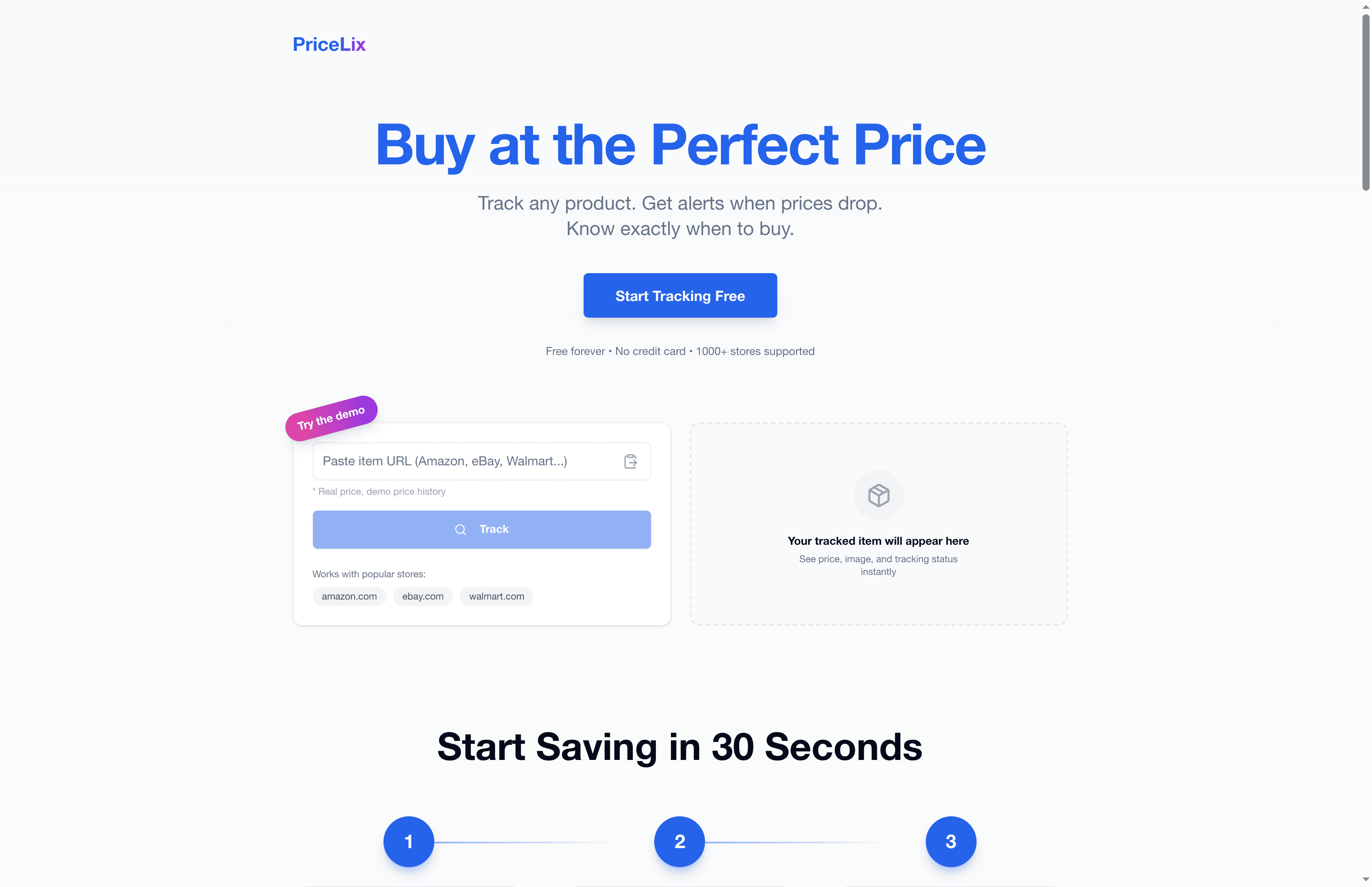
PriceLix is built for exactly this. Track products across Amazon, Walmart, eBay, and over a thousand other stores, get real-time alerts when prices hit your target, and review full price history charts to verify whether a deal is genuinely good. No browser extensions needed, just a clean dashboard that does the monitoring for you. Visit PriceLix to start tracking the items on your list and make sure the next deal you take is a real one.
Frequently asked questions
What is dynamic pricing and how does it affect me as a shopper?
Dynamic pricing is when prices change in real time based on demand, competition, or inventory levels, and it means you could see a product price shift significantly within hours. Using a price tracker helps you see those fluctuations and choose the right moment to buy.
How can I tell if a retail discount is fake?
Check the price history and look for deals that are always present or reference prices that seem inflated, since fake discounts often rely on “original” prices that were never genuinely charged. A 90-day price chart is the fastest way to verify.
Why do most stores have similar prices during big sales?
Competitor-based pricing means retailers continuously monitor each other and match prices, so discounts on popular items often converge across platforms during major sale events.
Should I buy as soon as I see a sale, or wait?
If you’ve tracked the price and confirmed it’s a genuine historical low, it’s safe to act. But many initial “teaser” discounts are followed by further price drops, and asymmetric pricing data suggests prices often creep back up after the promotional window closes.
What’s the most important retail pricing strategy to recognize?
Psychological pricing, including charm pricing and phantom markdowns, is the one that most directly influences your decision-making because it works below conscious awareness. Research confirms these techniques are deliberately studied and applied to maximize conversion at the expense of shopper clarity.
Recommended
- Retail pricing terms decoded: Shop smarter and save more | PriceLix
- Understanding seller price changes: smart shopping insights | PriceLix
- Dynamic pricing explained: outsmart retail price fluctuations | PriceLix
- What drives e-commerce pricing? Key strategies shoppers need | PriceLix
- Compare the best gold price UK today: Smart buying guide – Blackwell Jewellers