
7 advantages of monitoring price history online in 2026
You buy a laptop on Monday. By Thursday, the price drops $80. That stings. It happens more than you think, and it’s not bad luck. Dynamic pricing by retailers makes tracking price history essential for anyone who shops online regularly. Retailers adjust prices constantly based on demand, time of day, and competitor moves. The good news? Price history tools put that power back in your hands. In this article, we cover the top advantages of monitoring price history, how to compare the best tools, and real scenarios where tracking saves serious money.
Table of Contents
- Why dynamic pricing makes monitoring essential
- Top 7 advantages of monitoring price history
- Comparing popular price history tools
- Practical scenarios: When monitoring saves real money
- The overlooked edge: Why price history is more than just savings
- Start tracking your savings journey
- Frequently asked questions
Key Takeaways
| Point | Details |
|---|---|
| Beat dynamic pricing | Tracking price history lets you avoid overpaying by buying at the lowest point. |
| Spot real discounts | You can quickly tell real deals from fake markdowns by checking how prices change over time. |
| Maximize total savings | Combining price history insights with cashbacks or coupons helps you save even more. |
| Choose the right tool | Comparing features and privacy policies of price tracking tools ensures you pick what fits your needs. |
Why dynamic pricing makes monitoring essential
Dynamic pricing is when a retailer automatically adjusts a product’s price based on real-time factors. Think of it like airline tickets. The price you see today may be completely different tomorrow morning. Retailers use demand, inventory, and algorithms to constantly adjust pricing across thousands of products every single day.
Here’s what drives those price swings:
- Demand spikes: Prices jump when a product trends or goes viral.
- Low inventory signals: Scarcity triggers automatic price increases.
- Competitor pricing: Algorithms match or undercut rival stores in real time.
- Time-based rules: Some retailers charge more during peak shopping hours.
- Seasonal patterns: Prices shift around holidays, back-to-school, and major sale events.
Understanding pricing algorithms in shopping helps you see why the price you paid last week may not reflect the product’s true value. Amazon, Walmart, and eBay all use some form of dynamic pricing. Electronics, travel, and fashion are the most affected categories.
“The house always wins when you shop without data. Price history flips the table.”
This is where price monitoring becomes your defense. When you track a product over time, you build a clear picture of its real price range. You stop guessing and start deciding with actual evidence. The importance of tracking price history cannot be overstated for shoppers who want to stop bleeding money on purchases that could have waited a week.
With these challenges clear, let’s examine how tracking price history overcomes them.
Top 7 advantages of monitoring price history
Now that we know why prices fluctuate, here’s how tracking those changes benefits you directly. Monitoring price history can reveal the best time to buy, and that single insight alone is worth the effort.
- Time your purchase perfectly. Price history charts show you when a product typically hits its lowest point. You can wait for the right moment instead of guessing.
- Spot fake deals instantly. Retailers sometimes inflate a price before a sale to make the discount look bigger. Historical data exposes that trick immediately.
- Budget with confidence. When you know a product’s average price range, you can plan your spending without surprises.
- Avoid buyer’s remorse. Buying at or near the historical low means you’re unlikely to see a lower price right after your purchase.
- Understand market trends. Patterns in price data reveal seasonal dips, product lifecycle changes, and when new models are about to drop.
- Gain negotiation leverage. In some marketplaces, price history gives you evidence to request a price match or refund.
- Shop with total confidence. Knowledge replaces anxiety. You stop second-guessing and start acting on real data.
The price history tracking advantages go well beyond just saving a few dollars here and there. They add up to a fundamentally smarter shopping experience. Explore more about unlocking savings and confidence through consistent price monitoring.

Pro Tip: Set a target price before you start tracking. This keeps you focused and prevents impulse buying just because a price dropped slightly.
Comparing popular price history tools
With an understanding of the main benefits, choosing the right tool is the next step. Not every price tracker is built the same, and the differences matter more than most shoppers realize.
Here’s a quick comparison of popular options:
| Tool | Supported stores | Alert system | Historical data | Privacy risk |
|---|---|---|---|---|
| PriceLix | 1,000+ stores | Real-time email alerts | Long-term charts | Low, no extension needed |
| CamelCamelCamel | Amazon only | Email alerts | Years of data | Low |
| Honey | Multiple stores | In-browser popups | Limited | Medium, browser extension |
| Keepa | Amazon only | App and email | Detailed charts | Low |
| Google Shopping | Many stores | Basic alerts | Short-term | Medium |
Key things to look for when choosing a tool:
- Alert speed: Does it notify you within hours or days of a price drop?
- Site coverage: Does it track the stores you actually shop at?
- Data depth: Can you see months or years of price history?
- Ease of use: Does it require a browser extension or account setup?
Price history charts are only useful if the tool collects enough data over time. A chart with two weeks of data tells you very little. One with six months of data becomes gold.
One important note: combining price history tools with cashbacks and coupons can maximize savings, but tools may come with privacy trade-offs. Browser extensions in particular can access your browsing history. Always read the privacy policy before installing anything. Review best price tracking strategies to find the approach that fits your habits.
Practical scenarios: When monitoring saves real money
To see these advantages in action, practical scenarios reveal real impact. Price tracking is most effective when used alongside other tactics like cashback and coupons, but the history data is what makes the timing right.
| Category | Common price swing | Best time to buy | Risk without tracking |
|---|---|---|---|
| Electronics | 15% to 40% | Black Friday, post-launch | Overpaying at launch |
| Fashion | 20% to 60% | End of season | Missing clearance windows |
| Groceries | 5% to 20% | Weekly sale cycles | Paying full price consistently |
| Travel | 30% to 80% | 6 to 8 weeks before travel | Surge pricing exposure |
Let’s make this concrete. Say you want a 65-inch TV. Without tracking, you might buy it in October at $899 because it “feels” like a good deal. With price history, you’d see it dropped to $699 during last year’s Cyber Monday and is likely to do the same again. Waiting saves you $200 on a single purchase.
Fashion is another big one. Retailers mark up prices before seasonal sales, then slash them. If you track a jacket from September, you’ll see exactly when the real discount hits versus a manufactured one.
Pro Tip: Set your price alerts at least four to six weeks before a major shopping season. By the time Black Friday or Prime Day arrives, you’ll already know what a genuine deal looks like.
Here’s what happens when shoppers skip tracking:
- They pay surge prices during high-demand periods.
- They fall for fake “50% off” claims that started from an inflated base price.
- They miss the actual low point by days or even hours.
Understanding the role of price trends in your category makes a real difference. And if you want to go deeper, learning about the types of price tracking available helps you match the right strategy to your shopping habits.
The overlooked edge: Why price history is more than just savings
Most people think price tracking is about saving money. It is. But that’s only part of the story, and honestly, it might not even be the most valuable part.
Here’s what we’ve noticed: shoppers who consistently use price history data report feeling less stressed about purchases. They stop obsessing over whether they got the best deal after the fact. That mental relief is real and underrated.
Price history also builds financial awareness. When you regularly see how prices move, you start to understand market behavior. You recognize when a product is at the end of its lifecycle. You notice when a new version is about to launch, which almost always tanks the current model’s price.
There are trade-offs worth acknowledging. Some tools miss flash deals that last only minutes. Over-relying on tools can also create decision paralysis, where you wait so long for the perfect price that you miss a genuinely good one. The most successful shoppers use price history as one input, not the only input.
Looking at how price history transforms online shopping reveals a broader shift: informed consumers are reshaping how retailers price products. When enough shoppers track prices, retailers face pressure to keep pricing honest. That’s a win for everyone.
Start tracking your savings journey
Everything we’ve covered points to one clear takeaway: shopping without price history data is like driving without a map. You might get there, but you’ll probably take a wrong turn.
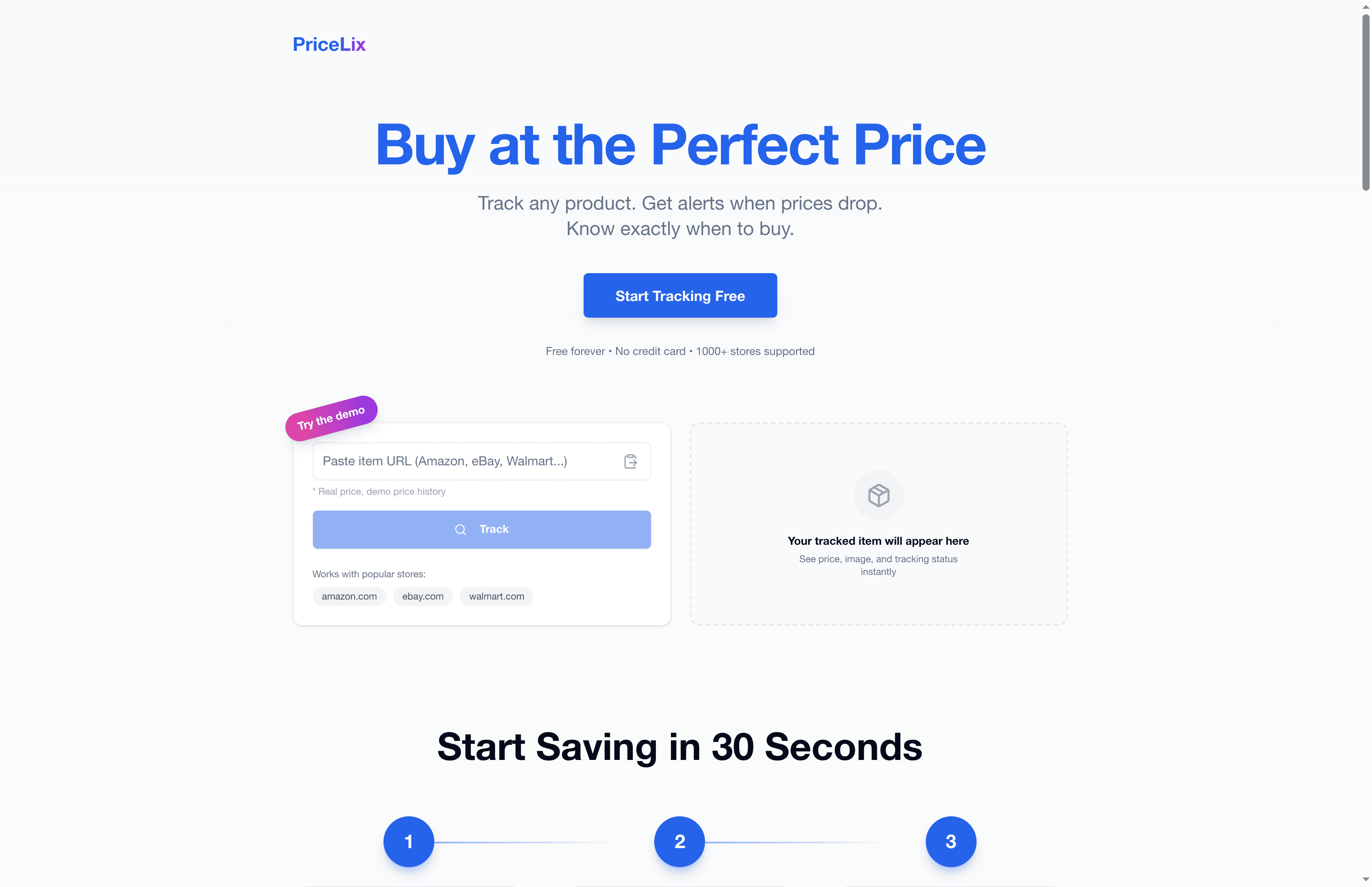
PriceLix makes it easy to start tracking prices across more than 1,000 stores without installing a single browser extension. You get real-time alerts, detailed price history charts, and a dashboard that does the daily monitoring for you. No guesswork. No overpaying. Just smarter decisions backed by actual data. Dive into the full price history benefits and see how much you could save starting today.
Frequently asked questions
How can I tell if a deal is truly a good price?
Check the product’s price history to spot fake markdowns and confirm the current price is genuinely lower than its historical average. A real deal shows a clear drop from a consistent baseline, not a drop from an artificially inflated starting point.
Do price history tools work on every website?
Most tools support major retailers like Amazon, Walmart, and eBay, but some tools miss Lightning deals and limited-time flash sales that expire within hours. Coverage varies widely, so check which stores your chosen tool actually supports before relying on it.
Are free price trackers safe to use?
Free tools can be useful, but there can be privacy trade-offs with free price tracking tools, especially browser extensions that access your browsing data. Always review the privacy policy before installing.
Can I combine price history tracking with coupons?
Absolutely. Combining with cashback and coupons increases your total savings significantly. Use price history to time the purchase, then stack a coupon or cashback offer on top for maximum impact.