
Best Practices for Smart Shopping in 2026
TL;DR:
- Effective online shopping involves considering total costs, verifying deals through price history, and protecting payments to avoid deceptive practices. Establishing clear needs, comparing full transaction terms, and timing purchases around genuine sale cycles help secure genuine savings. Using tools like Price-lix facilitates this process by tracking prices and alerting shoppers to real deals, minimizing overpaying and scam risks.
You already know the basics. But knowing them and actually applying them are two very different things. The best practices for smart shopping go well beyond grabbing a coupon code or waiting for a sale. They involve managing total cost, verifying deals, protecting your payment, and knowing when a “bargain” is actually bleeding your wallet dry. This article gives you the practical framework that separates shoppers who consistently save from those who just think they do. No obvious tips. No filler. Let’s get into it.
Table of Contents
- Key takeaways
- 1. Set your budget around total cost, not sticker price
- 2. Define what you need before you open a single product page
- 3. Master the art of comparing deals, not just products
- 4. Spot and avoid deceptive pricing tactics
- 5. Secure your payment and understand your protections
- 6. Build a habit of checking price history before every major purchase
- 7. Vet the seller before the product
- 8. Time your purchases around genuine sale cycles
- My honest take on where most shoppers go wrong
- Stop overpaying. Start tracking with Price-lix.
- FAQ
Key takeaways
| Point | Details |
|---|---|
| Budget beyond the price tag | Always factor in shipping, taxes, and add-on fees before committing to any purchase. |
| Verify before you buy | Check total deal value including delivery timing and return policies, not just the listed price. |
| Recognize fake discounts | Drip pricing, inflated reference prices, and countdown timers are all red flags to spot early. |
| Protect your payment | Use credit cards or virtual cards for purchases, especially on unfamiliar sites. |
| Use price history data | Tracking price trends over time helps you buy at genuine lows, not manufactured ones. |
1. Set your budget around total cost, not sticker price
This is where most shoppers get tripped up. They see a product listed at $49 and call it a win. Then comes the $12 shipping, the $6 handling fee, and suddenly that $49 deal is $67. The FTC recommends including delivery costs in your budget and comparing total cost across sellers, not just the product price alone.
Before you buy anything online, run through this checklist:
- What is the total price after shipping, taxes, and fees?
- Does the seller offer free returns, or will you pay to send it back?
- Is there a subscription or auto-renewal attached to this “deal”?
- Is the lower-priced option actually a lesser version of what you need?
Pro Tip: Build a simple spreadsheet or use a notes app to track your total spend per category each month. When you see the real numbers, impulse purchases become much harder to justify.
Setting a clear per-category budget forces you to prioritize. You stop asking “Can I afford this?” and start asking “Is this the best use of this budget?” That shift is where smart spending actually begins.
2. Define what you need before you open a single product page
Retailers design product pages to sell you on features you did not know you wanted. You land on a $30 item and leave with a $90 model because it had a button you will never press. The fix is simple: write down your must-have features and your absolute ceiling price before you search.

Distinguish between what a product must do and what would merely be nice. A laptop that needs to run spreadsheets and handle video calls does not require a dedicated GPU. A blender you use twice a week does not need a commercial-grade motor. Locking in your criteria before browsing removes the emotional pull of clever product photography and “only 3 left” warnings.
This habit also speeds up your decisions. When you already know what you need, comparison becomes faster. You filter by your specs, compare total price, read the relevant reviews, and move on. Shopping efficiency improves dramatically when you show up with a plan.
3. Master the art of comparing deals, not just products
Comparing prices across sellers is table stakes. What separates average shoppers from genuinely sharp ones is comparing entire transaction paths. That means evaluating shipping speed, return windows, seller reputation, and warranty terms alongside price.
Here is a quick comparison of what to evaluate across sellers:
| Factor | What to check | Why it matters |
|---|---|---|
| Total price | Price + shipping + tax + fees | Sticker prices routinely mislead |
| Return policy | Window length, who pays return shipping | A cheap item with no returns is a gamble |
| Seller rating | Reviews, response rate, dispute history | Low ratings signal higher risk |
| Delivery timeline | Estimated arrival, not just “ships in X days” | Late deliveries can cost you more |
| Warranty terms | Length, what’s covered, claim process | Cheap products with no coverage are liabilities |
Use price comparison tools to run this process without spending an hour on each product. The goal is to find the seller offering the best deal on the full package, not just the lowest number on the page.
Pro Tip: Read the one-star reviews first. They reveal patterns that five-star reviews never mention, like chronic shipping delays, misleading product descriptions, or unresponsive customer service.
4. Spot and avoid deceptive pricing tactics
Deceptive pricing is more widespread than most shoppers realize. The FTC has identified several practices that are illegal under consumer protection law, yet they appear on major platforms every day.
Here are the four most common traps:
- Drip pricing: The product looks cheap until fees are added at checkout. You see $29, you pay $52.
- False reference prices: A “Was $200, now $80” claim where the $200 price never reflected actual market value.
- Fake scarcity: “Only 2 left!” displayed on items that are perpetually in stock.
- Misleading countdown timers: Artificial urgency tactics that reset the moment they expire, pressuring you to skip comparison.
“Discounts must reflect genuine prior pricing. Hidden or late fees are deceptive.” — Revision Legal, summarizing FTC guidance on e-commerce pricing
To verify a discount is real, check the product’s price history. If the “original” price only appeared briefly before a sale, or never matched what comparable products sold for, the discount is manufactured. Tools that show price history charts make this verification take about 30 seconds. Learn more about spotting these tactics in this guide on fake discount red flags.
5. Secure your payment and understand your protections
How you pay matters as much as where you buy. Credit cards are the strongest consumer protection tool in your arsenal. They give you the right to dispute charges, reverse unauthorized transactions, and hold merchants accountable in ways that debit cards, PayPal Friends and Family, and wire transfers simply do not.
For purchases on unfamiliar sites, virtual payment cards limit your exposure significantly. A disposable card number tied to a spending limit means that even if a shady merchant stores your details, they cannot charge more than the card allows or reuse it after the transaction.
Before you enter any payment information, confirm three things:
- The URL begins with “https://” and shows a valid security certificate
- The site has a verifiable physical address and customer service contact
- There are no grammatical errors or inconsistencies in the checkout flow
Sellers are legally required to ship within 30 days unless they state otherwise. If your item does not arrive, your credit card gives you clear recourse. That same protection simply does not exist when you pay by Zelle or bank transfer. Payment method is not a minor detail. It is part of your safety net.
6. Build a habit of checking price history before every major purchase
One of the most underused smart spending techniques is the price history check. Retailers routinely inflate prices before sale periods so the discount looks bigger. Amazon Prime Day, Black Friday, and holiday sales are notorious for this. The only way to know if you are actually getting a deal is to see what the product sold for over the past 90 to 180 days.
Price history charts expose the pattern immediately. A product that has been $39 for three months and suddenly “drops” to $35 during a sale is barely a deal. A product that has been $79 and just hit $44 for the first time in six months? That’s worth buying.
This is exactly the kind of intelligence that Price-lix is built to deliver. The platform tracks price changes automatically across Amazon, eBay, Walmart, and over a thousand other stores, so you see real trends instead of retailer-written narratives. Shopping efficiency practices like this one take ten seconds and save you from spending $20 more than you had to.
7. Vet the seller before the product
You can find the perfect product at the right price and still get burned if the seller is a scam operation. Suspiciously low prices are consistently one of the top signals of counterfeit or fraudulent storefronts. If a product sells everywhere else for $120 and one site has it for $38, that is not a win. That is a warning.
Before buying from an unfamiliar seller, run a quick credibility check:
- Search the domain name plus the word “scam” or “review”
- Check how long the domain has been registered (newly registered sites are higher risk)
- Look for a verifiable return address, not just a contact form
- Confirm the site has real, detailed product descriptions rather than generic copy-pasted text
Losses from counterfeit goods or scam storefronts typically cost more than any missed coupon could have saved. Safe shopping is a core part of effective shopping strategies, not a separate concern.
8. Time your purchases around genuine sale cycles
Not all sales are equal. Some are genuinely the best time to buy. Others are manufactured events designed to create urgency without delivering real savings. Knowing which is which lets you plan major purchases around actual price drops rather than retailer marketing calendars.
Electronics tend to drop after new models launch, not during the holidays. Winter apparel hits its lowest prices in late January. Outdoor furniture bottoms out in September. These patterns are consistent year over year, and buying with them in mind is one of the wisest shopping choices you can make.
Sustainable shopping practices also fit here. Buying in season, buying once at the right price rather than twice at the wrong price, and choosing quality over quantity all reduce long-term spending and waste. The best online shopping habits are not about buying more. They are about buying right.
My honest take on where most shoppers go wrong
I’ve spent a lot of time watching how people shop online, and the same mistake keeps coming up. People spend thirty minutes hunting for a discount code, then skip the two-minute step of checking whether the seller is legitimate or the “sale price” is real.
In my experience, the biggest losses don’t come from missing a coupon. They come from trusting a deal that looked great but hid a terrible return policy, a fraudulent storefront, or a price that was never actually discounted. The house always wins when you skip your homework.
What I’ve found actually works: treat every major purchase like a small research project. Check the price history. Read the return terms. Verify the seller. Use a credit card. It takes maybe five extra minutes. The money you keep as a result adds up faster than any discount ever will. Discipline beats luck every single time.
— Serhii
Stop overpaying. Start tracking with Price-lix.
You now have the framework. The next step is having the right tool to apply it without spending an hour on every purchase.
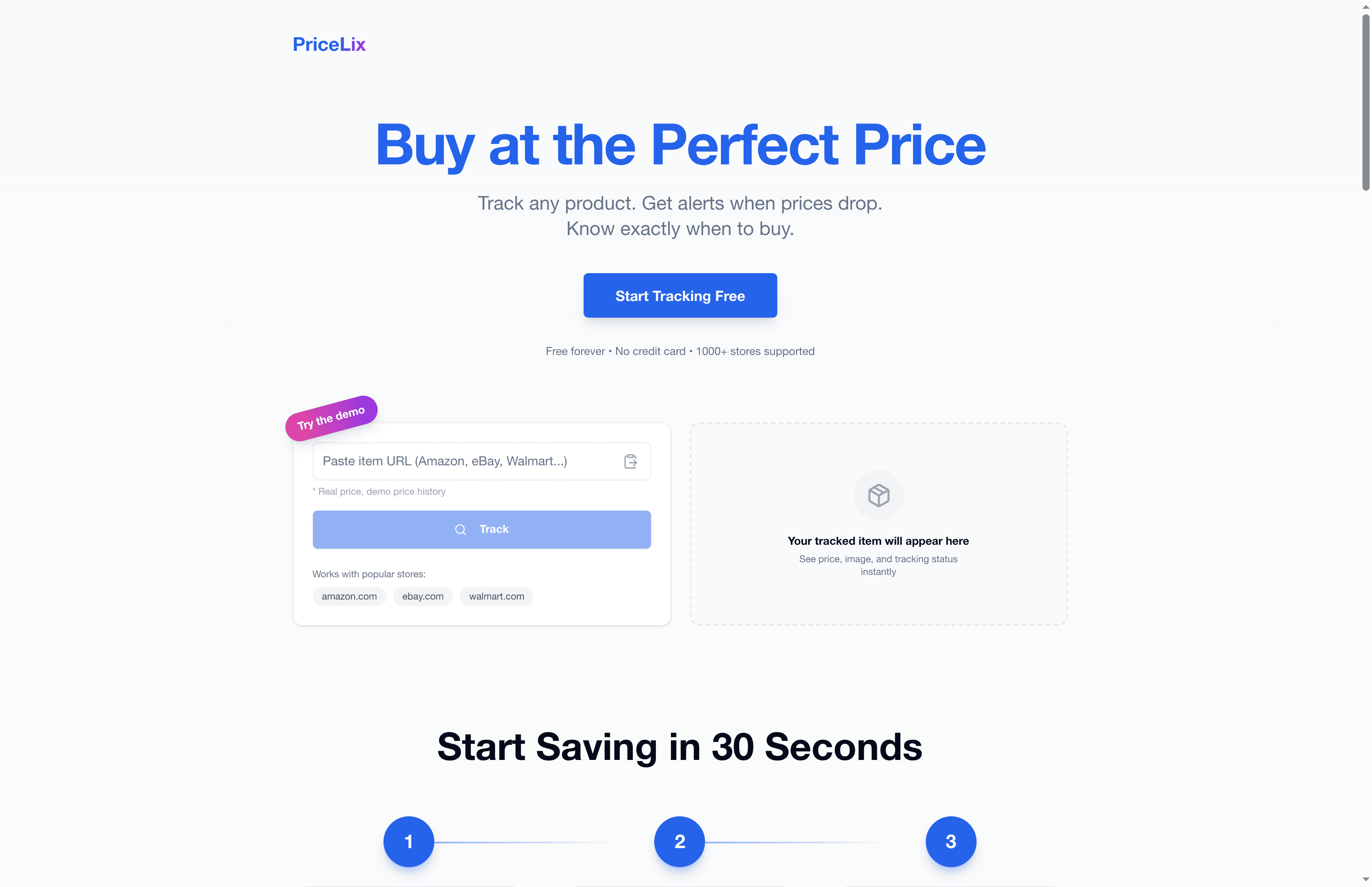
Price-lix was built for exactly this. It automatically tracks prices across Amazon, eBay, Walmart, and over a thousand other stores, sends you real-time alerts when prices drop, and shows you full price history charts so you can verify whether a deal is genuine in seconds. No browser extensions required. No manual checking. Just a clean dashboard that tells you when to buy and when to wait. If you are serious about putting these shopping efficiency practices to work, Price-lix is where you start. You can also dive deeper into transparent pricing habits to sharpen your approach even further.
FAQ
What are the best practices for smart shopping?
The core practices include budgeting for total cost rather than just price, verifying seller credibility, using price history tools to spot genuine deals, and paying with a credit card for purchase protection.
How do I know if a discount is real?
Check the product’s price history over the past 90 to 180 days. If the “original” price was inflated shortly before the sale or never matched the typical market rate, the discount is likely manufactured.
Why should I use a credit card instead of a debit card online?
Credit cards give you the right to dispute charges and reverse unauthorized transactions. Debit cards offer far weaker protections, and some payment methods like bank transfers offer none at all.
What is drip pricing and how do I avoid it?
Drip pricing is when a seller advertises a low base price and adds fees progressively at checkout. Always look at the final total before committing, not the number shown on the product listing page.
How can I tell if an online seller is legitimate?
Search the domain plus “scam” or “review,” check the site’s registration age, verify a real return address is listed, and confirm the site has detailed product descriptions and a secure HTTPS checkout.