
Price transparency explained: shop smarter and save more
TL;DR:
- Full price transparency includes all mandatory fees and taxes before checkout.
- Regulations ban drip and partitioned pricing that hide or mislead about total costs.
- Using price tracking tools and comparison sites can significantly increase savings.
You find the perfect item, click “Buy Now,” and then the checkout screen hits you with a $12 delivery fee, a $4 “service charge,” and taxes that weren’t mentioned anywhere on the product page. Sound familiar? You’re not alone, and you’re not imagining it. Price transparency in online shopping means displaying the total price upfront, including all mandatory fees, taxes, and unavoidable charges, so you can compare offers accurately. When retailers skip that step, you end up bleeding money without realizing it. This article breaks down what price transparency really means, which tactics are now banned, where the gray areas still live, and exactly how to protect your wallet.
Table of Contents
- What is price transparency in online shopping?
- How regulations enforce transparency—and what tactics are now banned
- Edge cases and transparency challenges: variable and optional pricing
- The transparency gap: dynamic pricing, personalized offers, and consumer impact
- Maximizing savings: tools and tactics for shoppers
- Why price transparency is actually harder than it looks—and what shoppers can do differently
- Ready to unlock full price transparency? Take the next step
- Frequently asked questions
Key Takeaways
| Point | Details |
|---|---|
| Total price is key | Always look for the complete cost upfront—including delivery and fees—to compare offers accurately. |
| Beware hidden tactics | Drip pricing and personalized offers can obscure real costs, so stay alert for late-stage charges or tailored prices. |
| Use transparency tools | Price trackers and alert services help you save 15-25 percent and avoid overpaying. |
| Regulations help, but vigilance matters | Legal rules drive transparency, but only proactive shoppers get the best deals through regular monitoring. |
What is price transparency in online shopping?
Price transparency is simple in theory: you should see the full cost of what you’re buying before you commit. In practice, it gets messier. Retailers have historically used every trick in the book to make prices look lower than they actually are.
At its core, displaying the total price upfront, including all mandatory fees, taxes, and unavoidable charges, is the standard required for accurate online comparisons. That means if standard delivery is the only shipping option available, it must be included in the price you see first, not revealed at the final checkout screen.
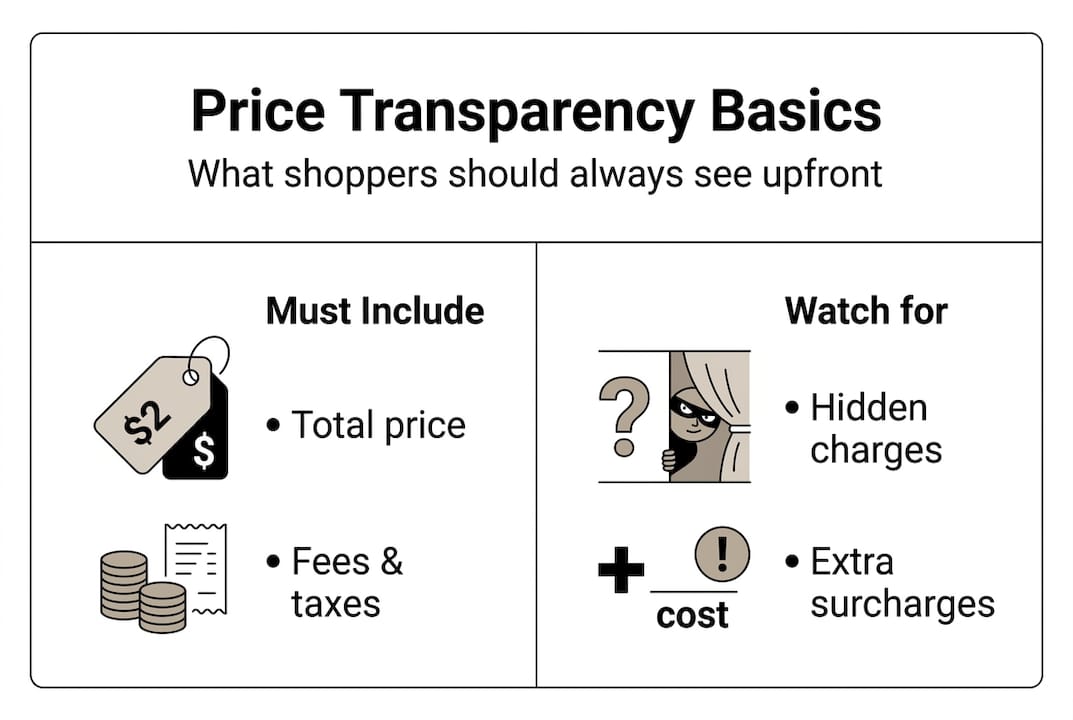
Here’s a quick breakdown of what counts as mandatory versus optional:
Mandatory costs (must be shown upfront):
- Standard delivery if no free option exists
- Unavoidable service fees or processing charges
- Government taxes that apply to all buyers in a region
- Mandatory subscription fees tied to the purchase
Optional costs (can be shown separately):
- Expedited or premium shipping upgrades
- Extended warranties or protection plans
- Gift wrapping or personalization add-ons
- Optional insurance
Watch out for “from” prices. A retailer advertising a laptop “from $499” may only have one unit at that price, with all other configurations costing significantly more. This is technically legal in some contexts, but it’s a classic misdirection move. Always click through to the actual product and verify the real price for the specific item you want.
Understanding the factors affecting online prices helps you spot when a deal is genuine versus when it’s just clever framing. Retailers adjust prices based on competition, inventory levels, time of year, and even your browsing behavior.
Key takeaway: Price transparency isn’t just a courtesy. It’s a baseline standard that lets you compare apples to apples when shopping across multiple stores.
Pro Tip: Before adding anything to your cart, scroll to the product detail page and look for a “total estimated cost” or “price includes” note. If it’s missing, factor in at least 10-15% for potential add-ons before you decide it’s a deal.
How regulations enforce transparency—and what tactics are now banned
With the basics clear, it’s important to see how new rules are shaping your shopping experiences.
Governments and consumer protection agencies have started cracking down hard. Drip pricing and partitioned pricing are now prohibited in regions like the UK, specific U.S. states, and for FTC-regulated purchases. These aren’t minor policy tweaks. They’re direct responses to widespread consumer harm.

Drip pricing is when a retailer starts with a low headline price and then slowly adds mandatory fees as you move through checkout. By the time you reach payment, the price has “dripped” up significantly. Partitioned pricing is similar: it splits a single price into multiple components to make the total feel smaller than it is.
Here’s how compliant and non-compliant practices compare:
| Practice | Compliant | Non-compliant |
|---|---|---|
| Show total price on product page | Yes | No |
| Add mandatory fees only at checkout | No | Yes |
| Advertise “from” price with one unit available | Borderline | Yes if misleading |
| Separate optional add-ons clearly | Yes | No |
| Include standard delivery in listed price | Yes | No |
The Minnesota price transparency law is one of the more detailed U.S. examples, requiring sellers to disclose all mandatory fees before the consumer reaches the final checkout stage. Other states are following suit.
Retailers who want to stay compliant generally need to:
- Display the full price, including all mandatory charges, on the product listing page.
- Separate optional fees clearly and only add them when a customer actively selects them.
- Avoid using “starting at” language unless multiple genuine price points exist.
- Update pricing in real time if fees change based on location or availability.
- Provide a clear price breakdown before the final purchase confirmation.
Knowing these online pricing tactics helps you identify when a retailer is cutting corners. If you reach checkout and the price has jumped more than what optional items you selected would explain, that’s a red flag worth investigating.
Statistic callout: Drip pricing and partitioned pricing are now banned across multiple major markets, signaling a global shift toward mandatory upfront cost disclosure for online retailers.
Edge cases and transparency challenges: variable and optional pricing
While regulations set a strong foundation, real-world shopping still holds some tricky gray areas.
Variable delivery fees and optional charges are treated differently under most transparency laws, and government-imposed taxes may be excluded from the initial displayed price depending on the jurisdiction. That creates legitimate confusion for shoppers.
Here’s a table of common edge cases and what to watch for:
| Scenario | What’s allowed | What to check |
|---|---|---|
| Delivery fee varies by location | Showing estimated or range | Enter your zip code early |
| Sales tax excluded from listing | Legal in most U.S. states | Add ~8-10% mentally |
| “From” price with size/color options | Legal if options exist | Check your specific variant |
| Optional warranty shown in cart | Legal if clearly optional | Uncheck if you don’t need it |
| Subscription auto-renewal fee | Must be disclosed | Read the fine print |
The distinction between avoidable and mandatory costs is the key. An avoidable cost is something you can opt out of, like premium shipping or an extended warranty. A mandatory cost is something you can’t escape, like standard shipping if there’s no free option, or a required booking fee. Mandatory costs must be in the upfront price. Avoidable ones don’t have to be, but they should be clearly labeled.
Here’s what to watch for when navigating these edge cases:
- Location-based delivery costs: Enter your address early in the shopping process to get an accurate delivery estimate before you fall in love with a price.
- Optional upgrades bundled into checkout: Some retailers pre-check warranty or protection plan boxes. Scroll through your cart carefully.
- Tax-exclusive pricing: In the U.S., most product listings exclude sales tax. Budget for it, especially on big-ticket items.
- Subscription-linked discounts: A “subscribe and save” price looks great until you realize you’re locked into monthly deliveries.
Pro Tip: Before you commit to any purchase over $50, check the seller price changes insights to understand how that retailer typically handles fees and pricing updates. It can save you a nasty surprise.
The transparency gap: dynamic pricing, personalized offers, and consumer impact
But even with full legal compliance, some pricing tricks can still muddy the waters.
Here’s the uncomfortable truth: a retailer can be 100% legally compliant with price transparency rules and still show you a different price than your neighbor sees. That’s the world of dynamic and surveillance-based pricing.
Dynamic pricing reduces transparency by setting individualized prices using consumers’ personal data, including browsing history, location, device type, and even the time of day you shop. The FTC’s surveillance pricing study confirmed that a wide range of personal data is being used to set prices that vary from person to person.
“Surveillance pricing systems use data about your location, browsing, and purchase history to set prices tailored specifically to what you’re likely to pay, not what the market rate actually is.” — FTC Surveillance Pricing Study, 2025
This makes genuine price comparison harder. If you and a friend search for the same product at the same time and see different prices, you’re experiencing personalization in action.
Here’s how to defend yourself:
- Use incognito or private browsing mode when checking prices to reduce personalization signals.
- Clear your cookies before big purchases, especially on sites you visit frequently.
- Compare prices across multiple devices or ask someone else to check the same product.
- Use price history tools to see what the item has actually sold for over time, not just today’s personalized number.
- Check prices from different locations using a VPN if you suspect location-based pricing.
Understanding dynamic pricing is one of the most powerful things you can do as a shopper. And using price history for transparency gives you the context to know whether today’s price is actually a deal or just a number designed to look like one.
Pro Tip: A product’s price history chart is your lie detector. If the “sale” price has been the normal price for six months, it’s not a sale.
Maximizing savings: tools and tactics for shoppers
To close the gap between legal transparency and real-world savings, let’s get practical.
Let me hit you with some numbers: transparency boosts consumer savings by 15-25% when shoppers actively use price comparison tools and alerts. That’s not a small margin. On a $300 purchase, that’s $45 to $75 back in your pocket.
Here’s a step-by-step approach to making transparency work for you:
- Search for the product on the retailer’s site and note the listed price.
- Add your location early to trigger accurate delivery and tax estimates.
- Check the price history using a tracking tool before deciding if it’s a good time to buy.
- Set a price alert at your target price so you’re notified automatically when it drops.
- Compare across stores using a price comparison platform to confirm you’re seeing the best available offer.
- Review your cart before checkout and uncheck any pre-selected optional add-ons.
Top tools that support price transparency:
- Price history trackers that show 90-day and 1-year price trends
- Automated price alert systems that notify you via email or app
- Browser-independent comparison platforms that work across 1,000+ stores
- Wish list consolidators that track multiple items simultaneously
Exploring bargain hunting strategies can sharpen your approach further, and online price optimization tips give you a framework for timing purchases around natural price cycles.
Pro Tip: Track an item for at least 2 weeks before buying. Most products cycle through price drops on a predictable schedule, especially around weekends, end-of-month periods, and seasonal transitions.
Why price transparency is actually harder than it looks—and what shoppers can do differently
Here’s where most articles stop. They explain the rules, list the tools, and call it a day. But there’s a deeper problem worth naming.
Regulations are genuinely helpful, but they’re not a cure-all. Pricing technology evolves faster than legislation. Retailers find new ways to segment and personalize pricing that technically comply with disclosure rules while still leaving shoppers at a disadvantage. And the bigger issue? Most shoppers don’t act on the transparency that does exist.
Low consumer engagement and dynamic pricing still hinder transparency, contributing to 8.7% cart abandonment and frequent overpayment, even when price information is technically available. The data is there. Shoppers just don’t use it.
The real edge isn’t knowing the rules. It’s building a habit. Checking real-time price changes consistently, setting alerts before you need them, and treating price history as a non-negotiable step before any significant purchase. That’s what separates the shoppers who save from the ones who overpay.
Transparency is a tool. Like any tool, it only works if you pick it up.
Ready to unlock full price transparency? Take the next step
If you’ve made it this far, you already know more about price transparency than most shoppers ever will. Now it’s time to put that knowledge to work.
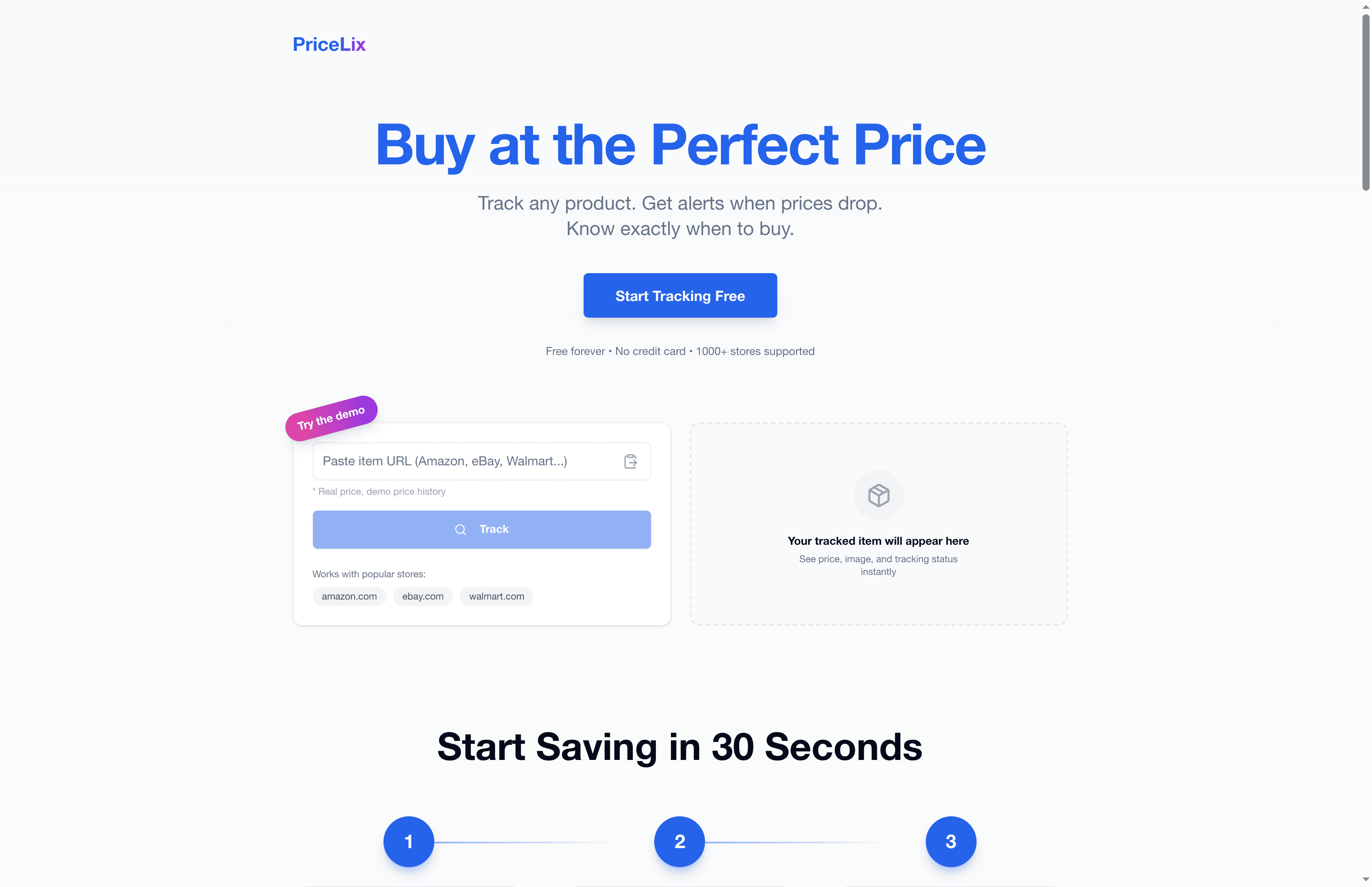
PriceLix makes it easy to track prices automatically across Amazon, eBay, Walmart, and over 1,000 other stores. You get real-time alerts when prices drop, detailed price history charts, and a dashboard that does the monitoring for you. No browser extensions needed. No manual checking. Just smarter shopping with the full picture in front of you. Start tracking with the PriceLix free tracker today and stop overpaying for items you were going to buy anyway.
Frequently asked questions
What must online sellers include in the total price?
Sellers must include all mandatory fees, unavoidable taxes, and standard delivery in the upfront total displayed before checkout, so consumers can compare offers accurately.
What is drip pricing and why is it banned?
Drip pricing reveals mandatory fees gradually during checkout to make the initial price look lower; it is now prohibited in the UK, several U.S. states, and for FTC-regulated purchases because it misleads consumers.
How can I tell if a price is personalized just for me?
Prices may be tailored using your location, browsing history, or purchase patterns; individualized prices using personal data are common, so checking in incognito mode or using a price comparison tool can reveal the difference.
Do price transparency tools really save money?
Yes. Shoppers who use price trackers and alerts consistently benefit from savings of 15-25% by catching genuine price drops and avoiding inflated or personalized pricing.
Recommended
- Compare prices effectively: proven tactics for smart shopping | PriceLix
- Step-by-step price comparison guide for smart savings | PriceLix
- Price optimization: save 15-40% on every online purchase | PriceLix
- Understanding seller price changes: smart shopping insights | PriceLix
- The Importance of Transparent Financial Guidance for a Secure Future