
Unlock savings by understanding price trends in 2026
TL;DR:
- Prices are surging unevenly across categories due to tariffs, supply chain issues, and inflation in 2026.
- Electronics, appliances, and energy costs face higher price elasticity, making timing and data tools crucial for savings.
- Using price history, alerts, and seasonal patterns helps shoppers maximize savings and avoid impulsive purchases.
Prices are not just creeping up in 2026, they are surging in ways most shoppers don’t see coming. CPI rose 3.3% YoY in March 2026, and that number hides some brutal category spikes hiding inside the average. If you’re still shopping the way you did two years ago, you’re likely overpaying without realizing it. The good news? There is a smarter way to shop, and it doesn’t require a finance degree. This guide walks you through what’s driving prices up, which product categories offer the best chances to save, and how to use data and tools to time your purchases like a pro.
Table of Contents
- What’s driving price changes in 2026?
- How price elasticity shapes your shopping power
- Smart tools for monitoring and predicting price drops
- Timing your purchases: Seasonal and behavioral tactics
- Why focusing on timing beats chasing one-off deals
- Level up your price tracking for 2026
- Frequently asked questions
Key Takeaways
| Point | Details |
|---|---|
| Inflation and tariffs impact | Prices are up 3–5% overall, with the biggest increases in energy, food, and imports. |
| Category price elasticity | Electronics are most likely to drop in price, while fashion and groceries rise steadily. |
| Best tools for savings | Automated alerts and price tracking platforms help you catch true deals. |
| Strategic timing works | Shopping during seasonal dips and monitoring multiple retailers maximizes your savings in 2026. |
What’s driving price changes in 2026?
Let’s get clear on what’s actually happening at checkout before we talk strategy. Prices aren’t rising uniformly. Some categories are getting hammered, and others are holding relatively steady. Knowing the difference is half the battle.
Tariffs from 2025 pushed imported goods prices up 5.4%, hitting electronics and apparel especially hard. Supply chain disruptions that started during the pandemic never fully resolved, and now tariff pressures are layering on top of that instability. The result is a pricing environment that changes faster than most shoppers can keep up with.
Here’s a snapshot of where prices are moving in 2026:
| Category | YoY Price Change |
|---|---|
| Energy | +10.9% |
| Apparel and footwear | +3.6% to +7.5% |
| Food (overall) | +2.7% |
| Groceries (forecast) | +3.1% |
| Electronics | Volatile, tariff-driven |
The overall CPI breakdown shows food rising 2.7% year over year, but inside that number, beef and coffee are surging well above the average. Meanwhile, some packaged goods are holding flatter. It’s not one story, it’s dozens of smaller stories playing out by category.
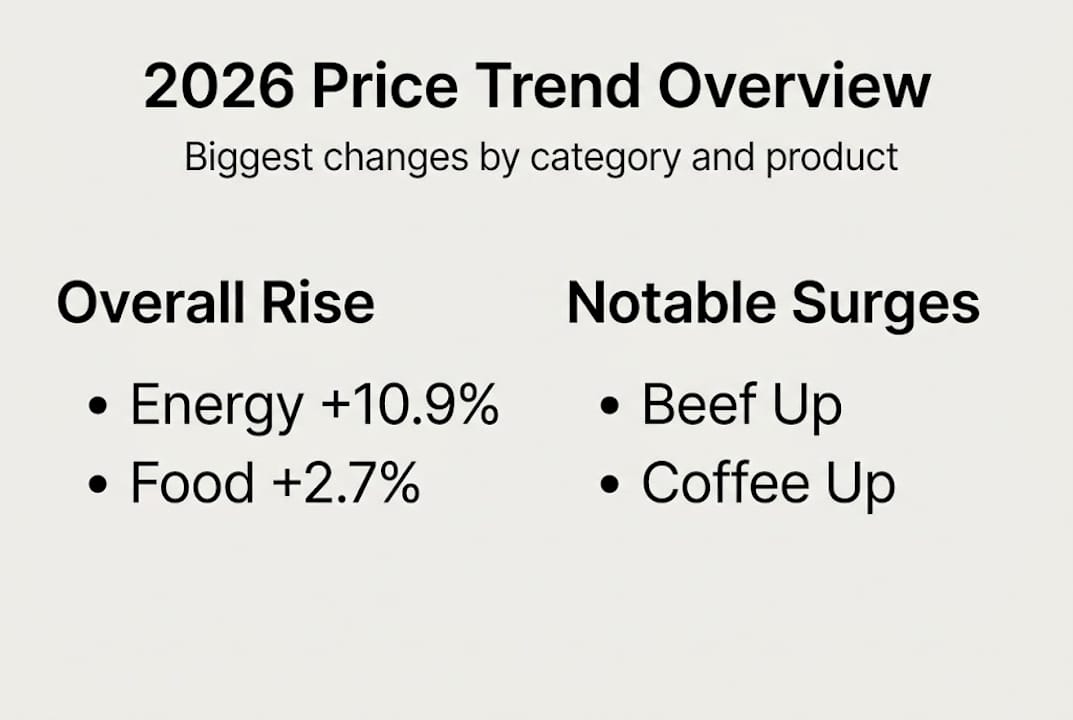
Grocery prices are forecast to rise 3.1% across 2026, which doesn’t sound dramatic until you add it to last year’s increases. The compounding effect is real, and it’s why shoppers who aren’t watching prices closely are bleeding money without realizing it.
Here’s what this means practically for online shoppers:
- Electronics and apparel are being squeezed by tariffs, meaning full retail prices are harder to justify
- Grocery and food staples are rising steadily, with certain items jumping much faster
- Energy costs filter into shipping prices, affecting nearly every online purchase
- Seasonal timing matters more now because the gap between sale prices and full prices has widened
Understanding seasonal pricing trends in 2026 is no longer optional if you want to protect your budget. The retailers know exactly how to price dynamically, and ecommerce pricing analytics are getting more sophisticated by the month. Shoppers who don’t use data are at a structural disadvantage.
How price elasticity shapes your shopping power
With category drivers in mind, let’s dig into how elasticity actually alters your deal-hunting success. Price elasticity, in plain terms, measures how much demand changes when a price changes. For shoppers, it tells you how likely a retailer is to discount a product and how much savings you can realistically expect.

E-commerce price elasticity averages around -1.34 across categories, but that aggregate masks major differences. Electronics sit at around -1.72, meaning demand is highly sensitive to price changes. Fashion lands closer to -0.89, which means less sensitivity and fewer dramatic discounts.
Here’s a quick comparison to help you prioritize where to focus your deal-hunting energy:
| Category | Elasticity Score | Discount Potential | Best Timing |
|---|---|---|---|
| Electronics | -1.72 | High | Black Friday, post-launch |
| Appliances | -1.45 | High | January, July sales |
| Fashion | -0.89 | Moderate | End of season |
| Groceries | -0.60 | Low | Weekly promotions |
| Beauty/personal care | -0.55 | Low | Subscription bundles |
What does this mean for your price tracking strategies? It means you should set your alert thresholds based on the category, not a one-size-fits-all rule. For electronics, waiting for a 10 to 15% drop is realistic. For grocery staples, don’t hold your breath for that level of discount.
Here’s a practical numbered approach to applying elasticity knowledge:
- Identify the category of the item you want to buy
- Look up its elasticity range using resources like how price elasticity works
- Set your target price based on realistic discount potential for that category
- Choose your alert threshold accordingly and activate tracking
- Use price history charts to confirm whether a current price is actually a deal
Understanding price history charts is especially powerful here. When you pair historical price data with elasticity knowledge, you stop guessing and start making decisions based on real patterns.
Also worth knowing: dynamic pricing is the practice retailers use to adjust prices in real time based on demand, inventory, and competitor moves. High-elasticity categories see more dynamic pricing, which means more opportunity and more risk if you’re not watching.
Pro Tip: Inelastic categories like beauty products and grocery staples rarely drop more than 5 to 8%. If you see a bigger dip, act fast because it won’t last long.
Smart tools for monitoring and predicting price drops
Understanding price sensitivity is one thing. Now let’s talk about the concrete tools that help you time and maximize your purchases.
Strategic purchasing using price history charts, automated alerts, and multi-retailer comparison can deliver 15 to 40% savings over paying full retail. That’s not a small number. On a $500 electronics purchase, that’s up to $200 back in your pocket.
Here are the core tools every savvy shopper should have in their 2026 toolkit:
- Price history trackers: Platforms that show you a product’s full price timeline, so you know whether today’s price is genuinely low or just average with a sale badge slapped on it
- Automated price alerts: Set a target price and get notified the moment it’s hit, no daily manual checking required
- Multi-retailer comparison tools: Check the same product across Amazon, Walmart, eBay, and other stores simultaneously
- Browser-free platforms: Tools like PriceLix that work from a dashboard without requiring extensions or complex setup
Knowing the price alert benefits is one thing, but using them consistently is what separates impulsive buyers from strategic ones. Alerts remove emotion from the equation. Instead of buying because something looks like a deal, you buy because the data confirms it is one.
Common pitfalls to avoid:
- False drops: Some retailers inflate prices before a sale to make the discount look bigger. Price history exposes this immediately.
- Limited-time pressure: Flash sales are designed to trigger urgency. If you’ve done your homework, you won’t fall for artificial scarcity.
- Single-store bias: Sticking to one retailer means missing better prices elsewhere. Always check at least two stores.
Check out this price tracking checklist for a step-by-step approach to setting up your monitoring system. And if you want to understand the full range of approaches available, there are 7 effective types of online price tracking worth exploring.
A solid sales trend analysis approach pairs well with price alerts. It helps you understand whether a deal is part of a broader pattern or a one-off event.
Pro Tip: Always cross-check a price drop with at least two different sources before buying. One site might show a lower price that’s outdated or for a different product variant.
Timing your purchases: Seasonal and behavioral tactics
After mastering tools and analytics, it’s time to put timing strategies to work. Because knowing when to buy is just as important as knowing where.
Seasonal spending data shows that electronics dip most sharply around Black Friday, while appliances hit their lowest prices in January and July. These aren’t rumors. They’re documented patterns that repeat year after year, and retailers count on shoppers not knowing them.
Here’s what a smart seasonal shopping calendar looks like:
- January: Appliances, winter clothing clearance, fitness equipment
- March to April: Tax refund season brings retailer promotions on big-ticket items
- July: Mid-year appliance sales, back-to-school electronics buildup
- October to November: Electronics, toys, and general merchandise leading into Black Friday
- December post-holiday: Deep clearance across most categories
Behavioral shifts among shoppers are equally important to track. In 2026, 79% of consumers changed their buying habits due to inflation and tariff pressures. People are no longer loyal to one store. The average household now uses 3.1 grocery stores per month, actively cross-shopping for better prices.
That behavior shift is your opportunity. Retailers competing for price-sensitive shoppers often offer better deals than those who assume loyalty. Monitoring multiple retailers is now a core savings strategy, not just a nice-to-have.
Building your own price tracking workflow around these seasonal patterns is the move. Set up alerts in advance of known sale periods, not during them. By the time Black Friday arrives, your alert should already be set and your target price locked in.
If you’re new to this, the guide to monitoring product prices online is a solid starting point for building that habit.
Why focusing on timing beats chasing one-off deals
Here’s a perspective most deal content won’t give you: chasing every flash sale is exhausting and usually unprofitable. I’ve seen shoppers spend hours hunting a $10 discount that took three hours to find. That’s not savings. That’s a hobby with bad ROI.
The shoppers who consistently win in 2026’s pricing environment are not the ones refreshing deal forums every hour. They’re the ones who built a quiet, automated system. They set alerts. They studied price history. They identified their categories and thresholds months in advance. Then they waited. And when the price hit their target, they bought without hesitation.
Patience combined with structure is the real edge. The price tracking workflow insights back this up. Shoppers who commit to a consistent routine see sustainable savings across the year, not just a lucky win here and there. One-off deals feed the impulse. Structured timing feeds the savings account.
In 2026’s shifting landscape, data rewards the patient and punishes the impulsive. Building that habit is the smartest financial move a shopper can make right now.
Level up your price tracking for 2026
You now know what’s driving prices, how elasticity shapes your opportunities, and which tools and timing tactics can save you real money. The next step is making it automatic.
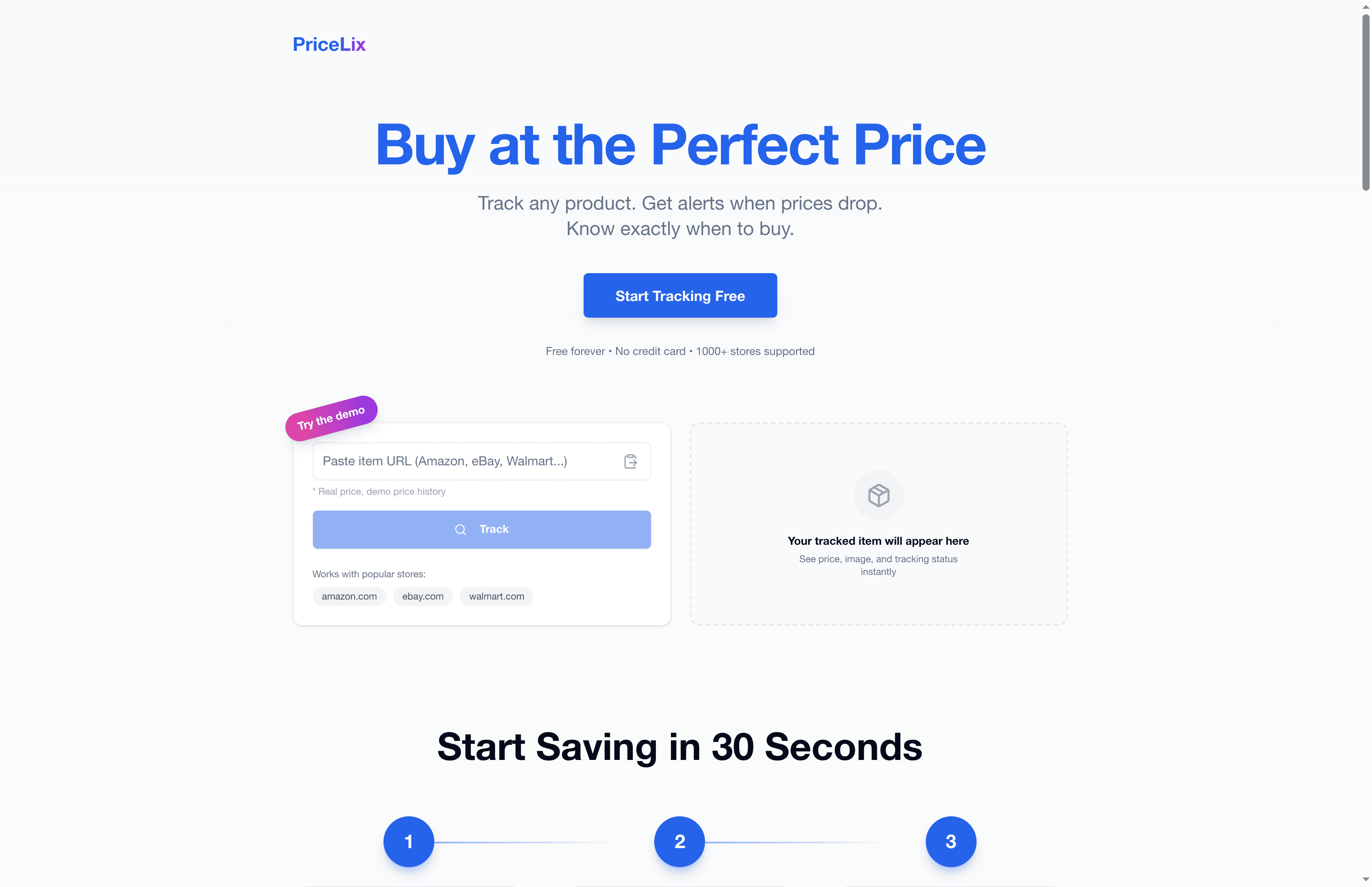
PriceLix connects you to all of that in one place. Track products across Amazon, Walmart, eBay, and over a thousand other stores without needing browser extensions or manual effort. Set your target price, activate your alert, and let the platform do the monitoring for you. If you’re ready to stop guessing and start saving with real data, explore the top price alert platforms that can put your 2026 strategy on autopilot today.
Frequently asked questions
Which categories are most likely to see price drops in 2026?
Electronics and appliances offer the best drop potential, thanks to high price elasticity and well-established seasonal sales windows like Black Friday and the January and July appliance cycles.
How do tariffs affect online shoppers’ prices?
Tariffs pushed import prices up 5.4%, and those costs flow through to consumers on electronics, apparel, and other imported goods, making cross-retailer comparison more important than ever.
What tools are best for tracking price trends and deals?
Price history trackers, automated alert platforms, and multi-retailer comparison tools are your best options. Using them together can deliver up to 40% savings versus buying at full price.
How has consumer shopping behavior changed in 2026?
Shopping is no longer single-store loyal. 79% of consumers changed their buying habits in 2026, and the average household now shops across 3.1 grocery stores per month to find better prices.