
Holiday Sales Explained: Save More This Season
TL;DR:
- Holiday shoppers often react to loud promotions rather than shopping offensively, risking overpayment.
- Understanding retailer pricing techniques and timing across categories helps consumers maximize savings during multiple overlapping sale events.
Most shoppers walk into holiday sales thinking they’re playing offense. In reality, they’re reacting. The promotions are loud, the timelines are blurry, and the discounts often look better than they actually are. Getting holiday sales explained properly means going beyond “Black Friday is a good day to shop.” It means understanding how retailers price things, when deals are genuinely deep, and why some shoppers consistently save hundreds more than others. This guide covers all of it: the major events, the pricing tricks, the tech shifts, and the strategies that actually work.
Table of Contents
- Key Takeaways
- The major holiday sale events you need to know
- Seasonal pricing trends by product category
- How retailers use pricing tactics to make deals look better
- Technology reshaping how we shop holiday sales
- Practical strategies to maximize holiday savings
- My honest take on holiday shopping
- Start tracking prices before the next sale hits
- FAQ
Key Takeaways
| Point | Details |
|---|---|
| Holiday sales span weeks | Major discounts start as early as mid-October and extend into mid-January clearance cycles. |
| Anchor pricing is real | Many “sale” prices are set against inflated originals. Always verify with price history before buying. |
| Category timing matters | Electronics peak on Black Friday; appliances, mattresses, and outdoor gear have better windows outside the holiday rush. |
| Mobile now leads shopping | 78% of Cyber Week traffic came from mobile devices in 2025, so optimizing your shopping setup for mobile pays off. |
| Post-holiday beats pre-holiday | Late December through mid-January often delivers deeper markdowns than the headline holiday events themselves. |
The major holiday sale events you need to know
Let me give you a map of the season, because “the holidays” is not one event. It’s a series of overlapping promotional windows that retailers have carefully designed to keep you spending from October through January.
Black Friday is still the anchor. Average discounts land between 11% and 25% depending on the category, but TVs are the real outlier, often seeing cuts of 30% to 50%. Retailers use big-screen TVs as traffic drivers because those deals bring shoppers in, and once you’re in, you spend on other things too. That’s by design.
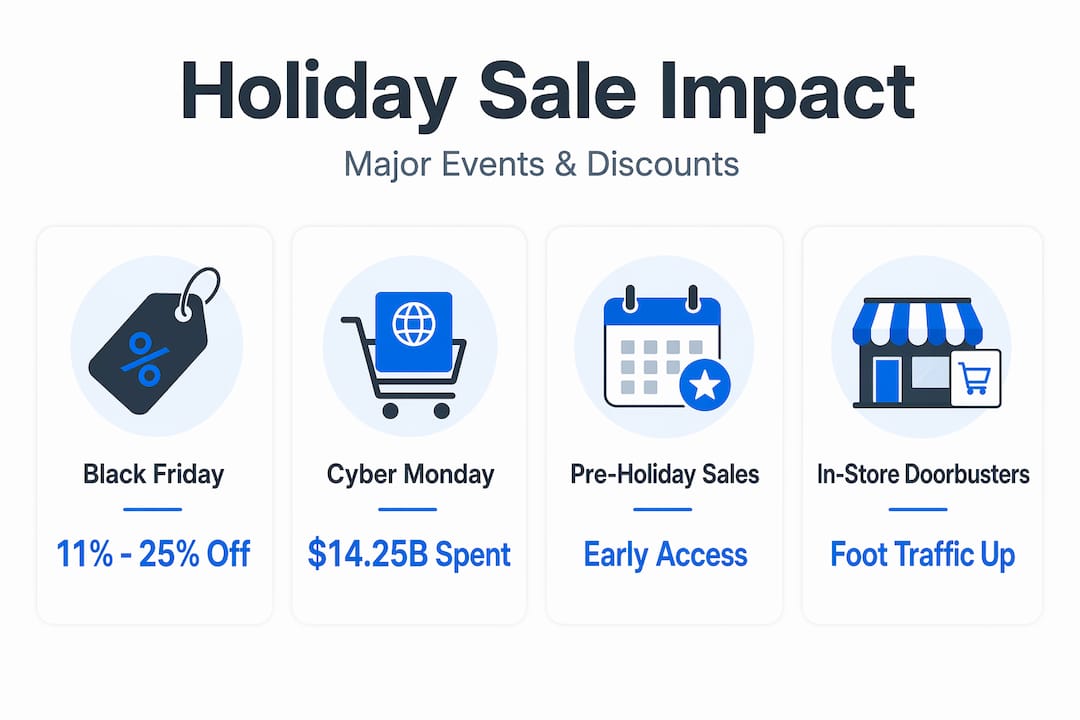
Cyber Monday has quietly overtaken Black Friday in raw spending. In 2025, Cyber Monday generated $14.25 billion in online purchases, a 6.3% jump year over year. Software, subscriptions, and digital goods get particularly aggressive discounts on this day. If you’re buying anything digital, Cyber Monday is your best window.
What most shoppers miss is that neither of these days stands alone anymore. Early access sales now begin as early as mid-October, and post-holiday clearance stretches well into January. Here’s how the full season breaks down:
| Sale Event | Typical Timing | Best Categories | Discount Strength |
|---|---|---|---|
| Early Access / Pre-Holiday | Mid-October to early November | Electronics, toys | Moderate (10%–20%) |
| Black Friday | Late November | TVs, appliances, fashion | Strong (20%–50% on anchors) |
| Cyber Monday | Monday after Thanksgiving | Software, electronics, online-only | Strong (15%–40%) |
| December Holiday Sales | Early to mid-December | Gifts, clothing, home goods | Moderate (15%–25%) |
| Post-Holiday Clearance | Late December through mid-January | Apparel, décor, seasonal tech | Deep (30%–70%) |
The in-store vs. online divide matters here too. Black Friday still drives foot traffic with doorbusters that may not appear online. Cyber Monday is exclusively digital. And the post-holiday window is strongest online, where inventory moves faster and markdowns automate quickly.
Seasonal pricing trends by product category
Here’s where understanding holiday sales gets genuinely useful. Not every product is cheapest during the November rush. Retailers discount based on inventory cycles, and if you know those cycles, you can beat the crowd.
- Electronics: Peak discounts happen on Black Friday and Cyber Monday. New model releases in fall push older models down in price. This is the right window to buy last year’s flagship phone or a previous-generation laptop.
- Mattresses: Memorial Day and Labor Day are better than Black Friday. Mattress retailers have historically used these holidays as their primary promotional windows, and the discounts are often just as deep.
- Appliances: Presidents’ Day in February and Labor Day in September are when retailers clear old inventory ahead of new models. You’ll find better deals on refrigerators and washers then than you will in November.
- Outdoor and patio furniture: Buy in late summer or early fall when retailers are clearing seasonal stock. Waiting until spring means paying full price again.
- Fashion and apparel: Post-holiday clearance from late December through mid-January is the strongest window. Post-holiday markdowns in apparel often surpass holiday discounts in both depth and availability.
The pattern here is clear. Black Friday is one anchor event among many, and the shoppers who save the most are the ones tracking a broader calendar of category-specific sale windows. If you’re only planning around November, you’re leaving real money on the table for several categories. Check out Price-lix’s guide on seasonal discount strategies for a full breakdown of when each major product category hits its pricing floor.
Pro Tip: Before buying any high-ticket item during the holidays, check its price history for the prior 90 days. If the “original” price only appeared for a week before the sale, that’s not a real markdown.

How retailers use pricing tactics to make deals look better
This section of holiday sales explained is the one most articles skip. Retailers are very good at creating the feeling of a deal. They’re not always as good at delivering one.
Anchor pricing is the most common tactic. A product gets listed at an inflated “original” price for a short period, and then the “sale” price makes the discount look massive. Many holiday deals use anchored pricing, where the apparent savings are only as real as the original price was genuine.
Urgency framing is the second weapon. Countdown timers, “only 3 left,” and “deal ends at midnight” are all designed to trigger impulse decisions. The uncomfortable truth is that most “limited time” discounts return after the event or were available in similar form earlier in the season. Genuine scarcity items exist, but they are the exception, not the rule.
Here’s how to protect yourself:
- Check price history before clicking “buy.” A price history chart shows you what the item actually sold for over the past six to twelve months. If the “sale” price is the same as the regular price, you’ve already avoided a bad purchase.
- Search the exact model number. Retailers sometimes create holiday-exclusive product bundles or slightly modified SKUs that look like deals but can’t be directly compared. Look up the model number independently.
- Compare across multiple retailers. The same product may be $20 cheaper on a competing site with no fanfare. Never assume one retailer’s “deal” is the best price available.
- Read the fine print on warranties and return windows. Some holiday deals come with shortened return policies or exclude manufacturer warranties. Net savings shrink fast if you can’t return a bad product.
Pro Tip: Price tracking tools that show a product’s full pricing timeline cut through retailer spin fast. When you can see that a “$200 discount” only happened because the price was inflated two weeks earlier, the urgency disappears.
Technology reshaping how we shop holiday sales
The way consumers engage with holiday sales has changed fast. Three forces are driving most of that shift: artificial intelligence, mobile commerce, and Buy Now, Pay Later financing.
On AI, the numbers are striking. 46% of US shoppers used AI tools before Black Friday 2025 to help with product comparisons and purchasing decisions. These tools simplify the decision fatigue that comes with hundreds of competing promotions. Shoppers overwhelmed by holiday promotions are increasingly turning to AI to cut through the noise and find what actually fits their needs. That number is only going up.
Mobile has already taken over.
Mobile devices drove 78% of global traffic and 70% of orders during Cyber Week 2025. If you’re still doing your holiday shopping at a desktop, you’re using a minority device.
This matters practically. Mobile-first retail apps often have exclusive app-only deals. Push notifications give you a real-time edge when flash sales go live. Shopping from a desktop means you might be seeing a different version of a retailer’s site, sometimes with fewer deals visible.
Buy Now, Pay Later is the third factor reshaping behavior. BNPL topped $1 billion on Cyber Monday 2025 alone, and hit $10.1 billion across the full holiday season. The convenience is real, but so is the risk. BNPL makes big purchases feel smaller in the moment. It’s easy to end up overextended by January if you’ve split five purchases across four different services.
Practical strategies to maximize holiday savings
Knowing the terrain is only half the work. Here’s how to actually execute and keep more money in your pocket during the holiday season.
- Build your wishlist before October. Decide what you actually want to buy before the promotions start. Impulse buying during sales is the single biggest reason shoppers overpay. A prepared list keeps you focused.
- Set price alerts on items you want. Manual monitoring is unreliable. Automated alerts from a price tracking tool send you a notification the moment a product drops to your target price. You don’t miss the deal because you weren’t watching.
- Stack promotions when possible. Many retailers allow coupon codes on top of sale prices, and loyalty points or cashback cards can add another 2% to 5% back. A 20% sale plus a 10% coupon plus 3% cashback is a 30% effective discount.
- Know the post-holiday opportunity. If you’re not in a rush, wait. Post-holiday clearance from late December to mid-January often delivers markdowns that exceed what you’d see on Black Friday itself, especially in apparel and home décor.
- Factor in return rates. Returns rose 25% to 35% in 2025, particularly in apparel. Before purchasing clothing or shoes as gifts, check the return policy. A deal you can’t return is a liability if the size or fit is wrong.
Pro Tip: Use Price-lix’s best buying time tool to see historical pricing patterns for any item before you decide when to pull the trigger. Sometimes the data tells you to wait two weeks. Sometimes it tells you to buy right now.
My honest take on holiday shopping
I’ve spent years watching how people approach holiday sales, and the pattern is almost always the same. Shoppers get swept up in the energy of the season, see a big red “50% OFF” badge, and buy. Then they find out later the price was inflated, or the same item went on sale for less the following week.
What I’ve learned is that patience is the most underrated shopping skill. The retailers know you’re in a hurry. They build their entire promotional calendar around that urgency. Countdown timers, limited-stock warnings, and flash sales all exist because they work on most people most of the time.
But here’s what I’ve seen actually separate the good shoppers from the rest. They treat holiday sales like a chess game, not a sprint. They do research before October. They set alerts, not alarms. They know that the 7% average price increase in 2025 means some “sales” barely offset inflation, so a genuine discount needs to clear a higher bar.
I’m not saying skip the holiday sales. Some deals are genuinely excellent. TVs on Black Friday, software on Cyber Monday, and apparel in January clearance are all real opportunities. But walking in without price history data and a clear list is how you end up spending more than you planned and feeling good about it until January’s credit card bill arrives.
Shop with knowledge. The house doesn’t win when you know the rules better than the dealer.
— Serhii
Start tracking prices before the next sale hits
The strategies above only work if you have the right data. That’s exactly what Price-lix is built for.
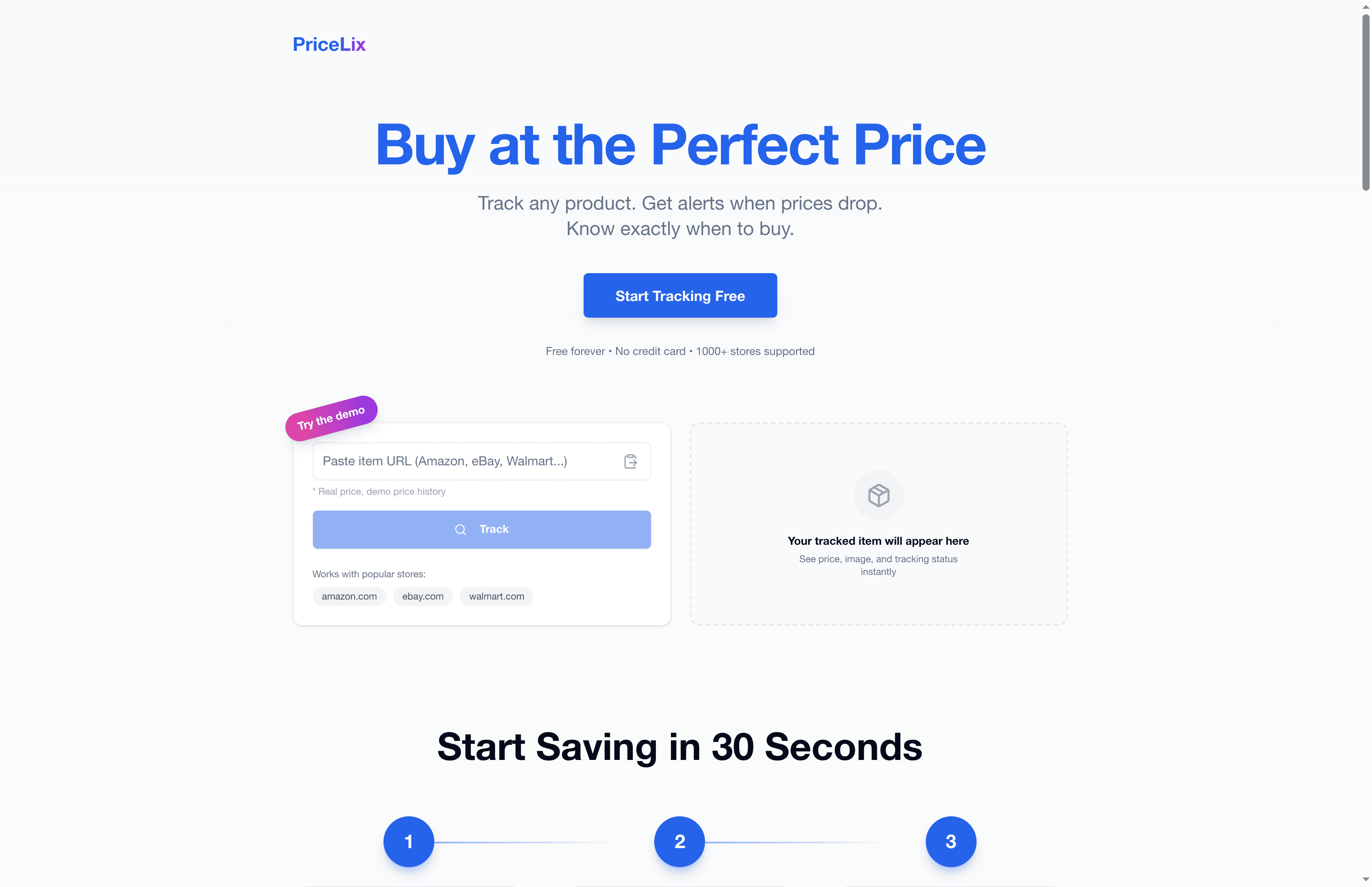
Price-lix tracks prices automatically across Amazon, Walmart, eBay, and over a thousand other stores. You add an item to your watchlist, set a target price, and get an alert the moment it drops. No guessing whether a deal is real. No manual checking every morning. The price history charts show you exactly what an item has sold for over time, so you can spot anchor pricing before it tricks you. If you want to go deeper on timing your purchases throughout the year, the Price-lix guide on holiday savings monitoring is a strong starting point. Or visit price-lix.com to start tracking items today.
FAQ
What is a holiday sale, exactly?
A holiday sale is a promotional period where retailers offer discounts tied to seasonal events like Thanksgiving, Christmas, or New Year’s. These sales span multiple weeks and include events like Black Friday, Cyber Monday, and post-holiday clearance.
When do the deepest holiday discounts actually happen?
The deepest discounts on electronics often appear on Black Friday and Cyber Monday, while apparel and décor hit their lowest prices during post-holiday clearance from late December through mid-January.
How can I tell if a holiday deal is genuinely a good price?
Check the product’s price history for the past 60 to 90 days. If the “original” price only appeared briefly before the sale, the discount is likely inflated through anchor pricing tactics.
Is Cyber Monday better than Black Friday for online shoppers?
For most online purchases, yes. Cyber Monday generated $14.25 billion in 2025 and tends to offer stronger discounts on digital goods, software, and online-exclusive products.
Should I use Buy Now, Pay Later for holiday purchases?
BNPL can help spread out large purchases, but use it carefully. Total BNPL holiday spending hit $10.1 billion in 2025, and overextending across multiple services is an easy way to start the new year with unexpected debt.