
Seasonal sale tracking guide: Maximize savings on every purchase
TL;DR:
- Using seasonal sales calendars and price tracking tools can help shoppers save over $500 annually.
- Proactively monitoring prices and verifying discounts prevents overpaying during hype-driven sales events.
- Off-season shopping with strategic tracking often yields better savings than relying solely on Black Friday deals.
You check a price on Monday. By Friday, the item is 40% off and already sold out. That stings. Seasonal sales move fast, and without a system in place, you’re always a step behind. The good news? Shoppers who combine sale calendars with price tracking tools can save $500 or more per year. This guide walks you through exactly how to do that, from understanding the retail calendar to setting up alerts, verifying real discounts, and stacking savings like a pro. No guesswork. No missed deals.
Table of Contents
- Understand the seasonal sales calendar and peak discount periods
- Set up your toolkit: Price tracking apps, browser extensions, and retailer alerts
- Strategically track prices and prepare for upcoming sales
- Verify real savings and avoid common sale traps
- The smarter way: Why off-season tracking beats Black Friday hype
- Get started: The easiest way to organize and automate your sale tracking
- Frequently asked questions
Key Takeaways
| Point | Details |
|---|---|
| Calendar timing matters | Most savings come from matching purchases to peak discount periods and off-season sales. |
| Use multiple tracking tools | Combining price trackers and wishlist alerts ensures you catch all the best deals. |
| Verify deals for real value | Always check price history and use two or more trackers to avoid inflated or fake discounts. |
| Stack discounts | Combine coupons, cash back, and clearance for the deepest savings on online purchases. |
Understand the seasonal sales calendar and peak discount periods
Retail has a rhythm. Once you learn it, you stop reacting to sales and start anticipating them. That shift alone changes everything.
Every year, the same windows open up. January post-holiday clearance delivers 50 to 75% off apparel and home goods as stores clear inventory. Presidents’ Day in February brings strong appliance and mattress deals. Memorial Day and Labor Day are the go-to windows for outdoor furniture and grills. Back-to-School season in July and August is ideal for electronics, backpacks, and school supplies. Then comes the big one.
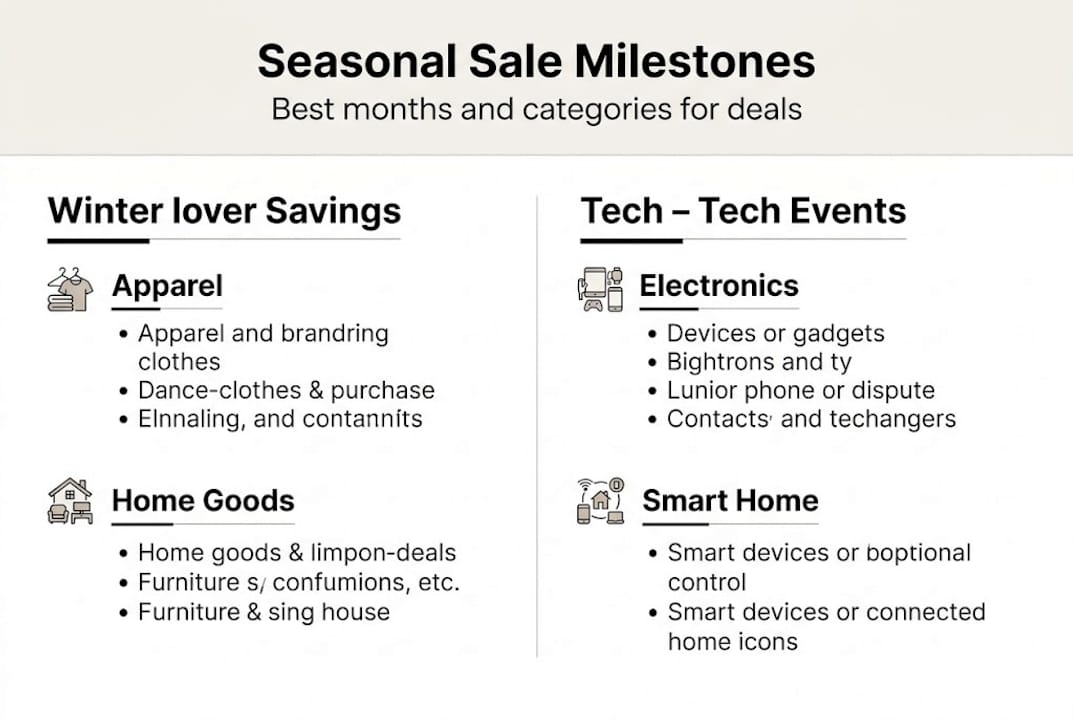
Black Friday and Cyber Monday are the most hyped events of the year, and for good reason. Average discounts hit 28 to 38%, with apparel reaching up to 45% and electronics landing between 28 and 30%. But here’s the catch: many of those “discounts” are measured against prices that were quietly inflated in the weeks before. More on that in a moment.
Amazon Prime Day, usually in July, has become its own major event, especially for tech and household items. And it often triggers competing sales at Walmart and Target on the same days.
Here’s a quick reference for the biggest sale windows and what to buy:
| Sale event | Best categories | Typical savings |
|---|---|---|
| January clearance | Apparel, home goods | 50 to 75% |
| Presidents’ Day | Appliances, mattresses | 20 to 40% |
| Memorial Day | Outdoor, grills | 20 to 35% |
| Prime Day | Electronics, home | 20 to 40% |
| Back-to-School | Electronics, supplies | 15 to 30% |
| Black Friday | Electronics, apparel | 28 to 38% |
| Cyber Monday | Tech, toys | 20 to 35% |
November is the single biggest month for online shopping. Order volume spikes by 64% compared to average months. That volume means competition is fierce, and items sell out fast.
Learning seasonal discount strategies gives you the foundation to plan purchases weeks or months in advance. Pair that with a monthly best time to buy guide and you’ve got a roadmap for the whole year. That’s when discount tracking for big savings stops being a hobby and starts being a strategy.
Set up your toolkit: Price tracking apps, browser extensions, and retailer alerts
Knowing when to buy is only part of the equation. You also need tools that watch prices for you, because manually checking every product every day is not realistic.
Here are the main tools worth knowing:
- CamelCamelCamel: Best for Amazon. It shows the full price history for Amazon products and lets you set email alerts for specific price targets. If you buy a lot on Amazon, this is non-negotiable.
- Honey: A browser extension that applies coupons automatically and tracks price drops across multiple retailers. It also has a feature called Droplist for monitoring specific products.
- Capital One Shopping: Similar to Honey, it works across many retailers and notifies you when prices drop on saved items.
- Karma: Another multi-retailer tool with a clean interface for wishlists and price drop alerts.
- Google Shopping: Not a tracker per se, but it shows quick price comparison graphs across sellers and is useful for a fast sanity check.
CamelCamelCamel and multi-retailer tools like Honey, Capital One Shopping, and Karma each serve a different purpose. Using one of each type gives you much better coverage than relying on a single app.

One thing most people don’t realize: these tools check prices every 5 to 15 minutes for tracked items. That’s a level of monitoring no human can replicate manually.
Retailer wishlists are also underrated. Amazon, Walmart, and Target all send native notifications when saved items drop in price. They’re not as customizable as third-party tools, but they’re zero effort to set up and work well for brand-specific shopping.
Understanding modern price tracker features helps you pick the right combination. And once you have your tools selected, applying best price tracking strategies ensures you’re getting the most out of each one.
Pro Tip: Set up your alerts 60 to 90 days before you actually need to buy. This gives you enough time to observe the price cycle and catch a genuine dip before the sale window closes.
Here’s a comparison of the top tools:
| Tool | Best for | Retailer coverage | Alert type |
|---|---|---|---|
| CamelCamelCamel | Amazon | Amazon only | |
| Honey | Multi-retailer | 1,000+ stores | Browser + email |
| Capital One Shopping | Multi-retailer | Wide | Browser + email |
| Karma | Multi-retailer | Wide | Browser + push |
| Google Shopping | Quick comparison | Multiple | None (manual) |
Strategically track prices and prepare for upcoming sales
With your toolkit ready, here’s how to put those tools to work for maximum results.
The process is straightforward, but most people skip a few key steps and leave money on the table.
- Save the item immediately. The moment you know you want something, add it to your tracker. Don’t wait until you’re ready to buy. You need historical data to work with.
- Set your alert threshold. Aim for either the historical low price or at least 15 to 20% below the current price. Don’t set it too low or you’ll never get triggered. Don’t set it too high or you’ll buy at a bad time.
- Check the price history chart. This is where you see patterns. Does the price drop every November? Every July? That chart becomes gold when you’re planning a purchase.
- Add to retailer wishlists too. Use both third-party trackers and native wishlists. They catch different drops at different times.
- Note the sale dates on your calendar. Cross-reference your tracking data with the seasonal calendar from the previous section. If Black Friday is coming and the price is already near its historical low, that’s your signal.
Tracking electronics 90 days ahead is considered optimal because tech products often cycle through price drops before major events. Apparel and home goods can be tracked on a shorter timeline, around 30 to 60 days. Appliances benefit from a longer window since deals are less frequent.
Shoppers who combine calendar awareness with proactive tracking save $500 or more annually. That’s not a rounding error. That’s real money.
For a full walkthrough, the price tracking checklist breaks down the process by category. And if Amazon is your main shopping platform, these Amazon price tracking tips are worth bookmarking. You can also check best time to buy tips for category-specific timing advice.
Pro Tip: Use two or more price trackers for the same product. Different tools update at different intervals and pull data from different sources. You’re less likely to miss a hidden price drop when you have multiple eyes on it.
Verify real savings and avoid common sale traps
Once your alerts are firing and sale dates are near, it pays to double-check for real savings and steer clear of classic retail traps.
Not every “sale” is what it looks like. Retailers sometimes pre-inflate prices before discounting, making a 30% off sticker look impressive when the actual reduction from the normal price is closer to 5 or 10%. This is especially common in the weeks leading up to Black Friday.
Here’s how to protect yourself:
- Check the price history chart before buying. If the “sale” price is still higher than the average price from the last six months, it’s not a real deal.
- Use two or more trackers to verify. Cross-checking with multiple tools gives you a more accurate picture of what the item actually costs over time.
- Stack your discounts. Clearance pricing plus a coupon code plus a cash back portal is how you get to genuinely deep savings. Each layer adds up.
- Buy seasonal items off-season. Winter coats in February, outdoor furniture in October, holiday decorations in January. The types of price tracking you use should match the category and timing.
- Watch post-event windows. The days after Black Friday and Cyber Monday often see prices drop further as retailers clear remaining stock.
Expert note: Post-event discounts can actually outpace the sale itself. Once the hype dies down and competition for buyers drops, retailers get more aggressive. That’s when the real clearance begins.
Learning why use price trackers goes beyond just catching drops. It’s about building a habit of verification. And if your current tool doesn’t cover a specific retailer, CamelCamelCamel alternatives can fill the gaps. You can also review Black Friday discount data to benchmark what a real deal looks like before you click buy.
The smarter way: Why off-season tracking beats Black Friday hype
Here’s a take you won’t find in most shopping guides: Black Friday is a great event, but it’s often a mediocre deal.
The crowds, the urgency, the countdown timers, they’re all designed to make you act fast without thinking. And that’s exactly when you overpay. Retailers know that high-visibility events attract buyers who haven’t done their homework. The house always wins when you’re shopping on emotion.
Off-season buying flips that dynamic. When you buy a winter coat in February or patio furniture in October, you’re shopping in low-competition windows where retailers genuinely need to move inventory. Off-season savings can reach 50%, and those prices aren’t inflated baselines. They’re real reductions.
The combination of off-season timing plus proactive tracking is consistently more powerful than waiting for a single hyped event. You’re not dependent on one day a year. You’re maximizing savings all year with a system that works quietly in the background.
Black Friday still has value for specific categories, especially electronics with limited off-season discounts. But treat it as one tool in your kit, not the whole strategy.
Get started: The easiest way to organize and automate your sale tracking
You now have the full picture: the calendar, the tools, the process, and the mindset. The last step is making it automatic so you don’t have to think about it every day.
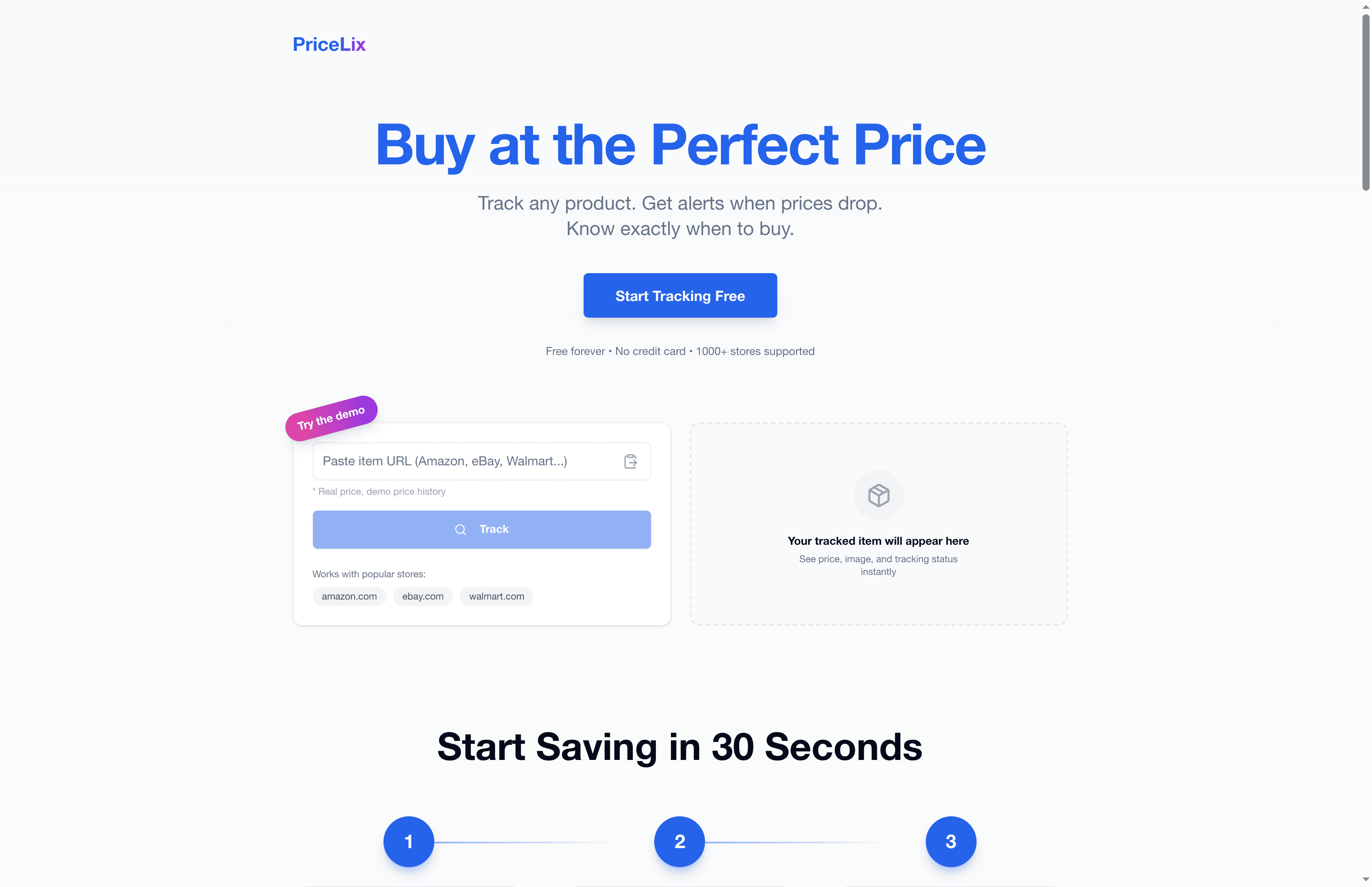
PriceLix lets you track prices across Amazon, Walmart, eBay, and over a thousand other stores from one dashboard. You set your target price, and we handle the rest. Real-time alerts notify you the moment a price drops, and detailed price history charts show you whether a deal is genuinely worth taking. No browser extensions required. No manual checking. Just smarter shopping. Start tracking your first item today and see how much you’ve been leaving on the table.
Frequently asked questions
Which month offers the highest average online discounts?
November delivers the biggest discounts, with Black Friday reductions averaging 28 to 38% and online order volume spiking 64% compared to typical months.
How much money can I save tracking seasonal sales proactively?
Shoppers who use sale calendars alongside price tracking tools can save $500 or more per year, with off-season purchases often delivering the highest actual savings.
Which price tracking tools cover the widest range of retailers?
Honey, Capital One Shopping, and Karma offer the broadest multi-retailer coverage, while CamelCamelCamel remains the strongest option specifically for Amazon products.
Is stacking coupons, clearance, and cashback the best way to increase savings?
Yes. Combining clearance with coupons and cash back consistently produces deeper discounts than any single strategy on its own.
Recommended
- Seasonal discount strategies: maximize your savings all year | PriceLix
- Unlock maximum savings by understanding online deals | PriceLix
- Blog - Price Tracking Tips & Savings Guides | PriceLix
- Bargain hunting strategies to save more online | PriceLix
- Disney Schnäppchenangebote 2026: So sparst du bis 30% – 2000-reisen - Ihre Spezialisten für Urlaub mit Disney-Magie
- Billigste måned at købe flybilletter: Spar op til 30% i 2026