
How to compare deals online: smart shopping for better savings
TL;DR:
- Comparing online deals requires using specific tools like Honey, Rakuten, and CamelCamelCamel for accuracy.
- Verifying deal authenticity involves checking price history, total costs, and product reviews, not just the listed price.
- Focusing on total value, including warranties and return policies, leads to smarter, long-term savings.
You finally snag what looks like a killer deal on a laptop. You’re pumped. Then, two days later, a friend texts you a screenshot showing the same laptop $80 cheaper on a different site. That stings. The good news? It doesn’t have to happen again. Comparing deals online isn’t just about opening a few tabs and guessing. It’s a skill, and when you get it right, you stop overpaying and start shopping with real confidence. This guide walks you through exactly how to do that, step by step, with the right tools and a clear process.
Table of Contents
- What you need before you start comparing deals
- Step-by-step: How to compare deals across platforms
- How to spot fake deals and avoid pricing tricks
- Verify value: Price history, product quality, and total cost
- The biggest myths about comparing deals: Why most shoppers get it wrong
- Ready to compare deals with confidence?
- Frequently asked questions
Key Takeaways
| Point | Details |
|---|---|
| Use the right tools | Browser extensions and price trackers automate comparisons and flag real discounts. |
| Beware of fake deals | Check price history to spot inflated discounts and avoid falling for urgency tactics. |
| Compare total value | Include shipping, warranty, and product quality before choosing the ‘best’ deal. |
| Verify before you buy | Double-check critical factors like reviews, return policy, and final price for true savings. |
What you need before you start comparing deals
With the challenge of online deals in mind, it’s critical to set yourself up for success by getting your digital shopping toolkit in order. Think of it like prepping your kitchen before cooking. Walking in without the right tools wastes time and leads to bad results.
The essential tools
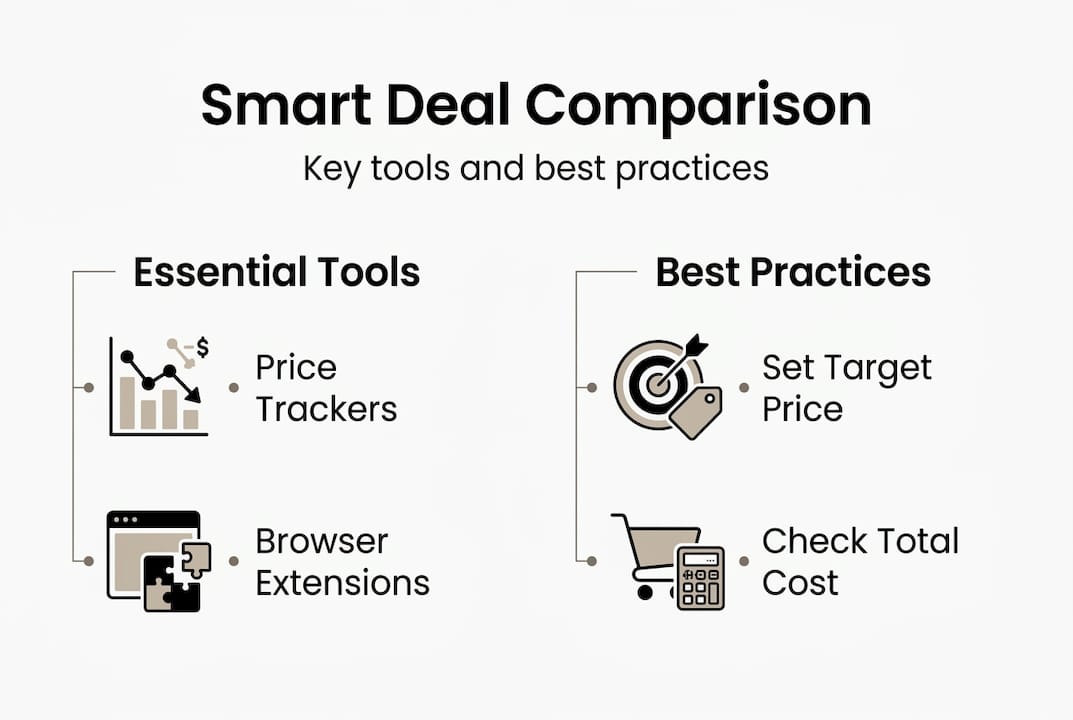
Following comparison shopping best practices starts with knowing which tools actually do the heavy lifting. Here’s a quick breakdown:
| Tool | What it does | Best for |
|---|---|---|
| Honey | Applies coupon codes automatically at checkout | Instant savings |
| Rakuten | Offers cashback on purchases at partner stores | Long-term savings |
| CamelCamelCamel | Tracks Amazon price history over time | Spotting fake discounts |
| Savely | Finds and applies digital coupons automatically | Grocery and retail deals |
Installing browser comparison tools like Honey, Rakuten, CamelCamelCamel, and Savely gives you automatic price comparisons, coupon application, and price history tracking while you shop, all without extra effort.
What else you need before you start
Beyond apps, you need a few other things in place:
- A list of the specific products you want, with model numbers where possible
- A clear budget range, not just a vague “I want to save money” goal
- Trusted review sources like Consumer Reports, Wirecutter, or Reddit communities
- A free account on at least one best price tracking strategies platform so you can set alerts
Knowing your target price before you start shopping keeps you anchored. Without it, you’re just browsing, and browsing is how impulse buys happen.
Pro Tip: Set up all your accounts and install your browser extensions before you actually need to buy something. Scrambling to install Honey at checkout while a flash sale ticks down is a recipe for mistakes.
Step-by-step: How to compare deals across platforms
Now that you have the tools ready, follow these steps to ensure you’re not missing out on hidden deals or wasting time on fake discounts.
- Search for the exact product using the full model name or number. Vague searches return vague results.
- Check at least three major retailers directly, including Amazon, Walmart, Target, and the brand’s own website. Manufacturer sites sometimes offer exclusive bundles or warranty perks.
- Run the product through a comparison engine like Google Shopping or PriceGrabber to get a fast overview of current listings.
- Pull up the price history using CamelCamelCamel for Amazon items or a general tracker for other stores. This tells you if today’s price is actually a deal.
- Evaluate refurbished or open-box options from certified sellers. You can often save 20 to 30 percent on electronics this way.
- Set a price alert so you’re notified if the price drops further. Learning about setting up price alerts takes less than a minute and pays off consistently.
Here’s a quick comparison of the three main approaches:
| Method | Speed | Accuracy | Effort |
|---|---|---|---|
| Manual browsing | Slow | Medium | High |
| App-driven comparison | Fast | High | Low |
| Price alerts | Passive | Very high | Very low |
As price tracker strategies from Consumer Reports confirm, shopping around on retailer sites for exclusive deals, using apps for price alerts, and considering refurbished or older models are proven ways to save.

Also check for bundled offers. Sometimes a retailer includes a free accessory or extended warranty that makes a slightly higher price the better value. Loyalty programs and store-specific coupons can tip the scales too. The comparison shopping guide approach works best when you look at the full picture, not just the sticker price.
Pro Tip: Always check the retailer’s shipping cost, return window, and warranty terms before you finalize. A $10 cheaper price means nothing if returns cost $15 or take three weeks.
How to spot fake deals and avoid pricing tricks
Even with all the right tools, recognizing real versus fake deals is a crucial next step. Retailers know you’re looking for discounts, and some use that against you.
Common pricing tricks to watch out for:
- Fake MSRP inflation: The “original price” shown is often a manufacturer’s suggested retail price that nobody ever actually charged. It makes the discount look bigger than it is.
- Dynamic pricing: Prices change based on your location, browsing history, or device. Clearing cookies or using incognito mode can sometimes reveal a lower price.
- Inflated pre-sale prices: A product gets quietly marked up weeks before a major sale, then “discounted” back to its normal price. This is especially common around Black Friday.
- Countdown timers and urgency tactics: “Only 2 left!” or a ticking clock is often a pressure tactic with no real basis. Don’t let artificial urgency push you into a bad decision.
- Unreliable third-party sellers: On marketplaces like Amazon, third-party sellers can list the same product at wildly different prices with varying quality and return policies.
As shop smarter with price trackers research from Consumer Reports shows, dynamic pricing, list price illusions, third-party seller variations, and urgency tactics are all edge cases shoppers need to watch for actively.
“If you can’t find a price history for a product, that’s a red flag. Cross-check across multiple trackers before trusting any discount claim.”
Understanding the types of online deals helps you recognize which ones are worth chasing. And knowing the benefits of price history tracking makes it clear why skipping that step is risky. Price history is your lie detector. Without it, you’re trusting the retailer to be honest, and that’s a gamble you don’t need to take.
If the importance of tracking price history isn’t already on your radar, make it one. It’s the single most reliable way to verify whether a deal is real.
Verify value: Price history, product quality, and total cost
Identifying a deal isn’t enough. Verifying its actual value is the final crucial step to true savings.
How to verify the full value of any deal:
- Pull the price history for the item on at least two trackers. If the price was raised 30 days before a sale, the “discount” is theater. Verify real discounts by checking whether the current price is genuinely below the historical average.
- Calculate the total cost, not just the listed price. Add shipping, taxes, and any required accessories.
- Check the product rating and review count. A 4.8-star rating with 12 reviews is less reliable than a 4.3-star rating with 4,000 reviews.
- Review the return policy. A 15-day return window with restocking fees is not the same as a 90-day free return.
- Factor in warranty length and support quality. A product with a two-year warranty from a reputable brand often saves more money long-term than a cheaper option with no coverage.
Here’s a sample comparison to make this concrete:
| Retailer | Base price | Shipping | Tax | Total cost | Rating | Warranty |
|---|---|---|---|---|---|---|
| Store A | $189 | $0 | $15 | $204 | 4.5 stars | 2 years |
| Store B | $175 | $12 | $14 | $201 | 3.8 stars | 90 days |
| Store C | $195 | $0 | $16 | $211 | 4.7 stars | 2 years |
Store B looks cheapest at first glance, but the lower rating and short warranty make Store A the smarter buy. Understanding why price history matters is only part of the picture. Learning to track prices for savings alongside quality data is what separates real deal hunters from people who just got lucky.
As Consumer Reports puts it, prioritize total value over the lowest price by factoring in reliability, warranties, and long-term costs. That mindset shift alone will save you hundreds of dollars over time.
The biggest myths about comparing deals: Why most shoppers get it wrong
Here’s the hard truth experienced deal-seekers know: cheapest is rarely best. Most shoppers still operate on the assumption that the lowest number wins. It doesn’t.
I’ve seen it play out too many times. Someone buys the cheapest version of a product, skips the reviews, ignores the return policy, and ends up replacing it within six months. The “savings” evaporate fast. Real savings come from research, timing, and understanding total value, not from chasing the smallest price tag.
The shoppers who consistently win are the ones using advanced price tracking tips strategically, planning purchases around known sale events like Prime Day or Black Friday, and double-checking retailer credibility before committing.
Another myth: comparing deals takes too long. With the right tools, a solid comparison takes five minutes, not an hour. The time investment upfront pays back every single time you avoid a bad purchase or catch a genuine discount.
Smart shopping isn’t about being cheap. It’s about being deliberate. Use the methods in this guide and you’ll stop bleeding money on deals that weren’t really deals at all.
Ready to compare deals with confidence?
Once you see the results of value-first shopping, it’s time to streamline your experience and save even more.
PriceLix makes the whole process easier. Instead of juggling five browser extensions and manually checking price history across multiple sites, you get one dashboard that does it all. Track items from Amazon, Walmart, eBay, and over a thousand other stores, and get real-time alerts the moment prices drop to your target.
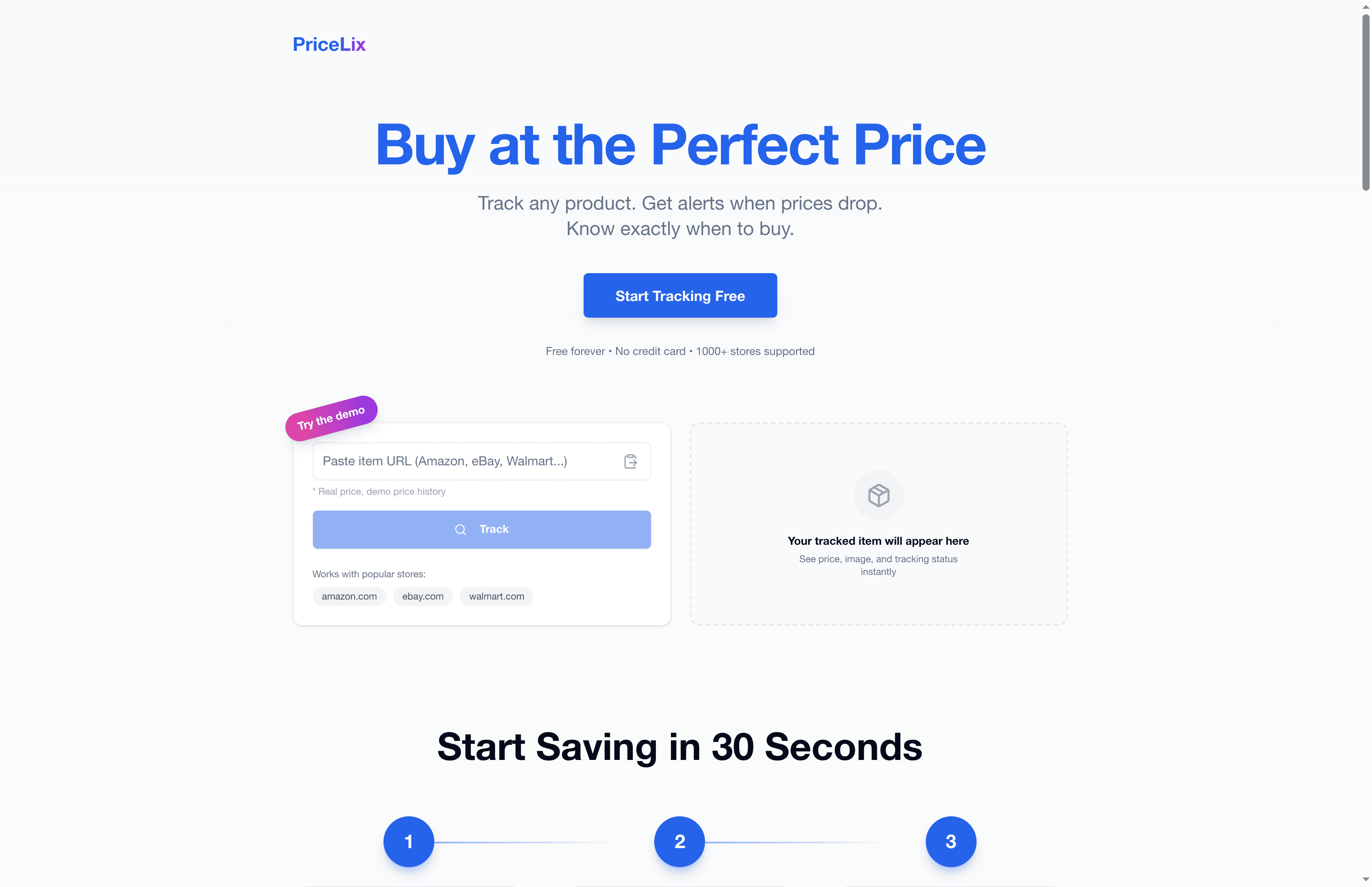
Start using advanced comparison tools today and set up your first price alert in under a minute. You can also explore the advantages of price history tracking to see exactly how much smarter your next purchase can be. Your wallet will notice the difference.
Frequently asked questions
How do I know if a deal is real or just inflated with a fake discount?
Check the product’s price history with a tracker to see if the price was raised before the sale, then compare across several retailers to confirm consistency.
What’s the quickest way to compare deals on multiple sites?
Browser extensions like Honey or dedicated apps automatically compare prices and apply coupons, cutting your research time down to seconds at checkout.
Do price alerts actually save money or just add noise?
Well-set price alerts keep you from impulse buying and help you purchase only when the item hits your target price. Shoppers using comparison and alert strategies save 5 to 10 percent on average for big-ticket items.
Should I always choose the lowest price?
No. Total value over lowest price means factoring in reliability, warranty, and return policies, because a slightly higher price often delivers better long-term savings.
Are AI shopping assistants accurate for deal comparison?
AI tools can help you generate product lists or get quick suggestions, but real-time data still needs manual verification since prices change faster than most AI tools can keep up with.