
Price optimization: save 15-40% on every online purchase
TL;DR:
- Price tracking and automation can save shoppers up to 40% per purchase.
- Using historical price data helps identify genuine deals and avoid impulse buying.
- Combining multi-platform comparison with alerts and history reduces overpaying and shopping stress.
Most online shoppers believe they’re getting a good deal during a sale. The reality? Retailers are often the ones winning. Studies show that shoppers who use price tracking and comparison consistently save 15-40% more than those who rely on gut instinct alone. Automation cuts the time spent monitoring prices by 70% and reduces impulse buys by 33%. Price optimization isn’t just a buzzword for retailers. It’s a practical set of strategies that puts you, the shopper, back in control. This guide breaks down exactly what price optimization means for everyday buyers, the core principles behind it, and the tools that make it effortless.
Table of Contents
- What is price optimization and why does it matter?
- Core principles of price optimization for shoppers
- Best tools and strategies for price optimization
- Advanced tips: Outsmarting retailer tactics and dynamic pricing
- Our perspective: Price optimization principles that actually work
- Ready to optimize every purchase?
- Frequently asked questions
Key Takeaways
| Point | Details |
|---|---|
| Let data guide decisions | Automated price alerts and tracking tools consistently save more than guessing or waiting for generic sales. |
| Comparison is key | Check prices across different sites with historical data to avoid hidden markups and spot real deals. |
| Outsmart retail tricks | Ignore charm pricing and use incognito mode or unbiased tools to sidestep personalization that raises your costs. |
| Save time and reduce impulse buys | Using price tracking automation cuts impulse purchases and saves you both money and valuable time. |
What is price optimization and why does it matter?
Price optimization, from a shopper’s perspective, means using data and timing to buy products at their lowest realistic price. It’s not about being cheap. It’s about being informed.
Retailers use sophisticated algorithms to adjust prices constantly. Prices shift based on demand, competitor moves, time of day, and even your browsing history. These retailer pricing tactics are designed to maximize revenue, not to help you save. Understanding that dynamic is the first step toward flipping it in your favor.
Here’s what price optimization actually delivers for shoppers:
- Significant savings. Shoppers who track prices and compare across stores consistently save 15-40% per purchase, with automation reducing monitoring time by 70%.
- Smarter timing. Instead of buying impulsively when a “sale” badge appears, you buy when price history confirms the deal is real.
- Fewer regret purchases. Automation and alerts reduce impulse buying by 33%, which means more money stays in your pocket.
- Confidence at checkout. When you know the price history of an item, you stop second-guessing yourself.
“The house always wins when you shop on emotion. Price data flips the odds.”
The biggest mistake shoppers make is trusting the retailer’s framing. A “50% off” tag means nothing if the original price was inflated three weeks ago. Price history charts expose that trick instantly.
Pro Tip: Focus on the data, not the discount badge. A price drop alert based on historical lows will always outperform a retailer’s marketing language. Use a price tracking checklist to build a repeatable habit around this.
Price optimization also matters because it scales. Once you set up alerts and tracking for your most-wanted items, the system works passively. You don’t have to check prices manually every day. The data comes to you.
Core principles of price optimization for shoppers
With the stakes clear, let’s turn core price optimization theory into actionable principles you can use immediately.
There are four principles every smart shopper should internalize:
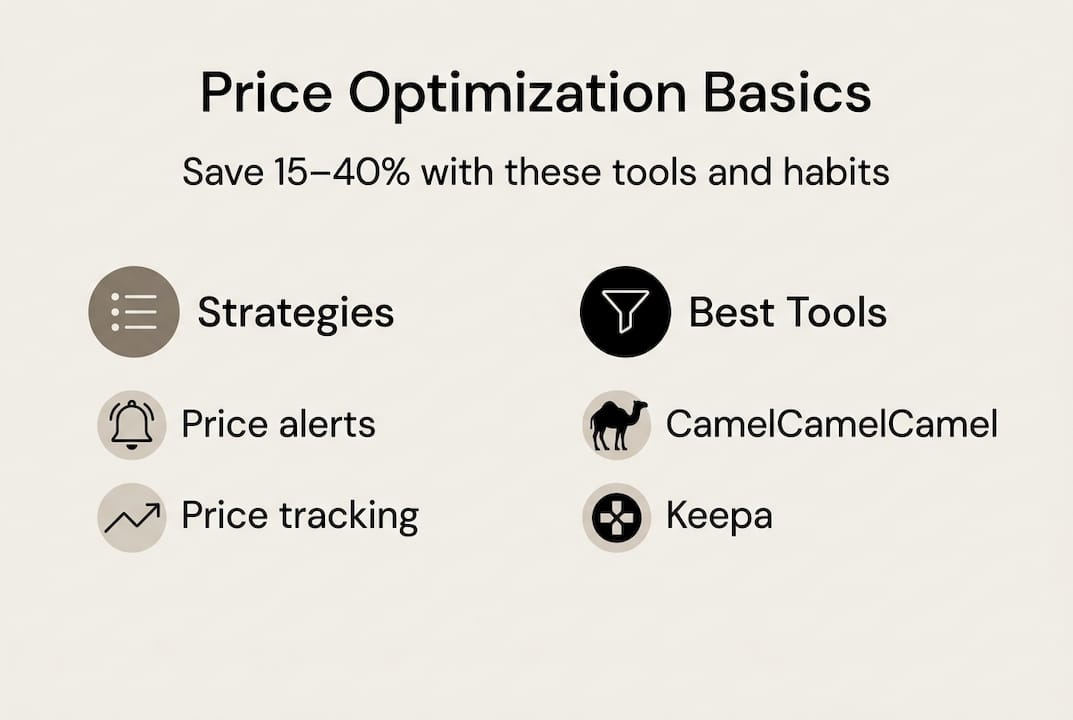
- Time your purchases around price history, not sale events. Retailers manufacture urgency. Price history charts reveal whether today’s price is actually a low point or just average.
- Set price drop alerts at a meaningful threshold. Setting alerts at 15-20% below the current price gives you passive coverage during sales events without constant manual checking.
- Compare across multiple platforms before buying. The same product can vary by 20-30% between Amazon, Walmart, and eBay on any given day.
- Use price history as your baseline, not the listed “original” price. If an item has spent most of the past year at $45, a “sale” price of $42 is not a deal.
Here’s a quick comparison of shopping approaches:
| Approach | Effort | Avg. savings | Impulse buy risk |
|---|---|---|---|
| No strategy (buy on impulse) | Low | 0-5% | Very high |
| Manual price checking | High | 5-15% | Medium |
| Alerts + price history tools | Low | 15-40% | Low |
| Multi-platform comparison | Medium | 10-25% | Low |
The numbers make the case clearly. Low effort plus smart automation beats high effort manual checking every time.

Understanding how price drop alerts work is essential here. An alert isn’t just a notification. It’s a decision trigger. When your alert fires, you already know the context: the item hit your target price, and the history confirms it’s a genuine low.
Pro Tip: Don’t set alerts at the current price. Set them 15-20% lower. This filters out minor fluctuations and ensures you only act when there’s a real opportunity. Passive monitoring during major sales events like Black Friday becomes effortless with this setup.
Refer to price comparison best practices to sharpen your cross-platform strategy further.
Best tools and strategies for price optimization
It’s one thing to know the theory. Here are the practical tools and strategies that turn know-how into real savings.
Here’s how the most popular price tracking tools stack up:
| Tool | Best for | Multi-site | Price history | Alerts |
|---|---|---|---|---|
| CamelCamelCamel | Amazon | No | Yes | Yes |
| Keepa | Amazon | No | Yes (detailed) | Yes |
| Honey | Multi-retailer | Yes | Limited | Yes |
| Google Shopping | Multi-retailer | Yes | No | Yes |
| PriceLix | Multi-retailer | Yes | Yes | Yes |
CamelCamelCamel and Keepa are the gold standard for Amazon tracking, with Honey and Google Shopping covering broader retail. The gap most tools leave is consolidated multi-store tracking with full price history. That’s where platforms like PriceLix fill in.
When choosing a tool, prioritize these features:
- Alert customization. You want to set specific price thresholds, not just generic “price dropped” notifications.
- Multi-site scanning. Tracking one store misses savings available elsewhere.
- Historical price data. Without history, you can’t tell if today’s price is actually good.
- No browser extension required. Extensions slow browsers and raise privacy concerns. Dashboard-based tools are cleaner.
Common mistakes shoppers make with price tracking tools:
- Setting alerts too close to the current price, leading to noise and alert fatigue
- Only tracking items on one platform and missing better deals elsewhere
- Ignoring price history and acting on alerts without context
- Forgetting to track shipping costs, which can erase apparent savings
For a deeper look at online price tracking methods and how to build an automated monitoring workflow, those resources will walk you through the setup step by step.
Automation is the real game-changer. Once your items are tracked and alerts are configured, you stop bleeding time on manual checks. The system flags opportunities. You act when it makes sense.
Advanced tips: Outsmarting retailer tactics and dynamic pricing
Armed with essential tools, let’s address the subtler ways retailers try to influence your choices and what you can do about it.
Retailers are not passive players. They actively use psychological pricing to shape your decisions. Knowing their playbook helps you ignore it.
Here are the most common tactics they use:
- Charm pricing. Prices ending in .99 or .97 feel significantly cheaper than they are. Your brain reads $49.99 as “forty-something,” not fifty dollars.
- Price anchoring. Showing a high “original” price next to a “sale” price makes the deal look better than it is, even if the original price was artificially inflated.
- Personalized pricing. Retailers track your browsing behavior and may show you higher prices based on your history, location, or device.
- Artificial urgency. Countdown timers and “only 3 left” messages push you to act before you’ve done the math.
- Bundle confusion. Bundling products makes it harder to compare individual item prices across competitors.
“Ignoring the retailer’s anchor price and focusing on historical data can yield savings of 20% or more on the same item within weeks.”
The fix for most of these is straightforward. Personalization raises prices for some shoppers, so browsing in incognito mode or using a fresh browser session can show you different pricing. Pair that with tool-based comparisons and you remove the retailer’s home field advantage.
Retailers also use psychological pricing and anchoring to make average prices look exceptional. Price history charts cut right through this. If the item has sold at $35 for six months and suddenly shows a “was $60, now $40” label, the chart tells the real story.
For a broader view of top price tracking strategies that counter these tactics, that resource covers the full picture.
The bottom line: shop with data, not emotion. Every retailer trick listed above loses its power the moment you have price history in front of you.
Our perspective: Price optimization principles that actually work
Here’s where most shoppers get price optimization wrong. They think it’s about hunting sales harder. It’s not.
We’ve seen the pattern repeatedly. Shoppers who chase deal-of-the-day emails and flash sales often end up spending more, not less. The urgency pulls them into purchases they didn’t plan. The discount feels like a win, but the unplanned spend is a loss.
The shoppers who save the most do one thing differently: they let real-world automation do the watching while they stay patient. They set a target price, configure an alert, and wait. No browsing. No temptation. Just a notification when the math works.
Conventional advice says “shop around.” That’s fine but incomplete. The real behavioral shift is moving from reactive shopping to passive, data-driven readiness. You decide what you want and what you’ll pay before the retailer gets a chance to influence you. That single shift, more than any coupon or sale event, is what delivers repeatable savings over time.
Ready to optimize every purchase?
You now have the principles, the tools, and the tactics to stop overpaying. The next step is putting them to work automatically.
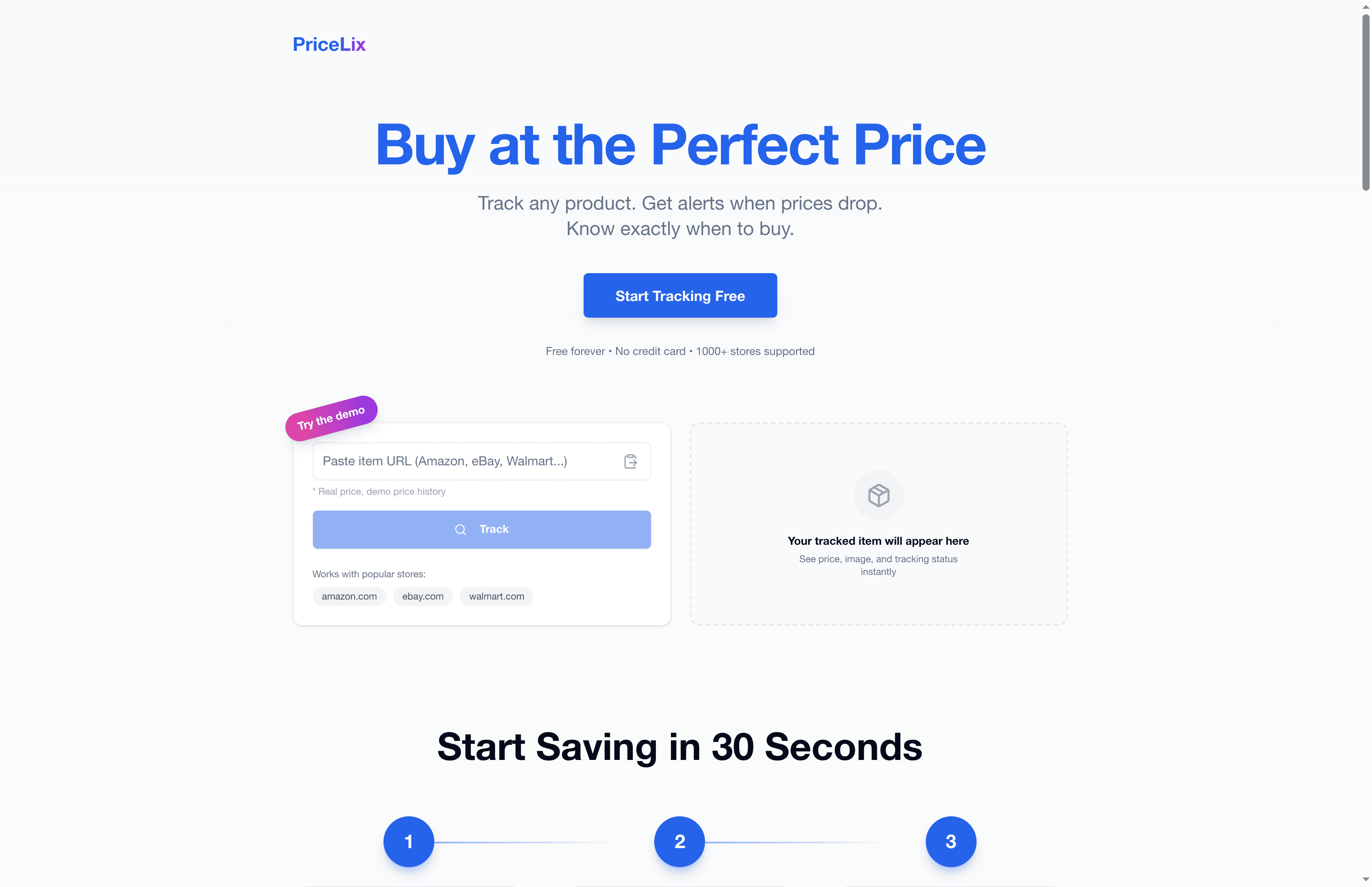
PriceLix brings everything into one clean dashboard: real-time price tracking across Amazon, eBay, Walmart, and over a thousand other stores, detailed price history charts, and customizable alerts that notify you the moment a price hits your target. No browser extensions. No manual checking. Just passive, reliable savings. Start by learning how to set up smart alerts for your most-wanted items and let the platform do the work while you focus on everything else.
Frequently asked questions
What is the fastest way to know if an online price is a good deal?
Set a price drop alert at your target price and check the item’s price history chart to confirm whether today’s price is genuinely at or near its historical low. If the history backs it up, it’s a real deal.
Which price tracking tool works best for Amazon?
CamelCamelCamel and Keepa are the top choices for Amazon, offering detailed price history charts and customizable drop alerts that give you full visibility into an item’s pricing over time.
How do price optimization strategies save money versus just waiting for sales?
Automation and data-driven alerts consistently deliver 15-40% savings while cutting impulse purchases by 33%, which passive sale-watching can’t match because it lacks the historical context to judge whether a deal is real.
Can retailer tactics like charm pricing really impact my shopping?
Absolutely. Charm pricing and anchoring are proven to nudge shoppers toward spending more than they intended, but relying on price history data instead of the retailer’s framing neutralizes these tactics almost entirely.
Recommended
- Bargain hunting strategies to save more online | PriceLix
- Factors Affecting Online Prices: Save More in 2026 | PriceLix
- Stop Overpaying Online | Save $1000/Year | PriceLix | PriceLix
- Blog - Price Tracking Tips & Savings Guides | PriceLix
- Gestion achat lingerie en ligne : guide pratique complet – Valetta.fr