
Unlock retail price matching for maximum online savings
TL;DR:
- Retail price matching policies vary widely, with specific rules on eligible items and competitors.
- Proper preparation, including proof and exact item matching, is essential for successful price match requests.
- Combining price matching with coupons, rewards, and price alerts maximizes overall savings.
Most shoppers assume price matching is simple: find a lower price, show it to the cashier, and pocket the difference. Reality is messier than that. Retailers have wildly different rules about what qualifies, who they’ll match, and when they’ll say no outright. Miss one detail in the fine print and you walk away paying full price. This guide breaks down exactly how retail price matching works, which major retailers offer it, and how you can layer it with other tactics to maximize savings on every purchase.
Table of Contents
- What is retail price matching?
- How major retailers implement price matching policies
- The step-by-step process for requesting a price match
- Stacking price matching with other savings strategies
- The overlooked truth about retail price matching
- Streamline price matching with PriceLix
- Frequently asked questions
Key Takeaways
| Point | Details |
|---|---|
| Understand price matching | Retail price matching lets you get the lowest price available for identical items from eligible competitors. |
| Check each retailer’s policy | Major retailers have very different price match rules and restrictions, so always review before shopping. |
| Maximize savings with stacking | Combining price matching with coupons, rewards, and alerts can significantly boost your total savings. |
| Follow step-by-step requests | Submitting a price match requires proper proof, matched products, and following retailer guidelines. |
| Use price tracking tools | Platforms like PriceLix help automate finding deals and streamline savings through price matching. |
What is retail price matching?
Retail price matching is a policy where a retailer agrees to match a competitor’s lower price on an identical item. The goal is simple: keep you from walking out the door. Retailers would rather cut their margin slightly than lose the sale entirely.
But here’s what most people miss. Price matching isn’t a universal right. It’s a voluntary policy each retailer designs on its own terms. Some are generous. Others are full of restrictions that make approval feel like winning a lottery.
Why do retailers offer it at all? A few reasons:
- Customer retention: It’s cheaper to match a price than to acquire a new customer.
- Competitive positioning: Stores like Best Buy use it to signal they’re always price-competitive.
- Perceived fairness: Shoppers feel respected when a store acknowledges a better deal exists elsewhere.
- Reduced cart abandonment: Online shoppers are one tab away from a competitor. Price matching keeps them on the page.
“Price matching is a retailer’s way of saying: we value your business more than we value that extra margin.” It’s a retention tool dressed up as a consumer benefit.
The key terms you need to know before requesting a match:
- Identical item: Same brand, model number, color, and size. No exceptions.
- Eligible competitor: Not every store counts. Retailers define which competitors qualify.
- Proof of price: You need to show the lower price, usually via a live website or printed ad.
When you maximize savings online, understanding these definitions is your starting point. Without them, you’re guessing. And guessing costs money.
Now that we’ve established why price matching matters, let’s break down how different retailers approach these policies.
How major retailers implement price matching policies
Not all price matching policies are created equal. Price matching is common across major retailers like Best Buy, Home Depot, and Target, but the details vary enough to make a real difference in what you can claim.
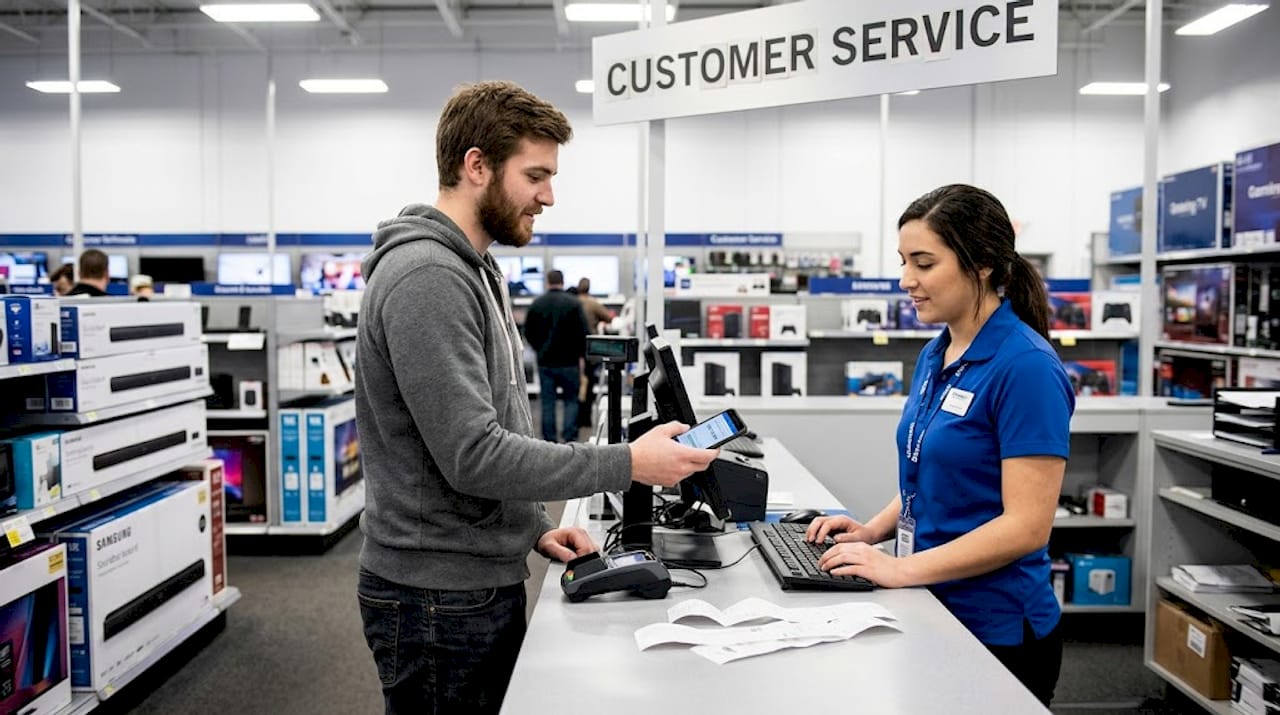
Here’s a quick comparison of how three major retailers stack up:
| Retailer | Matches online prices? | Proof required | Key limitations |
|---|---|---|---|
| Best Buy | Yes, including Amazon | Live website or ad | Excludes open-box, clearance, limited-time deals |
| Target | Internal price adjustments only | App or website | No longer matches external competitor prices |
| Home Depot | Yes, local competitors | Printed ad or digital offer | Excludes special orders and installation items |
Target’s shift to internal-only adjustments is a big deal. Many shoppers still walk in expecting to match a Walmart price and leave disappointed. Always check Target’s policy before assuming anything.
Watch out for these common fine print traps:
- Bundle exclusions: If the competitor’s price is part of a bundle deal, it usually won’t qualify.
- Third-party sellers: Amazon listings from third-party sellers are often excluded, even on Best Buy’s generous policy.
- Limited-time flash sales: Many retailers won’t match prices that are clearly promotional or time-limited.
- Out-of-stock items: If the competitor is out of stock, the match is typically denied.
- Geographic restrictions: Home Depot often limits matches to local competitors, not national chains.
Pro Tip: Before you buy anything, spend two minutes checking the retailer’s current price match policy page. Policies update frequently, and what worked six months ago may not apply today. When you compare deals online using a dedicated tool, you can spot eligible price gaps before you even set foot in a store.
Knowing price comparison best practices also helps you frame your request correctly, which matters more than most shoppers realize.
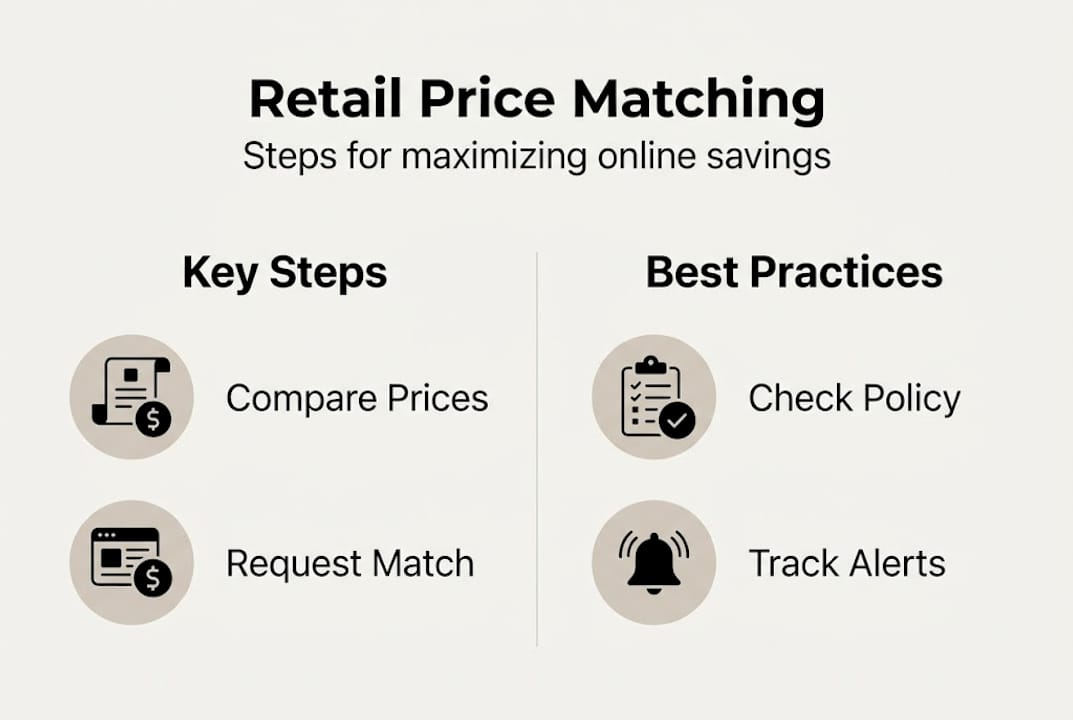
With these policy differences in mind, let’s see how the price matching process unfolds when you want to request a match.
The step-by-step process for requesting a price match
Knowing the policy is one thing. Actually getting the match approved is another. Here’s how to do it right, whether you’re shopping in-store or online.
- Find the competitor’s lower price. Search for the exact item on a competitor’s site. Confirm the item is in stock, available to the public, and not a membership-exclusive price.
- Check eligibility. Cross-reference the retailer’s policy. Confirm the competitor qualifies, the item matches exactly (model number, color, size), and there are no exclusions that apply.
- Gather your proof. Take a screenshot or pull up the live webpage on your phone. Some retailers require the price to be live and verifiable at the time of the request.
- Make the request. In-store, speak directly to a customer service rep or manager. Online, use the chat function or call the support line. Be clear, polite, and specific.
- Complete the purchase. Once approved, confirm the adjusted price appears on your receipt or order confirmation before finalizing payment.
Retailers require proof of competitor pricing and only match identical items, so sloppy preparation is the number one reason requests get denied.
Common mistakes that kill price match requests:
- Showing a price from a third-party marketplace seller instead of the retailer itself.
- Presenting an expired promotional price.
- Mismatched model numbers (even one digit off is a rejection).
- Requesting a match after the return window has closed.
Pro Tip: Use a price tracking tool to track online prices over time. Price history data shows you when a competitor’s price is genuinely lower versus temporarily inflated before a sale. This also helps you time your request for maximum approval odds. Pair this with solid bargain hunting strategies and you’re not just hoping for a match. You’re engineering one.
Once you’ve navigated the request process, the next question is: Can you combine price matching with other savings tactics for even greater benefits?
Stacking price matching with other savings strategies
Price matching alone is good. Price matching stacked with coupons, rewards points, and price alerts? That’s where the real savings happen. Think of it like layering armor. Each piece adds protection. Together, they’re nearly impenetrable.
Here’s how to layer your savings effectively:
- Coupons first, then price match: Apply any available coupon codes or manufacturer coupons before or after the price match, depending on the retailer’s rules.
- Activate loyalty rewards: Make sure your purchase earns points or cashback through the retailer’s loyalty program. Price matching doesn’t usually disqualify you from earning rewards.
- Set price alerts: Use a price alert tool to get notified the moment a competitor drops their price. This gives you a real-time trigger to request a match before the window closes.
- Stack with cashback apps: Platforms like Rakuten or cashback credit cards can add another layer of savings on top of a matched price.
- Time it around sales events: Major sales like Black Friday often have price match guarantees that extend before and after the event, giving you extra flexibility.
Here’s a real-world example of what stacked savings can look like:
| Scenario | Original price | Price match savings | Coupon savings | Rewards earned | Net cost |
|---|---|---|---|---|---|
| Laptop purchase | $1,200 | $120 (10% off) | $50 | $24 (2% back) | $1,006 |
| Appliance purchase | $800 | $80 (10% off) | $30 | $16 (2% back) | $674 |
| Electronics bundle | $500 | $50 (10% off) | $20 | $10 (2% back) | $420 |
The numbers add up fast. Retail price matching helps retailers retain customers and offer fair competition, but when you stack it with other tools, you flip the advantage entirely in your favor.
Understanding price alert benefits is key here. Alerts remove the guesswork and let you act at exactly the right moment. And if you want to go deeper, learning about dynamic pricing helps you understand why prices move and when competitors are most likely to undercut each other.
With these layered strategies in mind, let’s examine what most guides miss about retail price matching and what savvy shoppers must know.
The overlooked truth about retail price matching
Here’s something most price matching guides won’t tell you: retailers design these policies to look generous while staying profitable. The exclusions aren’t accidental. They’re strategic. Third-party seller exclusions, flash sale carve-outs, and geographic restrictions all exist to limit how often the policy actually pays out.
I’ve seen shoppers walk in confident, only to get denied because the competitor’s item was sold by a marketplace seller, not the retailer directly. That’s not bad luck. That’s the policy working exactly as intended.
The savvy move is to treat every price match request like a mini negotiation. Know the rules better than the person behind the counter. Check for recent policy updates, because retailers quietly revise terms all the time. And always verify that how price comparison works in your specific case before you commit to a purchase.
“Price matching isn’t always as simple or as generous as it seems. Read every policy.”
The shoppers who consistently win at this game are the ones who do their homework upfront, not after the fact.
Streamline price matching with PriceLix
Ready to make price matching effortless? Manually checking competitor prices, reading policy fine print, and timing your requests is a lot of work. That’s exactly what PriceLix is built to simplify.
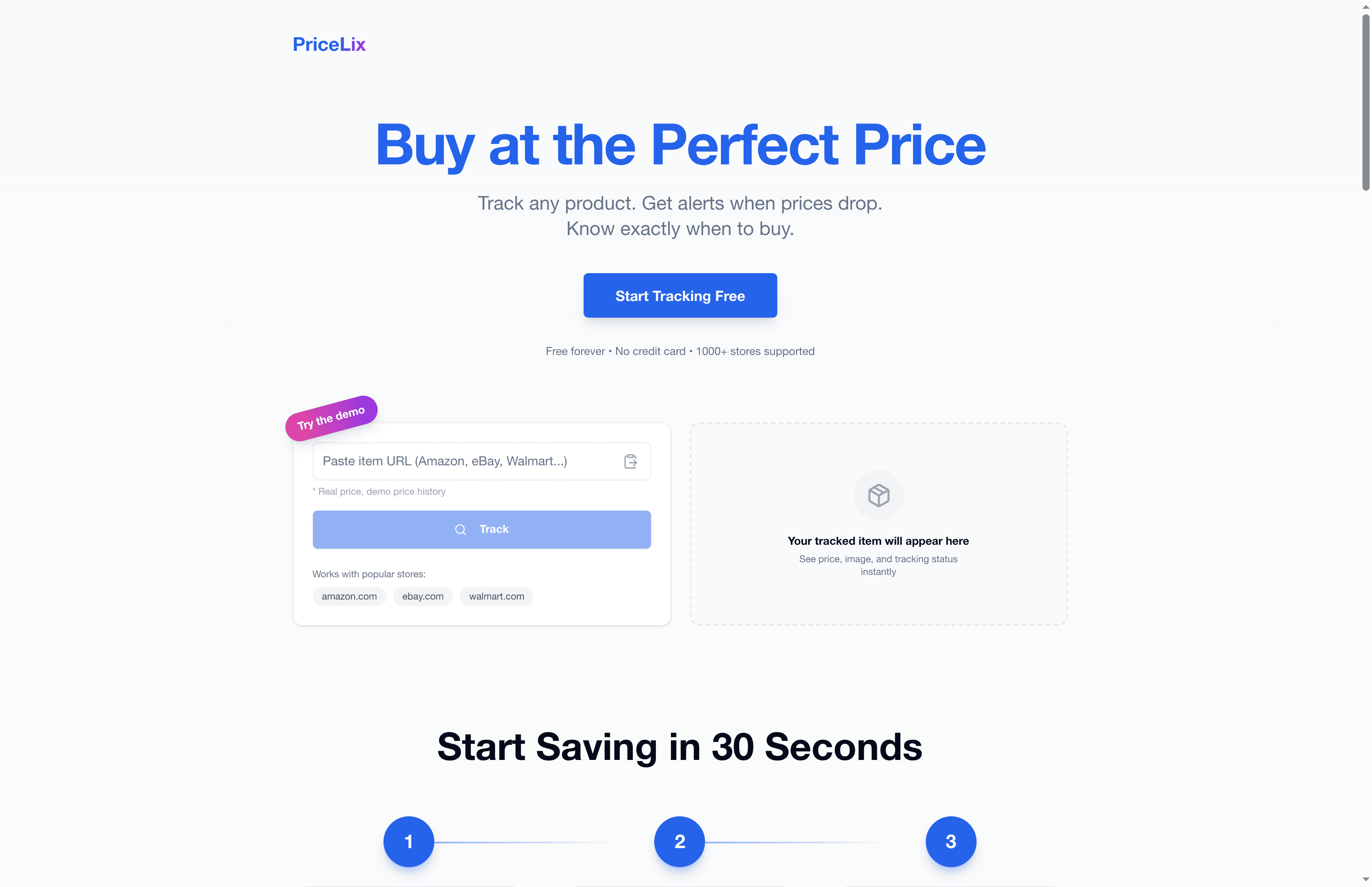
With the PriceLix savings platform, you can track prices across Amazon, Walmart, eBay, and over a thousand other stores automatically. Get real-time alerts the moment a competitor drops their price, so you always have the proof you need to request a match. No browser extensions required. No manual checking. Just smarter shopping with less effort. Start tracking today and let PriceLix do the heavy lifting while you pocket the savings.
Frequently asked questions
Do all retailers offer price matching?
No, price matching varies widely across retailers. Best Buy and Home Depot offer it broadly, but Target has shifted to internal price adjustments only and no longer matches external competitor prices.
Can you use price matching with coupons and rewards?
Yes, in most cases you can stack price matching with coupons and loyalty rewards, but retailer policies differ on what combinations are allowed, so always read the fine print before assuming you can layer everything.
What items qualify for price matching?
Only identical items with matching brand names, model numbers, and specifications sold by an eligible competitor qualify. Retailers verify exact matches before approving any request.
How do you prove a competitor’s lower price?
You typically need a live website page, a digital screenshot, or a printed ad showing the lower price at the time of your request. Proof must be current and verifiable by the retailer.
Can price matching be done online or is it only in-store?
Some retailers allow online price match requests via chat or phone, but policies differ by retailer, so always check the official guidelines before assuming online requests are accepted.