
Top Seasonal Shopping Tips to Maximize Your Savings
TL;DR:
- Effective seasonal shopping requires planning, setting a budget, and avoiding impulse buys by applying a 90-day delay on non-essential items. Knowing optimal sale windows, stacking discounts, verifying actual price drops, and comparing across retailers can maximize savings while minimizing hidden costs. Using automated tools like Price-lix helps track price history, monitor deals, and execute strategic purchases, ensuring true value from sales.
Seasonal sales look like a goldmine from the outside. But once you’re in the middle of Black Friday alerts, “limited time” countdowns, and suspiciously round-number “discounts,” the top seasonal shopping tips you actually need aren’t the ones most articles hand you. The traps are real. Fake markups, impulse purchases you regret by January, and shipping fees that quietly eat your savings. This guide cuts through all of that. You’ll get concrete seasonal shopping strategies built around timing, smart discount stacking, and avoiding the costly mistakes that bleed most shoppers dry every year.
Table of Contents
- Key takeaways
- 1. Build your seasonal shopping checklist before the sale starts
- 2. Apply the 90-Day Rule to kill impulse buying
- 3. Know when to shop for what
- 4. Avoid the early December price trap
- 5. Stack discounts like a pro
- 6. Verify that the discount is real
- 7. Compare prices across multiple retailers
- 8. Factor in shipping before celebrating
- 9. Read the return policy before you buy
- 10. Track inventory and set price alerts
- My honest take on seasonal shopping strategy
- Let Price-lix do the heavy lifting for you
- FAQ
Key takeaways
| Point | Details |
|---|---|
| Budget before you browse | Set a firm spending limit with a small buffer before any sale starts to prevent overspending. |
| Timing is everything | Different product categories have optimal sale windows; knowing them saves 20 to 35% or more. |
| Stack every discount layer | Combining promo codes, cashback, and credit card rewards adds 10 to 20% beyond advertised prices. |
| Verify discounts with price history | Many “sales” are just inflated original prices; use price tracking tools to confirm real drops. |
| Factor in hidden costs | Shipping, installation, and return restrictions can quietly erase the value of a great sticker price. |
1. Build your seasonal shopping checklist before the sale starts
The most successful seasonal shoppers don’t start planning when the sale notification hits. They plan weeks ahead. Your seasonal shopping checklist is the foundation everything else rests on.
Start with a clear budget that includes a small buffer, roughly 10 to 15%, for unexpected deals that genuinely make sense. Then separate your list into two columns: things you need and things you want. When the sale pressure is on, that distinction gets blurry fast. Having it written down keeps you honest.
- List specific items, not vague categories (“Samsung 65-inch TV” beats “new TV”)
- Set a maximum price per item so you know instantly if a deal is actually a deal
- Rank your list by priority so you spend your energy on what matters most
- Define which categories you’re shopping for during which sale events
Focused, category-specific lists are one of the clearest separators between shoppers who walk away satisfied and those who overspend on things they never needed.
Pro Tip: Write your list in a notes app you can access on your phone. When you’re in the moment, having it at your fingertips stops you from adding things that weren’t part of the plan.
2. Apply the 90-Day Rule to kill impulse buying
Here’s one of the best tips for shopping sales that most people skip entirely. Before any seasonal sale, go through your “maybe” items. Anything you added to a wishlist less than 90 days ago probably doesn’t belong in your cart.
The 90-Day Rule works like this: when you feel the urge to buy something non-essential, add it to a list and wait 90 days. Most of the time, the desire fades. If it doesn’t, you’ve confirmed it’s a genuine need and not a sale-induced impulse. This is one of the simplest delayed purchase strategies and it has a measurable effect on budget adherence.
During holiday sales especially, retailers engineer urgency. Countdown timers, “only 3 left” banners, flash deals. They’re designed to short-circuit your judgment. The 90-Day Rule is your defense against that.
3. Know when to shop for what
Not all sales are created equal, and not all products hit their lowest prices during the same events. This is where seasonal shopping strategies get genuinely useful.

| Category | Best sale window | Typical savings |
|---|---|---|
| Kitchen appliances | Memorial Day, Labor Day, Black Friday | 20 to 35% off |
| Electronics | Black Friday, Amazon Prime Day | 20 to 40% off |
| Clothing and apparel | End-of-season clearance | 30 to 70% off |
| Mattresses | Memorial Day, Presidents’ Day | 15 to 30% off |
| Outdoor furniture | Labor Day, late summer | 30 to 50% off |
The end-of-season clearance window is worth understanding separately. You can get 30 to 70% off but you’re accepting risk on size availability, style selection, and limited stock. Early-season shopping gives you better inventory at modest discounts. Which approach fits you depends on whether securing exactly the right item matters more than getting the deepest cut on price.
Pro Tip: For clothing in particular, learning to build a seasonal wardrobe with planned off-season buys pays off every year. Resources like seasonal wardrobe planning can help you think through those transitions strategically.
4. Avoid the early December price trap
This one catches a lot of people. Early December prices often creep up after Black Friday and Cyber Monday. Retailers know shoppers are still in buying mode and some haven’t finished their lists. That means the “sale” you see on December 5th may actually be higher than what was available on November 29th.
The playbook for how to save on seasonal shopping in winter is this: buy heavily during Black Friday and Cyber Monday, then pull back in early December. If you miss something, wait. Last-minute discounts often return in mid to late December as retailers push to clear inventory before year-end.
Patience here is not passive. It’s a strategy.
5. Stack discounts like a pro
This is where the best holiday shopping advice separates itself from the generic stuff. A sale price alone is rarely your best price. The real savings come from layering.
Here’s how discount stacking works in practice:
- Start with the retailer’s advertised sale price
- Apply a promo code (check the retailer’s email list or a code aggregator site)
- Run the purchase through a cashback portal to earn a percentage back
- Pay with a credit card that offers purchase rewards or travel points
Stacking these layers can add 10 to 20% on top of the advertised discount. That’s not nothing. On a $400 appliance, that’s an extra $40 to $80 back in your pocket. And 76% of consumers are at least somewhat influenced by cashback rewards. The ones who act on that influence consistently pay less.
You can also explore streetwear cop strategies for niche seasonal drops where stacking is equally applicable but timing is even tighter.
6. Verify that the discount is real
Not every “50% off” is what it claims to be. Many retailers inflate the “original” price weeks before a sale to make the markdown look bigger. This is markdown theater, and it’s common enough to treat as the default assumption rather than the exception.
The only way to cut through it is price history data. If you can see what a product actually sold for over the past 90 to 180 days, you can tell instantly whether a “sale” price is genuinely lower or just a number dressed up in a discount badge. Price tracking tools that show historical charts make this easy. Without them, you’re essentially trusting the retailer to be honest about what “original price” means, and that trust is rarely earned.
7. Compare prices across multiple retailers
Online shopping gives you something physical stores can never match: the ability to compare dozens of retailers in seconds. Use that advantage. A TV listed at $499 “on sale” at one retailer might be $449 at another store with no fanfare at all.
Price comparison also matters for product bundles. Sometimes a slightly higher sticker price at one retailer comes with free installation, extended warranty, or haul-away of your old item. Those extras have real dollar value that won’t show up in a side-by-side price comparison unless you look for them.
8. Factor in shipping before celebrating
Here’s a number worth keeping in mind: 69% of shoppers rate free shipping as very or extremely important, compared to only 29% who prioritize same-day delivery. That preference exists for a reason. Shipping costs can quietly turn a great deal into a mediocre one.
Before finalizing any online purchase during a seasonal sale, calculate the total delivered cost. Some retailers advertise low prices specifically because they charge above-average shipping. Others offer free shipping thresholds that push you to add more items to your cart, which is exactly how you end up overspending. Know the full number before you commit.
9. Read the return policy before you buy
Sale items often come with tighter return windows or no return option at all. “Final sale” is the phrase to watch for. If you buy a winter coat in November and it doesn’t fit, being stuck with it because the tag said “final sale” is an expensive lesson.
Before buying anything during a major sale event, spend 60 seconds confirming:
- Whether the item is returnable and for how long
- Whether returns are accepted in-store, by mail, or both
- Whether restocking fees apply
- Whether the original payment method gets refunded or store credit only
Major holiday weekends often come with bundled extras like free delivery and installation, but the return terms on those bundled purchases can be different from standard purchases. Always check.
10. Track inventory and set price alerts
Waiting for the right price is smart. Missing it because you weren’t watching is just painful. Setting price alerts removes the manual monitoring burden entirely. You tell the tool what price you’re willing to pay, and it tells you when that price shows up.
This is especially useful for high-demand items that sell out quickly. During major sale events, popular products can vanish within hours. If you’ve been tracking an item and know its price history, you can act the second a real drop appears without second-guessing yourself.
For a deeper look at how sale tracking works year-round, the payoff goes beyond individual deals. It builds a pattern of buying at genuine lows rather than manufactured “sale” moments.
My honest take on seasonal shopping strategy
I’ve watched a lot of people approach holiday sales with the best intentions and still end up overspending. The honest truth I’ve arrived at after years of following this stuff closely is that most seasonal shopping mistakes aren’t about ignorance of tactics. People know they should compare prices. They know impulse buying is costly. The problem is that sale environments are designed to overwhelm those instincts.
What I’ve found actually works is removing as many in-the-moment decisions as possible. Set your list, your budget, and your price targets before the sale starts. Then your job during the actual event is just execution. No deliberating, no “maybe just this one thing.” You already decided.
I’ve also learned that the best savings I’ve ever seen came from stacking, not from the advertised discount itself. A 20% off sale becomes a 30 to 35% savings when you add cashback and a rewards card. That gap compounds over a year of intentional shopping.
The one thing I wish someone had told me earlier: timing purchases strategically is not about catching every deal. It’s about not missing the ones that actually matter to you. That shift in mindset changes everything.
— Serhii
Let Price-lix do the heavy lifting for you
You now have a solid set of seasonal shopping strategies. But knowing when a discount is real, tracking dozens of items across multiple retailers, and catching price drops the moment they happen? That’s where most shoppers lose ground. That’s exactly what Price-lix is built for.
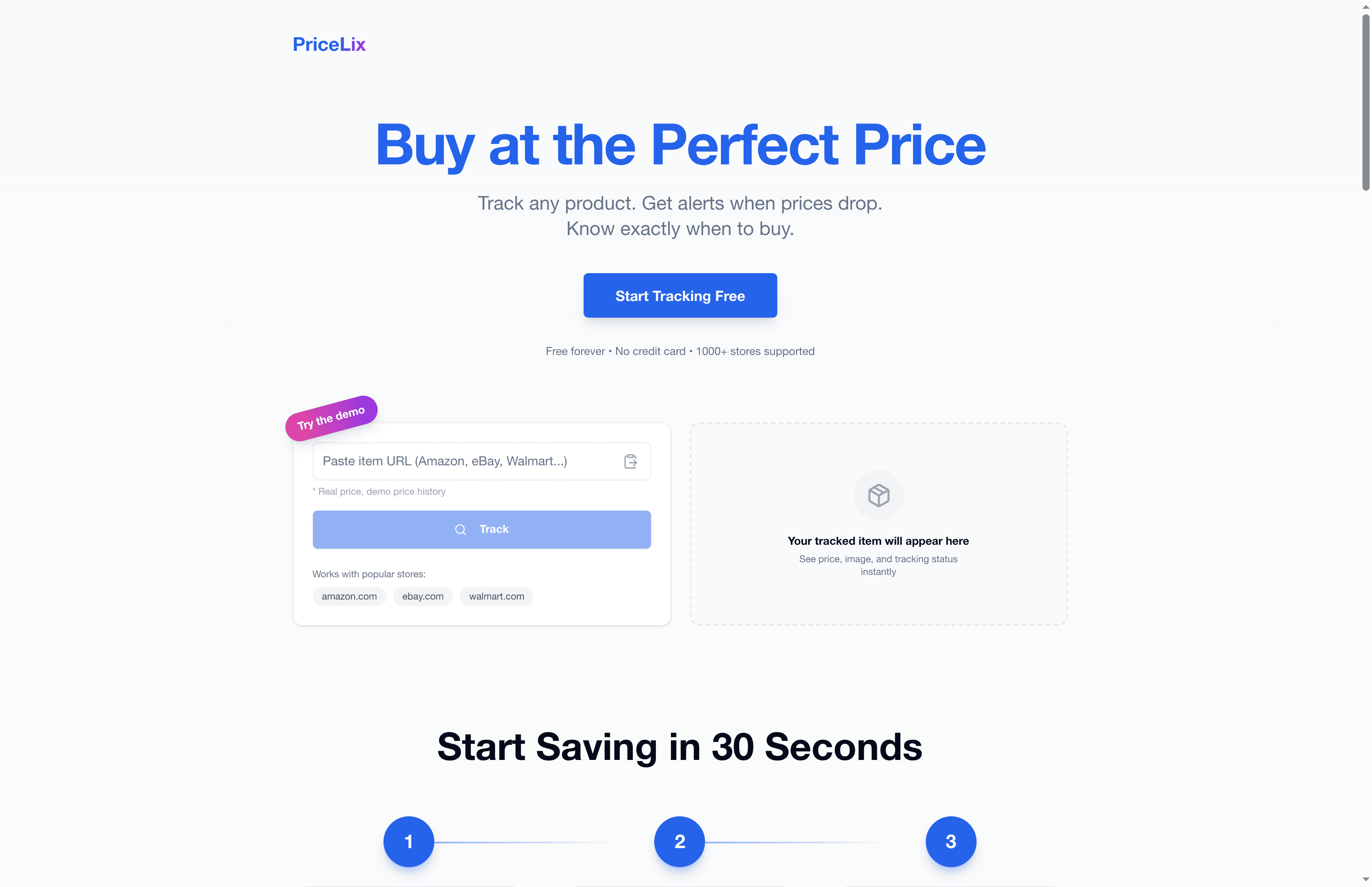
Price-lix automatically monitors prices across Amazon, Walmart, eBay, and over a thousand other stores. It sends you real-time alerts when prices drop and shows you full price history charts so you can see instantly whether a “deal” is genuine. No browser extensions, no manual checking. Just set your targets and let the platform do the watching. Explore holiday savings strategies and start tracking the items on your seasonal shopping checklist at price-lix.com.
FAQ
What are the top seasonal shopping tips for saving money?
The most effective tips include building a prioritized shopping list before sales start, stacking promo codes with cashback and card rewards, verifying discounts using price history data, and setting automated price alerts to catch genuine drops the moment they happen.
When is the best time to shop for appliances and electronics?
Kitchen appliances drop 20 to 35% during Memorial Day, Labor Day, and Black Friday sales, while electronics hit their lowest points around Black Friday and Amazon Prime Day.
How does discount stacking work in practice?
Discount stacking means combining a retailer’s sale price with a promo code, a cashback portal rebate, and credit card rewards. This combination can add 10 to 20% in savings beyond the advertised discount.
How can I tell if a sale price is actually a good deal?
Use a price tracking tool to review the item’s price history over the past 90 to 180 days. If the “original price” only appeared briefly before the sale, the discount is likely inflated. Real drops show up clearly against a consistent historical baseline.
Is it better to shop early in a season or wait for end-of-season clearance?
Early-season shopping gives you better selection at moderate discounts. End-of-season clearance offers deeper cuts of 30 to 70% but with real risk of limited sizes and styles. Choose based on whether getting exactly what you need matters more than getting the lowest possible price.