
Why monitor seasonal sales: maximize online savings year-round
TL;DR:
- Recognizing seasonal pricing patterns allows shoppers to buy at genuine discounts during key sale events.
- Using price tracking tools and setting alerts helps verify deals and avoid fake discounts.
- Building a year-round shopping plan and maintaining discipline significantly increases savings potential.
Shopping a sale doesn’t automatically mean you’re saving money. Retailers are smart, and their pricing strategies are even smarter. But here’s the thing: average Black Friday discounts range from 28% to 38% across categories, which means real savings are absolutely on the table. You just need to know how to find them. This guide breaks down the seasonal pricing patterns that repeat every year, the tools that make tracking effortless, and the habits that separate shoppers who consistently pay less from everyone else who just hopes for the best.
Table of Contents
- How seasonal sales patterns shape online prices
- Tools and tactics: Tracking sales and price history
- Recognizing real deals: Separating hype from true discounts
- Advanced savings: Strategies for year-round results
- Why most shoppers leave savings on the table
- Start maximizing your seasonal savings now
- Frequently asked questions
Key Takeaways
| Point | Details |
|---|---|
| Patterns drive seasonal pricing | Predictable sales cycles mean big savings if you track timing and trends. |
| Price history tools are essential | Using trackers and alerts helps you identify genuine discounts versus marketing hype. |
| Verify deals before you buy | Compare sale prices against recent 30-day averages to avoid overpaying. |
| Build a proactive savings strategy | Creating a personal sales calendar and stacking offers delivers savings all year. |
How seasonal sales patterns shape online prices
Prices online are not random. They follow a rhythm. Once you recognize that rhythm, you stop reacting to sales and start anticipating them.
Major shopping events like Black Friday, Cyber Monday, and post-holiday clearance create predictable windows where prices genuinely drop. Retailers plan these drops months in advance, and savvy shoppers can plan around them just as carefully. Understanding seasonal pricing trends gives you a real edge because you’re no longer guessing.
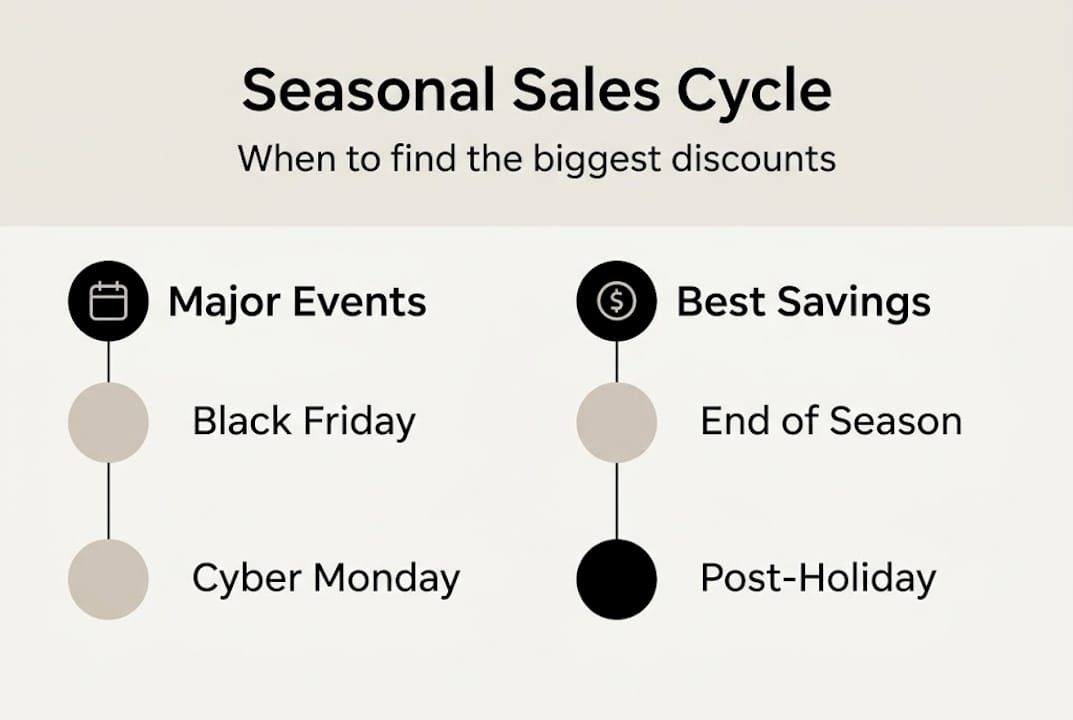
Let me hit you with some numbers. According to the Jacquard Holiday Marketing Report 2025, Black Friday alone captures 31% of total Cyber Week revenue, and discounts in the 40 to 49% range drive the highest shopper engagement. Discounts under 10%? They actually hurt conversion. Shoppers have gotten good at sniffing out weak deals.
Here’s how major categories typically behave during peak sale seasons:
| Category | Typical peak discount | Best time to buy |
|---|---|---|
| Apparel | 39% to 45% | End of season, Black Friday |
| Electronics | 28% to 30% | Black Friday, Cyber Monday |
| Home goods | 20% to 35% | Post-holiday clearance |
| Toys | 30% to 40% | Late November, December |
The pattern is clear. Apparel sees the steepest cuts, especially at end-of-season clearance. Electronics hold value longer but still dip significantly during November sales events.
What happens after the sale is just as important. Retailers typically reset prices upward once the event ends. If you missed the window, you’re often paying full price again until the next cycle rolls around. That’s the trap most shoppers fall into repeatedly.
Key seasonal windows to watch every year:
- January: Post-holiday clearance, winter apparel markdowns
- March to April: Spring sales, tax refund promotions
- July: Amazon Prime Day and competing retailer events
- October to November: Pre-holiday and Black Friday buildup
- Late December: Year-end clearance across most categories
Missing one of these windows doesn’t just mean waiting. It often means paying 20% to 40% more for the exact same product.
Tools and tactics: Tracking sales and price history
Knowing the patterns is step one. Acting on them at the right moment is where most shoppers drop the ball. The right tools make that part almost automatic.
Price tracking tools work by monitoring product listings across retailers and recording price changes over time. They show you a product’s price history as a chart, so you can instantly see whether today’s “sale” price is actually a deal or just a normal price with a flashy banner. Price tracking tools like CamelCamelCamel, Honey, and Keepa have made this accessible to everyday shoppers.
Here’s a quick comparison of popular options:
| Tool | Best for | Platforms covered | Alert feature |
|---|---|---|---|
| CamelCamelCamel | Amazon-specific tracking | Amazon only | Yes, email alerts |
| Keepa | Deep Amazon price history | Amazon only | Yes, with browser extension |
| Honey | Coupon stacking and tracking | Multiple retailers | Limited |
| PriceLix | Multi-store tracking and alerts | 1,000+ stores | Yes, real-time |
Understanding the online price tracking types available helps you choose what fits your shopping habits best. Some tools are browser extensions. Others run in the background and push notifications to your phone or email.
Here’s how to get started with price alerts in a few steps:
- Find the product you want to buy and copy its URL.
- Paste it into your price tracker of choice and pull up the price history chart.
- Set your target price, the number below which you’d be happy to buy.
- Enable alerts via email or app notification so you’re notified the moment the price hits your target.
- Wait and act fast when the alert fires, because flash pricing can revert within hours.
The importance of price history cannot be overstated. That chart becomes gold when you’re standing in front of a “50% off” banner and wondering if it’s real.

Pro Tip: Always check the last 30 days of price history before buying anything on sale. If the price was the same two weeks ago, it’s not a deal. It’s just marketing.
Recognizing real deals: Separating hype from true discounts
You’ve got tracking tools running. You understand the seasonal windows. But your inbox is still flooded with “SALE” emails every other day. How do you filter the noise?
The most common trick retailers use is called “Was/Now” pricing. They quietly raise a product’s price for a week or two, then slash it back to normal and call it a sale. Without price history, you’d never know. With it, the manipulation is obvious.
Here are the red flags to watch for:
- Sudden price spikes in the days before a major sale event
- Flash sales that only last 2 to 4 hours, creating artificial urgency
- “Limited stock” warnings on products that have been available for months
- Discount percentages with no clear original price listed
- Prices that match the 90-day average, meaning nothing actually changed
Off-season buying is one of the most underrated tactics. Winter coats in March. Grills in September. Patio furniture in October. Retailers need to clear inventory, and that’s when you often find the lowest prices of the year with zero competition from other shoppers.
A solid seasonal sale tracking guide will always tell you the same thing: verify before you buy. And price fluctuation insights show that prices can swing dramatically within a single week.
“The best protection against fake discounts is a 30-day price baseline. If the current price isn’t below that baseline, it’s not a real deal. Full stop.”
The Navy Federal best-time-to-buy guide reinforces this: shoppers who verify deals against a 30-day baseline consistently avoid inflated “sales” and buy at genuine lows. Build that habit and you’ll stop getting burned.
Advanced savings: Strategies for year-round results
Verifying deals is defensive. What about going on offense and engineering consistent savings all year long?
The most disciplined shoppers don’t wait for deals to find them. They build a personal shopping calendar that maps out every major discount period, product-specific clearance windows, and retailer-specific sale events. It sounds like extra work, but it takes about 30 minutes once a year and pays off every single month.
Here’s a simple framework for year-round savings:
- List your planned purchases for the next 12 months. Include big-ticket items and recurring needs.
- Map each item to its best buying window using seasonal data and past price history.
- Set price alerts for each item now, even if you’re not buying for months.
- Check in monthly to update your list and confirm your alerts are still active.
- Stack savings when possible: combine a historical price low with a promo code and cashback offer for maximum value.
AI-powered pricing tools are changing the game here. BCG research on year-end sales notes that while retailers raise prices during high-demand periods, consumer-side monitoring tools are increasingly able to exploit clearance cycles and predict optimal buying windows. The catch is that you still need to verify baselines manually. AI gives you a head start, not a guarantee.
Understanding online pricing tactics and how price algorithms work helps you stay one step ahead of dynamic pricing engines that adjust product prices hundreds of times per day.
Pro Tip: Post-peak clearance is where the real money is. Buying essentials right after a major sale event, when retailers are clearing leftover inventory, routinely nets double-digit percentage savings with none of the Black Friday chaos.
Why most shoppers leave savings on the table
Here’s the uncomfortable truth: most people reading guides like this one won’t actually change their behavior. Not because the information isn’t useful, but because discipline is harder than impulse.
The average shopper reacts. A flash sale email lands. They click. They buy. They feel good for 10 minutes. Then two weeks later the price drops another 15% and they feel nothing because they’ve already moved on. That cycle repeats endlessly.
The shoppers who consistently save are not smarter. They’re just more structured. They use lists. They set alerts. They check their seasonal discount strategies before clicking “add to cart.” They treat shopping like a system, not an event.
Combining research-backed timing with active price monitoring is what separates a 10% savings rate from a 30% one. The tools exist. The data exists. The only missing ingredient is consistency.
Pro Tip: Spend 10 minutes a month reviewing your price tracker dashboard and updating your shopping calendar. That one habit alone puts you ahead of 90% of online shoppers.
Start maximizing your seasonal savings now
You now have the full picture: how seasonal pricing cycles work, how to use tracking tools effectively, how to spot fake deals, and how to build a year-round savings system. The strategies are proven. The only question is whether you’ll apply them.
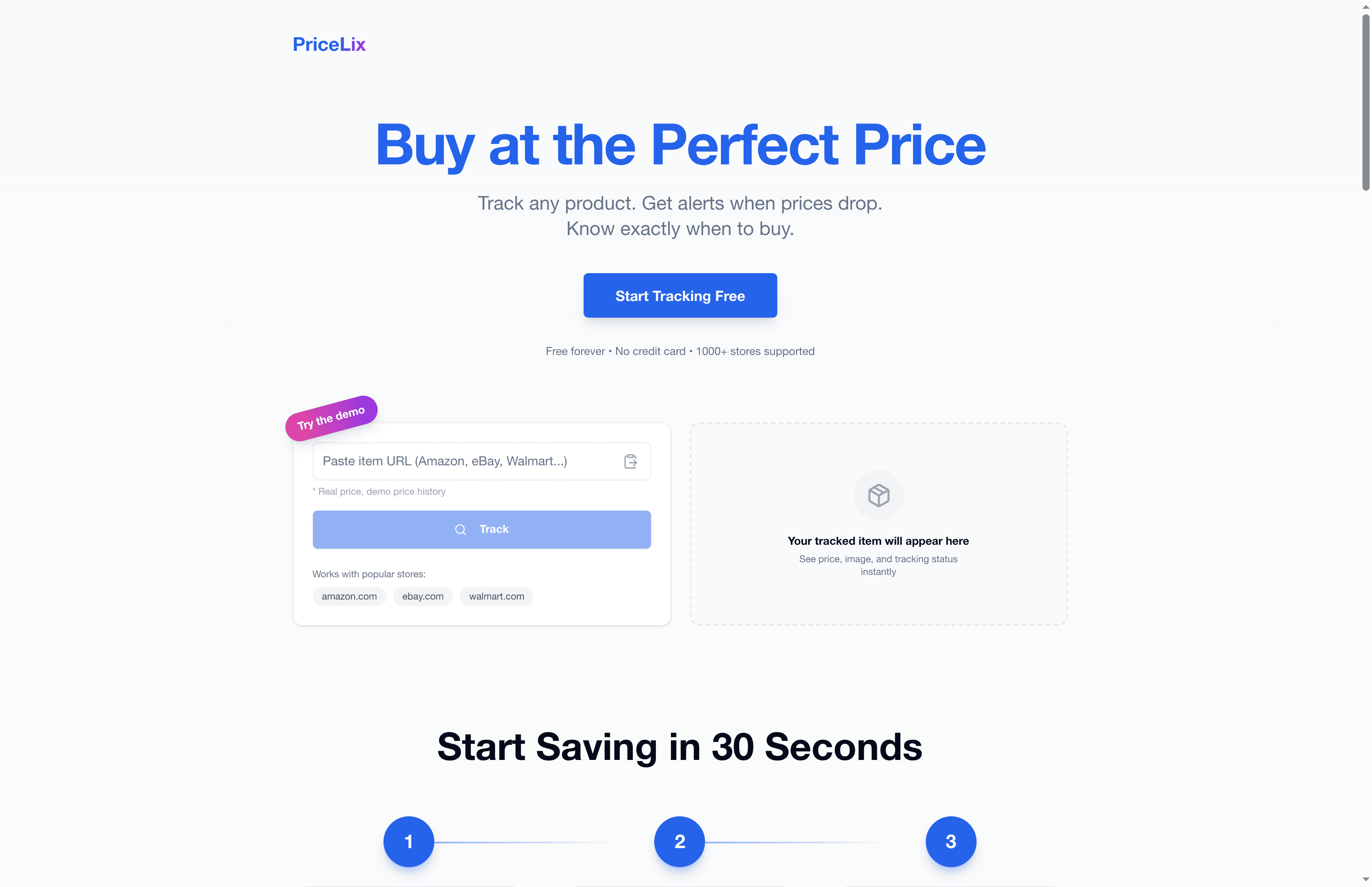
PriceLix makes the whole process effortless. You can get started with PriceLix today and immediately begin tracking products across Amazon, eBay, Walmart, and over a thousand other stores. Real-time alerts notify you the moment a price drops to your target. Price history charts show you whether a deal is real. And your personalized dashboard keeps everything organized without any browser extensions or complicated setup. Stop guessing. Start tracking.
Frequently asked questions
What are the best months for seasonal sales?
November and December offer the biggest sales events, including Black Friday, which captures 31% of total Cyber Week revenue. But deep discounts appear every quarter during clearance and holiday periods.
How do I know a sale price is really a discount?
Check the recent 30-day price history using price tracking tools and compare against historical lows to spot artificial markdowns before you buy.
Are price tracking tools safe and accurate?
Reputable tools aggregate prices reliably and are safe to use, but always verify price history and recent sales data yourself before making any purchase decision.
What products see the biggest seasonal discounts?
Apparel frequently sees discounts of 39% to 45% during major sales events, while electronics typically range from 28% to 30% during peak periods like Black Friday.