
Why prices fluctuate online: a shopper's guide to saving
You check a product online today and find a great price. Tomorrow, that same item costs 15% more. By next week, it drops below your original find. This constant price shifting leaves many shoppers frustrated and uncertain about when to buy. Understanding why online prices fluctuate helps you stop overpaying and start capitalizing on predictable patterns. This guide reveals the mechanisms driving price changes and shows you practical ways to use this knowledge for consistent savings on every purchase you make.
Table of Contents
- Key takeaways
- What drives online price fluctuations?
- How algorithms and technology impact online pricing
- The influence of seasonal trends and sales events on prices
- How to use online price fluctuations to maximize savings
- Explore smart shopping tools at PriceLix
- FAQ
Key Takeaways
| Point | Details |
|---|---|
| Dynamic pricing | Retailers adjust prices in real time based on competition, demand, inventory, and what shoppers will pay. |
| Inventory signals pricing | Low stock tends to raise prices while excess inventory prompts discounts to clear shelf space. |
| Algorithms influence prices | Advanced pricing engines analyze data from many sources to set optimal prices and respond quickly to market changes. |
| Track prices to save | Using price tracking tools helps you identify the best deals and time purchases for maximum savings. |
What drives online price fluctuations?
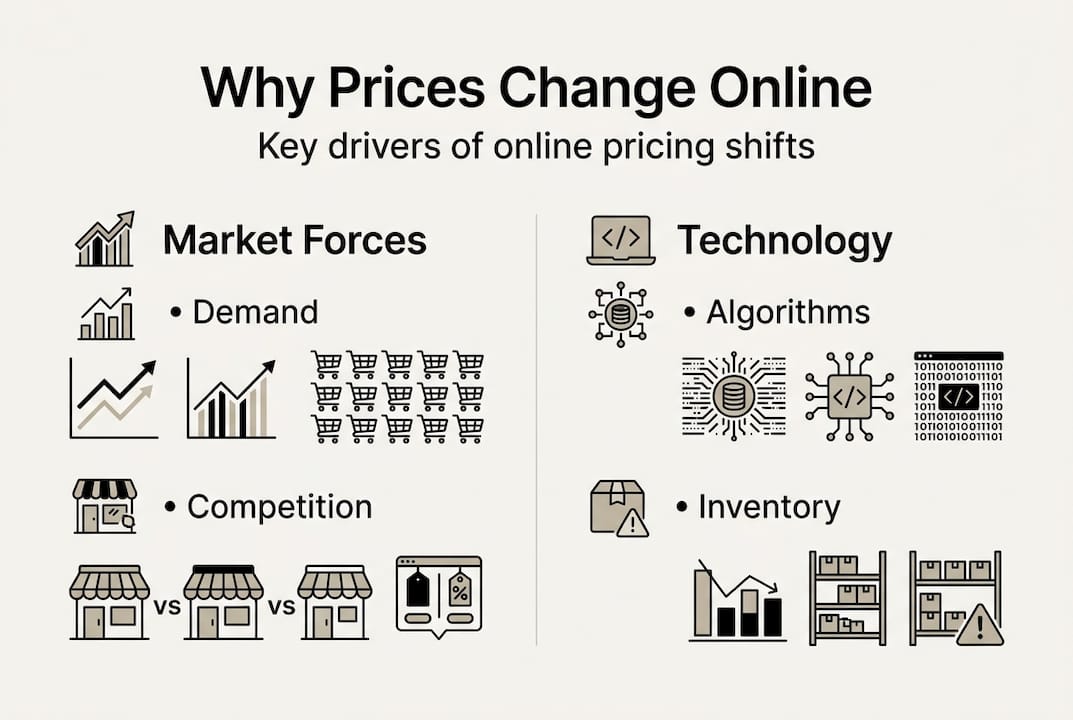
Online retailers operate in a hypercompetitive environment where standing still means losing customers. Dynamic pricing strategies let stores adjust prices instantly based on what competitors charge, how much inventory sits in warehouses, and what consumers demonstrate they will pay. When demand surges for a trending product, prices climb. When stock piles up, retailers slash prices to move merchandise before it becomes obsolete or seasonal relevance fades.
Inventory management directly influences pricing decisions. Low stock signals high demand or supply constraints, prompting retailers to raise prices and maximize profit per unit sold. Conversely, excess inventory creates pressure to discount aggressively and recover shelf space and capital. These inventory-driven adjustments happen constantly across millions of products, creating the price volatility shoppers encounter daily.
Sophisticated algorithms process multiple data streams simultaneously to set optimal prices. These systems evaluate competitor pricing across dozens of stores, track consumer browsing and purchase patterns, monitor social media trends, and factor in shipping costs and profit margins. The result is pricing that shifts multiple times per day, sometimes hourly, as market conditions evolve. Flash sales and limited-time promotions add another layer of intentional volatility designed to create urgency and drive immediate purchases.
Key factors driving price changes include:
- Competitor pricing moves that trigger automated responses
- Real-time demand signals from search volume and cart additions
- Inventory levels approaching reorder points or overstock thresholds
- Time-sensitive promotions designed to boost short-term revenue
- Geographic pricing variations based on local market conditions
Pro Tip: Retailers often test different price points on identical products to gauge demand elasticity. Clearing your browser cookies or checking prices in incognito mode sometimes reveals these experiments and helps you spot artificially inflated pricing.
Understanding these core drivers transforms seemingly random price changes into recognizable patterns. Retailers are not being arbitrary or unfair. They are responding rationally to market forces and using technology to stay competitive. Once you grasp the logic behind fluctuations, you can anticipate changes and position yourself to buy at optimal moments rather than reacting emotionally to whatever price appears when you happen to check.
How algorithms and technology impact online pricing
Pricing algorithms represent the invisible engine powering modern e-commerce price volatility. These sophisticated systems continuously scan competitor websites, analyze historical sales data, monitor current inventory levels, and assess consumer behavior signals to calculate prices that maximize revenue. Algorithmic pricing systems process millions of data points daily, enabling retailers to respond within minutes to competitor price drops or demand spikes that would have taken days to address manually.

The speed and scale of algorithmic pricing create both opportunities and challenges for shoppers. Prices can drop suddenly when algorithms detect weakening demand or aggressive competitor discounting. Equally, prices can spike without warning when algorithms sense strong interest or limited supply. This technological arms race means retailers constantly monitor each other, creating cascading price adjustments across entire product categories as one store’s algorithm triggers responses from competitors’ systems.
Online price tracking methods have evolved to help consumers navigate this algorithmic complexity. Advanced tracking tools now monitor prices across hundreds of retailers simultaneously, identifying patterns and predicting optimal purchase windows. These consumer-focused technologies level the playing field, giving individual shoppers access to insights previously available only to professional buyers and industry analysts.
Algorithmic pricing creates several observable patterns:
- Synchronized price movements across competing retailers within hours
- Rapid price corrections after manual pricing errors are detected
- Predictable daily or weekly pricing cycles based on traffic patterns
- Geographic price discrimination based on local competition and demand
- Personalized pricing experiments targeting different customer segments
“Retailers using dynamic pricing algorithms report revenue increases of 5-10% compared to static pricing models, demonstrating why this technology has become ubiquitous across e-commerce platforms.”
The technology driving price fluctuations operates continuously and without emotion. Algorithms do not care about fairness or customer frustration. They optimize for profit within parameters set by human managers. This reality means shoppers must either accept paying whatever price appears at purchase time or deploy their own technological tools to monitor and capitalize on algorithmic pricing patterns. The latter approach consistently delivers better outcomes for patient, informed consumers.
Understanding algorithmic pricing mechanics helps you recognize when you are seeing a genuine deal versus normal price cycling. Products that rarely go on sale suddenly discounted by 30% likely indicate overstock or discontinued inventory. Small price fluctuations of 2-5% throughout the day represent normal algorithmic competition and should not trigger immediate purchases. Significant drops of 15% or more during off-peak shopping periods often signal the best buying opportunities, as algorithms attempt to stimulate demand during slow periods.
The influence of seasonal trends and sales events on prices
Retail calendars follow predictable rhythms that create recurring opportunities for savvy shoppers. Seasonal pricing patterns emerge from the intersection of consumer demand cycles, inventory management needs, and competitive pressure during high-stakes shopping periods. Black Friday, Cyber Monday, Prime Day, and back-to-school seasons represent planned discount events where retailers intentionally slash prices to capture market share and move large volumes of merchandise.
Prices typically follow a characteristic pattern around major sales events. In the weeks leading up to Black Friday or Prime Day, prices often creep upward as retailers establish higher baseline prices that make subsequent discounts appear more dramatic. During the event itself, prices plummet as stores compete aggressively for attention and sales volume. Post-event, prices rebound quickly but often remain below pre-event peaks as retailers clear remaining promotional inventory.
Seasonal demand shifts create additional predictable pricing patterns. Winter clothing costs peak in early fall as consumers prepare for cold weather, then drops sharply in late winter as retailers make room for spring inventory. Electronics prices often decline in the months following major product launches as early adopter demand subsides and newer models approach release. Understanding these cycles lets you time purchases to coincide with natural price lows rather than paying inflated peak-season prices.
| Sales Event | Typical Discount Range | Best Product Categories | Timing Strategy |
|---|---|---|---|
| Black Friday | 20-50% | Electronics, appliances, TVs | Shop early morning or online Thursday evening |
| Cyber Monday | 15-40% | Computers, software, online services | Monitor prices starting Sunday night |
| Prime Day | 25-45% | Amazon devices, home goods, fashion | Compare prices on competing sites same day |
| Back-to-School | 10-30% | Laptops, supplies, clothing | Buy in late July before inventory depletes |
| End-of-Season | 30-70% | Clothing, outdoor gear, seasonal items | Wait until final clearance for maximum savings |
Key seasonal pricing insights include:
- January and July represent clearance months across most retail categories
- New model releases trigger immediate discounts on previous generation products
- Holiday gift-giving seasons see prices rise in November, drop in December
- Travel and hospitality prices peak during school vacation periods
- Consumer electronics follow annual release cycles creating predictable discount windows
Smart shoppers build purchase calendars around these seasonal patterns. Non-urgent purchases get scheduled for known discount periods, while necessary immediate purchases get researched thoroughly to ensure current pricing falls within acceptable ranges. This disciplined approach transforms seasonal price fluctuations from frustrating unpredictability into reliable savings opportunities that compound significantly over time.
How to use online price fluctuations to maximize savings
Knowledge without application delivers no value. Transforming your understanding of price fluctuations into consistent savings requires adopting specific tools and strategies that automate monitoring and alert you to optimal buying opportunities. Price tracking strategies form the foundation of systematic savings, replacing reactive shopping with proactive planning based on data rather than impulse.
Implementing a comprehensive savings approach involves several coordinated steps:
- Identify products you plan to purchase within the next 3-6 months and add them to a tracking list
- Set price alert thresholds based on historical price data showing realistic discount levels
- Compare prices across at least 3-5 retailers before making any significant purchase
- Research typical seasonal pricing patterns for your target product category
- Combine price tracking with cashback programs, credit card rewards, and coupon codes
- Maintain purchase discipline by waiting for alerts rather than buying on impulse
- Review price history charts to verify current prices represent genuine value
Price tracking checklists help ensure you complete each step systematically. Studies show shoppers using structured tracking approaches save an average of 18% compared to those making unplanned purchases at whatever price appears when need arises. This savings percentage compounds significantly over time, particularly for households making frequent online purchases across multiple product categories.
Pro Tip: Set price alerts 10-15% below current prices rather than waiting for maximum possible discounts. This balanced approach captures most savings opportunities while avoiding the frustration of alerts that never trigger because your threshold was unrealistically low.
Timing purchases strategically amplifies savings beyond simple price tracking. Buying winter coats in March rather than November, purchasing electronics in January rather than December, and shopping for outdoor furniture in September rather than May consistently delivers 20-40% savings compared to peak-season pricing. Patience becomes a financial asset when combined with systematic monitoring that ensures you act quickly when optimal prices appear.
Effective price tracking delivers measurable results:
| Strategy | Average Savings | Implementation Effort | Best For |
|---|---|---|---|
| Automated price alerts | 15-20% | Low (set and forget) | High-value items you can wait for |
| Multi-retailer comparison | 8-12% | Medium (requires research) | Immediate purchase needs |
| Seasonal timing | 20-40% | Low (requires planning) | Non-urgent purchases |
| Coupon stacking | 5-15% | Medium (requires coordination) | Retailers offering multiple discounts |
| Price history analysis | 10-18% | Low (one-time research) | Expensive or frequently purchased items |
The most successful shoppers treat price tracking as a routine habit rather than occasional effort. Adding items to tracking lists when first discovered, reviewing alerts weekly, and maintaining a running list of planned purchases transforms shopping from reactive spending into strategic acquisition. This mindset shift delivers compounding benefits as you build experience recognizing genuine deals and avoiding artificially inflated pricing disguised as discounts.
Explore smart shopping tools at PriceLix
Navigating the complex world of fluctuating online prices becomes significantly easier with the right tools supporting your decisions. PriceLix provides comprehensive price tracking and comparison features designed specifically for shoppers tired of overpaying and missing deals. Our platform monitors prices across over a thousand retailers, delivering real-time alerts when tracked items hit your target prices and providing detailed price history charts that reveal genuine value versus artificial discounts.
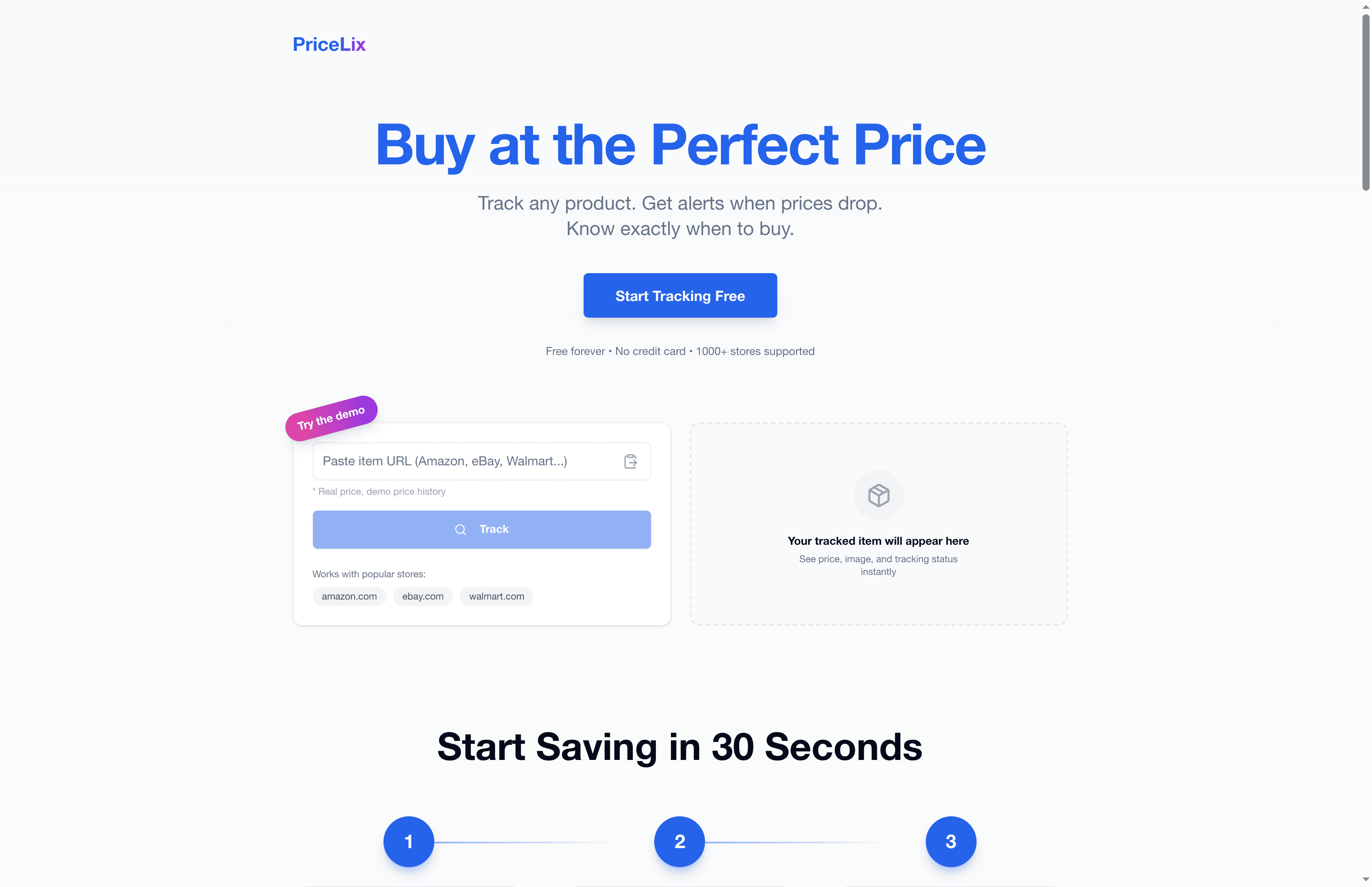
The dashboard consolidates all your tracked items in one place, automating daily price checks and eliminating the tedious manual work of visiting multiple websites repeatedly. Whether you are hunting for the perfect moment to buy electronics, waiting for seasonal discounts on fashion, or tracking everyday essentials, PriceLix transforms price fluctuation from frustrating unpredictability into strategic advantage. Start tracking your first items today and experience how informed shopping delivers consistent savings on every purchase.
FAQ
Why do online retailers change prices so often?
Retailers adjust prices frequently to remain competitive in real-time markets where consumer demand, competitor actions, and inventory levels shift constantly. Dynamic pricing algorithms enable stores to optimize revenue by responding within minutes to market changes that previously took days to address manually. This technological capability has made frequent price adjustments the industry standard rather than exception.
Can price tracking tools guarantee the best deal every time?
Price tracking tools significantly improve your odds of catching excellent deals but cannot guarantee absolute lowest prices due to unpredictable flash sales, limited-quantity promotions, and geographic pricing variations. These tools work best when combined with strategic timing, multi-retailer comparisons, and understanding of seasonal patterns. Think of tracking as a powerful advantage rather than perfect solution.
How can I predict when prices will drop online?
Monitoring seasonal sales calendars, product release cycles, and historical price patterns helps anticipate likely discount periods for specific product categories. Price tracking tools with alert features let you capitalize on drops immediately when they occur, even if exact timing remains uncertain. Combining pattern awareness with automated monitoring delivers the most reliable results for catching optimal prices.
Do all products experience the same price fluctuations?
Price volatility varies dramatically by product type, with electronics, fashion, and seasonal items experiencing frequent significant changes while staples and commodity products remain relatively stable. High-demand items with many competing retailers see more price movement than niche products with limited sources. Understanding your target product’s typical volatility helps set realistic expectations and appropriate tracking strategies.
Recommended
- Why prices fluctuate: smart strategies to save in 2026 | PriceLix
- Price fluctuations explained: shop smart and save in 2026 | PriceLix
- Price Trends: Making Smarter Online Purchases | PriceLix
- Real-Time Price Changes Explained: Maximizing Savings | PriceLix
- Depop Pricing Strategy Guide for Maximizing Profits Easily