
How to Shop Smarter Online and Save More Money
TL;DR:
- Combining price comparison tools, coupon automation, seller verification, and timing helps shoppers pay less online with confidence. Most forego these steps, leaving money unclaimed, but resources from the FTC, PayPal Honey, and Google Shopping can fill those gaps efficiently. Establishing a simple routine that includes total cost comparison, seller verification, timely purchases, and post-sale follow-up saves money over relying solely on coupon extensions or impulsive buying.
Shopping smarter online means combining price comparison tools, coupon automation, seller verification, and strategic timing to consistently pay less and buy with confidence. Most shoppers leave real money on the table because they skip one or two of these steps. The FTC, PayPal Honey, and Google Shopping each offer resources that close those gaps fast. This guide covers every layer of smart online purchasing strategy so you stop overpaying and start keeping more of your money.
How to shop smarter online with price comparison
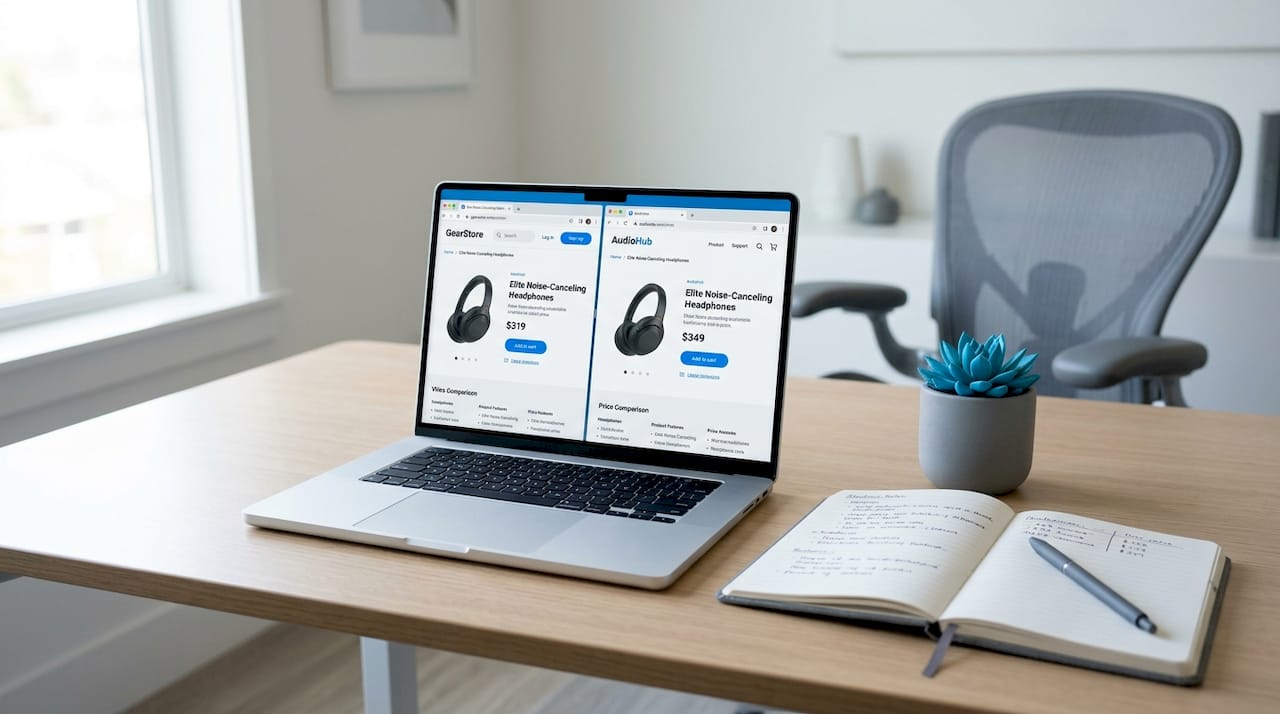
Price comparison is the foundation of every smart online purchasing strategy. The goal is not just finding the lowest number on the screen. The true comparison target is the final checkout price including shipping, taxes, and fees. A $40 item with $15 shipping beats a $45 item with free shipping only on paper.
Here is how to compare prices the right way:
- Use exact product identifiers. The FTC recommends noting product specifics like manufacturer name, model number, size, and color before you start comparing. Vague searches return vague results.
- Check multiple platforms. Google Shopping and Yahoo Shopping pull listings from hundreds of retailers simultaneously. They are the fastest way to see the price spread on any item.
- Factor in total cost. Shipping fees, handling charges, and estimated taxes all change the real price. Always calculate the full checkout total before deciding.
- Set price alerts. Instead of checking manually every day, use price drop alerts to get notified the moment a tracked item hits your target price.
The table below shows how total cost shifts across common retailer scenarios:
| Retailer type | Listed price | Shipping | Estimated total |
|---|---|---|---|
| Marketplace seller | $38.00 | $9.99 | $47.99 |
| Big-box retailer | $44.00 | Free | $44.00 |
| Specialty store | $41.00 | $4.99 | $45.99 |
That first row looks like the best deal until you add shipping. This is exactly the trap most shoppers fall into. Learning price comparison best practices before you buy takes two minutes and can save you $10 or more per order.
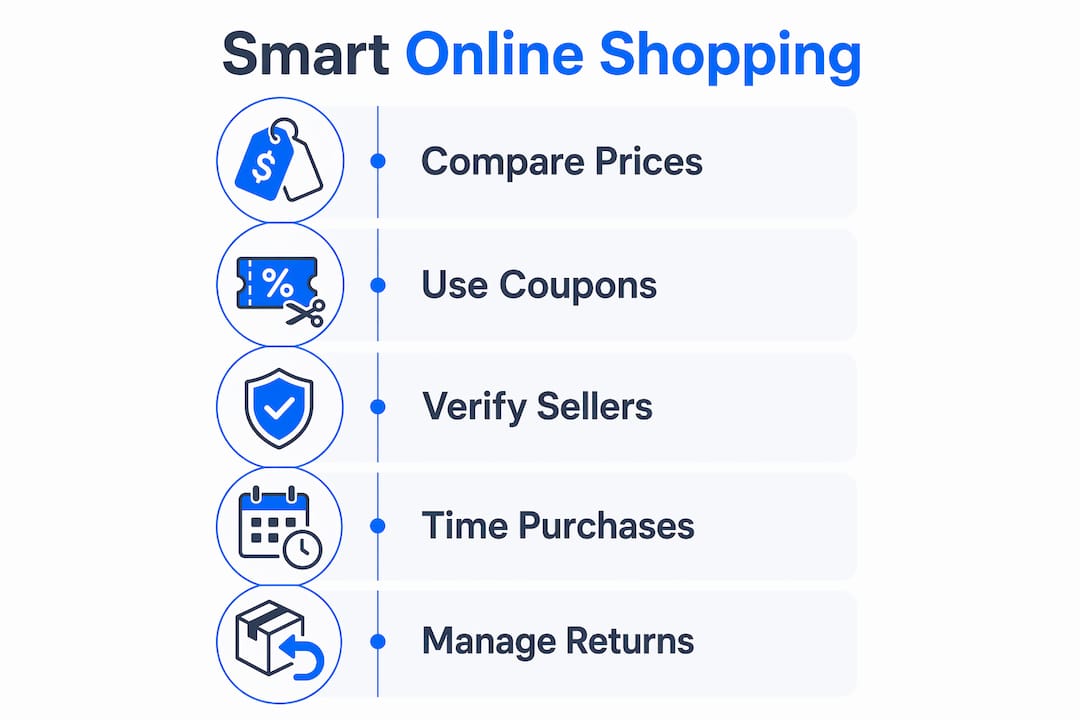
Pro Tip: Add items to a watchlist or price tracker before buying. Prices on Amazon and Walmart fluctuate daily. Waiting 48 to 72 hours after spotting a deal often reveals whether the price is genuinely low or artificially inflated before a sale.
Do coupon extensions and cash back tools actually save money?
Yes, but with an important caveat. Tools like PayPal Honey apply coupon codes automatically at checkout and track price drops through a feature called Droplist. You add items to Droplist and Honey alerts you when the price falls. That is a genuinely useful function that requires zero effort after setup.
Cash back programs add another layer. Services like Rakuten offer a percentage back on purchases at thousands of retailers. You shop as normal and collect rewards over time. AARP advises using comparison catalogs and deal extensions together for maximum effect, but always verify the final price manually before completing checkout.
Here is what these tools do well and where they fall short:
- What they do well: Automatic coupon testing at checkout, price drop notifications, cash back accumulation, and deal surfacing without extra effort.
- What they miss: Return policies, shipping timelines, seller reliability, and whether a “sale” price is actually lower than the item’s historical average.
The honest truth is that coupon extensions automate coupon searching and price alerts but do not verify return policies, shipping promises, or seller reliability. They are a great first layer of savings, not a complete strategy on their own.
Pro Tip: Before trusting a coupon extension’s “best price found” message, cross-check the result on Google Shopping or a dedicated price history tool. Extensions occasionally miss better deals on lesser-known but legitimate retailers.
How do you verify a seller is trustworthy before buying?
Seller trust is the most underrated part of smart online purchasing. A great price from a fraudulent seller is not a deal. It is a loss. The FTC warns that scam websites use fake low prices to lure buyers, then disappear after payment.
Use this process before buying from any unfamiliar seller:
- Search the seller’s name plus “reviews” and “complaints.” Real buyer experiences surface quickly. If the first page of results is full of scam reports, walk away.
- Check for secure payment options. Legitimate sellers accept credit cards or PayPal. The FTC specifically warns to avoid gift card or crypto payments because they are untraceable and non-refundable.
- Read the return and refund policy. If it is buried, vague, or missing entirely, that is a red flag.
- Look for contact information. A real business has a phone number, a physical address, or at minimum a responsive email.
- Pay with a credit card. Credit cards give you the right to dispute charges. Debit cards and wire transfers do not offer the same federal protections.
“Keep records of your order: the ad or product description, the online receipt, and any emails you get from the seller.” — FTC Consumer Advice
Evaluating seller trustworthiness in e-commerce is not paranoia. It is the same due diligence you would apply to any financial transaction. One fraudulent purchase can wipe out months of coupon savings.
When is the best time to buy online to get the lowest price?
Timing is a real lever that most shoppers ignore. AARP’s research confirms that seasonal timing and text signups consistently yield better savings than waiting for random sales. The pattern is predictable once you know it.
Here are the timing strategies that actually work:
- Buy seasonal items off-season. Winter coats drop 40 to 60 percent in March. Grills and outdoor furniture hit their lowest prices in late summer and fall. Patience here is not passive. It is a strategy.
- Sign up for retailer text messages. Many stores send exclusive discount codes to text subscribers before those deals appear anywhere else. It takes 10 seconds to sign up and costs nothing.
- Buy discounted gift cards first. Sites like Raise and CardCash sell gift cards for major retailers at 5 to 15 percent below face value. Combine a discounted gift card with a sale price and you stack two layers of savings on one purchase.
- Use AI shopping assistants. AARP highlights that AI tools on search engines and social platforms like Instagram now forecast price trends and surface personalized deals. Google’s AI shopping features and Perplexity’s shopping mode are worth testing.
- Abandon your cart strategically. Many retailers trigger a discount email within 24 hours of cart abandonment. This is not guaranteed, but it works often enough to be worth trying on higher-ticket items.
Pro Tip: Check price history before any “limited time” sale. A product marked 30 percent off may have been at that exact price for the past three months. Price history charts on tools like Price-lix reveal whether a sale is real or manufactured urgency.
How to handle returns, refunds, and price adjustments
Post-purchase management is where budget-conscious shoppers recover money they would otherwise lose. Most people skip this step entirely, and retailers count on that.
Follow this process to protect every purchase:
- Read the return policy before you buy. Know the return window, who pays return shipping, and whether restocking fees apply. A 15 percent restocking fee on a $200 item costs $30. That changes the math on whether the deal was worth it.
- Track prices after purchase. The FTC confirms that price matching and adjustments are available at many retailers if the price drops shortly after your purchase. Most stores honor this within 7 to 14 days. You just have to ask.
- Keep your evidence pack. The FTC stresses that thorough record keeping is critical when requesting refunds or handling problems. Save your order confirmation, any seller promises, screenshots of the listed price, and all email communications.
- Act fast on disputes. Experian outlines that credit card dispute timelines run 60 days under the Fair Credit Billing Act. Miss that window and you lose your federal protection. File early with full documentation.
| Action | Timing | Outcome |
|---|---|---|
| Request price adjustment | Within 7 to 14 days of purchase | Partial refund if price dropped |
| Initiate return | Within stated return window | Full or partial refund |
| Dispute credit card charge | Within 60 days of statement | Federal protection under FCBA |
| Contact seller directly | Before escalating dispute | Faster resolution in most cases |
The FTC also notes that sellers must ship within 30 days if no shipping time is promised. If your order is late and the seller is unresponsive, you have grounds to dispute the charge immediately.
Key takeaways
Smarter online shopping requires combining price comparison, coupon automation, seller verification, strategic timing, and post-purchase follow-through as a single integrated habit, not a checklist you use once.
| Point | Details |
|---|---|
| Compare total cost, not sticker price | Always include shipping, taxes, and fees before deciding which deal wins. |
| Use tools as a first layer, not the whole strategy | PayPal Honey and Rakuten automate savings but cannot verify seller trust or return policies. |
| Verify every unfamiliar seller | Search for complaints, confirm secure payment options, and always pay by credit card. |
| Time purchases around known cycles | Off-season buying and retailer text signups consistently deliver better prices than impulse buys. |
| Protect purchases after checkout | Track prices for adjustments, keep records, and file credit card disputes within 60 days. |
Why I think most shoppers only use half the playbook
I have watched people obsess over finding a $3 coupon code while completely ignoring the $12 shipping fee sitting right below the price. That is the trap. The savings tools get all the attention because they feel satisfying in the moment. You paste a code, the price drops, you feel like you won. But the real money is in the boring stuff: reading return policies, checking price history, timing your purchase by two weeks, and keeping a folder of order confirmations.
The other thing I have noticed is that scam awareness has not kept pace with scam sophistication. Fake storefronts in 2026 look identical to legitimate retailers. The only reliable filter is the payment method and the paper trail. Credit card plus documentation equals protection. Everything else is hope.
My honest recommendation: build a 5-minute pre-purchase routine. Check the total cost including shipping. Verify the seller has real reviews. Confirm the return policy. Check price history for 30 days. Then buy. That routine, done consistently, will save you more money than any browser extension ever will. Price-lix makes the price history part of that routine take about 30 seconds. The rest is just discipline.
— Serhii
Start tracking prices with Price-lix today
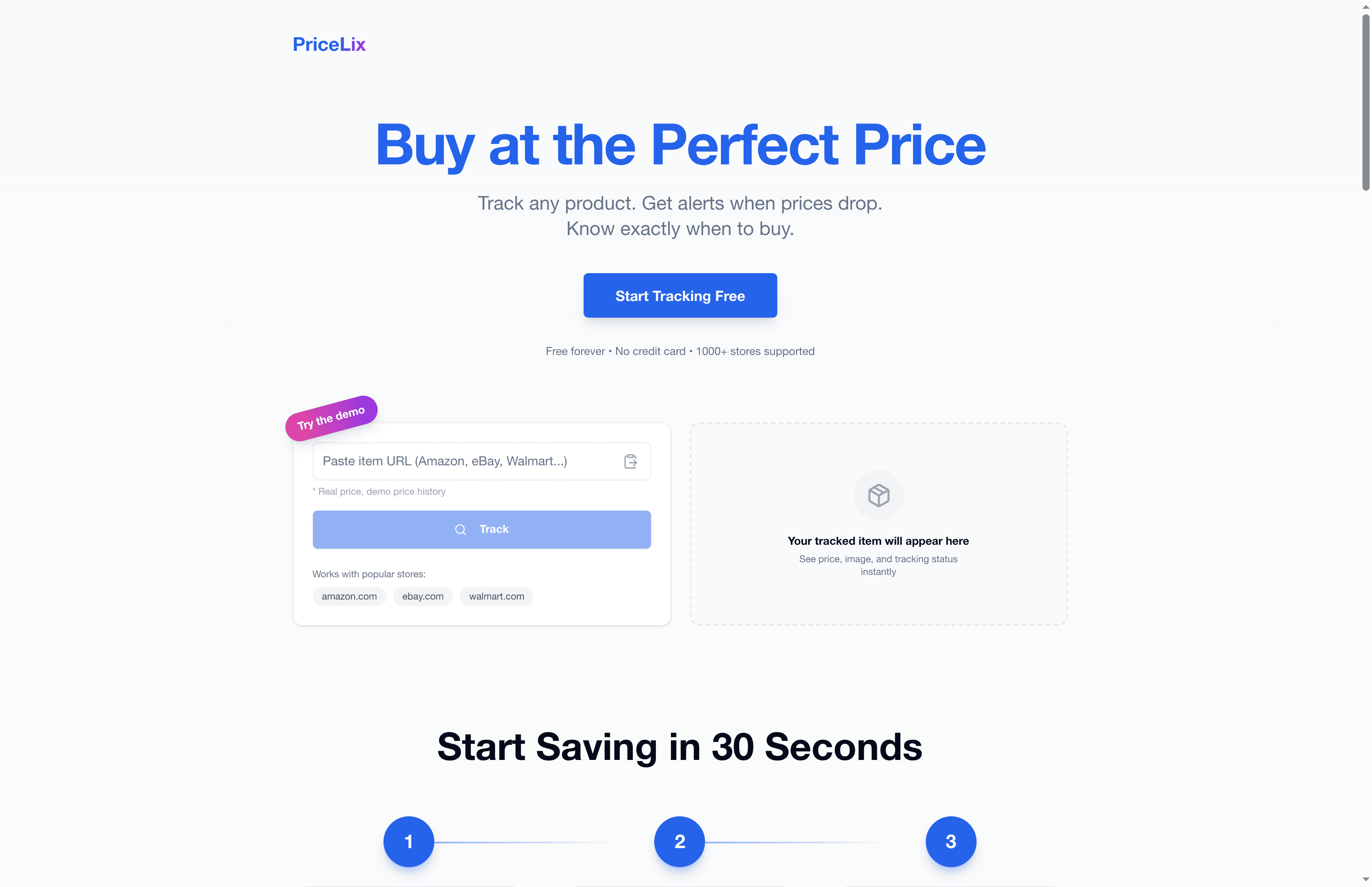
Price-lix is built for exactly the kind of shopping described in this article. The platform tracks prices automatically across Amazon, eBay, Walmart, and over a thousand other stores. You set your target price, and Price-lix sends you a real-time alert the moment an item hits it. No browser extension required. No manual checking. Just a clean dashboard showing you price history charts and drop notifications for every product you are watching. If you want to put the strategies in this guide on autopilot, start tracking prices with Price-lix and stop guessing when to buy.
FAQ
What is the fastest way to compare prices online?
Google Shopping is the fastest starting point. It pulls listings from hundreds of retailers in one search. For deeper price history, a dedicated price tracking tool shows whether today’s price is actually a deal compared to the past 30 to 90 days.
How do I know if an online seller is legitimate?
Search the seller’s name alongside the word “complaints” or “reviews” before buying. The FTC recommends avoiding any seller that requests payment via gift cards or cryptocurrency, as those methods offer no fraud protection.
Do coupon browser extensions really save money?
Yes, tools like PayPal Honey automatically test coupon codes at checkout and can reduce your total. However, they do not verify seller reliability or return policies, so manual verification of those details remains your responsibility.
When is the best time of year to buy electronics online?
Electronics typically hit their lowest prices around Black Friday, Cyber Monday, and after major product launches when older models get discounted. Setting a price alert on your target product lets you catch the drop without watching daily.
How long do I have to dispute a credit card charge for an online purchase?
Experian confirms you have 60 days from the statement date to dispute a charge under the Fair Credit Billing Act. File early and include your order confirmation, seller communications, and any screenshots of the original listing.