
Unlock Savings: How Tech Transforms Bargain Hunting Online
TL;DR:
- Modern technology enables automated price tracking, alerts, and stacking discounts for maximum savings.
- Using multiple tools consistently can save shoppers 20 to 30 percent on online purchases.
- Regular review and disciplined workflows are essential for leveraging tech tools effectively and avoiding missed deals.
Most online shoppers believe they’re getting a good deal. They’re not. Retailers use dynamic pricing, meaning prices shift dozens of times a day based on demand, time, and browsing behavior. Without the right tools, you’re essentially shopping blind. The good news? Technology has leveled the playing field. Price tracking platforms, automated alerts, and smart workflows now make it possible for any shopper to buy at the right time, every time. This guide breaks down exactly how innovative tech solutions work, which tools deliver the biggest savings, and how to build a routine that keeps money in your pocket during every sale season.
Table of Contents
- How technology changed bargain hunting forever
- Essential tech tools for maximizing savings
- The power of automation: Algorithms and smart notifications
- Building your tech-enabled bargain hunting workflow
- Why most shoppers still miss out—and how you can do better
- Ready to supercharge your savings?
- Frequently asked questions
Key Takeaways
| Point | Details |
|---|---|
| Tech revolutionized bargain hunting | Digital tools and automation have made finding the best deals easier and more effective than ever. |
| Automate for consistent savings | Automation and smart notifications enable you to save 20% or more on regular purchases. |
| Combine tools for maximum impact | Stacking apps, extensions, and coupon finders multiplies your online savings. |
| Build a disciplined workflow | Following proven steps and best practices ensures you never miss out on big discounts. |
How technology changed bargain hunting forever
Not long ago, bargain hunting meant clipping paper coupons, flipping through newspaper ads, and driving to three different stores to compare prices. It was time-consuming, inconsistent, and honestly exhausting. Fast forward to today and the game has completely changed.
The shift started with comparison websites. Shoppers could suddenly see prices from multiple stores on one screen. Then came browser extensions that automatically applied coupon codes at checkout. Now we have full-scale online bargain strategies powered by real-time data, price history charts, and instant notifications.
Here is what modern tech-enabled bargain hunting actually looks like:
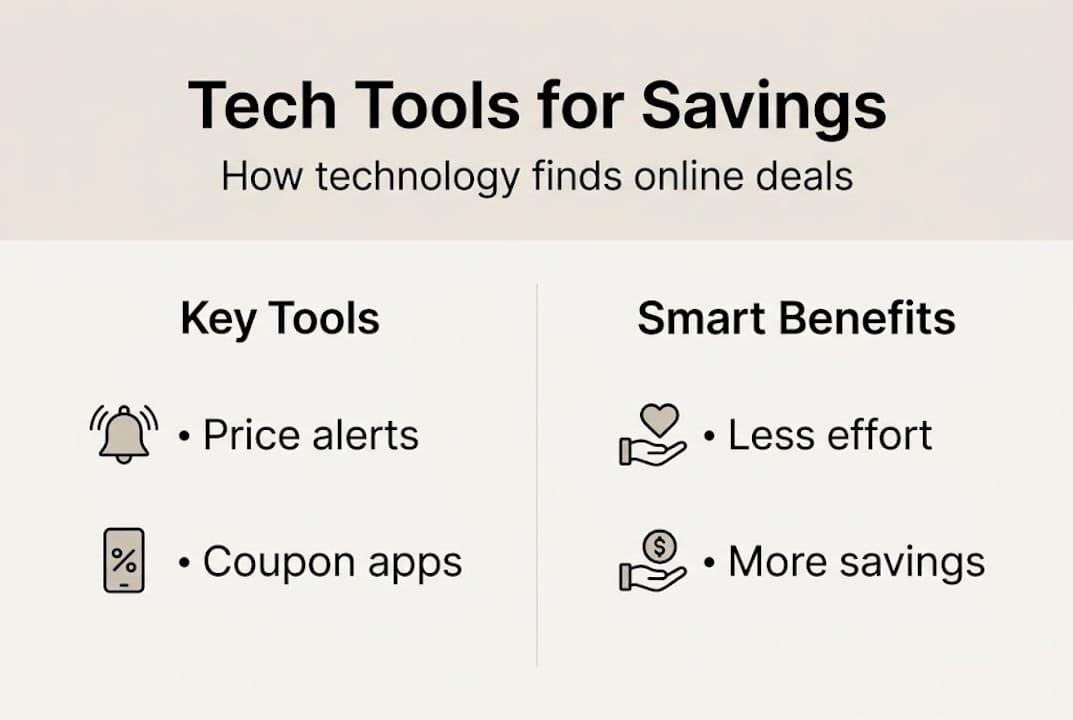
- Price tracking tools monitor product pages 24/7 and log every price change.
- Alert systems send you a notification the moment a price drops to your target.
- Digital coupons are applied automatically at checkout without you lifting a finger.
- Price history charts show you whether a “sale” is actually a good deal or just clever marketing.
- AI-driven comparison engines surface better alternatives you might not have searched for.
Automated systems and browser extensions monitor price drops and notify retail customers of savings opportunities. That single shift, from manual checking to automated watching, is what separates shoppers who overpay from those who don’t.
“The best time to buy is rarely the day you decide you need something. Tech tools make sure you’re ready when the price is right.”
Understanding how these tools interact is also important. When you stack a price alert with a cashback platform and a digital coupon, your savings aren’t just added together. They compound. A 10% price drop plus 5% cashback plus a 15% coupon code equals a very different checkout total than what most shoppers ever see. For a deeper look at how these deals are structured, check out understanding online deals to see how retailers layer their promotions.
The result is a smarter, faster, and far more profitable shopping experience. You don’t need to be a tech expert to use these tools. You just need to know which ones are worth your time.
Essential tech tools for maximizing savings
Let’s get specific. Not all tools are created equal, and knowing which ones to use makes a real difference. Popular digital platforms and apps help shoppers discover the best prices and promotions in retail. Here’s a breakdown of the main categories:
| Tool type | What it does | Best for |
|---|---|---|
| Price tracking apps | Tracks prices over time, shows history | Avoiding fake sales |
| Browser extensions | Applies coupons, compares prices live | Quick checkout savings |
| Cashback platforms | Returns a % of your purchase | Stacking extra savings |
| Deal alert services | Notifies you when a target price is hit | Seasonal sales timing |
| Price comparison sites | Shows prices across multiple stores | Finding the lowest rate |
The smartest shoppers don’t just pick one. They layer them. Here’s how that works in practice: you add a product to a price tracker, set your target price, and activate a cashback portal. When the alert fires, you visit the product page through your cashback link and apply a coupon at checkout. That’s three savings sources working together without much extra effort on your part.
For those just getting started, the must-have deal tools list is a solid place to begin. And if you want to compare apps specifically for deal finding, the best deal finder apps guide breaks down top options by feature and use case.
Pro Tip: Before any major sale event like Black Friday or Prime Day, set up all your price alerts at least two weeks in advance. Retailers often inflate prices before a sale, then drop them back to “normal” and call it a deal. Your price history data will expose that trick instantly.
The combination of multiple tools working in sync is where the real power lies. Think of each tool as a layer of defense against overpaying. One tool might catch a price drop. Another makes sure you get cashback. A third grabs the coupon. Together they build a system that’s almost impossible to beat.
The power of automation: Algorithms and smart notifications
Here’s where things get really interesting. Behind every price alert is an algorithm doing the heavy lifting. These aren’t simple scripts checking a page once a day. Modern price tracking systems run constant checks, detect patterns, and in some cases predict when prices are likely to drop based on historical data.

Automated systems monitor price drops and notify retail customers of savings opportunities in real time. That means while you’re at work or asleep, the software is watching. It sees the 3 a.m. flash sale that lasts two hours and sends you an alert before it’s over.
Here’s how the automation process actually works:
- You add a product to a tracking platform and set a target price or percentage drop.
- The algorithm checks the product page at regular intervals, sometimes every hour.
- When the price hits your target, the system generates an instant notification via email, SMS, or app push.
- You review the alert and decide whether to buy, knowing the price history backs up the decision.
- You purchase with confidence, often combining that alert with a coupon or cashback for extra savings.
The data is compelling. Automated price checks can help users save substantial amounts by alerting them to optimal buying times. That’s not just convenience. That’s real money.
| Method | Avg. savings | Effort required |
|---|---|---|
| Manual price checking | 3 to 5% | High |
| Basic alert system | 10 to 15% | Low |
| Full automation + stacking | 20 to 30% | Very low |
You can also explore the different online price tracking types to find the method that fits your shopping style best. And if you’re curious how the underlying logic works, a look at price tracking algorithms explains the mechanics in plain language.
The bottom line is this: automation removes the guesswork and the manual effort. It replaces both with data-driven decisions that cost you almost nothing to set up.
Building your tech-enabled bargain hunting workflow
Knowing what tools exist is one thing. Using them consistently is another. Here’s a step-by-step workflow you can follow to make sure tech is actually working for you every time you shop.
- Make a wish list. Before you buy anything, add it to a tracking platform. Don’t buy on impulse.
- Set a target price. Research the average price using the history chart and decide what you’re willing to pay.
- Enable alerts. Turn on email or push notifications so you’re notified the moment a price drops.
- Sync your sales calendar. Mark key sale dates like Black Friday, Cyber Monday, and Amazon Prime Day. Many price drops happen predictably around these events.
- Layer your tools. Activate a cashback portal and find any applicable coupon codes before you click buy.
- Review weekly. Check your tracked items once a week to catch any drops you may have missed.
Following a price tracking workflow can save shoppers 20 to 30% using automation. That’s a meaningful number. On a $500 electronics purchase, that’s $100 to $150 back in your pocket.
Pro Tip: Use a price tracking checklist before every major purchase. A quick review of your tracked items and active alerts takes five minutes and consistently prevents impulse buys at the wrong price.
Common mistakes to avoid:
- Buying before the alert fires. Impatience is expensive. Trust the system.
- Ignoring price history. A 20% discount means nothing if the product was inflated 25% the week before.
- Setting up and forgetting. Alerts need occasional review. Products get discontinued, prices get replaced, and lists get stale.
For additional guidance on getting the most from your setup, explore best price tracking strategies for 2026 to stay sharp as retail trends shift.
Why most shoppers still miss out—and how you can do better
Here’s the uncomfortable truth: most people set up a price tracking tool once, get a few alerts, and then stop paying attention. Life gets busy, and the tool fades into the background. That’s exactly where the savings dry up.
Tech tools are only as powerful as the habits around them. An alert you ignore is just noise. A checklist you never open is just a list. The shoppers who actually see 20 to 30% in savings aren’t using fancier tools. They’re using the same tools more consistently.
The real edge comes from combining three things: automated alerts, a regular review process, and a disciplined checklist before every purchase. That combination creates compounding savings over time. You don’t just save once. You save every time, across every platform, on every category.
Smart tracking strategies are not about having the most tools. They’re about showing up for the ones you have. Think of it like exercise. The plan isn’t the hard part. Consistency is.
If you commit to even a 10-minute weekly review of your tracked items, you will catch deals that the average shopper walks right past. That’s not an opinion. That’s what the data shows, and we’ve seen it play out consistently for bargain hunters who treat this like a system rather than a one-time setup.
Ready to supercharge your savings?
You now have a clear picture of how technology transforms bargain hunting. From automated alerts to stacked discounts and disciplined workflows, the tools are all there waiting for you. The only thing left is to put them to work.
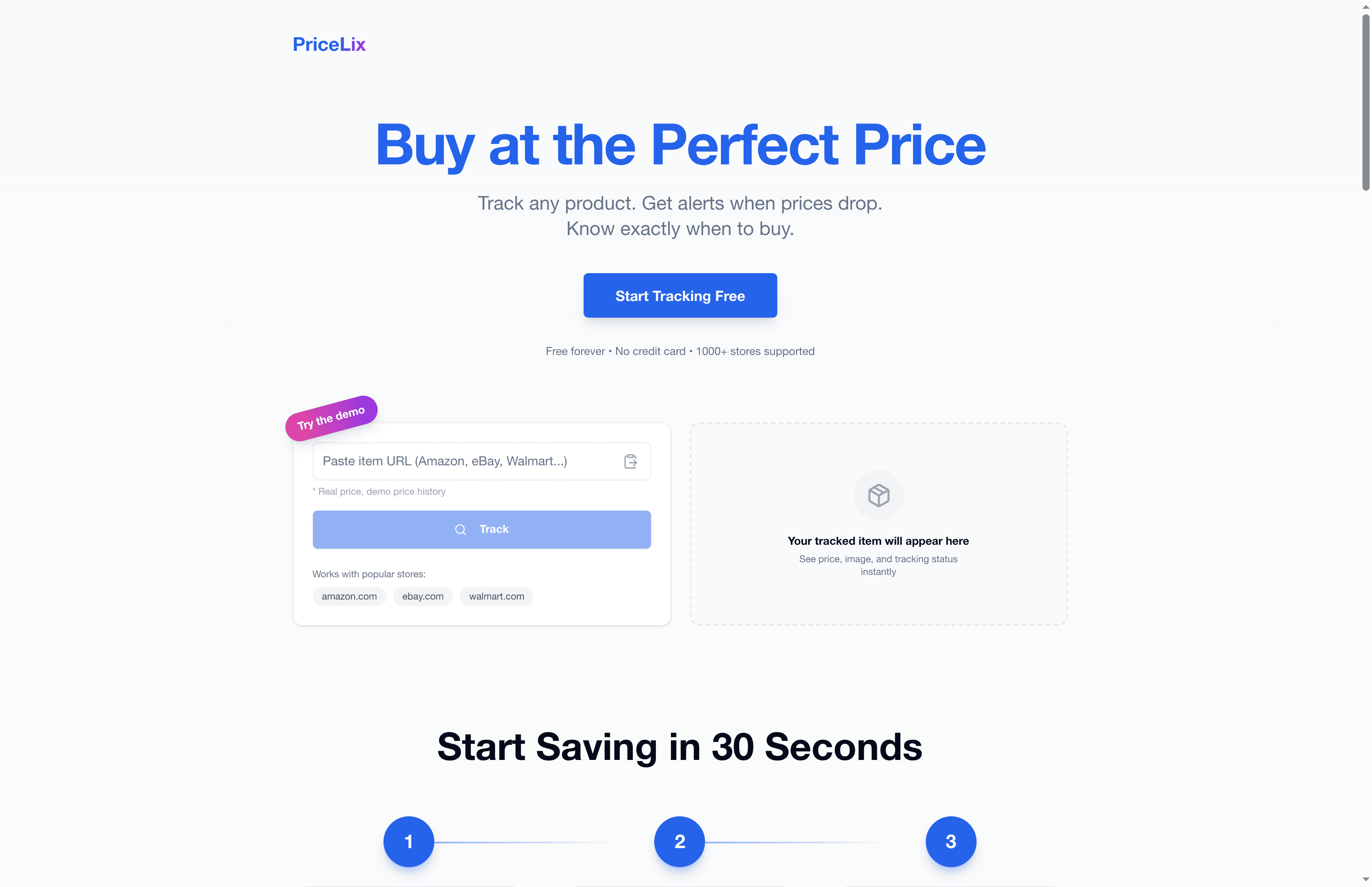
PriceLix makes that easier than anything else out there. It tracks prices across Amazon, eBay, Walmart, and over a thousand other stores, all from one dashboard, with no browser extension required. Set your targets, let the platform do the watching, and buy only when the price is right. Get started with PriceLix today and see how quickly savings add up. And if you want to sharpen your approach even further, explore bargain-hunting strategies that pair perfectly with what PriceLix offers.
Frequently asked questions
What’s the fastest way to start using tech for bargain hunting?
The quickest way is to sign up for a price tracking platform or install a trusted browser extension that sends automated price drop alerts directly to your phone or inbox.
How much money can automation tools really save?
A solid price tracking workflow can save you between 18% and 30% on online purchases depending on how consistently you use the tools and stack your discounts.
Are all price tracking apps and extensions safe to use?
Most are safe, but stick to well-reviewed trusted price tracking platforms and avoid any tool that asks for unnecessary personal or payment information.
Can I combine coupon finders and price trackers for better savings?
Absolutely. Using both together lets you stack automatic discounts. Popular platforms and apps are specifically designed to work alongside coupon and cashback tools for maximum total savings.