
10 must-have tools for deal hunters: save more every purchase
TL;DR:
- Effective deal-hunting tools automate coupon application, price tracking, and retailer comparison.
- Layering multiple tools maximizes savings and helps track real-time fluctuations across stores.
- Building a hybrid strategy with price history data and automated alerts leads to smarter purchases.
Finding a genuine deal online feels like searching for a needle in a haystack — except the haystack is on fire and the prices change every hour. Retailers reprice products thousands of times a day, flash sales vanish before you blink, and coupon codes expire mid-checkout. It’s exhausting. The good news? The right set of tools completely transforms how you shop. Instead of bleeding money without realizing it, you can automate savings, catch price drops the moment they happen, and buy with confidence. This guide covers the best deal-hunting tools available right now, how to evaluate them, and how to build your own winning toolkit.
Table of Contents
- How to evaluate tools for deal hunting
- Top browser extensions every deal hunter needs
- Must-have price tracking and alert apps
- Side-by-side comparison of top deal-hunting tools
- Editorial perspective: What most lists get wrong about deal-hunting tools
- Unlock even smarter savings with PriceLix
- Frequently asked questions
Key Takeaways
| Point | Details |
|---|---|
| Compare before you buy | Always stack price comparison and coupon tools to reveal real deals instantly. |
| Track prices automatically | Set up price alerts to grab the best offers without constant monitoring. |
| Mix and match tools | Using a combination of extensions and apps boosts your overall savings and reduces missed opportunities. |
| Check privacy settings | Opt for trusted tools that explain how your data is handled and allow custom permissions. |
How to evaluate tools for deal hunting
Not all deal-hunting tools are created equal. Some look impressive but deliver minimal real-world savings. Before installing anything, it helps to know exactly what separates a genuinely useful tool from digital clutter on your browser.
Here are the core criteria every tool should meet:
- Coupon finding: Does it automatically search and apply promo codes at checkout, or do you still have to hunt manually?
- Price tracking: Can it monitor an item over time and show you whether today’s price is actually a deal?
- Retailer comparison: Does it check multiple stores instantly so you’re not stuck paying more at one shop when another has it cheaper?
- Usability: Is installation simple? Does it stay out of the way until you need it? Checkout should not feel like a fight.
- Price and value: Most top tools are free, but some offer premium tiers. Ask whether the paid extras actually pay for themselves.
- Security and privacy: What data does the tool collect? Read the privacy policy, or at least scan it. Your browsing and purchase history is valuable, and you should know who has it.
- Compatibility: Does it work on your preferred browser or mobile device? A great desktop extension that doesn’t run on your phone is only half a solution.
For a practical benchmark, Honey applies coupons, tracks prices, and compares Amazon sellers, making it one of the most feature-rich free tools available today. That kind of multi-function coverage is the standard to measure others against.
When comparing options, lean on price comparison best practices to avoid common traps like anchoring to a “sale” price that was never the real retail price.
Pro Tip: Look for tools that overlap on at least two features. Combining a coupon finder with a price tracker means fewer apps doing more of the heavy lifting for you.
Top browser extensions every deal hunter needs
With your evaluation criteria set, let’s examine the essential browser tools every savvy deal hunter should consider. These extensions run quietly in the background and step in when it counts most.
-
Honey (PayPal Honey): Honey is arguably the most recognized deal tool out there. It scans for coupon codes at checkout automatically, tracks prices through its Droplist feature, and highlights Amazon sellers offering the same item at lower prices. The Honey Droplist tracks and alerts you to price drops with zero manual effort required.
-
Capital One Shopping: You don’t need a Capital One card to use this extension. It applies coupon codes at checkout, compares prices across retailers in real time, and earns you rewards on qualifying purchases. Real-time price comparisons and auto-coupon application are where tools like this genuinely shine.
-
Coupert: Coupert works similarly to Honey but focuses heavily on cash back in addition to coupons. It surfaces available codes at checkout and earns you points redeemable for cash. It’s particularly strong on fashion and lifestyle retailers.
-
PriceBlink: PriceBlink shows you a price bar at the top of any product page, instantly comparing the item’s cost across competing stores. If someone else sells it cheaper, you’ll know before you even consider adding it to your cart.
Learning how online price comparison tools work under the hood helps you get the most out of each extension. And if you’re curious about the mechanics behind price fluctuations, it’s worth taking time to understand real-time savings before building your setup.
“The smartest shoppers don’t just use one extension. They layer a coupon auto-filler with a price tracker, letting each tool do what it does best without stepping on the other’s toes.”
Pro Tip: Running multiple extensions can sometimes cause checkout pop-ups to conflict. Disable coupon auto-apply on one extension if two are both trying to apply codes at the same moment. A smooth checkout always beats a glitchy one.
Must-have price tracking and alert apps
Browser extensions are powerful, but dedicated price tracking apps can put savings on autopilot. These platforms specialize in one thing — watching prices over time — and they do it exceptionally well.
Here’s a look at the leading options:
| App | Supported stores | Alert method | Standout feature |
|---|---|---|---|
| Honey Droplist | Amazon, select retailers | Email, in-app | Integrated with coupon tool |
| camelcamelcamel | Amazon only | Email, RSS | Deep Amazon price history |
| PriceLix | Amazon, eBay, Walmart, 1,000+ stores | Email, dashboard | Broadest multi-store coverage |
| Idealo | EU-focused retailers | App notification | Price history with buy timing |
Honey offers Droplist tracking for thousands of products, but its store coverage is more limited compared to dedicated multi-store platforms. camelcamelcamel is the gold standard for Amazon-only shoppers who want deep historical data going back years.
PriceLix covers over a thousand stores, making it the strongest pick if you shop across multiple retailers and want one dashboard to rule them all. Understanding what makes smart price alerts effective will help you configure your thresholds so you’re notified at exactly the right moment, not too early and not too late.
For a broader look at how these tools differ mechanically, exploring the price tracking types available gives you a clearer picture of which approach matches your shopping habits.
Quick pros and cons:
- Honey Droplist — Pros: Easy to use, already integrated. Cons: Limited store coverage outside Amazon.
- camelcamelcamel — Pros: Excellent historical data. Cons: Amazon only, older interface.
- PriceLix — Pros: Wide store coverage, automated daily checks, clean dashboard. Cons: Newer platform, still building brand recognition.
- Idealo — Pros: Strong European coverage, buy-timing suggestions. Cons: Limited for US-based shoppers.
Side-by-side comparison of top deal-hunting tools
To unlock even more savings, see how these tools stack up side by side before you decide. Picking the wrong primary tool means leaving real money on the table.

| Feature | Honey | Capital One Shopping | Coupert | PriceBlink |
|---|---|---|---|---|
| Coupon auto-fill | ✓ | ✓ | ✓ | ✗ |
| Price tracking | ✓ (Droplist) | Limited | ✗ | ✗ |
| Real-time price comparison | ✓ | ✓ | ✗ | ✓ |
| Notification method | Email, in-app | Email, in-app | In-app | Browser bar |
| Browser support | Chrome, Firefox, Edge, Safari | Chrome, Firefox, Edge | Chrome | Chrome, Firefox |
| Mobile app | ✓ | ✓ | ✗ | ✗ |
Honey and Capital One Shopping are the leading multi-function tools for shoppers who want coupon finding and price comparison in a single install. Coupert punches above its weight on cash-back rewards. PriceBlink wins for pure, instant price-matching speed.
A few things worth watching:
- Privacy: Honey’s data collection practices have drawn scrutiny. Always review what permissions you’re granting before installation.
- Mobile gaps: Coupert and PriceBlink lack standalone mobile apps, which limits their usefulness if you shop heavily on your phone.
- Retailer relationships: Some tools prioritize partner retailers in comparisons. This doesn’t mean the result is wrong, but it’s worth knowing.
- Overlap conflicts: Running Honey and Capital One Shopping together can cause coupon pop-up clashes at checkout.
For a deeper look at how today’s options stack up, check out a current list of top price comparison apps to stay current as new tools emerge.
Editorial perspective: What most lists get wrong about deal-hunting tools
Here’s the uncomfortable truth most roundup articles won’t tell you: picking one tool and sticking with it forever is a losing strategy. Retailers adapt. They learn which coupon codes tools auto-apply and quietly invalidate them. They shift pricing tactics seasonally. A tool that crushed it for you in January might underperform in July.
The real edge comes from rotating your tools. Use Honey for a month, then layer in Capital One Shopping to compare results. Track the same items in two platforms and see whose alerts fire first. You’ll quickly identify which tool performs best for your specific shopping categories.
Most people also chase short-term coupons obsessively and ignore price history. That’s backwards. A 10% coupon on an already-inflated price is no deal at all. Historical price data tells you what an item actually costs over time. That chart becomes gold when you’re deciding whether a Black Friday offer is real or manufactured urgency.
Build your own hybrid strategy. Explore best price tracking strategies and stop relying on any single platform to make the call for you. The house always wins when you’re playing by their rules.
Unlock even smarter savings with PriceLix
You’ve now got the criteria, the tools, and the strategy. The next step is putting it all together without spending hours manually checking prices across dozens of sites.
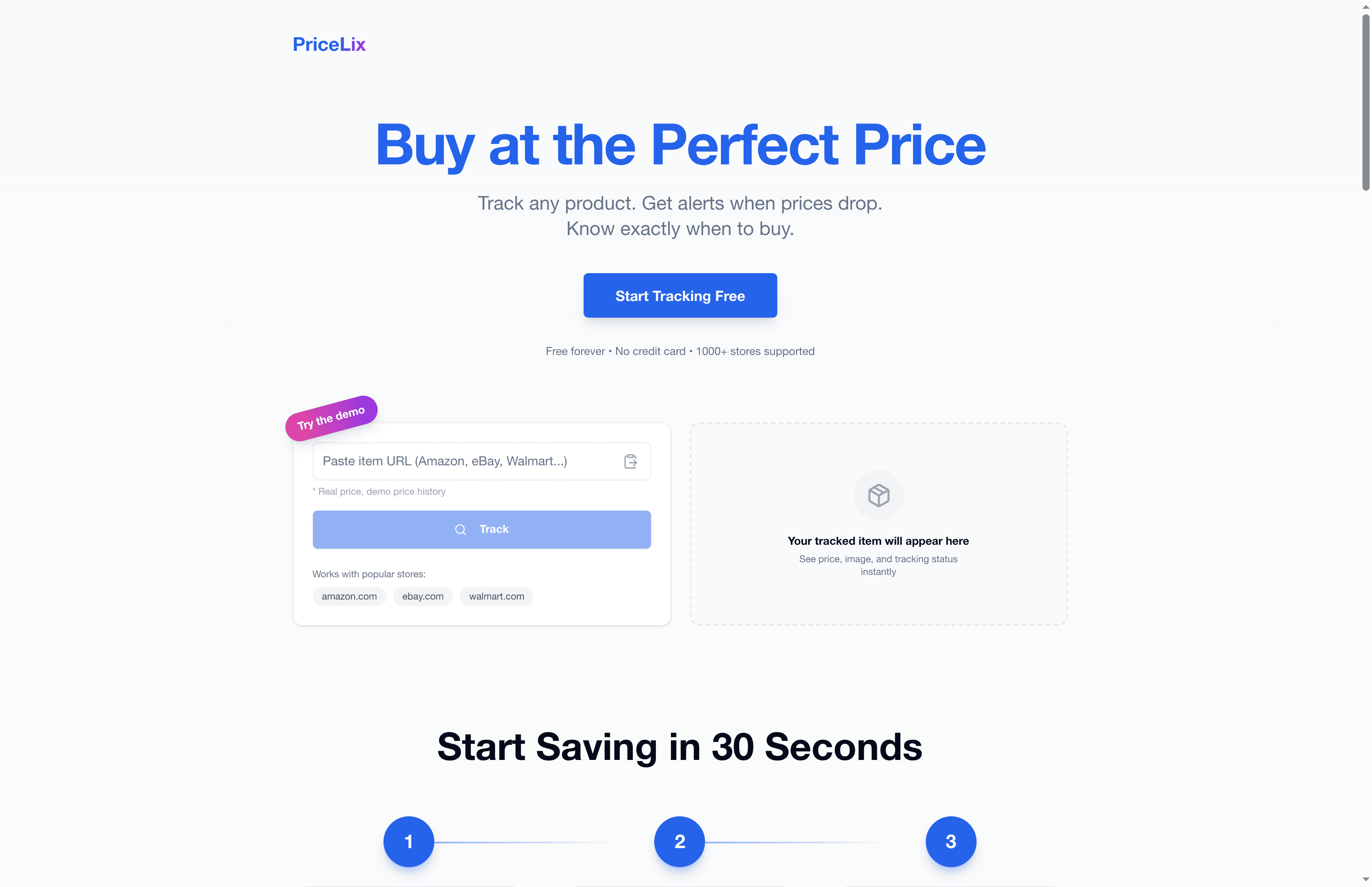
That’s exactly what PriceLix is built for. The platform tracks prices automatically across Amazon, eBay, Walmart, and over a thousand other stores, sending you real-time alerts the moment a price drops. No browser extensions required, no complicated setup. Just add your items, set your target price, and let the dashboard do the work. Whether you’re hunting for holiday deals, waiting out a product launch, or just refusing to overpay, PriceLix gives you the information advantage you need.
Frequently asked questions
What is the safest way to use deal-hunting tools without risking personal data?
Choose well-established tools with transparent privacy policies, read user reviews, and only grant permissions the app actually needs. Honey collects minimal data and maintains privacy safeguards, which sets a reasonable baseline for what to expect from reputable tools.
Can you use more than one price-tracking tool at once?
Yes, and it’s often a smart move. Just be aware that overlapping functions can cause pop-up conflicts at checkout, so disable duplicate features where needed. Running multiple deal tools works well when each is configured to handle a specific job.
What are the best free deal-hunting tools for beginners?
Honey, Capital One Shopping, and Coupert are all free, beginner-friendly, and deliver instant value through automatic coupon finding and price comparisons. Honey and Capital One Shopping are the two strongest starting points for new users.
How do price alerts help save money?
Price alerts notify you the moment an item hits your target price, so you buy at the lowest point instead of guessing. Price tracking apps send alerts that take the guesswork and the manual checking completely out of the equation.