
Top budget shopping tips: Save big on Amazon, Walmart & more
TL;DR:
- Effective online shopping requires planning, price comparison, and timing to maximize savings.
- Combining coupons, loyalty programs, and cashback offers can significantly reduce total costs.
- Using price tracking, flash sales, and strategic timing helps capture the best deals consistently.
Online shopping is supposed to save you money, but that’s not always how it plays out. Prices shift hourly, flash sales disappear before you blink, and a “great deal” on Amazon might cost less at your local Walmart. Stretching every dollar takes more than luck. It takes a layered approach, where planning, timing, smart tools, and the right loyalty programs all work together. This guide walks you through proven strategies to spend less without sacrificing what you need, from building a smarter shopping routine to knowing exactly when to click “buy.”
Table of Contents
- Shopping strategy essentials: Plan, compare, and time your buys
- Maximize savings with coupons, promo codes, and loyalty programs
- Take advantage of price drops, flash sales, and retailer deal triggers
- Create your personal action plan for ongoing budget wins
- Why conventional budget shopping tips miss the mark (and what really works)
- Save even more with PriceLix: Your partner for smarter shopping
- Frequently asked questions
Key Takeaways
| Point | Details |
|---|---|
| Plan purchases wisely | Make shopping lists around sales to prevent overspending and maximize savings. |
| Stack deals where possible | Use coupons, promo codes, and loyalty rewards together for deeper discounts. |
| Capitalize on flash deals | Monitor price drops and opportunistic sales to catch the best prices online. |
| Adapt and compare | Stay flexible and compare online versus in-store prices to avoid paying more. |
Shopping strategy essentials: Plan, compare, and time your buys
Let’s start with the foundation. Most people overspend online not because they’re careless, but because they skip a few key steps before shopping. Fixing those habits is where the real savings begin.
Start with a list, every single time. It sounds obvious, but shopping without a list invites impulse purchases, the kind that add up fast without you noticing. Think of it like grocery shopping on an empty stomach. You grab things you never planned for. A written list forces intention.
Here’s what a solid pre-shop habit looks like:
- Write your list before opening any store tab. No browsing first.
- Compare prices across platforms before settling on one retailer. A quick online price comparison between Amazon, Walmart, and Target can reveal surprising differences.
- Check in-store prices too. Many shoppers assume online is always cheaper. It’s not. Certain categories like groceries and household goods are sometimes priced lower at the physical store.
- Time big purchases around known sale events. Black Friday, Prime Day, back-to-school season, and end-of-quarter clearances offer predictable price drops.
- Sign up for retailer newsletters. Yes, your inbox gets cluttered. But a 15% welcome discount or an early sale alert can be worth the trade-off.
Perspective from a fellow shopper: The moment I started treating online shopping like a mission, with a goal, a list, and a deadline, I stopped “just browsing” and started actually saving.
Pro Tip: Review the best discount retailers before you commit to a purchase. Some stores consistently offer deeper baseline discounts than others, especially on electronics, home goods, and seasonal items.
Timing also matters more than people realize. Retailers refresh pricing throughout the day, and some categories see predictable drops on specific days. For example, appliances tend to go on sale mid-week, while clothing discounts tend to cluster on weekends. Pair this knowledge with grocery loyalty strategies to stretch your food budget further too.
Maximize savings with coupons, promo codes, and loyalty programs
Once you’ve got your planning habits locked in, the next layer is stacking discounts. This is where shoppers who pay attention pull way ahead.
Here’s how to work the system:
- Search for promo codes before checkout. Type the retailer’s name plus “promo code” or “discount code” into your browser. Dedicated coupon sites like RetailMeNot, Honey, or even a quick Reddit search often surface active codes.
- Clip digital coupons inside the retailer app. Walmart, Target, and Kroger all have in-app coupons that automatically apply at checkout. These aren’t always advertised. You have to go find them.
- Enroll in loyalty programs for stores you use regularly. The accumulation of points over time adds up to real money. Some programs also give birthday bonuses, surprise discounts, or early access to sales.
- Stack discounts where store policy allows. A loyalty discount on top of a promo code on top of a sale price? That’s the ideal scenario. Always check the store’s coupon policy first.
- Use store credit cards strategically. If you already frequent a retailer, their branded card often delivers 5% or more in cashback. Just pay the balance in full each month to avoid interest eating your savings.
Per AARP’s guidance on smarter shopping, using coupons, digital offers, and loyalty programs together consistently lowers your total checkout cost. Not rocket science, but most people still leave these savings on the table.
Here’s a quick comparison of popular discount methods to help you decide where to focus:
| Savings method | Effort required | Average discount | Best for |
|---|---|---|---|
| Promo codes | Low | 5 to 20% | One-time or new-customer purchases |
| Digital coupons | Low | 5 to 15% | Groceries and household staples |
| Loyalty programs | Medium | 2 to 10% per purchase | Repeat buyers at a single retailer |
| Stacking (combined) | Medium to High | 15 to 35%+ | Planned purchases at participating stores |
| Store credit cards | Low (ongoing) | 3 to 5% cashback | Frequent shoppers at a specific chain |
Pro Tip: Tools focused on optimizing online purchases can help you identify which retailers offer the most generous stacking policies, so you know where your loyalty dollars go furthest.
One more thing worth mentioning: not all retailers play by the same rules. Some allow you to combine a manufacturer’s coupon with a store coupon. Others will only let one discount apply. Before you build your shopping strategy around stacking, double-check the fine print. Exploring tech-centric savings tools and comparing discount and rewards programs across retailers helps you figure out which combinations actually work.
Take advantage of price drops, flash sales, and retailer deal triggers
Now we get to the opportunistic side of saving. These tactics don’t work every time, but when they do, the discounts can be significant.

Price drops: Retailers adjust prices constantly based on demand, competition, and inventory levels. The challenge is catching those drops at the right moment. That’s where price tracking tools become your best friend. They monitor product pages automatically and send you an alert the second a price falls. No manual checking required.
Check out smart price drop tactics to understand how to set up alerts effectively and which product categories see the most frequent price movement.
Flash sales and daily deals: These are fast. Amazon Lightning Deals, Walmart’s Rollbacks, and site-wide flash events can offer 30 to 60% off, but the window is often a few hours or less. The shoppers who win at flash sales are the ones who already know what they want. That’s another reason a list matters.
The abandoned cart trick: Here’s a tactic worth knowing. Some retailers, especially in fashion and home goods, will email you a discount code if you leave items in your cart without buying. It’s a behavioral trigger designed to bring you back. As MoneySavingExpert points out, this tactic depends entirely on the retailer’s individual marketing practices and isn’t guaranteed. But when it works, it can save you 10 to 15% with zero extra effort.
| Tactic | Reliability | Potential savings | Time sensitivity |
|---|---|---|---|
| Price drop alerts | High | 5 to 40% | Moderate |
| Flash sales | Medium | 20 to 60% | Very high |
| Abandoned cart codes | Low to Medium | 10 to 20% | Low |
| Cashback platforms | High | 1 to 15% | Low |
Cashback platforms deserve a special mention. Sites like Rakuten, TopCashback, and similar services give you a percentage of your purchase back when you shop through their links. It’s passive savings. You shop as normal, and money gets deposited into your account. Pair this with an existing coupon or sale, and you’re running multiple savings layers simultaneously. Learn more about how cashback strategies work and which platforms consistently pay out the most.
Also consider building a seasonal sales guide into your buying calendar. Knowing that televisions typically drop after the Super Bowl or that winter coats go clearance in February lets you plan big purchases months in advance.
Create your personal action plan for ongoing budget wins
Having all these tips is great. Actually using them consistently is what separates occasional savers from people who genuinely spend less over time. The key is turning strategy into a repeatable system.
Here’s a step-by-step framework you can start using today:
- Before every purchase, check your list. Is this item planned, or is it a spontaneous grab? If it’s unplanned, wait 24 hours. The urge usually passes.
- Look up the price history of the item. Knowing whether today’s price is high, average, or at a low point is essential. Tools built around best price tracking strategies make this simple.
- Search for a coupon or promo code. Spend two minutes doing this. It often pays off.
- Check your loyalty program balance. If you’re close to a reward, maybe wait and redeem it now. If not, shop normally and let points accumulate.
- Activate a cashback portal before clicking through to the retailer’s site.
- After purchase, track any rebates or warranty claims that apply.
Beyond individual purchases, keep a simple document or notes app with:
- Your loyalty program logins and current point balances
- Your go-to coupon sources per retailer category
- Upcoming sales events on your calendar (Prime Day, Cyber Monday, etc.)
- Items you’re watching and want to buy only when the price drops
Combining strategic planning with timing and coupon stacking is consistently cited as the most effective way to maximize what your money buys. This isn’t opinion. It’s pattern. Shoppers who plan spend less.
Pro Tip: Revisit your system every few months. Retailers change their loyalty structures, coupon policies, and sale schedules constantly. What worked last year might not work today. Flexibility beats rigid rules. Check out bargain hunting approach guides periodically to stay current on what’s actually delivering results.
Why conventional budget shopping tips miss the mark (and what really works)
Here’s my honest take after watching countless shoppers follow standard advice and still overpay: most budget shopping tips are too generic to be useful.
“Always use a coupon.” Great advice, except when the coupon pushes you toward a brand that’s still more expensive than the store brand without any coupon. “Wait for a sale.” Sure, but if the sale never drops below the regular price at a competing store, you’ve wasted time. The truth is that online prices aren’t always the lowest option, and tactics like abandoned-cart discounts don’t work the same way for every person or every retailer.
What actually works is adaptability. A coupon is a tool, not a rule. A sale is an opportunity, not a mandate. The best budget shoppers I’ve observed treat every purchase as its own puzzle. They ask: what’s the actual best price for this specific item, at this specific moment, from this specific type of retailer?
Retailers also change their policies faster than most guides get updated. Loyalty programs restructure their point values. Cashback platforms rotate which stores are eligible. Promo code stacking rules shift with each checkout redesign. If you’re following last year’s playbook without checking current terms, you’re probably leaving money behind.
The fix is simple but requires ongoing attention. Use tools that monitor discount strategies in real time rather than relying on static guides. Layer your methods rather than betting everything on one approach. And accept that results will vary because no single trick works equally well across all stores and all product categories. That’s not a flaw in your strategy. That’s just how retail works.
Save even more with PriceLix: Your partner for smarter shopping
Everything we’ve covered in this article, price comparisons, drop alerts, tracking sale windows, building a purchase history, requires consistent effort to do manually. That’s where PriceLix makes a real difference.
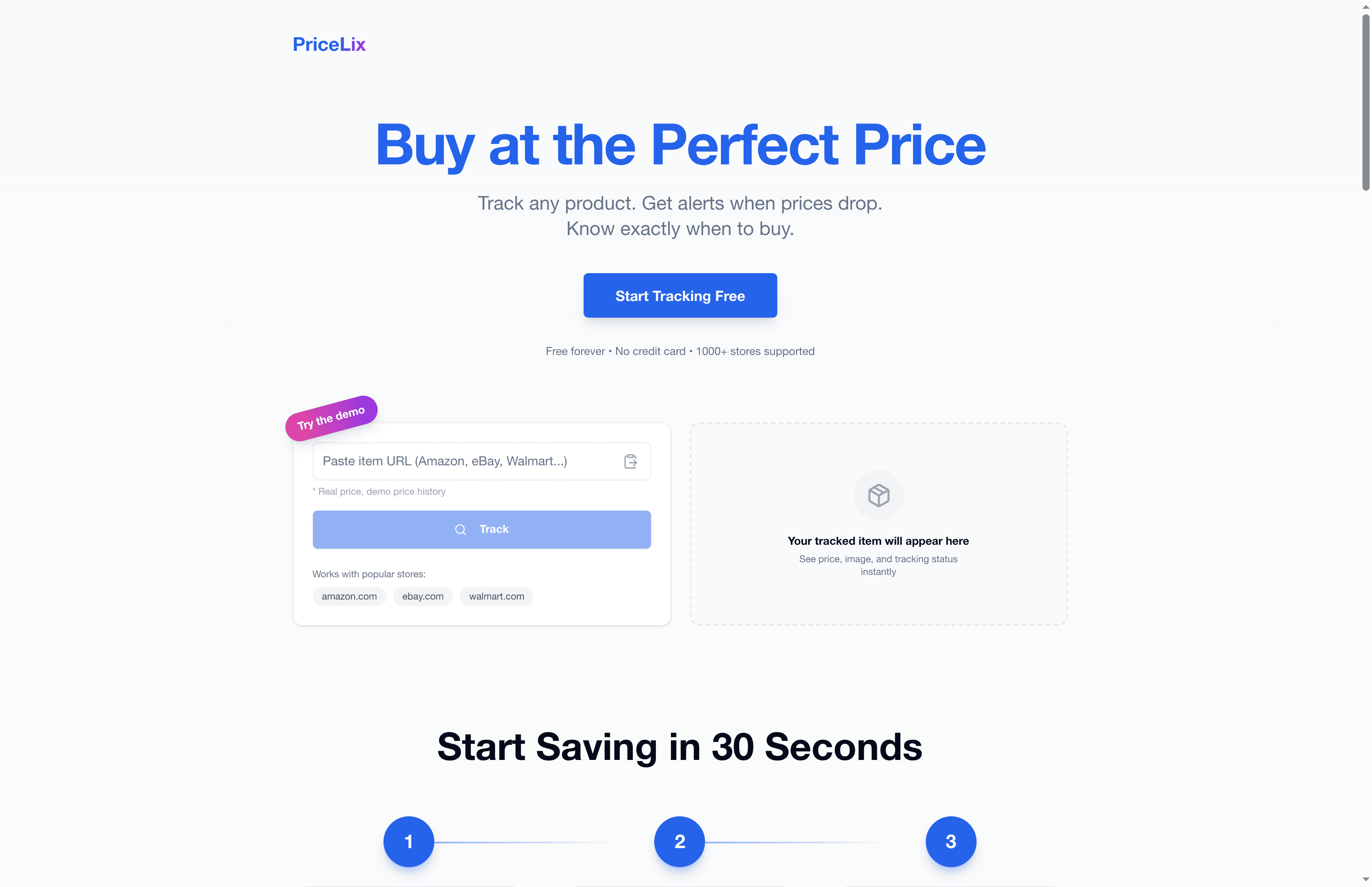
PriceLix is built specifically for shoppers who want to stop guessing and start buying at the right price. The platform tracks prices automatically across Amazon, Walmart, eBay, and over a thousand other stores, sending you real-time alerts when something on your list drops in price. No extensions needed. No daily manual checks. Just add the product, set your target price, and let the system do the watching. Whether you’re hunting for a seasonal deal, preparing for a holiday purchase, or simply want to know if today’s price is actually good, PriceLix gives you the price history and context to decide with confidence. Start tracking smarter today and keep more of your money where it belongs.
Frequently asked questions
How do I know if an online price is better than in store?
Use a price comparison tool or check multiple platforms side by side, since online prices can sometimes be higher than what you’d pay in the physical store. Checking both before you buy is the safest habit.
Are abandoned-cart discounts available at every retailer?
No. Only some retailers send discount codes after you leave items in your cart, and terms differ by retailer. Treat it as a bonus when it happens, not a guaranteed strategy.
What are the best ways to avoid impulse buying online?
Building a list and shopping sales intentionally are the most effective defenses against unplanned purchases. A 24-hour waiting rule for non-essential items also helps significantly.
Do all retailers allow stacking coupons and promo codes?
No. Many retailers limit you to one discount per transaction. Always read the store’s coupon policy before checkout to avoid surprises or disappointment at the final price screen.
Recommended
- Blog - Price Tracking Tips & Savings Guides | PriceLix
- Top strategies for monitoring discounts and maximizing savings | PriceLix
- Top retailers with the best discounts to maximize savings | PriceLix
- Unlock Savings: How Tech Transforms Bargain Hunting Online | PriceLix
- How to Find Stunning Formal Wear on a Budget - DressMeUpNY