
Top retailers with the best discounts to maximize savings
TL;DR:
- Many sales discounts are exaggerated or based on inflated original prices.
- Retailers like Walmart and Ollie’s offer genuine, consistent savings through everyday low prices.
- Using automated tools and timing strategies helps shoppers maximize real discounts and avoid impulsive buy triggers.
You see “SALE” banners everywhere. Flash deals, clearance events, limited-time offers. But here’s the uncomfortable truth: most of those discounts aren’t nearly as good as they look. Some retailers inflate original prices just to slash them. Others rotate the same tired 10% off coupon and call it a deal. If you’ve ever bought something on sale and later found it cheaper somewhere else, you already know that not all discounts are created equal. This guide cuts through the noise and maps out the retailers that consistently deliver real, meaningful savings so you can stop guessing and start shopping smarter.
Table of Contents
- How to identify retailers with the best discounts
- Top retailers with the largest everyday and event-based discounts
- Department store discount events and loyalty offers
- Retailer discount comparison and expert takeaways
- Pro tools and hacks for optimizing savings across retailers
- What most shoppers miss about hunting for real discounts
- Get even more value from your discount hunt
- Frequently asked questions
Key Takeaways
| Point | Details |
|---|---|
| Retailer discount strategies | Some stores use everyday pricing, others focus on big-event sales, so compare both for the biggest savings. |
| Consistent high-discount stores | Ollie’s, ALDI, and Dollar General offer some of the deepest everyday markdowns, often up to 70-80 percent off. |
| Department store event deals | Look to JCPenney and Kohl’s for massive Black Friday and loyalty-card event discounts—some over 70 percent off. |
| Optimization tools | Automate your deal-hunting and coupon application with browser extensions and dedicated discount-tracking platforms. |
| Value over hype | Focus on reliable savings methods and your own shopping needs, not just the biggest headline discount. |
How to identify retailers with the best discounts
Before you chase any “deal,” you need a framework. Otherwise, you’re just reacting to marketing instead of making smart decisions.
Here’s what actually separates a real discount from a fake one:
- Consistency. Does this retailer offer deep discounts regularly, or only once a year during a hyped event? Retailers with consistent pricing patterns are far easier to plan around.
- Depth. A 10% discount barely covers tax. Look for retailers offering 30% or more on items you actually want, especially in your preferred categories.
- Category coverage. Some retailers crush it in electronics but barely move the needle on apparel. Match the retailer to your shopping priorities.
- Event-based vs. everyday pricing. Mega-sales like Black Friday and Prime Day are powerful, but they can also push you toward impulse buys. Everyday low pricing is quieter but often more reliable.
- Loyalty and stacking potential. Store cards, member pricing, and digital coupons can layer on top of existing discounts. This is where serious savers do their best work.
- Price match guarantees. Retailers that match competitors give you built-in insurance. You don’t have to shop around as aggressively when the store does the work for you.
One thing worth knowing: deeper discounts don’t always increase volume, they often just shift buyers toward higher-priced items. Personalized and targeted discounts tend to be more valuable for both the retailer and the shopper, because they’re relevant rather than random.
“The best discount isn’t the biggest one. It’s the one that saves you money on something you were already going to buy.”
Watch out for retailers using tiered quantity discounts as a tactic to push higher order values. Buy two, get one free sounds great until you realize you only needed one. Behavioral and personalized offers tend to cut through that noise.
Once you have this framework in mind, the smartest move is to build a habit around monitoring discounts and applying solid bargain hunting strategies that keep you ahead of the cycle instead of reacting to it.
With a framework for evaluating discounts, we can now look at which retailers truly deliver.
Top retailers with the largest everyday and event-based discounts
Let me hit you with some numbers. These aren’t marketing copy. These are real figures that explain why certain retailers consistently come out on top.
Walmart runs on an Everyday Low Price model, also known as EDLP. The goal is simple: keep prices low all the time so shoppers don’t have to wait for a sale. But Walmart goes further with Rollbacks, targeted temporary price cuts on specific products. In 2024, Walmart executed over 30,000 price cuts and recorded 4.6% comparable sales growth as a result. That’s not a fluke. That’s a strategy working at scale.
Amazon plays a different game. It stacks deep discounts into event-based sales throughout the year. During the Big Spring Sale, Amazon offered up to 50% off in the Kitchen category, 45% off in Fashion, and 35% off in Home. These aren’t small moves. For shoppers who know when Amazon’s events run and what categories to target, the savings can be substantial.
Ollie’s Bargain Outlet is the one most people overlook. They sell brand-name merchandise at up to 70% off retail prices every single day. Not during a sale. Every day. That kind of everyday depth is rare and worth paying attention to if you’re near a store.
ALDI, Dollar General, and Ross Dress For Less operate on closeout and everyday low price models that can hit 70 to 80% off on select merchandise. These retailers buy overstock and closeout goods and pass those savings directly to you.
Here’s a quick breakdown of what each brings to the table:
- Walmart: Massive product range, daily Rollbacks, strong online and in-store presence, price match guarantee
- Amazon: Deep event-based discounts, Prime exclusives, broad category coverage
- Ollie’s Bargain Outlet: Daily 70% off, brand-name goods, treasure-hunt shopping experience
- ALDI/Dollar General/Ross: Extreme everyday value, closeout models, unpredictable but often massive savings
Pro Tip: Walmart’s unadvertised Rollbacks don’t always show up prominently online. Check the in-store app or browse the “Rollback” filter on Walmart.com to find cuts that aren’t being pushed in ads. Stack those with digital coupons for extra savings.
For smart price drop strategies that help you capture these windows without refreshing pages all day, automation is your best friend.
Department store discount events and loyalty offers
Department stores have a completely different game plan. They rely on high-frequency sale events, loyalty rewards, and card-based discounts to drive repeat purchases. If you shop at these stores regularly, the perks add up fast.
Kohl’s is the king of coupon stacking. You can regularly find 40% off sitewide sales, then layer in an extra 30% off with the Kohl’s Card, plus Kohl’s Cash that compounds across future purchases. It’s genuinely one of the best loyalty ecosystems in retail for frequent shoppers. According to available data, Kohl’s frequently offers discounts of up to 40% off, with card holders unlocking additional savings on top.
JCPenney takes the crown on Black Friday. Among all department stores, JCPenney averages 76% off during Black Friday, which is the highest average of any major department store tracked. Macy’s comes in at 57%, and Walmart at 38%. To put it in context, Black Friday category averages across the board run about 28 to 30% for electronics, 39 to 45% for apparel, and 30 to 35% for home goods.
Here’s what the top department stores offer in terms of loyalty perks:
- Kohl’s: Kohl’s Card for extra % off, Kohl’s Cash on every purchase, frequent coupon drops
- JCPenney: Deep Black Friday discounts, JCP Rewards program, clearance events throughout the year
- Macy’s: Star Rewards program, seasonal Friends & Family events, Beauty Insider perks
- Nordstrom Rack: Off-price every day, Nordy Club points, Anniversary Sale access
Knowing how to shop seasonal sales and building a rhythm around those events is how loyal shoppers squeeze the most out of department store deals.
Pro Tip: If you’re a regular Kohl’s shopper, always apply for the Kohl’s Card before a major sale event. The extra stacking discount on top of already-discounted items can push your total savings well past 50%.
Use seasonal sale tracking to know when these events are coming, and pair that with seasonal discount strategies to make sure you’re buying at the right moment rather than reacting.
Retailer discount comparison and expert takeaways
Let’s put these retailers side by side so you can choose where to focus your energy based on what matters most to you.
| Retailer | Discount model | Avg. discount | Loyalty program |
|---|---|---|---|
| Walmart | EDLP + Rollbacks | Up to 38% (BF) | Walmart+ membership |
| Amazon | Event-based | Up to 50% (events) | Prime membership |
| Ollie’s Bargain Outlet | Closeout daily | Up to 70% (everyday) | Ollie’s Army card |
| ALDI / Dollar General | Closeout / EDLP | Up to 70 to 80% (select) | None / DG app |
| Kohl’s | Event + loyalty | Up to 40%+ stacked | Kohl’s Card + Cash |
| JCPenney | Event-based | 76% avg Black Friday | JCP Rewards |
| Home Depot | Seasonal events | Up to 71% off tools | Pro Xtra program |
Home Depot deserves a special callout for DIY shoppers and homeowners. During its Spring Black Friday sales, Home Depot discounts tools up to 71% and home items up to 56%. For anyone outfitting a home workshop or tackling renovation projects, this is one of the deepest seasonal discounts available anywhere.
Research from the e-commerce space shows something worth noting. Tiered discount strategies can boost average order value by 30 to 40%, while behavioral targeting can lower the average discount from 27% to just 16% while still increasing conversion rates by 12 to 18%. Translation: smart retailers don’t need to go deep to win. They just need to be precise.
“Retailers using personalized discount strategies consistently outperform those relying on blanket promotions, because relevance converts better than size.”
Here’s a simple way to pick the right retailer for your goals:
- You want the deepest everyday discount. Shop Ollie’s, ALDI, or Dollar General for closeout pricing every single day.
- You want the biggest annual event discount. Target JCPenney on Black Friday or Amazon during Prime Day and the Big Spring Sale.
- You want reliability and breadth. Walmart’s EDLP model across thousands of categories gives you the most consistent everyday value.
- You want stacking and loyalty rewards. Kohl’s loyalty ecosystem is among the most stacking-friendly in retail.
- You’re a DIYer or homeowner. Home Depot’s seasonal events deliver some of the best tool and home improvement discounts available.
Use best price tracking strategies and discount tracking in 2026 to stay on top of these events without having to camp out on retailer websites.
You can also use tech deal comparisons to benchmark electronics pricing across platforms before you commit.
Pro tools and hacks for optimizing savings across retailers
Knowing where to shop is half the battle. Knowing how to shop is the other half.
The best deal-hunters don’t manually check prices every day. They automate it. Here are the tools and tactics that actually work:
- Honey: Automatically applies coupons at checkout across hundreds of retailers. Set it and forget it.
- Rakuten: Earns you cashback on purchases from thousands of stores. Stack it with existing discounts for double savings.
- Slickdeals: Community-driven deal discovery. Real shoppers flag real deals, so you get signal instead of noise.
- RetailMeNot: Aggregates coupons and promo codes by retailer, with user-verified success rates.
- PriceLix: Tracks prices across Amazon, Walmart, eBay, and over a thousand other stores, and alerts you the moment a price drops.
According to U.S. News Money, the smartest shoppers layer browser extensions like Honey and Rakuten for automatic coupons and cashback, while using aggregator sites like Slickdeals and RetailMeNot for deal discovery.
Here’s how to actually stack these tools:
- Install Honey and Rakuten in your browser. They work quietly in the background.
- Create a free Slickdeals account and set deal alerts for items you’re watching.
- Use a price tracking platform to get notified when a target item drops to your preferred price.
- At checkout, let Honey apply codes and Rakuten activate cashback simultaneously.
- If the retailer offers price matching, use a documented lower price from a competitor to squeeze out the final savings.
Pro Tip: Monitor seasonal sales patterns over time. Many retailers drop prices on the same categories at predictable times each year. Knowing that Walmart drops electronics prices in late January or that Amazon discounts kitchen gear every spring gives you a real edge. Pair that knowledge with retail price matching for maximum leverage.
After exploring hacks, let’s share some hard-won lessons on what really works for thrifty shoppers.
What most shoppers miss about hunting for real discounts
Here’s what I’ve seen over and over again: shoppers fixate on the highest percentage off and completely ignore whether the base price is accurate. A 70% off sticker means nothing if the “original” price was inflated to begin with.
The retailers that win your long-term loyalty aren’t always the ones running the flashiest sales. They’re the ones with predictable pricing, honest markdowns, and loyalty programs that actually pay off. Walmart doesn’t run a dramatic “EVERYTHING MUST GO” event. It just keeps prices low, consistently. That boring consistency ends up saving loyal shoppers more money than any single fire sale ever could.
There’s also a real danger in chasing big event sales. Black Friday and Prime Day are designed to create urgency. That urgency pushes you toward buying things you didn’t plan to buy, at prices you convince yourself are a steal. The house always wins when you’re shopping emotionally.
The smarter play is to build a personal watch list of items you actually need, then use monitoring and timing discounts to get alerted when those specific items hit your target price. You stop browsing aimlessly and start buying intentionally. That shift alone can cut impulse spending dramatically while ensuring you still catch the best prices on things that matter to you.
Generic advice says “wait for Black Friday.” Better advice says “track the items you want, set a price alert, and buy when it makes sense for your budget.”
Get even more value from your discount hunt
Finding great discounts takes research, timing, and consistency. But doing all of that manually every day? That’s exhausting, and honestly, most people don’t stick with it.
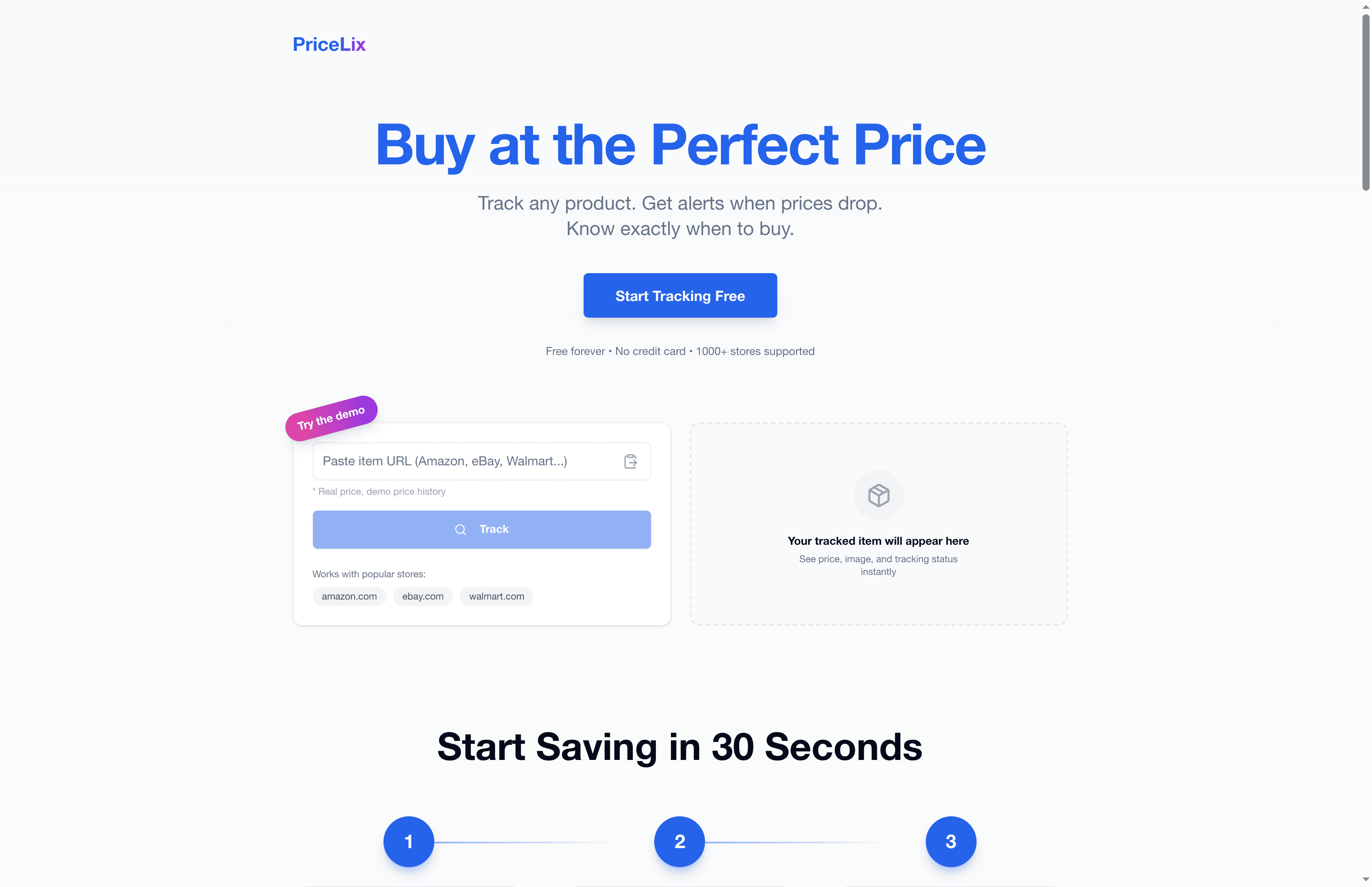
That’s where PriceLix changes the game. Instead of refreshing product pages or setting calendar reminders for sale events, PriceLix automatically monitors prices across Amazon, Walmart, eBay, and over a thousand other stores. The moment a price drops on an item you’re watching, you get an alert. No browser extensions required. No daily check-ins. Just smart, automated tracking that puts the best deals directly in front of you. Visit PriceLix and start tracking the items that matter to you today.
Frequently asked questions
Which retailer offers the highest everyday discounts?
Ollie’s Bargain Outlet and closeout retailers like ALDI and Dollar General offer everyday discounts up to 70 to 80% off on select merchandise, making them the best options for deep daily savings.
Which stores have the biggest Black Friday discounts?
JCPenney leads with an average 76% Black Friday discount, followed by Macy’s at 57% and Walmart at 38%, based on tracked averages across major department stores.
How do I make sure I’m getting the best deal online?
Use browser extensions like Honey and Rakuten for automatic coupons and cashback, and check sites like Slickdeals and RetailMeNot for community-verified current offers.
Are deeper discounts always a better value?
Not always. Deeper discounts often shift buyers to higher-priced items rather than increasing actual volume, so focus on overall value and consistent pricing patterns instead of headline percentages.
Which tools help track discounts automatically?
Extensions like Honey and platforms like PriceLix provide real-time alerts and automated tracking, so you catch the best deals on items you’re already planning to buy without the manual work.