
What are price spiders? The shopper's guide to smarter savings
You add something to your cart, wait a few days, and come back to find the price jumped $40. Sound familiar? Online prices change multiple times daily, and most shoppers have no idea it’s happening. Some people always seem to snag the lowest price at exactly the right moment. It’s not luck. They’re using tools called price spiders, and once you understand how they work, you’ll never shop blind again.
Table of Contents
- What are price spiders and why do they matter?
- How do price spiders work? The technology behind the scenes
- Key challenges: Anti-bot defenses, dynamic pricing, and legal considerations
- When should you use price spiders? Practical uses for online shoppers
- How to pick the right price spider tool for you
- Take your savings further: Smarter shopping with PriceLix
- Frequently asked questions
Key Takeaways
| Point | Details |
|---|---|
| What price spiders do | Price spiders automatically scan and monitor product prices across many online stores to help you find the best deals. |
| How they work | They mimic browsing behavior, collect price and product data, and alert you to the latest changes—often hourly. |
| What to watch out for | Success depends on tool quality and site defenses, so choose reliable, frequently-updated price trackers. |
| How to use them | Apply price spiders for smarter shopping, deal alerts, and automation so you never miss a major savings opportunity. |
What are price spiders and why do they matter?
Now that you’re aware of how fast prices shift, let’s decode the tool that helps savvy shoppers keep up: the price spider.
Price spiders, also known as price crawlers, scrapers, or trackers, are automated software tools that systematically scan e-commerce websites to extract and monitor product prices, availability, promotions, and related data. Think of them as tireless digital assistants that never sleep, never miss a price drop, and never get distracted.
“A price spider doesn’t just check one store. It can monitor thousands of products across hundreds of retailers simultaneously, something no human shopper could ever do manually.”
Why does this matter to you? Because 82% of US consumers compare prices before buying, yet most do it manually, which is slow and unreliable. Price spiders automate that entire process.
Here’s what price spiders can track for you:
- Product prices across multiple retailers at once
- Stock availability so you know when an item is back in stock
- Promotional discounts and limited-time deals
- Price history so you can see if a “sale” is actually a real discount
- Competitor pricing for businesses managing their own product listings
There are several types of price tracking methods available today, and price spiders sit at the core of most of them. Businesses also use them heavily, with platforms like the PriceSpider brand commerce platform serving enterprise-level needs.
How do price spiders work? The technology behind the scenes
Armed with an understanding of what price spiders are, let’s dive into how they actually collect and deliver price data.
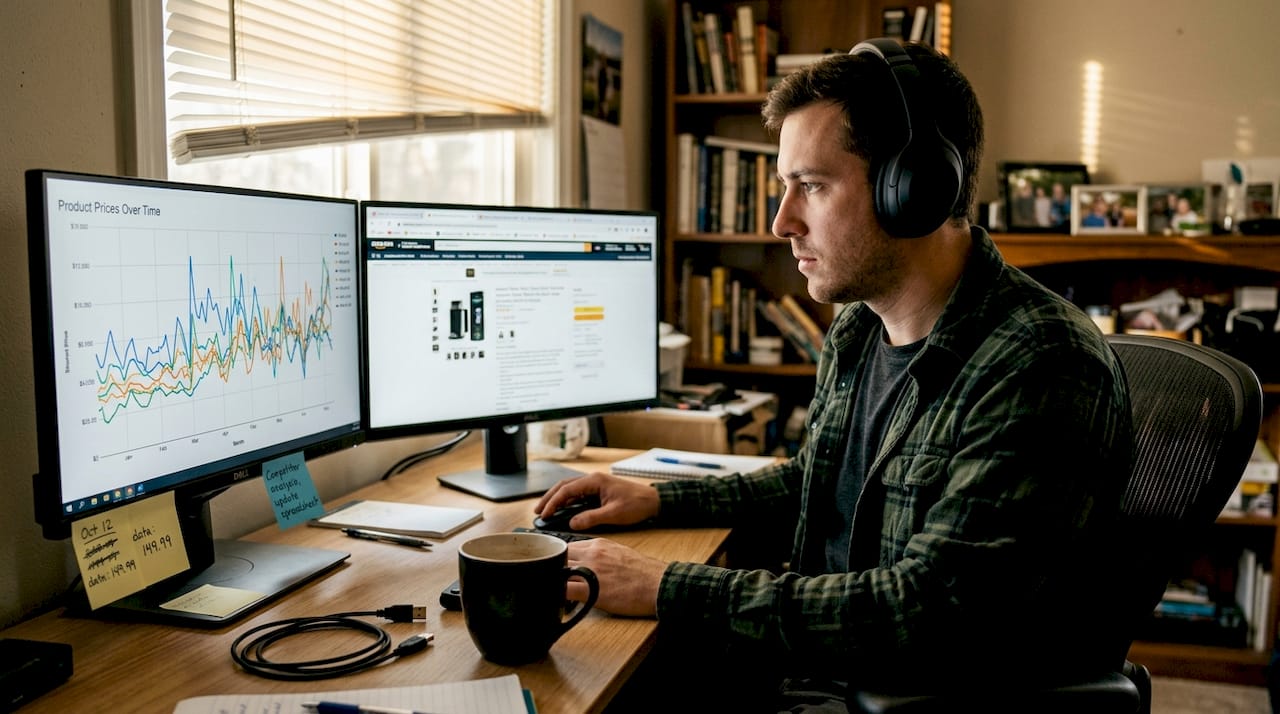
At a basic level, price spiders mimic human browsing, navigating websites, parsing HTML and JavaScript, handling dynamic content, cleaning data, and storing it for dashboards and alerts. It sounds complex, but the result for you is simple: you get notified when a price drops.
Here’s how the process works step by step:
- Crawling - The spider visits a product page, just like you would in a browser.
- Parsing - It reads the page’s code to extract the price, title, and availability.
- Cleaning - Raw data gets normalized, removing duplicates and handling currency differences.
- Storing - Cleaned data is saved to a database and added to your price history chart.
- Alerting - When a price drops below your target, you get an email or push notification.
The algorithms powering price tracking have gotten remarkably sophisticated. Many tools now use AI to detect price changes even when retailers try to obscure them.
| Feature | Basic tools | Advanced tools |
|---|---|---|
| Update frequency | Daily | Hourly or real-time |
| Site coverage | Dozens | Thousands |
| Anti-bot evasion | Limited | Proxy rotation, AI |
| Price history | 30 days | 1+ year |
| Alert types | Email only | Email, SMS, push |
Pro Tip: Always choose a price tracking tool that updates at least daily. Tools that only check weekly can miss flash sales that last just a few hours. For the best price tracking strategies, frequency is everything.
Key challenges: Anti-bot defenses, dynamic pricing, and legal considerations
Understanding the technical process sets the stage for the real-world bumps price spiders hit when tracking deals.
Price spiders don’t always have an easy ride. Retailers actively fight back against scraping because they don’t want competitors or shoppers gaming their pricing systems. Anti-bot blocks, CAPTCHAs, IP bans, dynamic pricing, and legal compliance all complicate large-scale data collection.
Here’s what price spiders are up against:
- CAPTCHAs - Challenges designed to block automated bots from accessing pages
- IP bans - Retailers block IP addresses that send too many requests too quickly
- Browser fingerprinting - Sites detect non-human browsing patterns and block them
- Dynamic pricing - Prices change based on your location, browsing history, or device
- JavaScript rendering - Some prices only load after JavaScript runs, making simple scrapers blind to them
There’s also a legal gray area worth knowing about. Most price spiders access publicly visible data, which is generally considered fair use. However, some websites’ terms of service explicitly prohibit scraping. Following best practices for safe price comparison means using reputable tools that stay on the right side of these rules.
Pro Tip: Don’t build your savings strategy around a cheap or outdated price tracking tool. If it can’t handle anti-bot defenses, you’ll get stale or missing data right when you need it most. Stick with tools that actively maintain their scraping infrastructure and keep up with identifying online price trends accurately.
When should you use price spiders? Practical uses for online shoppers
Knowing the hurdles price spiders face will help you spot when they work best for your needs.
Consumers use price spiders to find deals, set alerts, and automate savings, while businesses use them for repricing and enforcing minimum advertised price (MAP) policies. For everyday shoppers, the use cases are very practical.
Imagine you want a specific laptop. You check the price today: $899. You set a price alert for $819. Three weeks later, during a flash sale, the price drops to $799. You get notified instantly and buy it. That’s $100 saved with zero effort. This kind of scenario plays out constantly for shoppers who use price alerts.
Here’s when price spiders deliver the most value:
- Big-ticket purchases - Electronics, appliances, and furniture see the most price volatility.
- Holiday shopping - Black Friday “deals” are often not the lowest price of the year. A price history chart exposes this fast.
- Wish list monitoring - Set alerts on items you want but aren’t ready to buy yet.
- Seasonal items - Prices on outdoor gear, clothing, and travel accessories shift with the seasons.
- Product launches - New products often drop in price within weeks of release.
| Tool type | Best for | Limitations |
|---|---|---|
| Browser extensions | Quick checks on one site | Limited to supported stores |
| SaaS platforms | Multi-store tracking, alerts | May cost a monthly fee |
| Built-in retailer tools | Single store wish lists | No cross-store comparison |
| Dedicated trackers | Full price history, alerts | Requires account setup |
Using a price tracking checklist before any major purchase is one of the simplest habits you can build. It takes minutes and can save you serious money. If you’re still wondering why to monitor prices at all, the answer is simple: retailers are always optimizing for their profit, not yours. And if you want a step-by-step walkthrough, check out this guide on how to monitor product prices online.
How to pick the right price spider tool for you
Once you’re ready to leverage price spiders, the next step is finding a tool that suits your goals and habits.
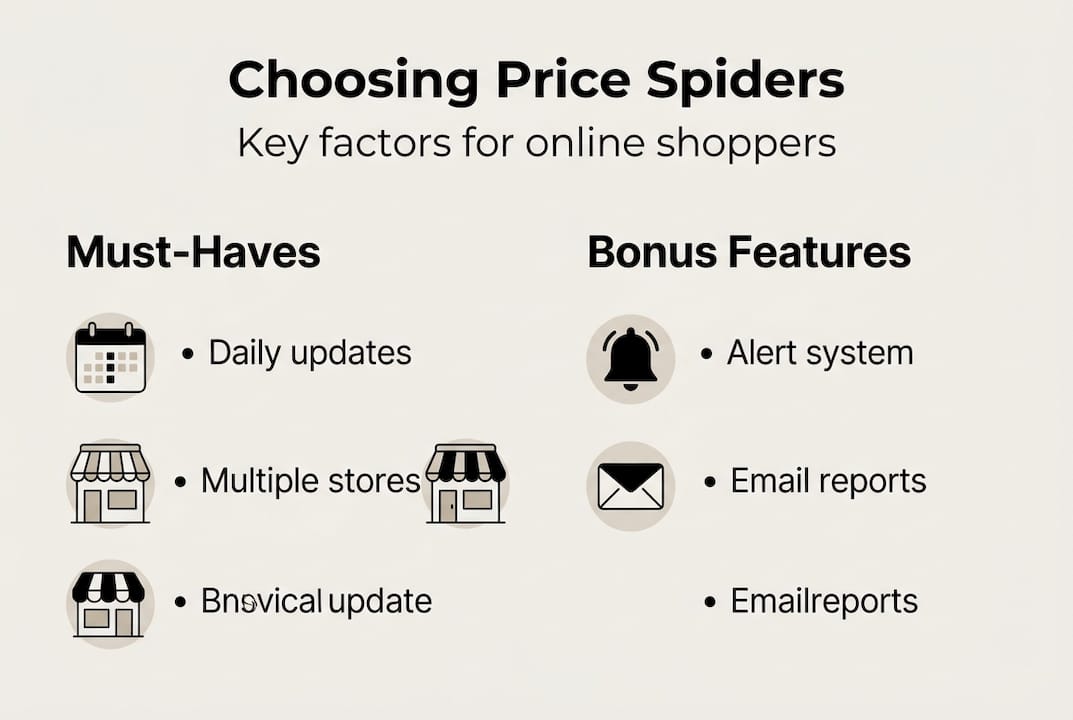
Not all price tracking tools are created equal. Costs range from $30 to $100 per hour for freelance scrapers, $600 to $1,000 per month for agencies, and SaaS platforms vary widely in price and features. For most individual shoppers, a well-built SaaS tool or dedicated price tracker is the sweet spot.
Here’s what to look for when evaluating any price spider tool:
- Update frequency - Does it check prices hourly, daily, or weekly? More frequent is better.
- Store coverage - Does it support the retailers you actually shop at?
- Anti-blocking capability - Poor tools fail 20 to 80% of the time on protected sites like Amazon. This is a dealbreaker.
- Price history depth - Can you see 6 months or a year of price data? That context is gold.
- Alert options - Email is fine, but SMS or push notifications mean you won’t miss a flash sale.
- Ease of use - If setup takes an hour, most people won’t stick with it.
- Cost - Free tools exist, but they often have limited coverage or slow update cycles.
The build-versus-buy question comes up a lot. Building your own scraper gives you full control, but it requires technical skills and ongoing maintenance as websites change their structure. Buying or subscribing to an established tool means someone else handles the hard parts.
For most shoppers, the answer is clear: use a trusted, regularly updated platform. Combine it with smart habits like checking real-time price changes explained before any major purchase, and you’ll consistently outmaneuver retailers who count on you not paying attention.
Take your savings further: Smarter shopping with PriceLix
Ready to make the switch from manual checks to smarter, automated price tracking? You’ve just learned how price spiders work, what challenges they face, and how to pick the right tool. Now it’s time to put that knowledge to work.
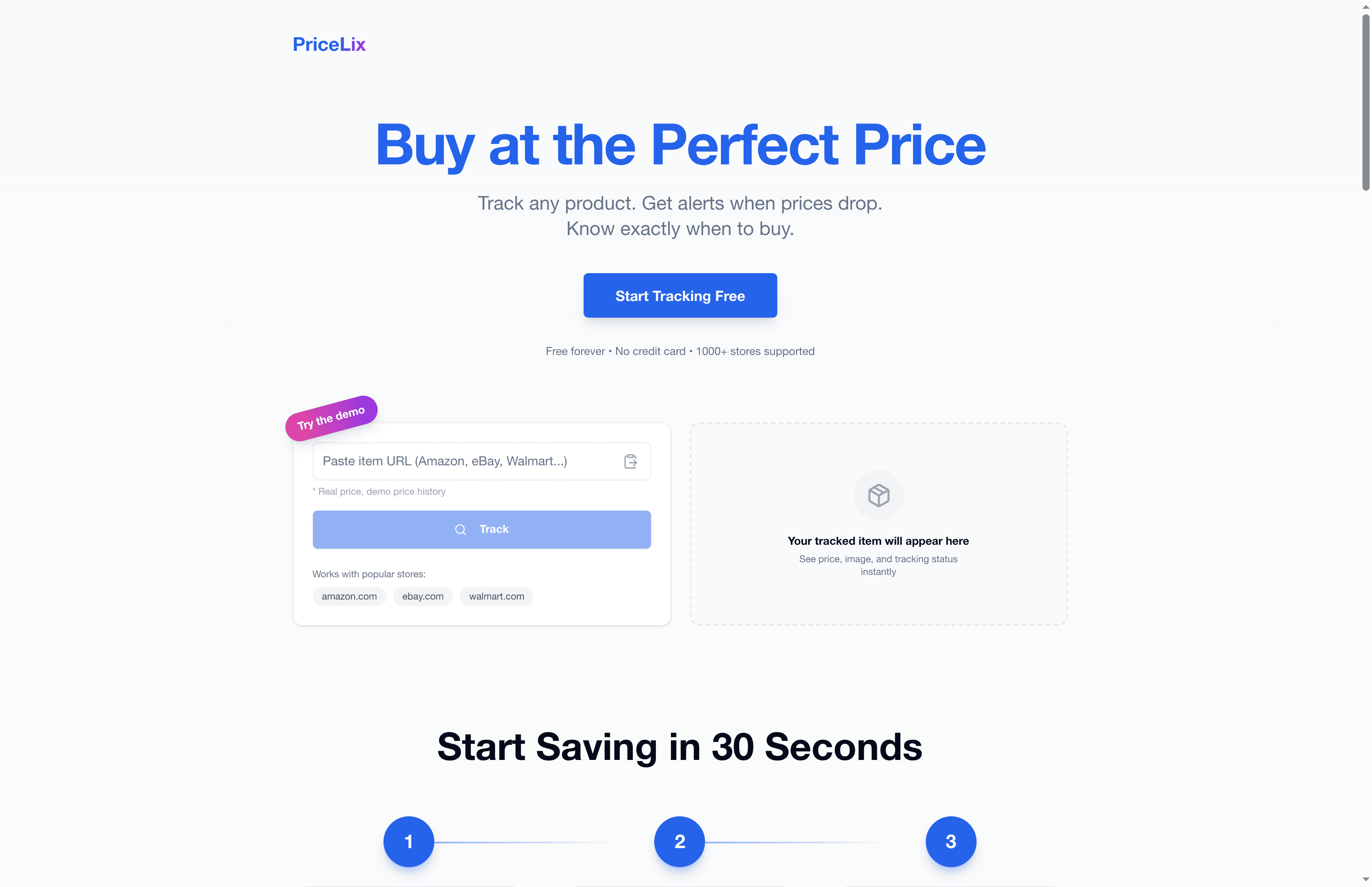
PriceLix is built exactly for shoppers like you. It tracks prices automatically across Amazon, eBay, Walmart, and over a thousand other stores, sends you real-time alerts when prices drop, and gives you detailed price history charts so you always know if a deal is real. No browser extensions needed. No complex setup. Just add a product, set your target price, and let PriceLix do the watching. Whether you’re hunting for holiday deals, monitoring a wish list, or just tired of overpaying, PriceLix turns price spiders into your personal savings engine.
Frequently asked questions
Are price spiders legal to use for personal price tracking?
Yes, most price spiders are legal when accessing publicly visible data, but some websites’ terms of service may restrict automated scraping, so it’s worth checking before you use a tool on a specific retailer.
Do price spiders work on every online store?
Not always. Anti-bot defenses, CAPTCHAs, and frequent website structure changes can block or disrupt price spiders, and poor tools fail 20 to 80% of the time on heavily protected sites like Amazon.
What are the main risks when using price spiders?
The biggest risks are inaccurate or outdated data caused by site changes breaking data selectors, along with potential terms of service violations and limited access to members-only or paywalled pricing.
How often do prices really change online?
More often than most shoppers realize. Prices change multiple times per day on major platforms, which is exactly why automated monitoring beats manual checking every single time.