
Explaining flash sales: a savvy shopper's guide
TL;DR:
- Flash sales create a false sense of urgency by leveraging limited time and inventory to induce FOMO among shoppers.
- Understanding that these tactics often use inflated reference prices helps consumers verify the authenticity of discounts and avoid overspending.
- Savvy shoppers, equipped with pre-researched price histories and prepared plans, can seize genuine deals and prevent impulsive purchases during these sales.
Flash sales feel like a gift. A massive discount, a ticking clock, a product you’ve been eyeing for months. But here’s the uncomfortable truth: that urgency is engineered. Explaining flash sales isn’t just about defining a discount type. It’s about understanding the psychology behind them so you don’t get played by the pressure. Most shoppers walk away thinking they scored a deal. Some did. Others paid more than they needed to, or bought something they didn’t actually need. This guide breaks down how flash sales work, what the discounts really mean, and how to shop them without bleeding money.
Table of Contents
- What are flash sales and how do they create urgency?
- Typical discounts and pricing strategies in flash sales
- How Amazon Lightning Deals exemplify flash sale mechanics
- Smart strategies for navigating flash sales and avoiding common pitfalls
- The hidden dynamics behind flash sales: what savvy shoppers often overlook
- Maximize your flash sale savings with PriceLix
- Frequently asked questions
What are flash sales and how do they create urgency?
A flash sale is a time-sensitive promotion that offers steep discounts for a short window, sometimes just a few hours or up to about a day, primarily to create urgency and drive fast purchasing behavior. The mechanics are simple by design. The pressure they create is anything but accidental.
Understanding flash sales means recognizing the two levers retailers pull every single time:
- Limited time: Sales run anywhere from a few minutes to about 36 hours. The countdown is always visible.
- Limited inventory: Only a set number of units are available. Once they’re gone, the deal disappears.
These two constraints, time and inventory, work together to create what behavioral economists call scarcity bias. Your brain interprets the limited availability as proof that the item is valuable. Add a countdown timer, and FOMO (fear of missing out) kicks in hard. You stop comparing options and start grabbing.
Flash sales don’t just sell products. They sell the feeling that you’re about to lose something if you don’t act right now.
That feeling is the product. And it’s very effective. Shoppers who understand this going in can use market timing strategies to decide whether a deal is worth grabbing or worth skipping. Everyone else is just reacting.
Typical discounts and pricing strategies in flash sales
Let’s talk numbers. Flash sales typically target discounts in the 30% to 70% range, depending on the product category, the retailer, and what they’re trying to move. Electronics and fashion tend to see the deepest cuts. Household goods and groceries usually stay in the lower end of that range.
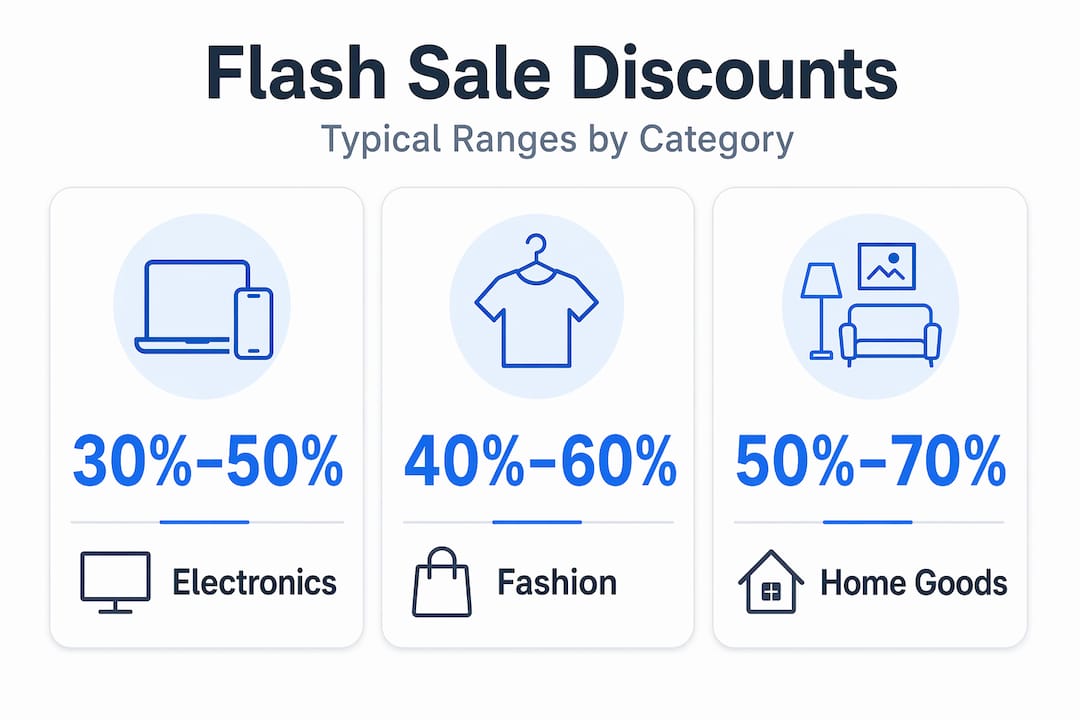
Here’s a rough breakdown of what to expect by category:
| Product category | Typical flash sale discount | Worth verifying price history? |
|---|---|---|
| Electronics | 30%–50% | Yes, always |
| Fashion and apparel | 40%–70% | Yes, often inflated base |
| Home goods | 20%–40% | Sometimes |
| Toys and games | 30%–50% | Yes, especially near holidays |
| Health and beauty | 25%–45% | Occasionally |
The problem isn’t the discount percentage itself. It’s the reference price it’s measured against. Reference pricing is the “was $120, now $75” framing you see everywhere. In theory, that original price reflects what the item actually sold for before the sale.
In practice? Not always.
Strikethrough pricing and perpetual promotions are a growing legal issue for retailers because some use inflated “former” prices that were never genuinely in effect for any meaningful period. That 40% discount might be calculated against a price nobody ever paid. The item might have been $75 for the last six months and briefly listed at $120 just to make the sale look dramatic.
Pro Tip: Before trusting any large “was/now” discount, check the item’s price history. Tools that show you a product’s actual price over the past 90 to 180 days tell you immediately whether the discount is real. Learn how to spot fake discounts before they cost you money.
How Amazon Lightning Deals exemplify flash sale mechanics
Amazon Lightning Deals are one of the most widely recognized examples of flash sale mechanics at scale. They’re also a masterclass in creating urgency through design. Here’s exactly how they work:
- Find the deal. Lightning Deals appear on Amazon’s Today’s Deals page, on individual product listings, and prominently in the Amazon mobile app.
- Check the timer and progress bar. Each deal shows a countdown timer and a colored progress bar showing how much inventory has already been claimed. When that bar is nearly full, the urgency spikes.
- Add to your cart. Once you claim a Lightning Deal, it goes into your cart as a reserved unit.
- Complete checkout within 15 minutes. This is critical. You have a 15-minute window after adding to cart to finish the purchase. Miss it and the deal is gone, sometimes permanently.
- Monitor for upcoming deals. Some Lightning Deals appear as “upcoming” with a scheduled start time, letting you set a reminder and be ready.
| Feature | Amazon Lightning Deals | Standard Amazon discounts |
|---|---|---|
| Time limit | 4 to 12 hours typical | Ongoing until changed |
| Inventory limit | Yes, visible progress bar | Usually no hard cap |
| Checkout time limit | 15 minutes after adding | No time pressure |
| Urgency signals | Countdown timer, progress bar | None |
The Lightning Deal checkout mechanic is designed specifically to compress your decision window. You can’t add it to cart and “think about it.” The clock is already running. That pressure is intentional and knowing it exists lets you pre-decide whether you want the item before the deal even starts.

Keeping up with these deals is much easier when you’re already monitoring discounts effectively across the products you actually want, rather than browsing deals hoping something useful shows up.
Smart strategies for navigating flash sales and avoiding common pitfalls
Here’s the thing about flash sales: they compress comparison time in a way that increases impulse buying risk for shoppers who aren’t checking total value alongside the discount. You need to walk in prepared, not react in the moment.
Before the sale starts:
- Add the item to your wishlist and check its price history. Know what “normal” looks like.
- Pre-fill your payment information and shipping address. Every extra click under a ticking timer is a chance to miss the deal.
- Set a firm budget for the event. Decide in advance what you’re willing to spend.
- Research return policies and shipping costs for any item you’re considering. A 40% discount evaporates fast if shipping adds $25.
During the sale:
- Shop within the first hour. Inventory goes fastest at the start, and the best-value items sell out quickly.
- Don’t let the progress bar panic you into skipping your checklist. If you haven’t verified the price, don’t buy.
- Compare the flash sale price against the item’s price history, not just the “was” price shown on the listing.
Pro Tip: Treat the 15-minute checkout window (or any checkout deadline) as your final filter. If you’re hesitating because you’re not sure about the deal, that hesitation is information. Walk away.
Legal guidance on reference pricing and strikethrough discounts suggests that shoppers should be genuinely cautious whenever a former price wasn’t in effect for a meaningful time period before the sale. The advertised markdown may look real but tell a different story in the price history.
Building a tracking discounts workflow before any major flash sale season, think Black Friday, Prime Day, back-to-school, can save you more than any single deal you find in the moment. And getting real-time alerts on the specific items you want means you stop hunting and start acting with confidence.
The hidden dynamics behind flash sales: what savvy shoppers often overlook
Most articles stop at “flash sales are short, act fast.” That’s fine as far as it goes. But it misses the deeper game.
Flash sales are not just a marketing format. They’re a decision-pressure system. Salesforce’s commerce research points out that the core distinction between a flash sale and a normal discount is intentional urgency, meaning shoppers are nudged to act quickly rather than think carefully. Retailers know that every extra minute you have to compare options is a minute you might not buy.
The really interesting part is what happens to your judgment under that pressure. When a countdown timer is running, your brain prioritizes speed over accuracy. You stop asking “is this a good deal?” and start asking “will I miss out?” Those are very different questions with very different answers.
Here’s what most shoppers overlook: the urgency itself is a signal worth questioning. If a deal is genuinely good, it holds up to a 30-second price check. If the retailer needs you to decide before you can check, that’s not urgency. That’s a tactic. Call it urgency theater.
The savvy approach is to treat flash sales as structured missions. You know what you want. You’ve checked the price history using market timing insights. You’ve set your budget. When the sale drops, you’re not reacting to pressure. You’re executing a plan you already made. That’s when flash sales actually work in your favor.
The shoppers who consistently win at flash sales aren’t the fastest clickers. They’re the most prepared ones.
Maximize your flash sale savings with PriceLix
Knowing how flash sales work is half the battle. The other half is having the right tools to act on that knowledge fast.
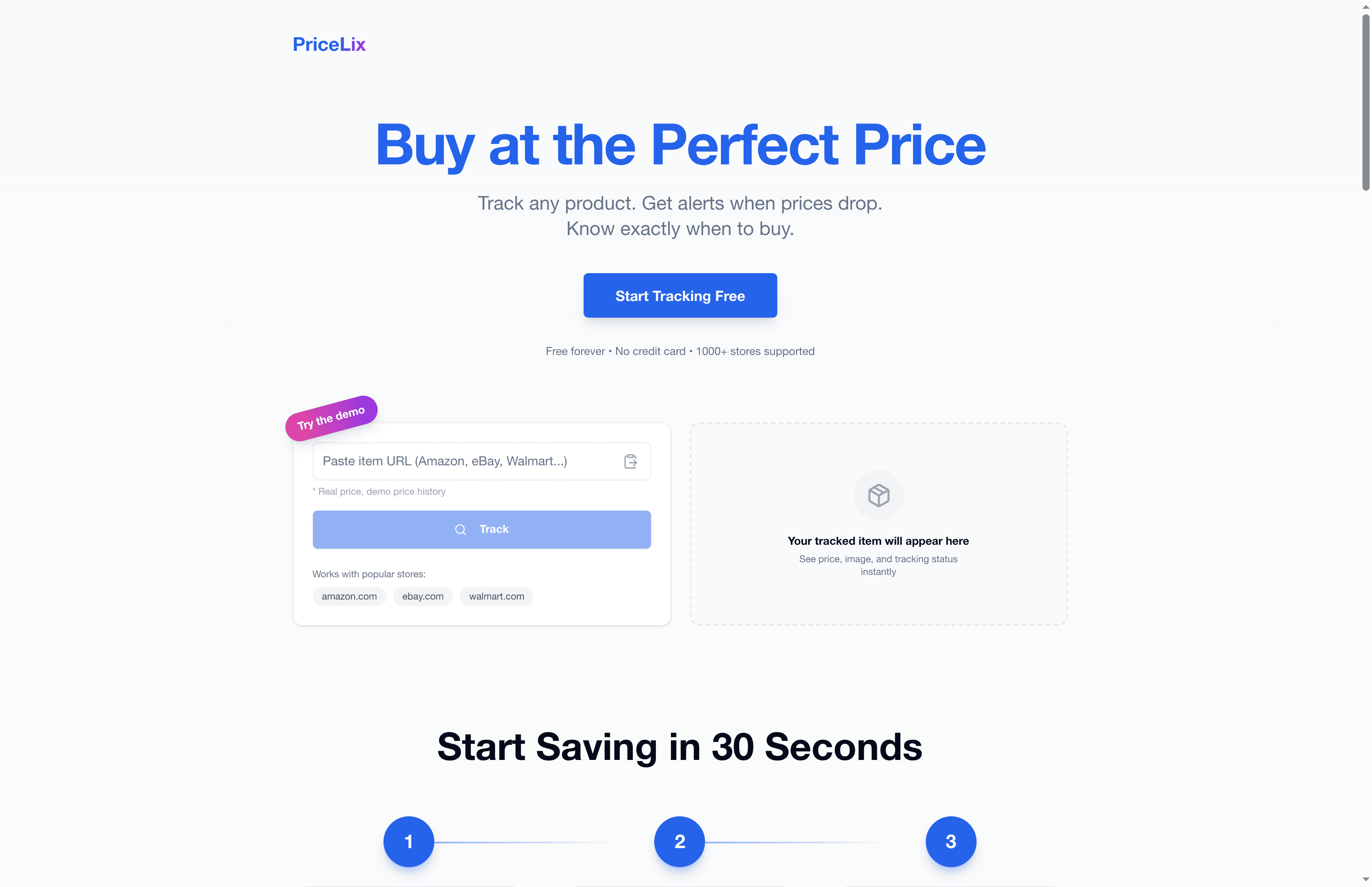
PriceLix is built exactly for this. Track prices across Amazon, Walmart, eBay, and over a thousand other stores automatically. Before any flash sale, you can pull up a full price history chart for any item you’re watching and know instantly whether the “deal” is real or manufactured. When a genuine price drop happens, PriceLix sends you a real-time alert so you’re not refreshing pages manually. You can visit PriceLix to start tracking your wishlist items today, build a pre-sale budget workflow, and stop guessing whether you’re actually saving. Flash sales are only powerful if you already know the real price.
Frequently asked questions
What exactly is a flash sale?
A flash sale is a temporary promotion with steep discounts that lasts from a few minutes up to about a day, designed to create urgency and push quick purchases before time or stock runs out.
How long do flash sales usually last?
Flash sales run from minutes to 36 hours, with most hitting a sweet spot of 2 to 24 hours to maintain urgency while reaching enough shoppers to be worth running.
Are all discounts in flash sales genuine savings?
Not always. Some retailers use inflated former prices to exaggerate how large the markdown looks, so checking a product’s price history before buying is the only reliable way to verify the deal is real.
What makes Amazon Lightning Deals different from regular discounts?
Lightning Deals use countdown timers and limited inventory with a hard 15-minute checkout window, meaning you must complete the purchase before the clock runs out or your reserved unit disappears.
How can I avoid impulse buying during flash sales?
Set your budget and wishlist before the sale starts, verify prices against historical data, and only act on deals you’ve already researched. Flash sales compress comparison time, so doing the research beforehand is what keeps you in control instead of the clock.