
Unlock hidden savings: Why shop during product launches?
TL;DR:
- Launch deals often include bundles, gift cards, and free items that provide more value than standard discounts.
- Evaluating the full offer and stacking additional rewards can significantly maximize savings during product launches.
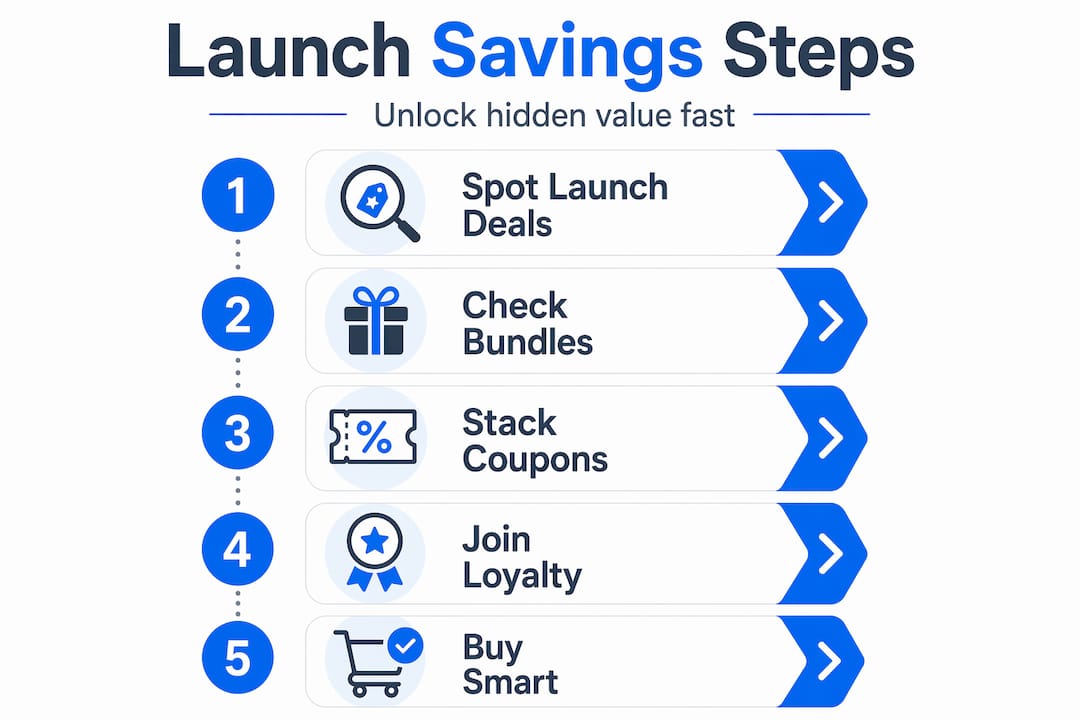
Most shoppers scroll past a product launch and think, “I’ll wait for a real sale.” That’s a mistake that costs them more than they realize. Bundled launch promos are frequently structured as gift cards, vouchers, and free-with-purchase offers rather than only headline price cuts, which means the biggest value is often hiding in plain sight. This article breaks down how launch deals actually work, how to compare bundles against price cuts, how to stack incentives for even bigger savings, and how to decide whether to buy now or wait. By the end, you’ll have a clear playbook for turning product launches into your personal savings events.
Table of Contents
- How product launch deals work and why they’re different
- The real value of launch bundles vs. price cuts
- Stackable savings: Coupons, loyalty programs, and hidden incentives
- Timing your purchase: Price risk, preorders, and smart decision-making
- A shopper’s take: Why launch events are a secret weapon for savings
- Level up your launch shopping with PriceLix
- Frequently asked questions
Key Takeaways
| Point | Details |
|---|---|
| Bundles offer real value | Launch bundles and incentives can beat simple discounts when you compare full benefit instead of just upfront price. |
| Stacking saves more | Combining digital coupons and loyalty programs with launch deals maximizes your total savings. |
| Timing is strategic | Buying at launch often reduces your price risk and secures limited-time incentives that may disappear later. |
| Compare before buying | Always assess total bundle value and potential post-launch savings to make the smart choice. |
How product launch deals work and why they’re different
Now that you know most shoppers focus on standard discounts, let’s look at how launch deals really work and why they matter.
A product launch is the first moment a new item hits the market. A preorder lets you secure that item before it’s available. Retailers know that early demand is highest right around this window, so they compete hard for your attention and your wallet. Instead of slashing the list price, they sweeten the deal in ways that don’t show up in a headline number.
Here are the most common types of launch incentives you’ll encounter:
- Bundle deals: The product ships with accessories, cases, earbuds, or software included at no extra charge.
- Gift card offers: Buy the product and receive a store gift card, usually ranging from $50 to $200, valid for future purchases.
- Vouchers and credits: Store credit applied to your account that reduces the cost of your next order.
- Free-with-purchase items: A second product, a subscription, or a service plan thrown in at zero cost.
- Exclusive launch bonuses: Color options, limited editions, or early access to features only available to day-one buyers.
Understanding launch promotional strategies reveals why retailers prefer this approach. Bundling protects the product’s perceived value. If a brand slashes $100 off a flagship phone, it signals that the phone wasn’t worth its original price. Offering a $100 gift card instead keeps the sticker price intact while still rewarding the buyer.
Here’s a quick look at how launch incentive formats compare across real event types:
| Launch event | Common incentive type | Estimated extra value |
|---|---|---|
| Flagship smartphone release | $100 to $200 gift card | $100 to $200 |
| Gaming console launch | Bundle with 2 to 3 games | $120 to $180 |
| Smartwatch preorder | Free fitness band or strap | $50 to $80 |
| Laptop release | Free accessories kit or bag | $60 to $100 |
| Streaming device launch | Subscription credit (3 to 6 months) | $30 to $60 |
Stat callout: Studies consistently show that shoppers who evaluate the full launch offer, not just the sticker price, capture 20 to 30 percent more value than those who wait for a standard seasonal discount. The total value is almost always higher than the number on the tag suggests.
What most shoppers overlook is that launch incentives are time-limited and often disappear within days of release. Once a product has been on the shelf for a few months, retailers may drop the price slightly, but those extras are long gone.
The real value of launch bundles vs. price cuts
Understanding the makeup of launch offers sets you up to see why bundles and extra incentives can sometimes deliver better results than headline markdowns.
Let’s run some real numbers. Imagine a flagship smartphone priced at $999. Here’s what two different deals look like side by side:
| Scenario | Deal type | What you get | Total value saved |
|---|---|---|---|
| Smartphone preorder | $150 gift card included | Phone + future $150 credit | $150 |
| Same phone, 3 months later | 10% seasonal discount | Phone at $899.10 | $99.90 |
| MacBook launch | Bundle with AppleCare + case | Laptop + $200 in extras | $200 |
| MacBook, 6 months later | 15% off refurbished | Laptop at a discount | $150 |
| Smartwatch preorder | Free fitness band worth $80 | Watch + band | $80 |
| Smartwatch, 4 months later | $40 off sale | Watch at a discount | $40 |
Across every single scenario, the launch deal delivers more measurable value. Bundles and gift cards can outperform a simple percent-off coupon because you’re comparing total value, including what you would otherwise pay for, rather than just the headline markdown size.
Here’s a step-by-step method for evaluating any launch bundle before you buy:
- List every item included in the bundle. Write down each one and what it would cost individually.
- Add up the standalone prices of all extras. Use current retail prices, not inflated estimates.
- Calculate the effective discount. Subtract the bundle’s total cost from the sum of what everything would cost separately.
- Compare to the best alternative deal you can find right now. Check price history to see if this product has ever sold lower.
- Factor in what you were already going to buy. If the gift card is for a store where you shop regularly, count it as real savings.
- Make your decision based on total value, not just the percentage off.
Pro Tip: When a launch offer includes a gift card, ask yourself honestly: “Will I actually spend this at this store within the next six months?” If the answer is yes, that gift card is basically cash. If you’ve never shopped at that retailer before, its value to you drops significantly. Factor that into your comparison when comparing online deals side by side.
The real winner is often the less obvious deal. A $150 gift card at a store where you buy household essentials every month is worth $150. A 15% discount on a product you could live without for three more months is a lot less valuable than it looks at first glance.
One more thing: monitoring discounts for maximum savings is especially useful right around launch windows. Prices on competing products often shift when a new item drops. You might catch a deal on last year’s model that makes the launch math even clearer.
Stackable savings: Coupons, loyalty programs, and hidden incentives
Once you’ve compared the core value of launch bundles, you can supercharge savings by carefully stacking multiple offers.

Most savvy shoppers know about coupons and loyalty points. Fewer people think to stack them deliberately on top of launch deals. Launch-related deals often provide value beyond direct savings when you combine digital coupons and loyalty programs, which can further improve your total checkout price during high-demand periods.
Here’s a checklist of savings sources to verify before every major launch:
- Retailer loyalty program rewards: Do you have points or cashback waiting to be applied?
- Digital coupons in your account: Log in before launch day and clip every relevant coupon.
- Credit card rewards: Some cards offer bonus cashback on electronics or on specific retailers.
- App-exclusive offers: Many retailers offer additional discounts through their mobile app that aren’t visible on the desktop site.
- Trade-in credits: Launching a new phone? Your old device might be worth $100 to $400 in trade-in credit you can combine with the launch incentive.
- Student, military, or employee discounts: These don’t expire and often stack with promotional pricing.
- Cashback portals: Shopping through a cashback portal can add 1 to 5 percent back on top of everything else.
Stat callout: Shoppers who combine at least three of these savings sources during a launch event can push their effective savings rate to 25 percent or higher, well above what any single coupon or sale event would deliver on its own.
The key principle with stacking is specificity. Coupons only matter if they apply to things you were already going to buy. Grabbing a coupon just because it exists and then spending money on something you didn’t need is not saving, that’s overspending with extra steps.
Pro Tip: Check for available stacking opportunities both before and after the launch date. Some retailers release additional digital coupons in the first 48 to 72 hours after a product drops to maintain momentum. Mark your calendar and revisit the deals page a couple of days after launch. You can also use bargain hunting strategies to stay consistently ahead of these windows.
Understanding retail pricing terms also helps here. When a deal says “up to X% off,” that number often applies only to select items, not the headline product. Knowing how to read that fine print is the difference between a real win and a frustrating checkout.
Timing your purchase: Price risk, preorders, and smart decision-making
Maximizing stacked value is powerful, but launch savings also depend on buying at the right moment. Here’s how to assess the timing.
Price risk is the chance that a product you want will be harder to find, more expensive, or stripped of its launch incentives if you wait too long. For hot products like gaming consoles, flagship phones, and limited-edition electronics, price risk is very real. Stock sells out. Scalpers mark up inventory. Launch bundles disappear.
Here’s a numbered framework for deciding whether to buy at launch or wait:
- Check the product’s demand level. Is it expected to sell out quickly? If yes, waiting carries real risk.
- Calculate the launch deal’s total value using the method from the previous section.
- Research the product’s likely discount trajectory. Does this brand typically drop prices within three months, or do they hold firm for a year or longer?
- Look at what you lose by waiting. Incentives gone? Bundle stripped? Trade-in value on your current device declining every month?
- Set a personal savings threshold. Decide in advance: “I’ll preorder if the bundle value exceeds X dollars, and I’ll wait if it doesn’t.”
“Preorders and launch incentives can reduce price risk and shift buyer decision-making by offering credit or extra items at checkout time, before later discounts ever appear.” This is especially true for products like the Samsung Galaxy S26+, where preorder offers routinely include hundreds of dollars in credit and extras that vanish on release day.
The honest truth is that waiting is not always the smarter play. For commodity items that get discounted frequently and have plenty of stock, waiting makes sense. For high-demand tech with generous launch incentives, buying early is often the better financial decision.
Seasonal savings strategies can help you build a broader calendar around launch timing. When you map out the major product release windows alongside holiday sales and seasonal markdowns, you can plan your spending strategically across the whole year rather than reacting one purchase at a time.
A shopper’s take: Why launch events are a secret weapon for savings
With all of these tactics in hand, it’s worth considering what most shoppers and deal sites miss about launch timing and value.
Most deal sites celebrate wait-and-see as the ultimate smart shopping strategy. The logic goes: prices always drop, so patient shoppers always win. I think that’s incomplete advice, and for certain categories it’s flat-out wrong.
Here’s what I’ve seen play out over and over again. A shopper waits three months for a price drop. They eventually buy the product for 10 percent less than the launch price. But the buyer who preordered got $150 in gift cards, a free accessory bundle worth $80, and a trade-in credit of $200. That “patient” shopper actually paid more in real terms and got less. The math doesn’t lie.
Bundle value and risk reduction are almost completely ignored by mainstream deal coverage. It’s easier to write a headline like “Phone drops to all-time low” than to explain that the preorder deal three months ago was worth twice as much when you add up every component. Complex value is invisible in a quick scroll.
The shoppers who consistently win at launch events are the ones who plan ahead. They know which products are dropping, they understand their own spending habits well enough to evaluate gift card value accurately, and they use strategies for tracking new deals to stay one step ahead of the competition.
My take: treat every major launch like a mini sales event that requires 15 minutes of homework. Check the bundle. Stack the coupons. Assess the timing. Most of the time, you’ll find that buying smart at launch beats waiting for a discount that arrives stripped of all the good stuff.
Level up your launch shopping with PriceLix
Ready to put these strategies in motion? Here’s a tool to make saving during the next launch simple and stress-free.
Knowing what to look for is only half the battle. Staying on top of launch deals across dozens of retailers, in real time, is where most shoppers fall behind. That’s exactly the gap PriceLix fills.
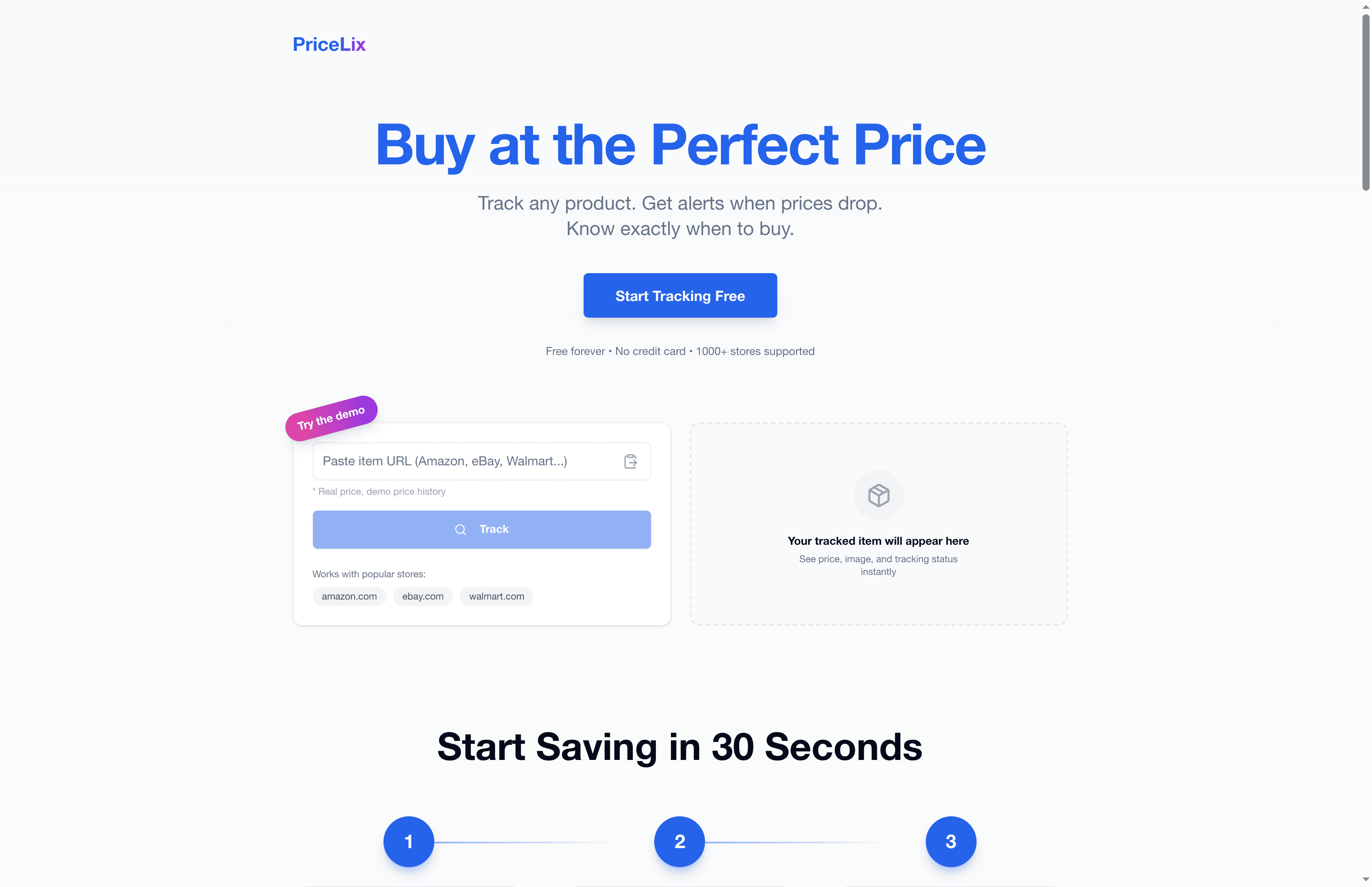
PriceLix tracks prices automatically across Amazon, eBay, Walmart, and over a thousand other stores. You set up a product to watch, and PriceLix sends you a real-time alert the moment a price drops or a deal goes live. During launch windows, this means you’re never caught off guard. You get the notification before the bundle sells out or the incentive expires. The price history charts show you whether a “launch deal” is genuinely a strong offer or just normal pricing dressed up in launch-day packaging. If you’re serious about making every product launch work in your favor, start tracking with PriceLix before the next big release hits.
Frequently asked questions
Are launch bundles really better than later seasonal sales?
Launch bundles often include extras or credits that beat simple price drops, but the best value depends on what you actually want to buy. Bundles and gift cards can outperform a simple percent-off coupon when you compare total value, not just the headline number.
Can I combine a launch deal with store coupons or loyalty rewards?
In most cases, yes — many retailers let you stack digital coupons or loyalty points with launch offers for extra savings. Launch-related deals often provide value beyond direct savings when combined with digital coupons and loyalty programs.
Should I preorder a new product or wait for future discounts?
Preorders offer bonus value and reduce price risk early, while waiting might net larger discounts later but without the same incentives. Preorders and launch incentives can reduce price risk and shift buyer decision-making before later discounts ever appear.
What types of incentives are most common during launches?
You can expect bundles, gift cards, add-on accessories, store vouchers, or free products with purchase at most major launches. Launch promos are frequently structured as bundles, gift cards, vouchers, or free-with-purchase offers rather than straight price cuts.